




All auctions / Coins & Banknotes / "1781" (ca. March 1783) Libertas Americana Medal. Reverse Cliché.
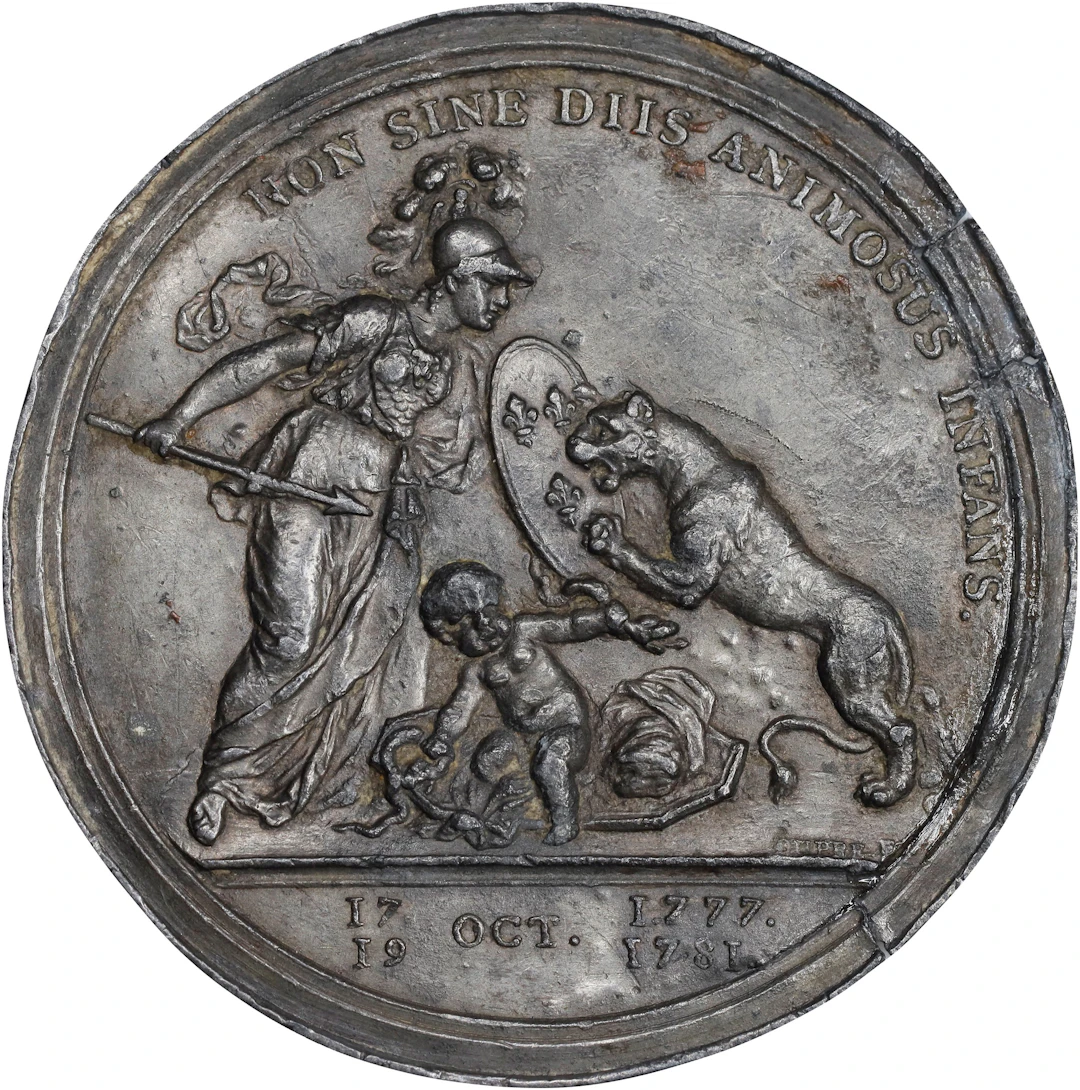
Extremely Rare Libertas Americana Reverse Cliché One of Just Two Known from the Completed Die "1781" (ca. March 1783) Libertas Americana Medal. Reverse Cliché. Original. Workshop of Augustin Dupre. As Betts-615. White Metal. Repaired. 48.1 mm, 0.7 mm to 1.6 mm thick. 191.3 grains. Called somewhat mishandled by John Ford while in his collection, as late as our June 2022 offering an arc of the outer rim of this piece was broken away from roughly 2 o'clock to 4:30. Since the original broken-off piece remained with the item all along, it has now been reattached through skillful repair, creating a pleasing whole during in-hand appreciation. The surfaces are deep gray and pleasing, original and attractive despite assorted marks, some old wax that remains present, and as-made surface roughness. The backing paper is a part-printed scrap, perhaps a bill of some sort, upon which the words and others are visible, along with a manuscript note. Despite the repair, this is a specimen of resounding historical importance, produced for Franklin's personal inspection as a final draft of the finished but as yet unhardened reverse die of the Libertas Americana medal. It was apparently this state, indeed a cliche essentially identical to this one, that Franklin sent to Sir William Jones in March 1783 with a note stating, "the engraving of my medal, which you know was projected before the peace, is but just finished. None are yet struck in hard medal, but will be in a few days." Unhardened dies are incredibly susceptible to damage, as 18th century die steel (and modern steel today) is brittle before it is hardened by quenching. Once a die is hardened, modification becomes very difficult, so if changes need to be made, they need to be done in that fragile, unhardened state. Engravers in major mints - Paris especially - were accustomed to making soft metal impressions as something of a proofreading copy, enabling the negative die to be viewed in the positive in rough draft form. Wax impressions were liable to leave bits of wax in the interstices of design elements, thus engravers settled upon tin (usually called "white metal" in modern numismatic circles) as the best medium. Tin melts at 450 degrees Fahrenheit, a low enough melting point to be accomplished in any small workshop. A ladle full of molten tin poured onto a surface will cool and harden fairly quickly, but it will remain soft long enough that a die can be easily pushed into it by hand, leaving a relatively durable impression in medal. Most often, medalists would find a piece of scrap paper - a note, a newspaper, a book page - to pour the tin atop, thus preventing their workspace from getting scorched and making the tin sheet somewhat easier to lift and trim. These splashers were not intended to be medals, or even permanent, but simply a temporary way to display the state of the die in the positive before its devices were rendered immovable. Each was personally crafted by the engraver in his shop. In the case of the Comitia Americana medals, the epreuves made by Duvivier, Dupre, and Gatteaux were ultimately intended to be viewed and handled by themselves and those close to the process. Benjamin Franklin's first experience with this form appears to have been his review the epreuves of the De Fleury medal, made between April 20 and May 4, 1780, prior to his recommendations regarding the lettering in that medal's obverse exergue. Engraver Augustin Dupre retained many of his splashers in his personal collection, some of which found their way into institutions in France and the United States. Thomas Jefferson used cliches as a spendthrift (and lightweight) way to collect all the medals of the Comitia Americana series, assembling a set for himself and another for his Virginia countryman James Madison. The exact history of this cliche is unknown, but its rarity is clear. The only other Libertas Americana reverse cliche from this finished state in private hands is the framed and inscribed piece last sold in our August 2012 Philadelphia ANA Auction, though we would not be surprised if at least a few exist, unrecognized. Provenance: Ex Ted Craige collection; Ted Craige estate, October 4, 1982; John J. Ford, Jr.; our (Stack's) sale of the John J. Ford, Jr. Collection, Part XIV, May 2006, lot 288; our sale of the Cardinal Collection Educational Foundation, June 2022 Auction, lot 1014. Click here for certification details from PCGS.
Estimate:£0.74
To the auctionView all items fromStack's BowersorCoins & Banknotes
Estimate:
£0.74
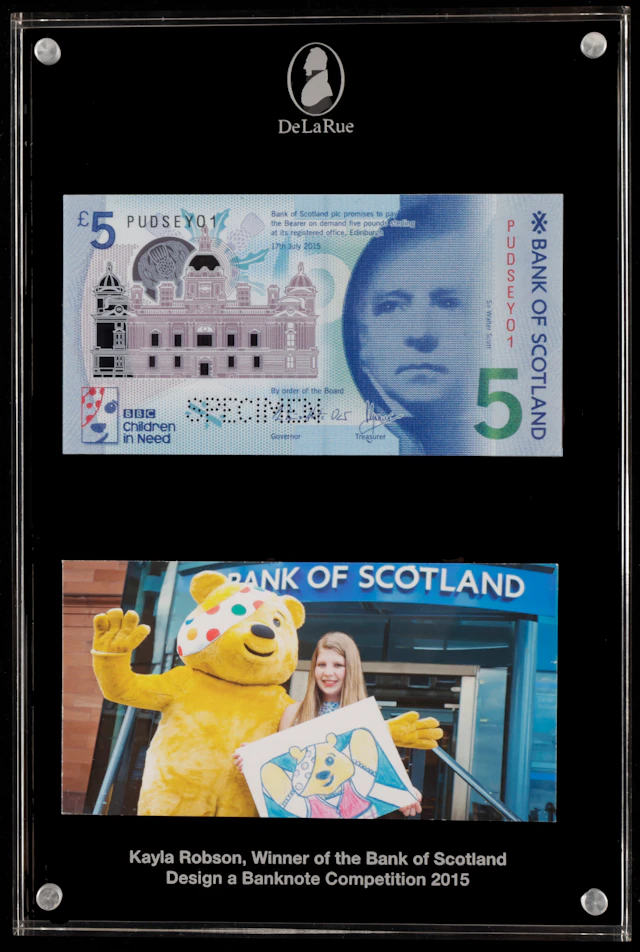
Bank of Scotland, the original presentation pack made to Ms Kayla
10/14/2026
£11,000
Est: £1,500
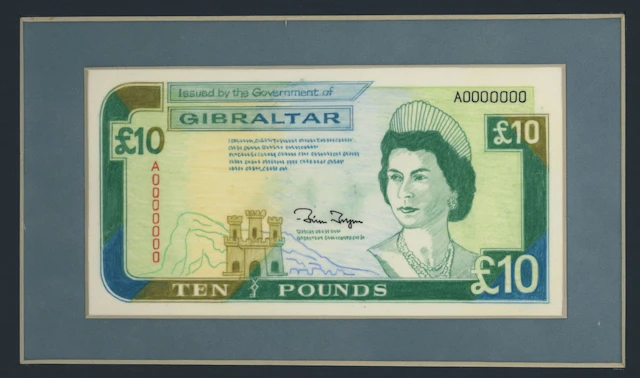
Government of Gibraltar, [front & back essay] hand-executed essays
10/01/2026
£700
Est: £300


OCT 27 | 4:00 PM
Bring your auction to collectors worldwide!
Get listed nowBy subscribing, you are agreeing to the privacy policy. Unsubscribe anytime.
Barnebys HQ
Brahegatan 10
BOX 5038
114 37 Stockholm
