





All auctions / Vehicles / 1925 Miller 122 Front Drive Race Car

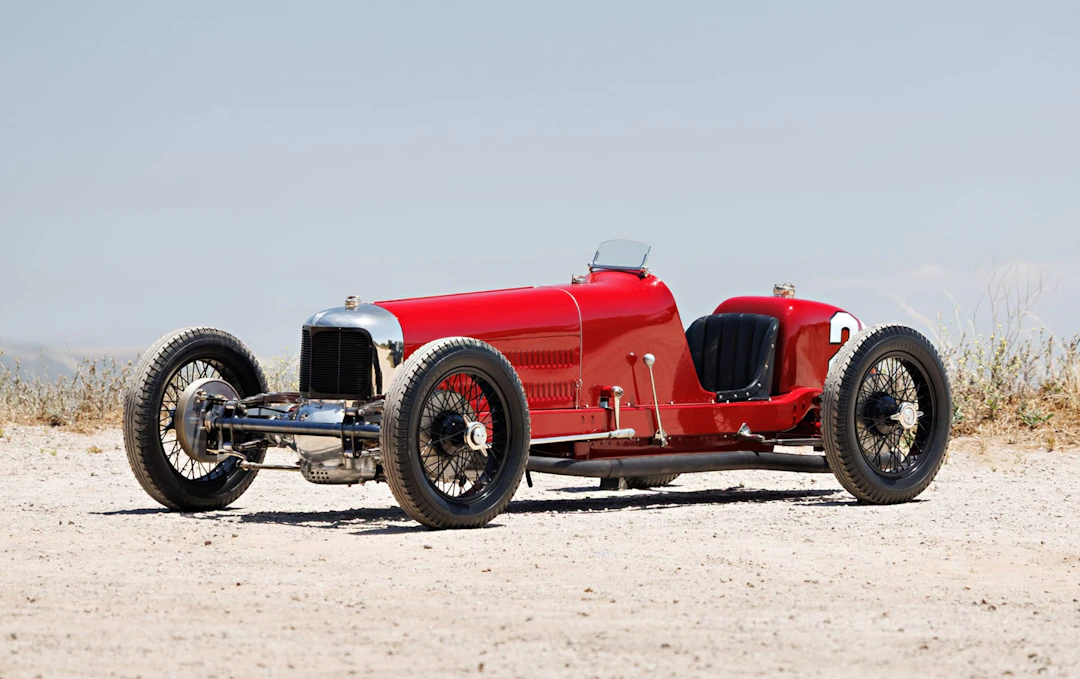
The contributions of Harold Arminius Miller to the early years of motorsport are impossible to overstate. Miller-designed or -powered cars won the Indianapolis 500 a then-unprecedented 12 times, beginning in 1922, when a Miller-powered Duesenberg took victory at the Brickyard. His concepts led to some of the very first purpose-built race cars that were not merely modified road equipment. Over 100 years later, the sheer beauty and functionality of Miller’s groundbreaking designs, and his fanatical attention to detail, continue to be a source of marvel. He pioneered the use of lightweight materials and supercharging, as well as front-wheel- and four-wheel-drive chassis. Surviving Miller cars and components are extremely rare and are prized on an unprecedented level. According to the extensive research of Miller historian Mark Dees, author of The Miller Dynasty, together with other noted authorities on the marque, the car presented here is the direct lineage of the second Front Wheel Drive Miller built. This No. 2 car was constructed at the start of the front-wheel- drive journey and was a sister car to No. 1, commissioned by Jimmy Murphy to campaign at Indianapolis and other board tracks. However, it was intended for an altogether different purpose: land speed record attempts. In an effort to reduce the car’s frontal area, No. 2’s brakes were placed within streamlined wheel discs, leaving less in the slipstream. For this reason, No. 2 had a very distinct look. Known as the “Outboard Brake” car, it is easily identifiable from others in period images. Following Jimmy Murphy’s untimely death at Syracuse in 1924, plans changed, and Harry Miller sent the “Outboard Brake” car to Indianapolis for 1925, placing Bennett Hill in the driver’s seat. Perhaps unsurprisingly given the car’s different build purpose, Hill found No. 2 unstable. Although he had qualifying speed, he was reluctant to drive it, resulting in a DNF. Shortly thereafter, the car was sold to the Packard Motor Co., who found the design to be of interest as a potential exploration for its passenger cars. The company would later sell the car to Stanley Reed, ushering in a new chapter of Indianapolis history for the No. 2 car. Bruce Miller attempted to qualify with it in 1927, without success. The car returned in 1928 with Sam Ross at the wheel, and presumably lighter wire wheels instead of the aerodynamic discs. At this outing, Ross was able to put the car on the grid in 16th place, having tested it at 106.572 mph, but his race was curtailed when his timing gears gave in on the 132nd trip around the Brickyard. In 1929, Albert Karnatz experienced a similar ending when a fuel leak ended his Indy run on lap 50. With a change in regulations now requiring a riding mechanic, No. 2 was reconfigured in two-seat form by ace metalworker Myron Stevens and returned to Indy still wearing its identifiable wire-braked front wheels. With the pairing of Dave Evans at the helm and Thane Houser as riding mechanic, the revised No. 2 car placed 33rd in qualifying and 6th Overall, marking the car’s highest placing yet. The No. 2 car was then sold to Frank Brisko, who would own and campaign it for the next 16 years. Brisko continually adapted the car to evolving regulations, rebranding it many times. He even had it run for him while he drove the four-wheel-drive Miller separately in 1933. The No. 2’s races in this period yielded the following results: in 1931, Brisko and mechanic Floyd Wiese ran until a broken steering arm put them out on lap 138; in 1932, Brisko and Floyd Sparks started in 13th and ran to the 61st lap before the clutch surrendered; and in 1933, with Boyle Valve Company sponsorship and driven by Wesley Crawford with Charles Crane. During that 1933 race, No. 2 lost a wheel on the 146th round of the circuit – miraculously without either rider being hurt. In an impressive feat of engineering, Brisko built his own six-cylinder twin cam to re-power the “Brisko Special” when it returned to Indy for 1937. At this point, the car also lost its arched front axle, having been fitted with a straight beam at the forefront. The No. 2 car qualified that year with a speed of 118.213 mph, and its 105-lap outing resulted in 23rd place, despite having to end the race early with an oil leak. Rule changes for 1938 necessitated that the body revert to single seater form once again. Now driving solo, Brisko qualified 11th, but suffered oil issues and a retirement on lap 39. The following year, he was again 11th on the grid, but managed one less lap due to an air pump issue. Brisko raced the No. 2 car at Indy three more times and his persistence was rewarded in 1940 with a 9th place finish. The 1941 race resulted in another retirement. On the No. 2 car’s final outing in 1946, it sported freshly built Myron Stevens bodywork, which resembled a Maserati 6CM. Racing as the “Boxar Tool Special,” it was piloted by Louis Tomei and recorded a final 34 laps before taking its Indy bow. Still in its guise as the Boxar Tool Special, the car passed into the collection of Ed Tragar of Chicago, where it remained until the 1980s, when Miller historian David Uihlein traced its origins back to its birth as No. 2 and acquired the car. At that time, the fully enveloped body and Brisko “6” were still in place, but Uihlein promptly sold those to Mark Dees in his quest to return the car to its original format. Through the 1980s and 1990s, employing the talented Joe Silnes of Indianapolis, Uihlein retrieved anything linked to the No. 2 car’s first configuration, and at one point even sent the car to the UK, where noted restorers and fabricators Sean Danaher assisted in its reconstruction. The car was thus returned to its 1925 look, with two exceptions: the wheels were standardized to wires for practical reasons and the straight-section front axle was utilized, reflecting the later part of the car’s history. The No. 2 Front Wheel Drive was one of David Uihlein’s proudest collecting and restoration achievements. The car remained in his collection until 2007, and was shown at numerous Miller events during this tenure. It then passed to the Price Museum of Speed, where it has continued to be appreciated and has shared exhibition space with other luminaries of Indianapolis folklore. With one of the most colorful Indy careers of all, including no less than 14 outings over more than two decades, this exactingly restored example of Miller’s iconic Front Wheel Drive racing car is an incredibly important piece of history, deserving of a new chapter of ownership that recognizes its stature. Please note that this vehicle is titled as FD1221. car
Estimate:£450,111
To the auctionView all items fromGooding Christie'sorVehicles
Estimate:
£450,111
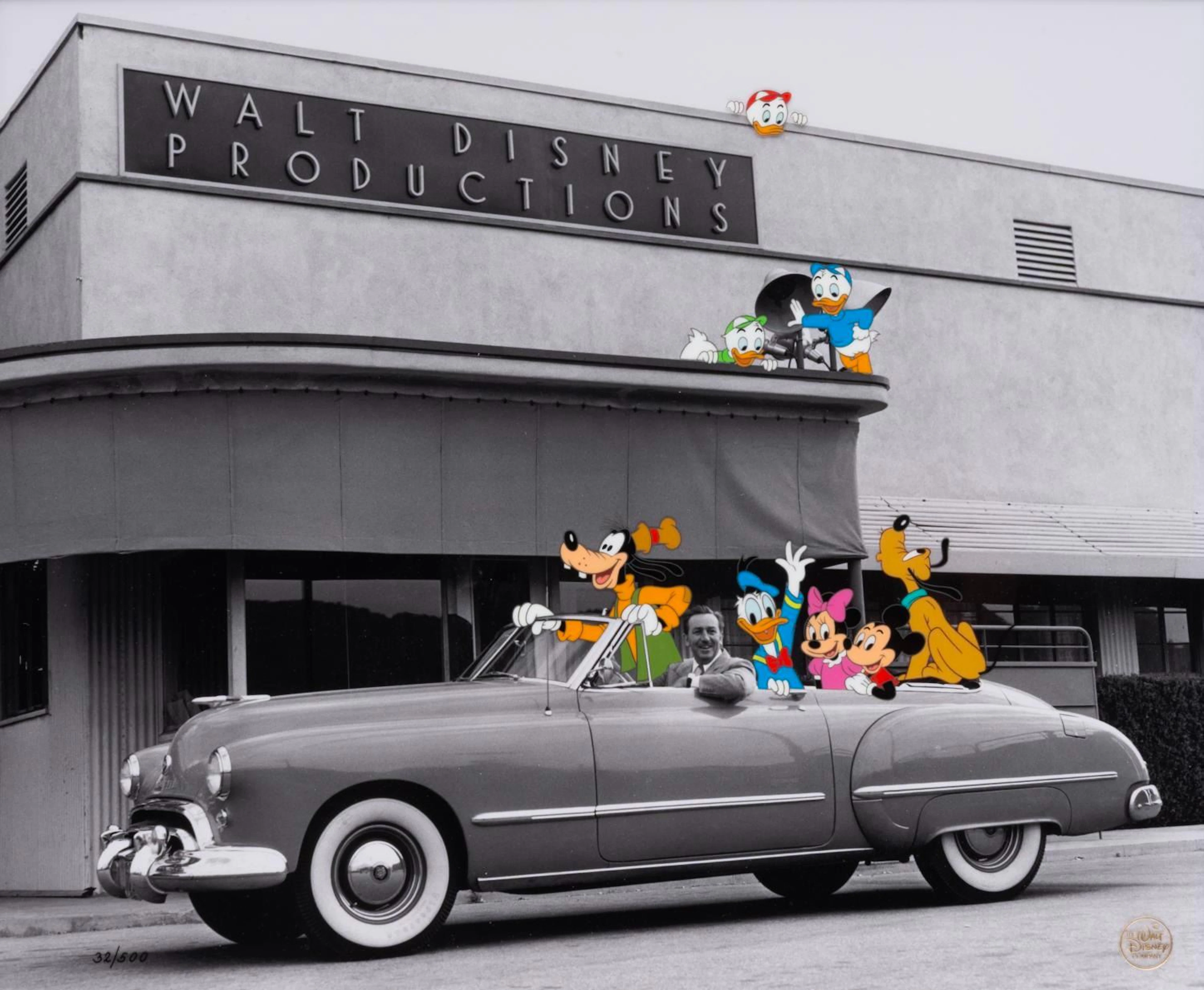
A "Walt’s Convertible" Hand-Painted Limited Edition Cel.
08/16/2026
£276.73
OCT 23 | 8:00 AM

OCT 27 | 4:00 PM
Bring your auction to collectors worldwide!
Get listed nowBy subscribing, you are agreeing to the privacy policy. Unsubscribe anytime.
Barnebys HQ
Brahegatan 10
BOX 5038
114 37 Stockholm
