



All auctions / Ethnographical / A bronze sculpture - Fon - Benin (No reserve price)

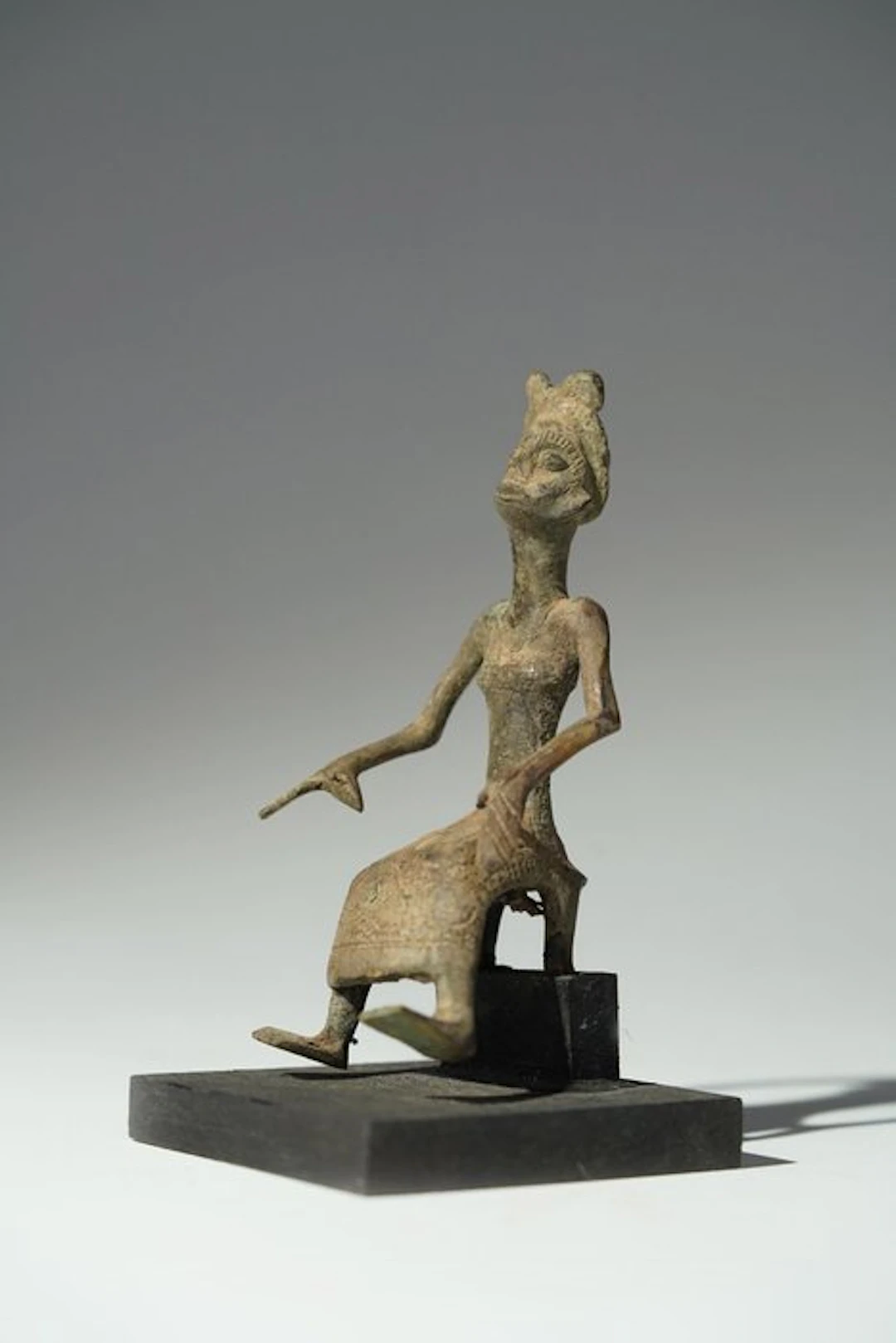
Fon Bronze Figure – Seated Anthropomorphic Figure, Asen Tradition Fon Cultural Sphere, Cotonou Region, Southern Benin Material: Copper alloy (bronze), cast; oxidized surface, incl stand. Dating: Undetermined, possibly 20th century Cultural Attribution: Fon, according to the supplied attribution Object Type: Figurative metal sculpture associated with the Asen tradition Function: Possibly a component of an ancestral commemorative altar Description This finely modeled metal sculpture represents a seated anthropomorphic figure distinguished by an elongated neck, expressive facial features, and a carefully articulated arrangement of the arms and lower body. Its slender proportions and unusual posture create a composition that combines formal elegance with an impression of ceremonial significance. The figure appears to have been cast in a copper alloy and exhibits an irregular surface characterized by greenish oxidation, brown discoloration, and areas of lighter encrustation. The head is comparatively small in relation to the elongated neck and upper body. Its facial features are strongly stylized, with prominent eyes, incised or modeled eyebrows, a projecting nose, and a broad mouth. The upper portion of the head displays two raised projections, which might represent an elaborate hairstyle, headdress, or symbolic attributes. Their precise identification remains uncertain. The face is turned slightly to one side, lending the sculpture an animated quality. The long neck rises from a narrow torso with clearly indicated shoulders and breasts. The figure may therefore represent a woman, although the identification is not entirely secure. Both arms extend outward before bending at the elbows. One hand appears to gesture forward with an extended finger, while the other rests upon or grasps an element extending across the lower body. This element resembles a broad piece of cloth, a garment, or a separately conceived symbolic form. The lower portion of the sculpture is particularly intriguing. One leg extends forward, terminating in a narrow foot, while the other appears to be bent beneath or alongside the body. A broad, curved form occupies much of the foreground, creating an impression of drapery or a supporting structure. The figure is presented on a modern black display mount, which is not part of the original sculpture. The overall composition combines slender anatomical elements with more substantial, rounded volumes. The contrast between the elongated neck, delicate arms, and broad lower structure gives the sculpture a distinctive silhouette. The uneven surface and surviving casting details contribute to its expressive character, although the extent of wear, corrosion, and possible restoration cannot be determined from the photograph. Art-Historical Context The sculpture is attributed to the Fon cultural sphere of southern Benin and is described as belonging to the Asen tradition. Asen are commemorative metal altars associated particularly with Fon ancestral practices. They were traditionally commissioned to honor deceased family members and establish a continuing relationship between the living and their ancestors. The historical development of Asen is closely connected with the former Kingdom of Dahomey and its successor communities. In the nineteenth and twentieth centuries, these memorial objects became important expressions of family history, social identity, and remembrance. Their imagery frequently combines human figures, animals, objects, and symbolic references to the life of the deceased. A typical Asen consists of a metal shaft supporting a platform upon which miniature figures and objects are arranged. These compositions may incorporate forged iron, hammered sheet metal, and cast copper-alloy elements. The iconographic arrangement is often highly individualized, reflecting the identity, occupation, achievements, or personal relationships of the person commemorated. The present sculpture differs from a complete Asen altar because it lacks the characteristic supporting shaft and platform. Its relatively small scale, seated posture, and figurative composition nevertheless suggest that it may originally have formed part of a larger commemorative assemblage. Such an interpretation remains provisional, since no original attachment or archaeological context has been documented. Symbolism and Possible Ritual Function Within the Fon Asen tradition, human figures frequently serve as visual references to deceased individuals, their relatives, or aspects of their social identities. A seated figure may indicate a person of importance, although posture alone cannot establish rank or status. The present figure's prominent breasts suggest a possible female identity. If this interpretation is correct, the sculpture might commemorate a woman or represent a female figure associated with the deceased. However, the original meaning of the gestures and accompanying forms remains uncertain. The extended arm and pointed hand are particularly expressive. Such gestures may have conveyed specific meanings within the visual language of the original composition, potentially referring to an action, personal characteristic, or remembered event. Without the complete assemblage or accompanying oral testimony, their significance cannot be securely reconstructed. The broad form extending across the lower body may represent clothing, an object held by the figure, or a structural component of the original sculpture. It should not be identified more precisely without additional views. Asen memorials were traditionally associated with offerings and ceremonies through which families maintained relationships with deceased relatives. They functioned not simply as representations of the dead but as material points of contact between generations. If the present figure belonged to such an altar, its significance would have depended upon the broader iconographic arrangement and the family history associated with it. Detached from that context, it retains its sculptural individuality while much of its original narrative meaning remains inaccessible. Regional Characteristics: Cotonou and Southern Benin The Cotonou region belongs to the historically interconnected coastal landscape of southern Benin, where Fon, Aja, Hueda, Yoruba, and other communities maintained extensive commercial, political, and artistic relationships. The production and circulation of metal objects developed within this environment through local workshops, regional exchange, and the patronage of families and religious institutions. Cotonou's position as a major coastal commercial center makes it an important location in the circulation of objects associated with the former Kingdom of Dahomey. However, an attribution to the Cotonou region does not necessarily establish that the sculpture was manufactured there. It may instead indicate the location where it was acquired or collected. A particularly important center for Asen production was Ouidah, situated west of Cotonou. Ouidah developed distinctive traditions of commemorative metalwork, especially elaborate iron altars incorporating cut-out figures and symbolic compositions. Other workshops in southern Benin employed cast copper-alloy figures, sometimes combining them with iron structures. This distinction is relevant to the present sculpture. Its rounded modeling and integrated three-dimensional form differ from the predominantly flat, cut-metal figures associated with certain Ouidah workshops. It may therefore belong to a different technical tradition within the broader Asen repertoire. The use of cast copper-alloy figures in southern Beninese commemorative sculpture also reflects the interaction between metalworking techniques and the changing visual preferences of patrons during the nineteenth and twentieth centuries. The present object's distinctive facial modeling and expressive gestures are consistent with the broader possibilities of this sculptural environment, although a precise workshop attribution remains impossible. Art-Historical Appreciation The artistic quality of this sculpture resides in the relationship between its delicate upper body and the substantial forms occupying its lower section. The unusually elongated neck establishes a strong vertical axis, while the outstretched arms introduce an expansive horizontal movement. The figure's face is particularly expressive. Its prominent eyes, carefully modeled features, and slightly elevated head create an impression of alertness and individuality. The small raised projections above the forehead contribute to its distinctive appearance and may have carried an iconographic meaning now difficult to recover. The asymmetrical arrangement of the arms and legs gives the composition a sense of movement rarely encountered in strictly frontal commemorative figures. This dynamism is reinforced by the extended hand, which appears to direct attention beyond the sculpture itself. The surface displays an attractive combination of earthy brown tones and greenish oxidation, emphasizing the contours of the casting. Such surface characteristics may result from age, environmental exposure, and subsequent handling, but they cannot independently establish the object's antiquity. As an individual work, the sculpture demonstrates the expressive possibilities of figurative metalcasting in southern Benin. Its possible connection with the Asen tradition is particularly interesting, since these commemorative assemblages frequently incorporated individualized figures whose meanings depended upon family histories and specific visual narratives. The sculpture should therefore be understood as a potentially significant example of Fon-related commemorative metalwork, while its original position within an Asen, precise date, and ritual significance remain open to further investigation. Selected Literature Blier, Suzanne Preston. “Asen: Forged Memories of Iron in Dahomey Vodun Art.” Tribal Art, 2018. A directly relevant study of Asen memorial sculpture, its historical development, iconography, and regional variations. Freyer, Bryna. Asen: Iron Altars from Ouidah, Republic of Benin. Washington, D.C.: National Museum of African Art, Smithsonian Institution, 1993. A specialized exhibition publication documenting the distinctive Asen traditions of Ouidah and their commemorative significance. Poling, Clark. Asen: Iron Altars of the Fon People of Benin. Atlanta: Emory University Museum of Art and Archaeology, 1986. A specialized study of Fon ancestral altars and their artistic and ritual contexts. These publications address the Asen tradition directly and provide a more appropriate comparative foundation than general surveys of African sculpture. None establishes the precise identification of the present detached figure. Informant: Amadou Dogo Copyright and Scientific Documentation Some of the information and photographs have been generated with the assistance of artificial intelligence and are based on published sources in ethnography, archaeology, and art history. Original texts and photographs may be protected by copyright. All rights held by the respective copyright holders are reserved. Inv. No. MAZ32437 Sold without TL test. Catawiki's experts perform a virtual review based on the information, photographs, provenance and supporting documentation provided during the submission process. Acceptance of a traditional or ancient African art object for auction does not constitute independent authentication or certification by Catawiki, nor does it mean that Catawiki's expert has physically or scientifically authenticated, patina-analyzed, or dated the object. Under our Terms and Traditional African Art Submission Guidelines, the seller remains responsible for the accuracy, legality, provenance and authenticity of the object and the information provided.
Estimate:£175.89
To the auctionView all items fromCatawikiorEthnographical
Estimate:
£175.89

OCT 27 | 4:00 PM
Bring your auction to collectors worldwide!
Get listed nowBy subscribing, you are agreeing to the privacy policy. Unsubscribe anytime.
Barnebys HQ
Brahegatan 10
BOX 5038
114 37 Stockholm
