



OCT 8 | 3:00 PM

Bring your auction to collectors worldwide!
Get listed nowBy subscribing, you are agreeing to the privacy policy. Unsubscribe anytime.
Barnebys HQ
Brahegatan 10
BOX 5038
114 37 Stockholm
All auctions / Books, Maps & Manuscripts / ‡ A MATCHED PAIR OF 19 INCH FLOOR-STANDING LIBRARY GLOBES
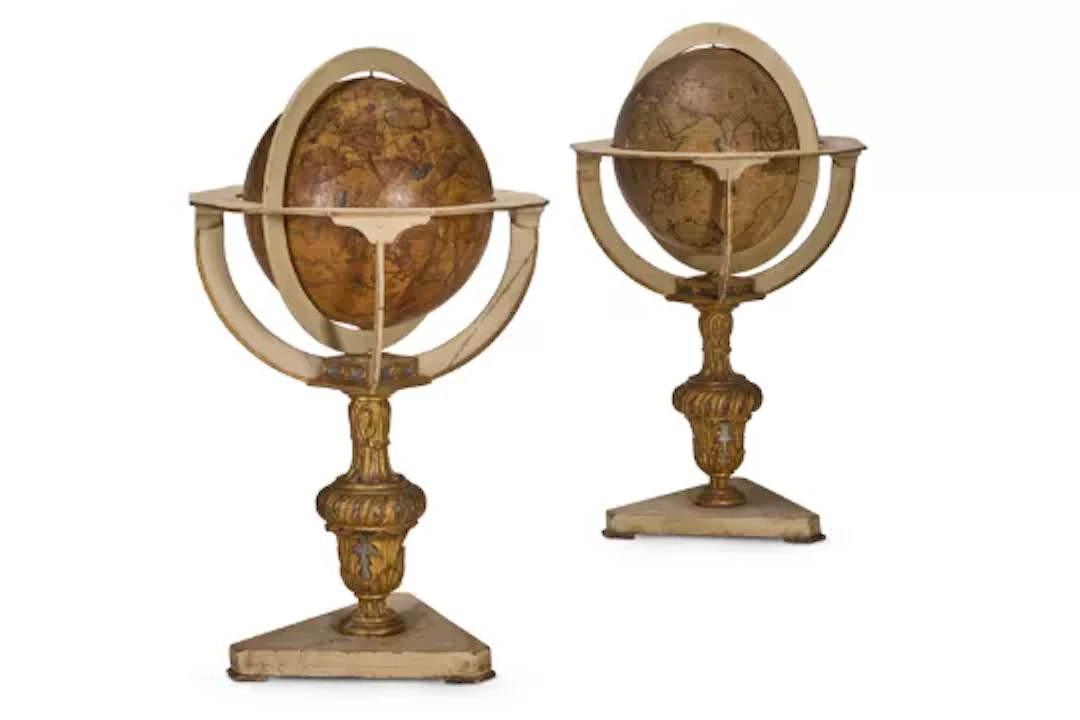
‡ A MATCHED PAIR OF 19 INCH FLOOR-STANDING LIBRARY GLOBES ITALIAN, THE GORES AFTER MATTHAEUS GREUTER, ROME, PUBLISHED 1632 AND 1636 Each approx. approximately 122cm high overall Each made up from two pairs of twelve engraved printed gores with polar calottes, the terrestrial with a dedication cartouche to Jacopo Boncompagni to the Southern Atlantic, descriptive cartouches in the Indian Ocean and Pacific, prime Meridian through the Cape Verde Islands and oceans decorated with sea monsters, sailing ships and compass roses, the Southern hemisphere with extensively annotated cartouche In istu quam exhibemus terreni globi descriptione omnium regionum iuxta et insularum… Mathaeus Greuter Auctor Annon MDCXXXII; the celestial with gores laid to the ecliptic poles and elaborately decorated with hand-coloured figural representations of the constellations and with celestial bodies annotated as described in an explanatory cartouche adjacent to VRSA MAIOR, over further extensively annotated cartouche In hoc Caelesti Globo notantur omnes stellae fixae, ad annum 1636… ROMAE, M. Greuter…, each now pivoted via the poles within a later cream painted wood meridian ring, set in later carved parcel gilt cream painted wood stands incorporating plain octagonal horizon rings over elaborate baluster uprights and triform platform bases, (the spheres with historic damage and repairs) Matthaeus Greuter was born in Strasbourg in 1564. He learned engraving there before continuing his craft in Lille and Avignon, and finally settling in Rome in around 1606. Shortly after his arrival he began producing globes and maps mostly for the Vatican. For his globes he took the terrestrial information from Blaeu, and for the celestial he copied the work of Van den Keere and Plancius and incorporated the work of the Danish astronomer Tycho Brahe (1546 - 1601) published in 1622. Greuter also depicted two new constellations, the ‘Camelopardalis’ (the giraffe) in the northern sky and ‘Unicornis’ (the unicorn) near the equator. These originate from celestial maps published in 1624 by the Silesian astronomer Jacob Bartsch (1600 - 1632), who quoted the new constellations of the Dutchman Petrus Plancius (1552 - 1622). In addition to his 19 inch globes Greuter published a smaller 10.5 inch pair in 1638. His globes proved popular and sold widely throughout Italy, they were republished by Rossi after 1638 and in around 1695 in Rome. Condition Report: Terrestrial: The gores are not coloured with no traces of historic glaze and have noticeable opening at the joins between some of the segments to the Northern hemisphere. There is also some misalignment in their positioning - hence we are of the opinion that this globe may have been composed from a set of gores laid onto a globe at a later date, or perhaps the gores taken-off and re-laid. The upper part of the sphere has significant denting/filling and other faults mostly around the cartouche text and there is noticeable brown staining to the upper section. There are also some scuffs/snags to the gores mostly to the equatorial areas. The lower hemisphere is generally in better condition with notable faults mostly limited opening of joins between the gores, slight scuffs and other minor blemishes. The meridian ring is made from laminated timber painted cream, but the sphere is sitting low on its pivots hence will not turn. The pivot retaining bars and screws to the meridian rings appear relatively modern (early 20th century perhaps?). Celestial: The sphere has colouring however this may be later/strengthened, as well as evidence of a light glaze/varnish (more noticeable to Southern hemisphere). The joins between the gores are much tighter than the terrestrial. There is noticeable distortion/denting to the upper hemisphere near Vrsa Minor and the southern polar area also has distortion/denting around the pivot suggesting repairs/consolidation at this point. Both these areas of damage/repair retain much of the original paper surface but with infilling and re-touching (with some slight flaking/losses to the filling). Other faults to the sphere and mostly limited to bumps, scuffs and other age-related faults. The sphere will rotate within its meridian ring which is constructed and finished in the same manner as for the terrestrial. The stands: As catalogued the stands are of later date. The baluster uprights appear to have age hence are most likely 18th century; the square blocks supporting the quadrant arms are probably later purpose-made (perhaps late 19th/early 20th century). The triangular plinths most likely date to the time the stands were ‘composed’. The stands are generally in sound condition but with overall chips/losses to the gilt/gesso finishes. The terrestrial horizon ring has repaired cracks/breaks (surface has been coloured to match in the repair). Both stands have some noticeable shrinkage cracks to the planar elements. Condition Report Disclaimer, ‡, ‡ A MATCHED PAIR OF 19 INCH FLOOR-STANDING LIBRARY GLOBES ITALIAN, THE GORES AFTER MATTHAEUS GREUTER, ROME, PUBLISHED 1632 AND 1636 Each approx. approximately 122cm high overall Each made up from two pairs of twelve engraved printed gores with polar calottes, the terrestrial with a dedication cartouche to Jacopo Boncompagni to the Southern Atlantic, descriptive cartouches in the Indian Ocean and Pacific, prime Meridian through the Cape Verde Islands and oceans decorated with sea monsters, sailing ships and compass roses, the Southern hemisphere with extensively annotated cartouche In istu quam exhibemus terreni globi descriptione omnium regionum iuxta et insularum… Mathaeus Greuter Auctor Annon MDCXXXII; the celestial with gores laid to the ecliptic poles and elaborately decorated with hand-coloured figural representations of the constellations and with celestial bodies annotated as described in an explanatory cartouche adjacent to VRSA MAIOR, over further extensively annotated cartouche In hoc Caelesti Globo notantur omnes stellae fixae, ad annum 1636… ROMAE, M. Greuter…, each now pivoted via the poles within a later cream painted wood meridian ring, set in later carved parcel gilt cream painted wood stands incorporating plain octagonal horizon rings over elaborate baluster uprights and triform platform bases, (the spheres with historic damage and repairs) Matthaeus Greuter was born in Strasbourg in 1564. He learned engraving there before continuing his craft in Lille and Avignon, and finally settling in Rome in around 1606. Shortly after his arrival he began producing globes and maps mostly for the Vatican. For his globes he took the terrestrial information from Blaeu, and for the celestial he copied the work of Van den Keere and Plancius and incorporated the work of the Danish astronomer Tycho Brahe (1546 - 1601) published in 1622. Greuter also depicted two new constellations, the ‘Camelopardalis’ (the giraffe) in the northern sky and ‘Unicornis’ (the unicorn) near the equator. These originate from celestial maps published in 1624 by the Silesian astronomer Jacob Bartsch (1600 - 1632), who quoted the new constellations of the Dutchman Petrus Plancius (1552 - 1622). In addition to his 19 inch globes Greuter published a smaller 10.5 inch pair in 1638. His globes proved popular and sold widely throughout Italy, they were republished by Rossi after 1638 and in around 1695 in Rome. A MATCHED PAIR OF 19 INCH FLOOR-STANDING LIBRARY GLOBES, In istu quam exhibemus terreni globi descriptione omnium regionum iuxta et insularum… Mathaeus Greuter Auctor Annon MDCXXXII, VRSA MAIOR, In hoc Caelesti Globo notantur omnes stellae fixae, ad annum 1636… ROMAE, M. Greuter…, Condition Report:, Terrestrial: The gores are not coloured with no traces of historic glaze and have noticeable opening at the joins between some of the segments to the Northern hemisphere. There is also some misalignment in their positioning - hence we are of the opinion that this globe may have been composed from a set of gores laid onto a globe at a later date, or perhaps the gores taken-off and re-laid. The upper part of the sphere has significant denting/filling and other faults mostly around the cartouche text and there is noticeable brown staining to the upper section. There are also some scuffs/snags to the gores mostly to the equatorial areas. The lower hemisphere is generally in better condition with notable faults mostly limited opening of joins between the gores, slight scuffs and other minor blemishes. The meridian ring is made from laminated timber painted cream, but the sphere is sitting low on its pivots hence will not turn. The pivot retaining bars and screws to the meridian rings appear relatively modern (early 20th century perhaps?). Celestial: The sphere has colouring however this may be later/strengthened, as well as evidence of a light glaze/varnish (more noticeable to Southern hemisphere). The joins between the gores are much tighter than the terrestrial. There is noticeable distortion/denting to the upper hemisphere near Vrsa Minor and the southern polar area also has distortion/denting around the pivot suggesting repairs/consolidation at this point. Both these areas of damage/repair retain much of the original paper surface but with infilling and re-touching (with some slight flaking/losses to the filling). Other faults to the sphere and mostly limited to bumps, scuffs and other age-related faults. The sphere will rotate within its meridian ring which is constructed and finished in the same manner as for the terrestrial. The stands: As catalogued the stands are of later date. The baluster uprights appear to have age hence are most likely 18th century; the square blocks supporting the quadrant arms are probably later purpose-made (perhaps late 19th/early 20th century). The triangular plinths most likely date to the time the stands were ‘composed’. The stands are generally in sound condition but with overall chips/losses to the gilt/gesso finishes. The terrestrial horizon ring has repaired cracks/breaks (surface has been coloured to match in the repair). Both stands have some noticeable shrinkage cracks to the planar elements. Condition Report Disclaimer
Estimate:£20,000
To the auctionView all items fromDreweattsorBooks, Maps & Manuscripts
Estimate:
£20,000

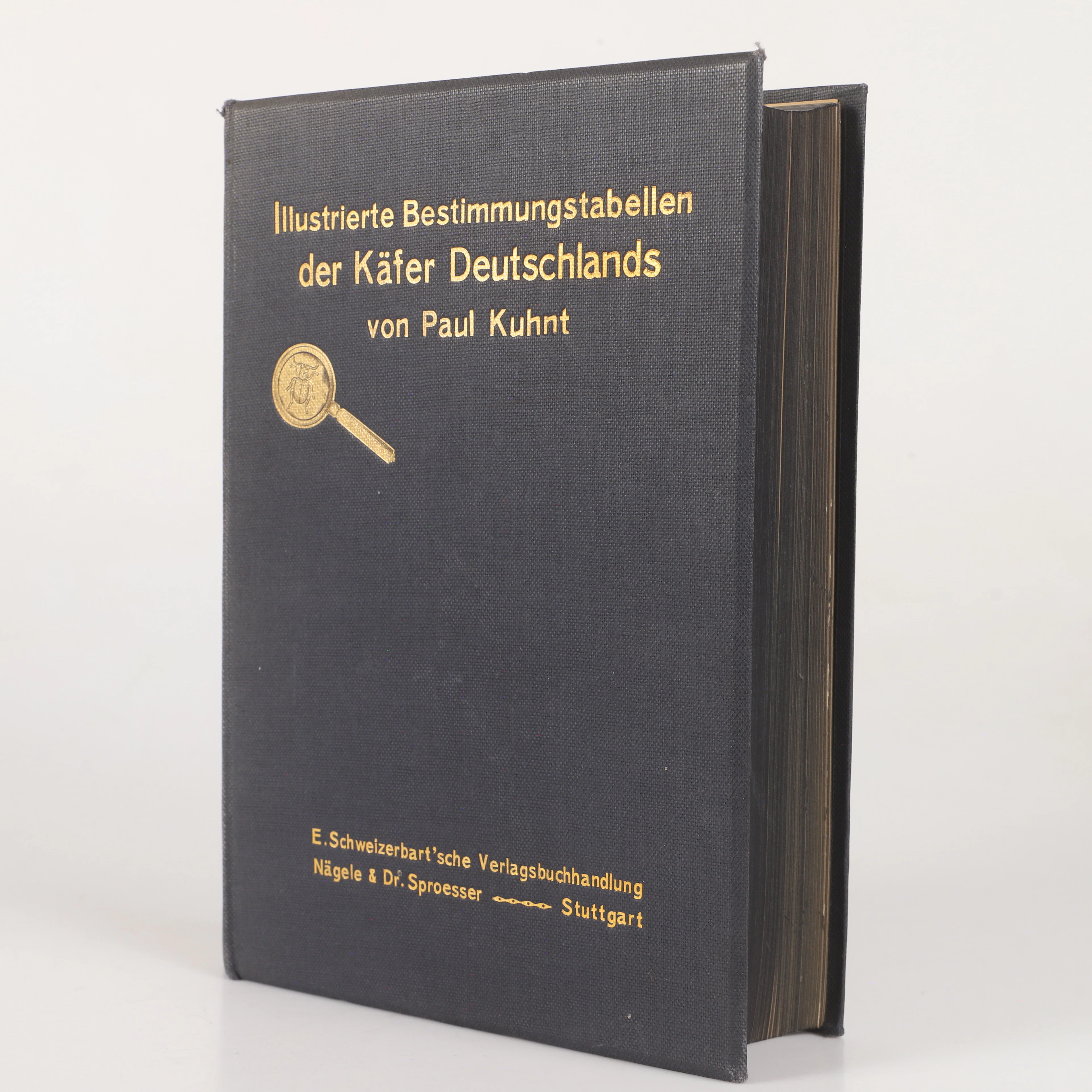
BOK, "Illustrierte bestimmungstabellen der käfer Deutschland"Paul
10/06/2026

£22.7
Est: £30.25
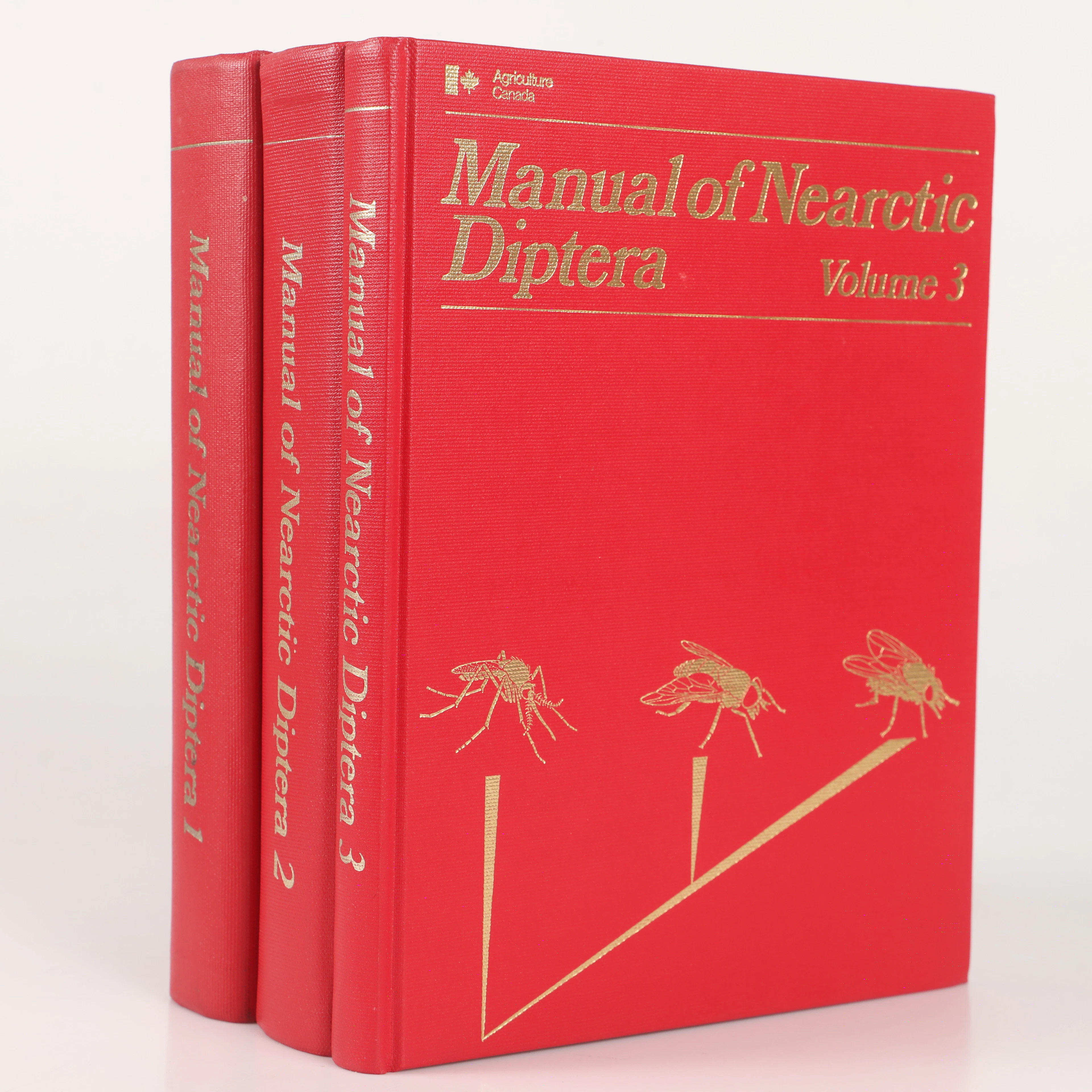
UPPSLAGSVERK, 3 band, "Manual of Nearctic Diptera", Agriculture Canada
10/06/2026
£41.62
Est: £60.5
OCT 8 | 3:00 PM


OCT 8 | 3:00 PM


Bring your auction to collectors worldwide!
Get listed now