



OCT 17 | 10:00 PM

All auctions / Ethnographical / A stone sculpture - Dogon - Mali (No reserve price)

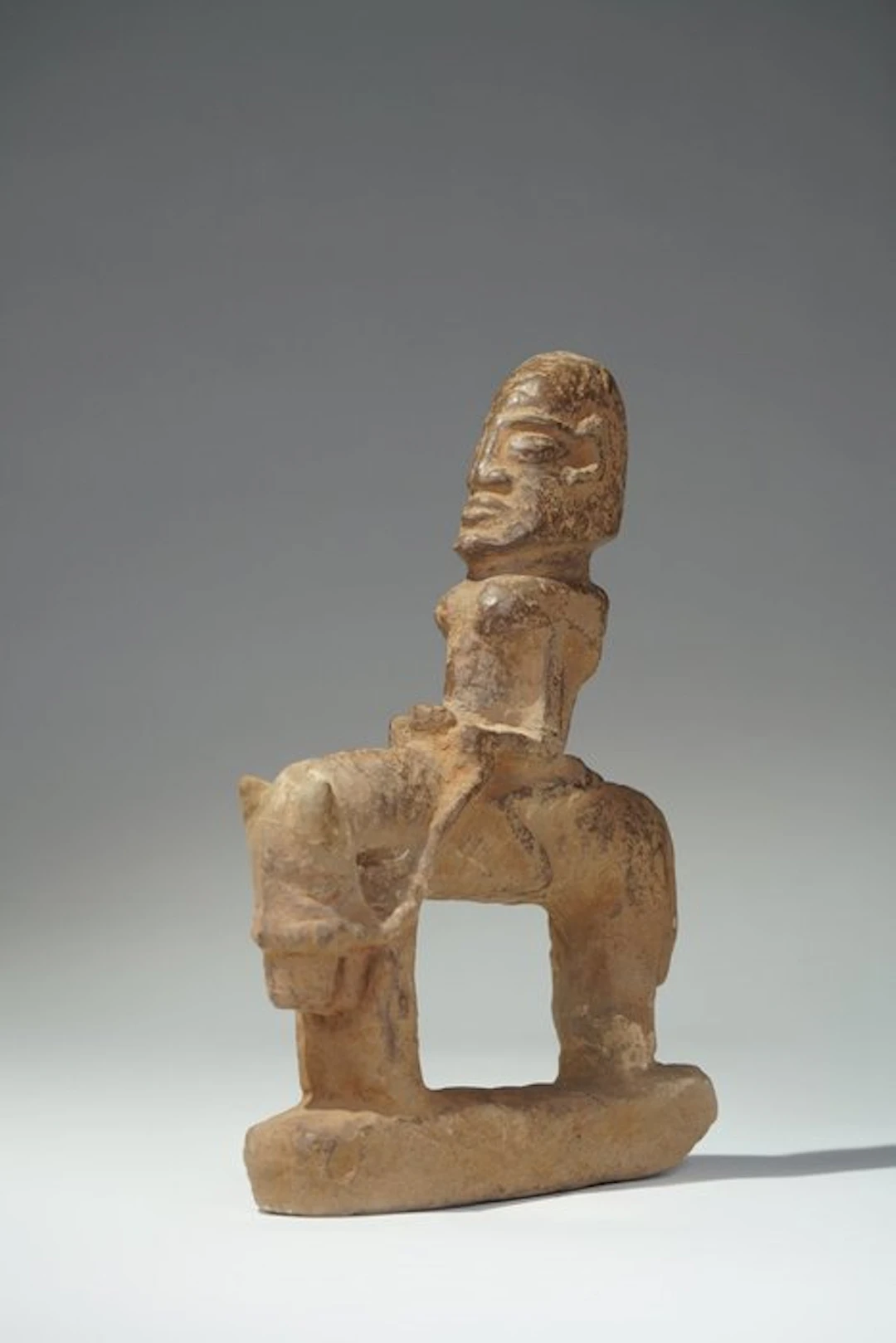
Dogon Stone Equestrian Figure, Bandiagara Region, Mali Dogon, Bandiagara region, Mali Stone This unusual stone sculpture represents a mounted male figure and translates one of the most significant themes of Dogon and wider Western Sudanic imagery—the horse and rider—into a compact, strongly architectural composition. The sculpture is organized around the vertical body of the rider and the rectangular opening formed beneath the horse, while an elongated base visually unites animal and human figure. The rider dominates the composition. His disproportionately large head rises from a long cylindrical neck and is modeled with strongly projecting facial features. Heavy arched brows frame narrow eyes, while the broad nose, projecting lips and pronounced chin create a powerful profile. The treatment is highly sculptural rather than naturalistic: the face consists of a succession of projecting horizontal volumes that contrast with the elongated verticality of the neck and torso. The rider sits erect upon the animal, his body reduced to a narrow column. His arms descend toward the horse's neck and appear closely integrated into the central mass of the composition. This rigid, frontal bearing gives him an appearance of authority rather than movement. The sculptor has consequently emphasized the status of the rider rather than attempting to represent an active equestrian scene. The horse is treated with comparable economy. Its long neck descends almost vertically toward the base, while the body forms a horizontal bridge between the forequarters and hindquarters. The resulting rectangular negative space beneath the animal is one of the most important formal features of the sculpture. Horse, rider and base become a single architectural structure composed of alternating solids and voids. The stone has a warm ochre to light brown coloration with darker areas concentrated in recesses and across the upper surfaces. Its softly rounded edges and irregular surface lend the sculpture an archaeological character. These visual characteristics alone, however, cannot provide a secure indication of age. Regional characteristics The attribution to the Bandiagara region is particularly significant. The Bandiagara Escarpment and its surrounding plateau constitute the historical heartland of many Dogon communities and have produced an exceptionally varied sculptural tradition encompassing standing and kneeling figures, ancestral images, architectural elements, ritual vessels and equestrian representations. Horse-and-rider imagery occupies a distinctive position within Dogon art. Horses were historically prestigious animals throughout the Western Sudan and were closely associated with wealth, political authority and military power. The Metropolitan Museum of Art notes that the equestrian archetype occurs widely across the region and was associated with persons possessing exceptional political, military, economic or spiritual authority. Within Dogon traditions, equestrian figures have frequently been interpreted as representations of the hogon, the religious and political authority of a community. A historical account from 1907 documented an equestrian wooden sculpture belonging to a hogon, while other field evidence records an equestrian sculpture used on an ancestral altar. The horse also acquired cosmological associations. In interpretations of Dogon mythology recorded during the twentieth century, equestrian imagery was connected with Nommo and with accounts concerning the primordial ancestors. A Dogon initiation vessel in the Metropolitan Museum, for example, bears an equestrian figure identified in that specific ritual context with the hogon and relates the horse to the mythical descent of the primordial ancestors. Such interpretations should nevertheless be applied cautiously to an individual sculpture. The Metropolitan Museum's catalogue of the Lester Wunderman collection explicitly observes that comparable freestanding Dogon horsemen generally lack adequate field documentation and that there is no compelling evidence for identifying every example with one particular historical or mythical personality. The horse-and-rider motif was widespread throughout the Western Sudan and also occurs in the artistic traditions of neighboring populations. The material of the present sculpture makes it particularly intriguing. Most widely published Dogon equestrian sculptures are in wood or metal, and equestrian imagery also appears on ritual vessels and other objects. A stone example therefore deserves special attention. Without archaeological documentation, however, neither its precise ritual function nor its chronology should be inferred solely from material and surface appearance. Formally, the work shares the characteristic Dogon preference for reducing bodies to strongly articulated geometric masses. The oversized head of the rider, abbreviated torso and highly simplified horse subordinate anatomical realism to clarity and monumentality. Despite its compact proportions, the sculpture communicates an emphatic hierarchy: the horse provides the structural foundation while the upright rider becomes the visual and symbolic summit. The image may consequently be understood within the broader Western Sudanic language of equestrian authority. Whether the rider specifically represents a hogon, an ancestor, a legendary leader or another powerful personage cannot be determined without its original field context. What can be stated more securely is that the horse-and-rider theme carried strong associations with prestige and exceptional status in Dogon and neighboring artistic traditions. Selected Literature Laude, Jean. African Art of the Dogon: The Myths of the Cliff Dwellers. New York, 1973. Griaule, Marcel. Masques dogons. Paris, Institut d’Ethnologie, 1938. Ezra, Kate. Art of the Dogon: Selections from the Lester Wunderman Collection. New York: The Metropolitan Museum of Art, 1988. Particularly relevant for Dogon equestrian sculpture and for the cautious interpretation of the horse-and-rider motif. De Grunne, Bernard. Ancient Sculpture of the Inland Niger Delta and Its Influence on Dogon Art. In comparative studies of Dogon and Middle Niger sculptural traditions. Leloup, Hélène. Dogon. Paris: Somogy, 2011. Important comparative reference for the regional stylistic diversity of Dogon sculpture. Some of the information and photos are generated by artificial intelligence and is based on published sources from the fields of ethnography, archaeology, and art history documents. All information and photos are protected by copyright. Inv. No. MAZ30191 Informant: Yoro.
Estimate:£381.25
To the auctionView all items fromCatawikiorEthnographical
Estimate:
£381.25
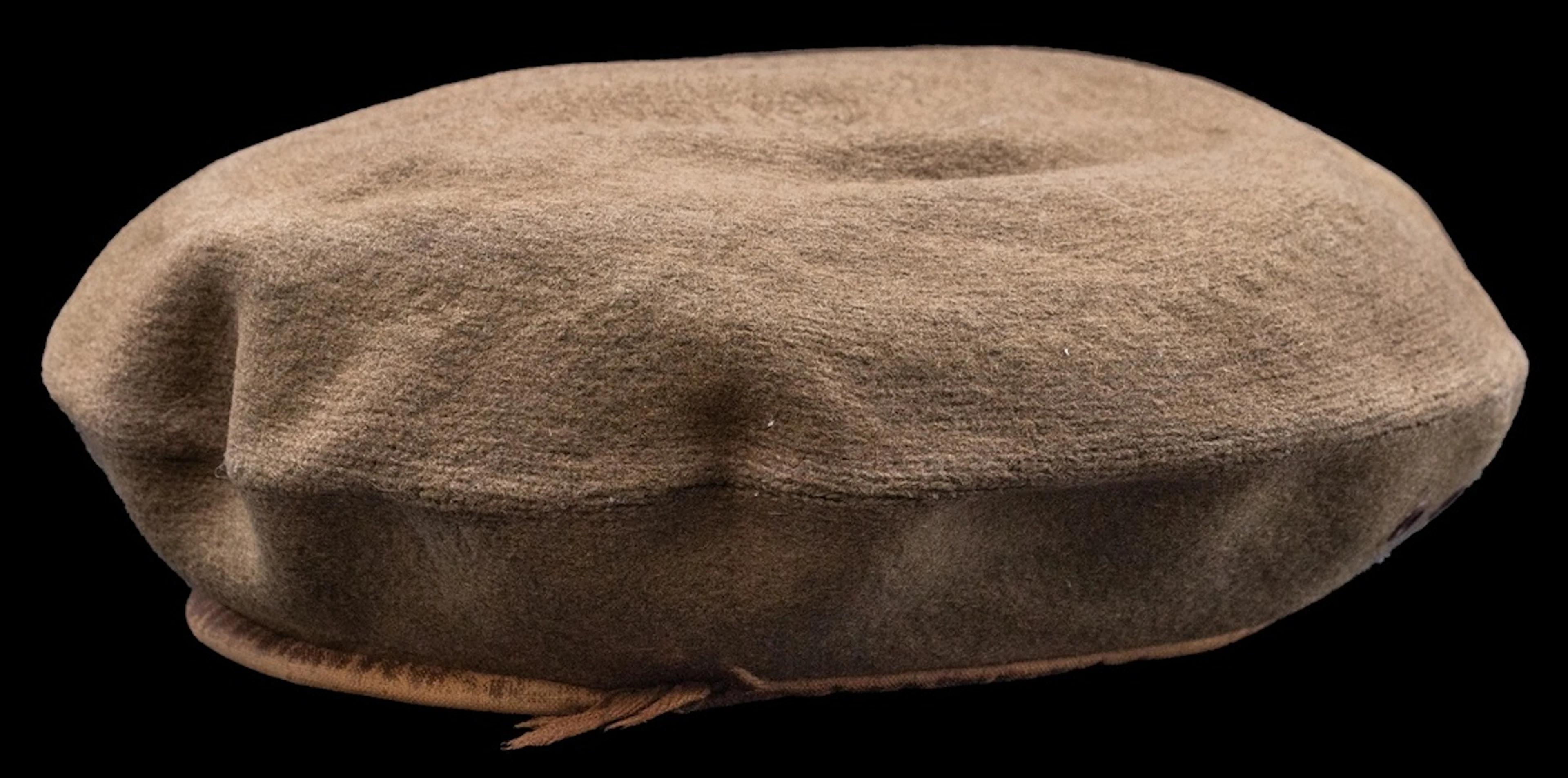
A rare opportunity to acquire an item of Cuban historical importance:
09/22/2026
£850
Est: £500
OCT 17 | 10:00 PM


Bring your auction to collectors worldwide!
Get listed nowBy subscribing, you are agreeing to the privacy policy. Unsubscribe anytime.
Barnebys HQ
Brahegatan 10
BOX 5038
114 37 Stockholm
