



All auctions / Arts & Graphics / Albrecht Dürer (1471–1528), Según - Saint Jerome in His Study

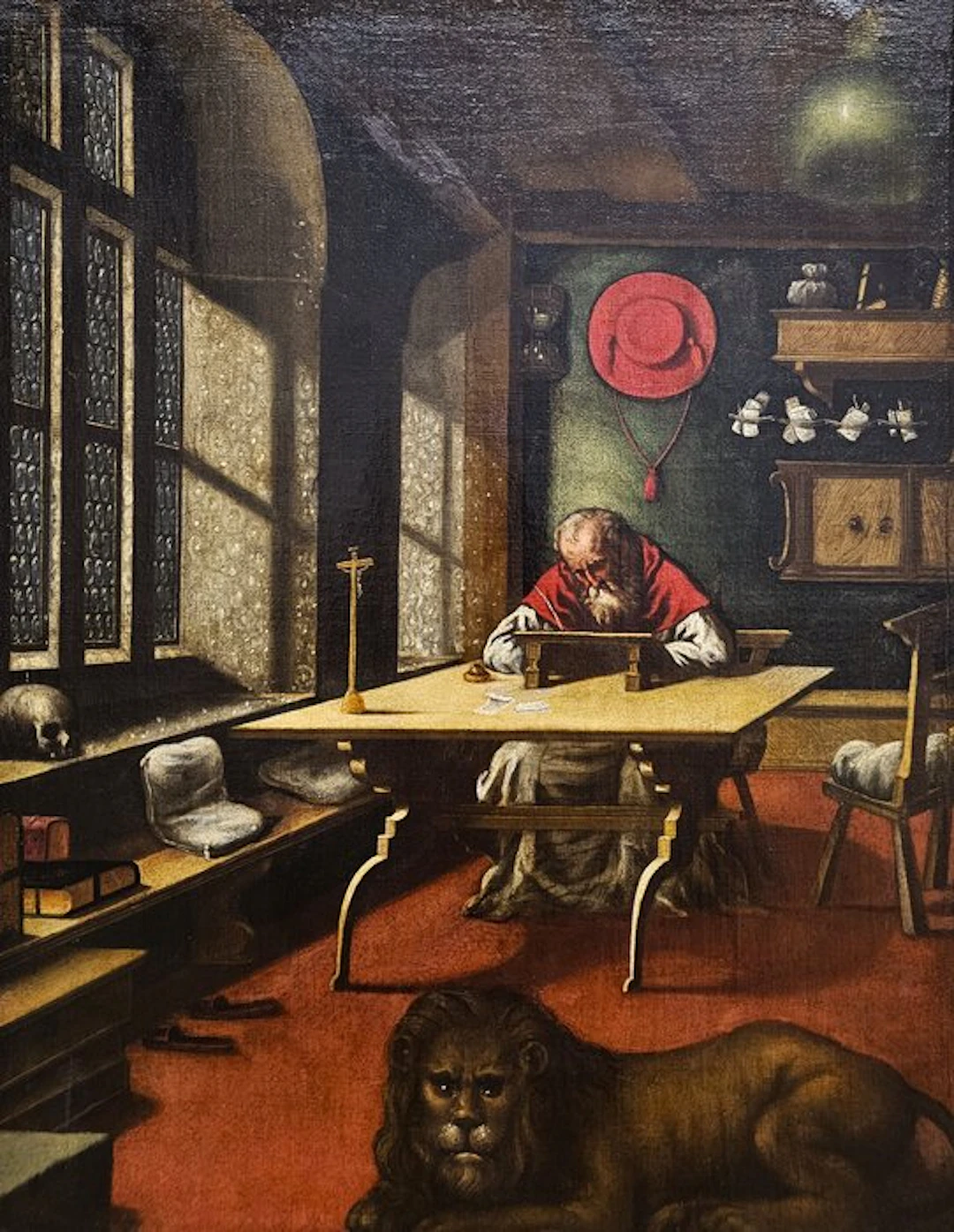
European School, late 18th century According to Albrecht Dürer (1471–1528) Saint Jerome in his Study Author: European School, probably Spanish/Catalan scope Model: after Albrecht Dürer Title: Saint Jerome in his Study Technique: oil on canvas Chronology: late 18th century Canvas measurements: 82 × 65 cm Overall dimensions with frame: 100 × 82 cm Approximate weight of the ensemble: 15 kg Signature: not visible Reverse: old inventory number “Nº 199” and initials “C.O.” Provenance: private Catalan collection Description Important and interesting oil on canvas from the late 18th century, coming from a private Catalan collection, depicting Saint Jerome in his study following one of Albrecht Dürer’s most celebrated compositions: the extraordinary print Saint Jerome in His Study, made in 1514. Iconographic identification is especially rich. Saint Jerome is depicted as a learned man and Doctor of the Church, focused on reading and writing at his worktable. Around him an interior is carefully articulated through numerous symbolic elements: books and papers, the crucifix, the skull, the large red cardinal’s hat, and in the foreground the inseparable lion, one of the saint’s traditional attributes. The painting translates into color the complex intellectual and spiritual universe imagined by Dürer, transforming the linea r precision of the Renaissance engraving into an image of warm, silent, and deeply contemplative atmosphere. A composition born from Durero The ultimate reference of the work is the famous 1514 engraving, one of the central images of Northern Renaissance. The general structure of the composition remains clearly recognizable: the large side window, the skull on the bench, the books and cushions, the central desk, the crucifix, the saint bent over his work, the red hat suspended in the background, domestic furniture, and the monumental presence of the lion in the foreground. The painter, however, does not simply translate the model mechanically. The incorporation of color profoundly modifies its reading. The intense reds of the floor, the vestments, and the cardinal’s hat contrast with the dark greens of the room, the earthy tones of the furniture, and the deep blacks of the shadowed areas. The result is a version of strong personality, in which the rigorous durerian construction acquires a more intimate and pictorial dimension. Light, silence, and knowledge One of the most suggestive aspects of the work is its treatment of light. The illumination enters laterally through the windows and builds the interior through large zones of light and shade. The architecture is defined progressively by contrast, while Saint Jerome remains focused on his work, isolated from the outside world. The scene thus possesses a notable sense of silence. The presence of the skull introduces the traditional memento mori: even knowledge and intellectual activity are subject to the passage of time and mortality. In front of it, the crucifix introduces the spiritual and salvific dimension. The work can be read, therefore, not only as a representation of a saint but as a reflection on knowledge, time, death, and faith. Saint Jerome and his attributes The iconography of Saint Jerome is especially recognizable by several elements present in the composition. The red hat refers to his traditional status as cardinal; the books, papers, and writing tools evoke his extraordinary intellectual activity and his translation of the Sacred Scriptures; the skull symbolizes the transience of life; and the lion, placed very prominently in the foreground, refers to the well-known legendary episode in which the saint cures a wound on the animal’s paw, which has remained by his side since then. The choice of the saint as a learned man, rather than depicting him penitentially in the desert, directly connects with the humanist Renaissance tradition and with the image that Dürer made into one of the great archetypes in the history of European engraving. Historical context The enormous diffusion of Dürer’s prints allowed his compositions to be used for centuries as sources by painters of different European schools. In Spain and in the Mediterranean sphere, the use of old engravings as compositional models is also extensively documented during the 17th and 18th centuries. This work should be understood within this tradition: a late pictorial reinterpretation of a Renaissance model of enormous prestige, adapted to the sensibility and language of late 18th-century European painting. Its Catalan provenance and certain characteristics of the work make a Spanish or Catalan context reasonable to consider, although current documentation is not sufficient to assign it to a specific workshop. Reverse and provenance The reverse preserves two particularly interesting elements for future research. On the upper crossbar there is an old number: “Nº 199” and on the canvas itself the initials can be observed: “C.O.” The collection or inventory to which these marks belong has not been identified at present. However, its conservation offers an interesting avenue of research on the historical provenance of the work, especially considering its origin in a Catalan collection. Condition report The work presents a general condition coherent with its age. The surface shows craquelure, small irregularities, wear and natural aging of varnishes and the pictorial layer, without these elements detracting from the overall reading of the composition. Some superficial darkening zones typical of a painting of this chronology are observed. A professional conservation intervention could potentially recover nuances currently partially veiled by aging. It is recommended to carefully review all detail photographs, which form an integral part of the description. Measurements of the canvas: 82 × 65 cm Measurements with frame: 100 × 82 cm Approximate weight: 15 kg The painting is presented in an important gilded frame, of great decorative presence. The frame is included as a gift, so, due to its age and weight, it will not be subject to reclamation. Barcelona Art Gallery ships via a professional specialized company, using tailor-made boxes and foam protections. Worldwide shipping is available. Due to the considerable volume and weight of the set, any potential logistical surcharge related to the large format or certain continental or non-EU destinations will be borne by the buyer."
Estimate:£1,256.38
To the auctionView all items fromCatawikiorArts & Graphics
Estimate:
£1,256.38
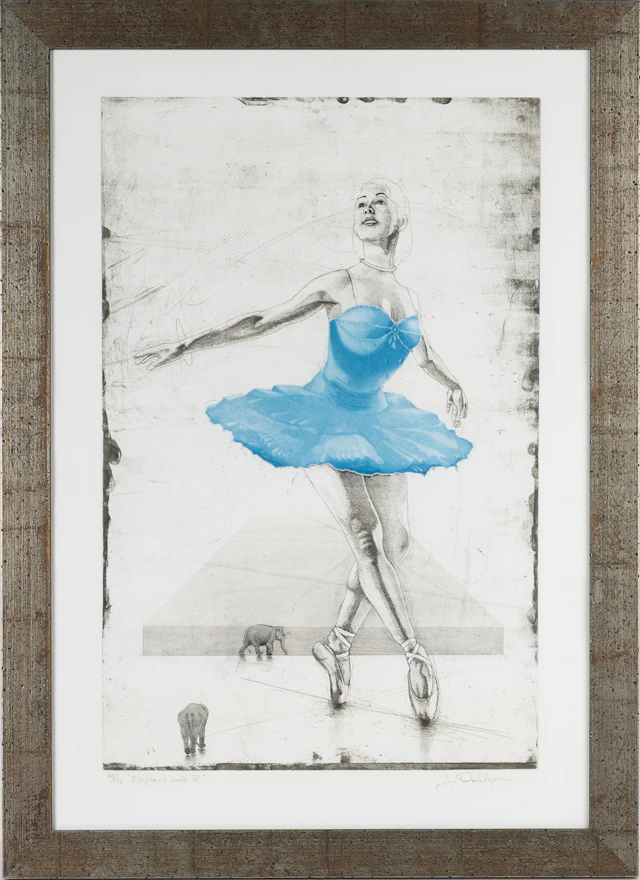
JAN DAHLGREN (FÖDD 1954). "Elephant walk III", etsning.
10/23/2026
£22.58
Est: £75.3
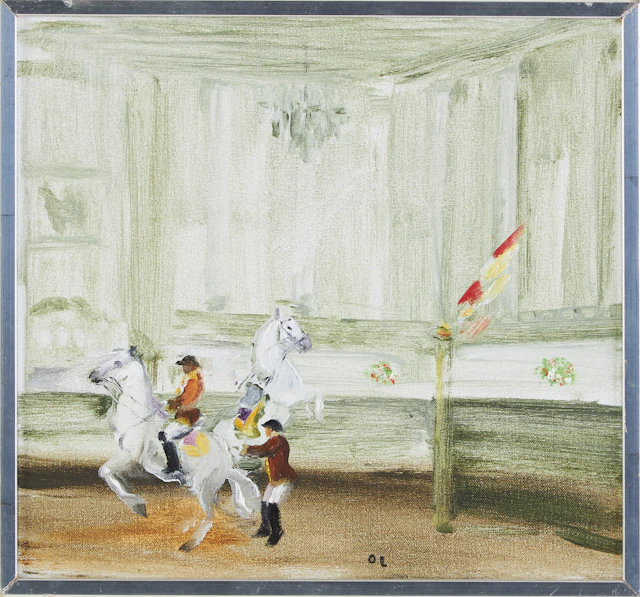
OLLE LINDGREN (FÖDD 1930). "Detroit" och interiör med hästar, (2 )
10/23/2026
£75.28
Est: £150.6

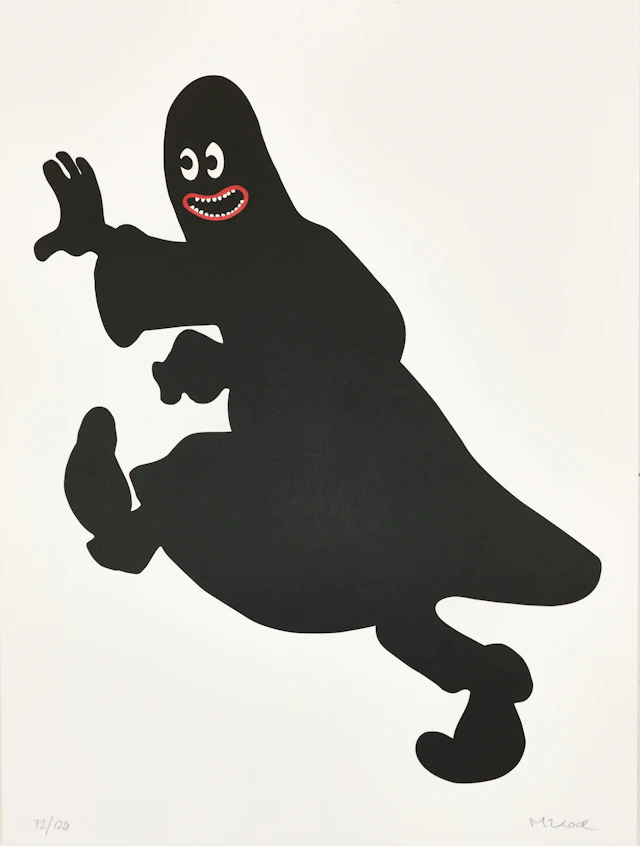
MAKODE LINDE (Sverige, född 1981). "Phantom Blot", signerad och numrerad
10/23/2026
£109.98
Est: £188.25


OCT 27 | 4:00 PM
Bring your auction to collectors worldwide!
Get listed nowBy subscribing, you are agreeing to the privacy policy. Unsubscribe anytime.
Barnebys HQ
Brahegatan 10
BOX 5038
114 37 Stockholm
