



All auctions / Ancient Art / Ancient Egyptian - Faience - Shabti

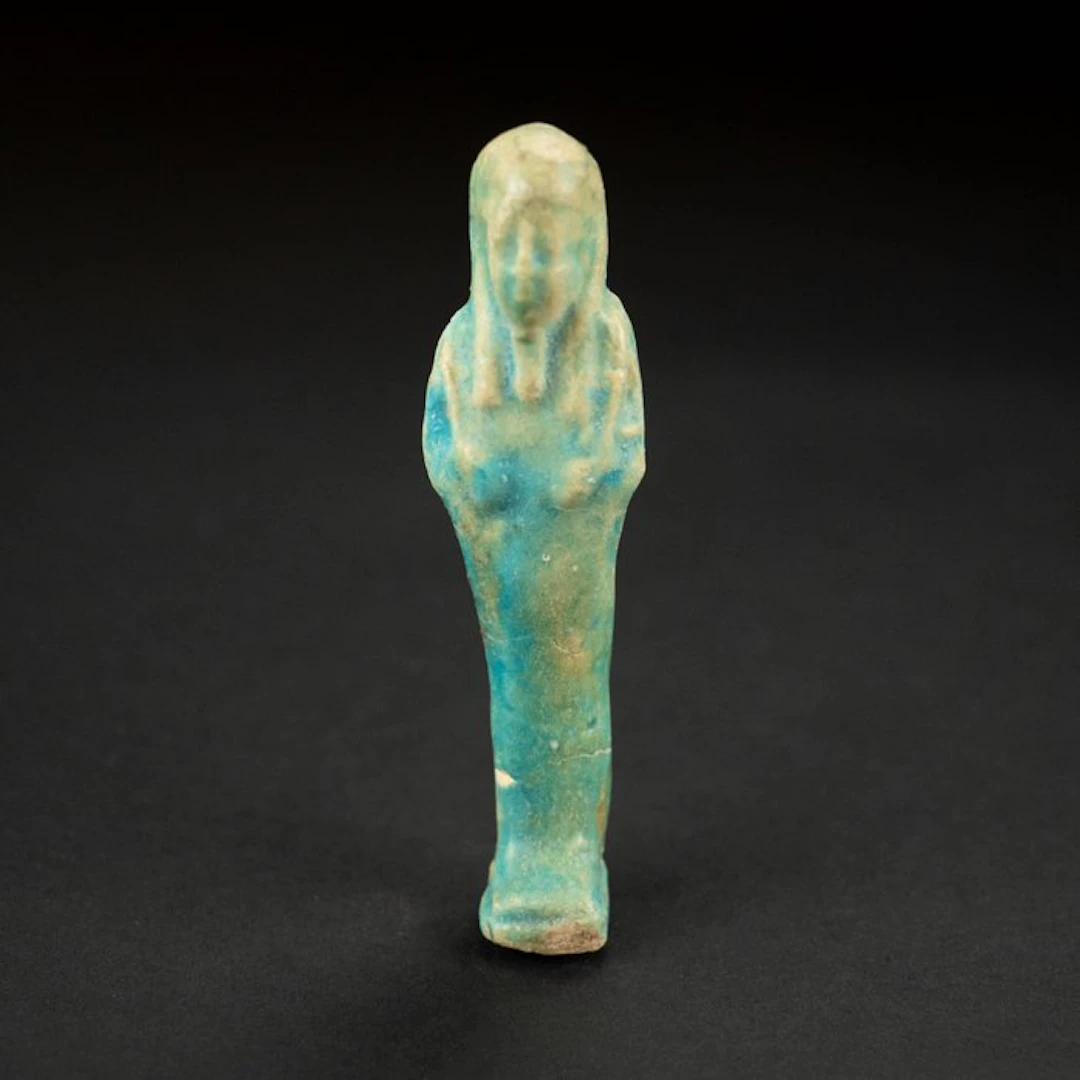
Faience Shabti of the Late Period This ancient Egyptian faience Shabti comes from Egypt's Third Intermediate Period and was created as a funerary object for the afterlife. The figure portrays the deceased in a mummified form and served, according to ancient Egyptian belief, as a magical substitute who would undertake the tasks required for the deceased in the afterlife. The figure bears no surviving inscription and therefore cannot be attributed to a specific owner. Uninscribed faience Shabtis from this period are nonetheless common and were included as symbolic servants in graves. During the Late Period, Egyptian art saw a strong return to earlier traditions, with artists consciously drawing on the styles and forms of past eras. Shabtis continued to be produced in large numbers and remained one of the most important funerary objects in private burials. The figure was made from Egyptian faience, a material valued for its brilliant surface and symbolic meaning, especially for religious objects. The blue-green glaze was associated with concepts of renewal, fertility, and eternal life, reflecting the ancient Egyptian belief in rebirth in the afterlife. A fine example of Late Period funerary art and the enduring significance of Shabtis within the religious burial practices of ancient Egypt.
Estimate:£274.66
To the auctionView all items fromCatawikiorAncient Art
Estimate:
£274.66


OCT 23 | 8:00 AM


OCT 27 | 4:00 PM
Bring your auction to collectors worldwide!
Get listed nowBy subscribing, you are agreeing to the privacy policy. Unsubscribe anytime.
Barnebys HQ
Brahegatan 10
BOX 5038
114 37 Stockholm
