



NOV 27 | 3:00 PM

All auctions / Ancient Art / Ancient Greek Lead Gland or projectile with a coiled snake


OBJECT: Sling bullet or projectile with a coiled snake in relief and possibly a lost inscription on the reverse, 4th century BC. HISTORICAL PERIOD: 4th century BC. MATERIAL: Lead. MANUFACTURE/PRODUCTION: Casting or pouring into a single-valve clay casting mould bearing a recessed motif or inscription. DESCRIPTION: Biconical sling projectile with a symmetrical cross-section, featuring a coiled snake in relief on one of its two faces; the opposite face is flatter and may have an unidentified inscription. One of the projectile’s tips or ends is recessed from impact, which would indicate its use in a military context. The coiled-snake motif is relatively uncommon compared with inscriptions, but is well documented in Greek military iconography. DIMENSIONS: 42 x 22 mm. Weight: 95 g. DETAILS: Inscriptions served a purpose beyond identifying the army: they were genuine propaganda messages. The snake held deep symbolic significance in the Greek world and could have several interpretations, such as: an apotropaic symbol (warding off evil and protecting the bearer); an emblem of Athena, associated with the goddess and the Acropolis of Athens; or an intimidating element. Like the Gorgon heads, thunderbolts, or scorpions depicted on other sling bullets, the snake may have been intended to have a psychological effect on the enemy. It should also not be ruled out that the snake served as the emblem of a city, military unit, or commander. HISTORICAL CONTEXT: Projectiles of this type were used in the conflicts of the Corinthian War (395–387 BC), the campaigns of Thebes and Sparta, the wars of Philip II of Macedon, and Alexander the Great’s early campaigns. Their production area can generally be placed in the 4th-century-BC Greek world: mainland Greece, Macedonia, Asia Minor, and the Aegean islands. CONDITION: Very good. RESTORATIONS: None PROVENANCE: Specialist archaeology gallery, Spain, 2004; formerly in an old private collection, United Kingdom, 1960. These objects are part of a larger group of 26 projectiles, assembled as a collection in the 1960s. NOTES: Bibliography: Foss, C. A Bullet of Tissaphernes. Journal of Hellenic Studies, 95, 25–30, 1975. ; Robinson, D. M. Excavations at Olynthus. Part XIII: Vases Found in 1934 and 1941.; McCaul, J. On Inscribed Greek and Roman Sling Bullets, 1864; H. Zangemeister, “Glandes plumbeae latine inscriptae”, 1885.; Heintges, E. “Missiles: Inscribed Sling Bullets and Communication in the Late Republic”. Stephen Tuck, “Inscribed Greek Sling Bullets in Missouri”, 1999.; W. Kendrick Pritchett, The Greek State at War, vol. V, 1991. Information provided by the gallery where the object was purchased. Sale ONLY within Europe (EU). See the description and attached images for details and dimensions. Due to factors such as the lighting on the object when the photographs were taken, its colour may differ slightly from the original. A copy of the certificate(s) of authenticity and a copy of the catalogue, if the object(s) are listed in it, will be sent with the object(s). The details and other information provided here were supplied by the gallery where the object(s) were acquired. According to this information: The pieces comprising the catalogue, whether individual items, a collection, or a lot, are considered genuine and have been traded ethically and professionally, with Spanish and international specialists from the various admission committees of national and international antiques fairs involved. Due to new laws governing the export of archaeological cultural goods, we do NOT sell outside the EU. Shipments are sent insured, with declared value and a certificate. Copies of the acquisition and authenticity information will be sent with the object(s). The seller can prove that the lot was obtained legally; the provenance statement has been reviewed by Catawiki. Tracked shipping. The seller will arrange any necessary permits, such as an export licence if required. The seller will inform the buyer of its status if this takes more than a few days. The seller has been informed by Catawiki of the documentation requirements and guarantees the following: – The object was obtained legally. – The seller is entitled to sell and/or export the object, as applicable. – The seller will provide the necessary provenance information and arrange the required documentation and permits/licences, as applicable and in accordance with local law.
Estimate:£125.83
To the auctionView all items fromCatawikiorAncient Art
Estimate:
£125.83
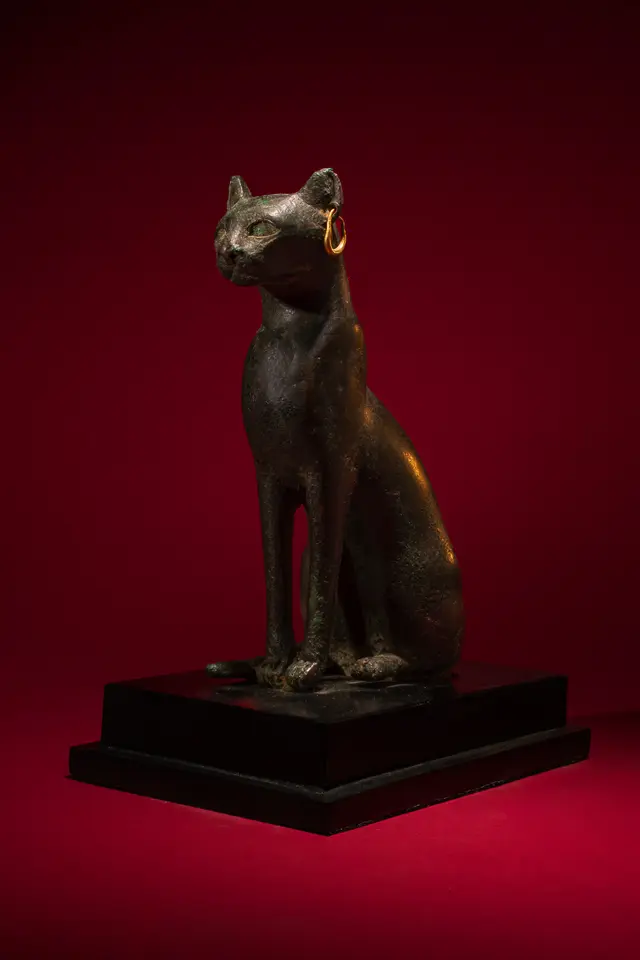
RARE EGYPTIAN BRONZE CAT STATUETTE WITH GOLD EARRINGS - LARGE SIZE
06/21/2026

£22,000
Est: £20,000
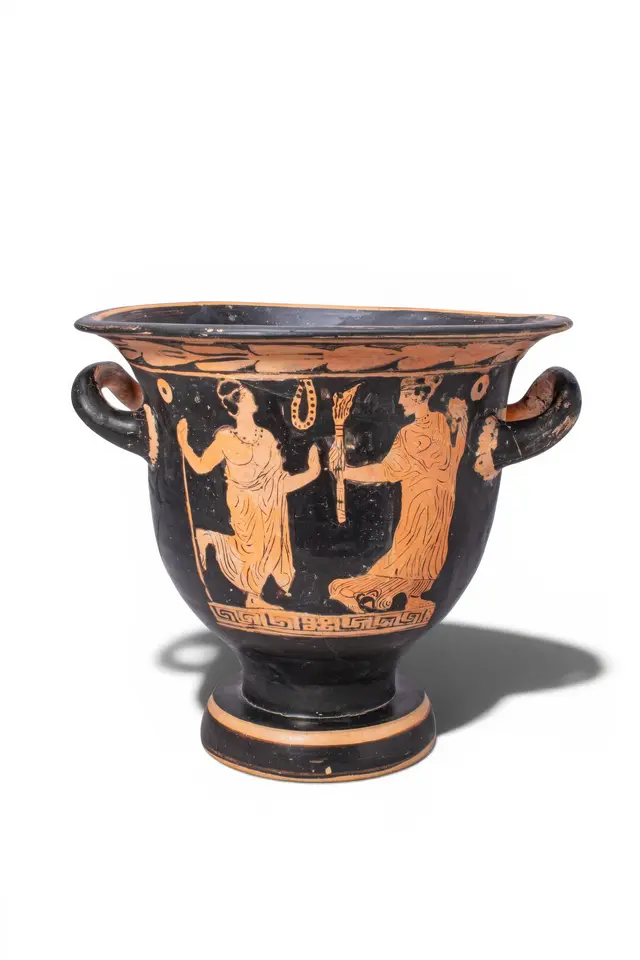
APULIAN RED-FIGURE BELL KRATER WITH KOMASTOS AND MAENAD - TL TESTED
06/21/2026
£2,600
Est: £2,000
NOV 27 | 3:00 PM



NOV 26 | 11:00 PM
Bring your auction to collectors worldwide!
Get listed nowBy subscribing, you are agreeing to the privacy policy. Unsubscribe anytime.
Barnebys HQ
Brahegatan 10
BOX 5038
114 37 Stockholm
