



All auctions / Ancient Art / Ancient Roman

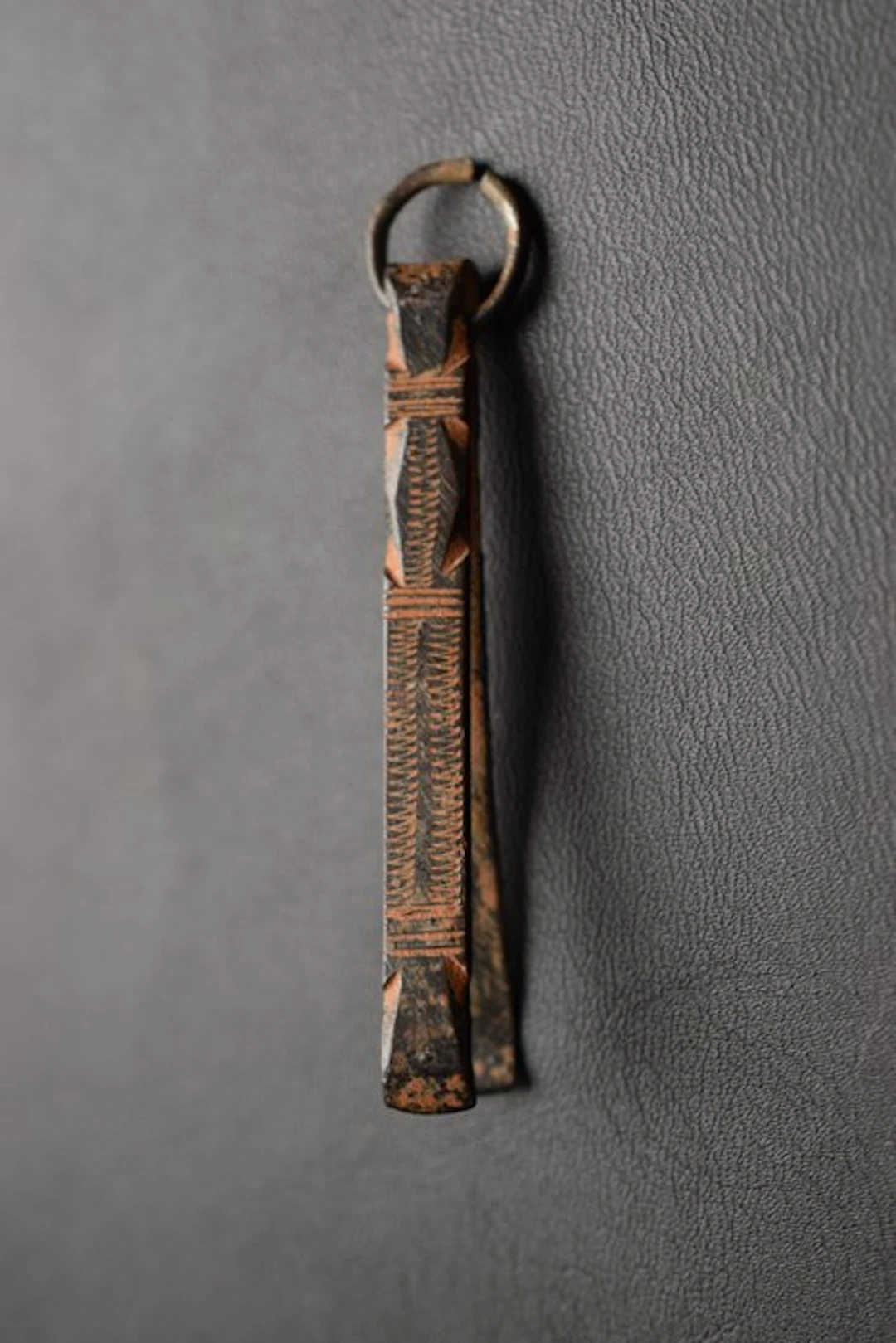
Ancient Roman Legionary Bronze Medical Tweezers with Original Suspension Ring and Elaborate Engraved Decoration Roman Imperial Period, circa 1st–3rd century AD Material: Bronze Weight: 5.0 g Total Length (including ring): 62.0 mm Length (excluding ring): 54.1 mm Width at the tips: 5.7 mm From a Private European Collection. A very rare and exceptionally attractive pair of Ancient Roman bronze tweezers of a type suitable for medical applications within the Roman military world, distinguished by their remarkably elaborate engraved decoration, magnificent almost black desert patina and, most importantly, the survival of their original suspension ring. This beautifully preserved instrument offers a fascinating connection to the medical practices of the Roman legions, where the treatment of battlefield injuries, removal of foreign objects and care of wounded soldiers formed essential aspects of military life. Roman Military Medicine – Saving Lives Behind the Front Lines: The Roman army was not only one of the most formidable military forces of antiquity but also possessed a remarkably organised system of medical care. Military medical personnel, including the medici, were responsible for treating injuries sustained during combat, military exercises and the demanding conditions of life on campaign. Among the most frequent challenges were wounds caused by arrows, spears, swords and other weapons, as well as splinters and foreign materials embedded in injured tissue. Small precision instruments such as bronze tweezers could be employed to grasp and remove accessible foreign bodies, assist in cleaning wounds and perform delicate medical procedures. In such circumstances, even a relatively small instrument could have played an important role in the treatment of an injured legionary. Removing Splinters and Foreign Objects from Battlefield Wounds: Imagine the aftermath of a fierce confrontation on the frontiers of the Roman Empire. A wounded legionary is brought to a military medical station after suffering injuries during combat. His wounds contain small fragments of wood, debris or other foreign materials that must be carefully removed before further treatment. Working with the limited but remarkably sophisticated instruments available in antiquity, a Roman military medic examines the injury and carefully extracts accessible fragments using a small pair of bronze tweezers. The narrow gripping tips of an instrument such as this would have been suitable for precisely such delicate tasks. This historically plausible application illustrates the practical importance of small medical implements in the demanding environment of Roman military medicine. The Original Suspension Ring – Practical Equipment for a Military Medic: One of the most remarkable characteristics of this exceptional instrument is the survival of its original bronze suspension ring. The ring provided a practical means of attaching or suspending the tweezers, allowing them to be carried together with other small implements. Such portability would have been particularly advantageous for medical personnel operating in military camps or accompanying troops during campaigns. The survival of this original component is especially desirable, preserving an important feature of the instrument's ancient construction and enhancing its historical completeness. Exquisite Engraved Decoration – Precision and Roman Craftsmanship: Beyond its medical function, this remarkable instrument displays an impressive degree of artistic refinement. The bronze surface features elaborate engraved decoration and carefully executed ornamental details, demonstrating the craftsmanship devoted to small functional implements during the Roman Imperial Period. The combination of practical construction and decorative sophistication gives this piece a particularly distinguished appearance. Roman medical instruments were manufactured in a variety of forms, and finely crafted examples demonstrate the technical abilities of ancient metalworkers. The beautiful engraved decoration of this particular instrument makes it especially appealing as both a historical object and a work of Roman bronze craftsmanship. Magnificent Almost Black Desert Patina: Particularly captivating is the exceptional ancient surface, displaying magnificent deep brown to almost black tones. This striking desert patina beautifully accentuates the engraved decoration and elegant proportions of the instrument. Together with the surviving original suspension ring, the dark bronze surface gives this piece an extraordinarily atmospheric and visually impressive appearance. The Valetudinarium – Inside a Roman Legionary Hospital: Permanent Roman military fortresses could contain purpose-built hospitals known as valetudinaria, where injured and ill soldiers received medical attention. These establishments formed part of the Roman army's organised approach to maintaining the health and fighting strength of its troops. Medical personnel employed instruments such as probes, scalpels, forceps and tweezers to examine injuries, treat wounds and perform surgical procedures. An instrument of this form could have been used in precisely such a medical environment, where careful manipulation and the removal of small foreign objects were essential aspects of treatment. The survival of ancient medical instruments offers a remarkable connection to the individuals who cared for wounded soldiers nearly two thousand years ago. A Remarkable Collector's Piece of Roman Military Medical History: The exceptional combination of elaborate engraved decoration, magnificent almost black desert patina, elegant proportions and surviving original suspension ring makes this an especially attractive example of Roman bronze craftsmanship. Its form also offers a compelling connection to the world of Roman military medicine, battlefield wound treatment and the sophisticated medical practices developed within the Imperial army. A very rare and highly appealing collector's piece for enthusiasts of Roman military history, ancient medical instruments and legionary equipment. I prove that the lot was obtained legally , provenance statement seen by Catawiki Important information. I guarantee that I am entitled to ship this lot. I will take care that any necessary permits will be arranged. I will inform the buyer about this if this takes more than a few days.
Estimate:£184.26
To the auctionView all items fromCatawikiorAncient Art
Estimate:
£184.26


OCT 27 | 4:00 PM
Bring your auction to collectors worldwide!
Get listed nowBy subscribing, you are agreeing to the privacy policy. Unsubscribe anytime.
Barnebys HQ
Brahegatan 10
BOX 5038
114 37 Stockholm
