



NOV 7 | 5:00 PM

All auctions / Ancient Art / Ancient Roman Bronze Five Handles


"Ancient Roman Bronze Collection – Five Handles, Three Duck Heads and Two Bells (10) Culture / Period: Ancient Roman Date / Period: 1st–2nd century AD Material: Bronze Dimensions: 20–85 mm Condition: Good condition No shipping outside the European Union. Due to complex export regulations concerning cultural goods, this item cannot be shipped outside the EU. Please ensure you have a delivery address within the European Union before placing a bid. Provenance information: Object Registration ID: 1049 The current owner (S.N.J. S.) purchased the collection of five handles, three duck heads and two bells from J.P. in Eijsden, the Netherlands. The previous owner, J.P. from Eijsden (the Netherlands), stated that the objects had been in his collection since the 1990s. According to the previous owner, the objects had previously been in a private collection in the Netherlands since the 1990s. No further information concerning the earlier ownership history of the objects was available from the previous owner. Background Information: Bronze fittings, decorative handles, animal-shaped ornaments and small bells formed an important part of everyday material culture throughout the Roman Empire. During the 1st and 2nd centuries AD, particularly under the Flavian, Trajanic, Hadrianic and Antonine emperors, Roman craftsmanship reached a high level of technical refinement. Bronze objects were widely used in domestic furnishings, personal equipment, household utensils and decorative fittings, combining practical functionality with established artistic traditions. This collection consists of ten Roman bronze objects, including five handles, three duck-head ornaments and two bells. The handles display elongated, shaped forms, with some featuring moulded bands, raised collars and decorative details. Such bronze fittings were used on various types of Roman equipment, including domestic utensils, containers, furniture and other functional objects. Their carefully formed profiles illustrate the attention Roman metalworkers devoted to both practical construction and ornamental finishing. The three duck-head ornaments reflect the popularity of animal imagery in Roman decorative metalwork. Birds, including ducks and other waterfowl, appeared frequently in Roman art and craftsmanship, particularly as decorative terminals, vessel attachments and furniture fittings. Their curved beaks and stylised forms were well suited to bronze casting, allowing craftsmen to incorporate recognisable animal motifs into functional objects. Such decorations demonstrate how Roman artisans combined naturalistic inspiration with practical design. Small bronze bells were another familiar feature of Roman daily life. Known in Latin as tintinnabula, bells were used in various contexts, including the equipment of domestic animals, harness fittings and household settings. Some also had decorative or protective associations. Their sound-producing function made them useful objects in both practical and ceremonial environments, while their manufacture required careful casting and finishing to achieve a suitable shape and resonance. Roman bronze objects were commonly produced using casting techniques, including mould casting and the lost-wax process, followed by filing, polishing, engraving or additional decorative work. Workshops throughout the Roman Empire manufactured fittings and ornaments for local markets, while established commercial routes facilitated the movement of finished goods, raw materials and artistic influences between provinces. During the 1st and 2nd centuries AD, Roman trade and military networks connected the Mediterranean with the northern provinces, including Gallia, Germania and Britannia. Bronze household equipment and decorative fittings circulated across these regions, reaching settlements, military forts, towns and rural villas. Their widespread distribution reflects the integration of provincial communities into the economic and cultural life of the Roman Empire. This collection of ten bronze objects offers an interesting insight into the diversity of Roman metalworking, bringing together practical handles, decorative animal motifs and small bells. Together, they illustrate the craftsmanship, functional design and artistic preferences of the early Roman Imperial period, providing a direct and tangible connection to the objects that formed part of everyday life in the ancient Roman world."
Estimate:£175.65
To the auctionView all items fromCatawikiorAncient Art
Estimate:
£175.65
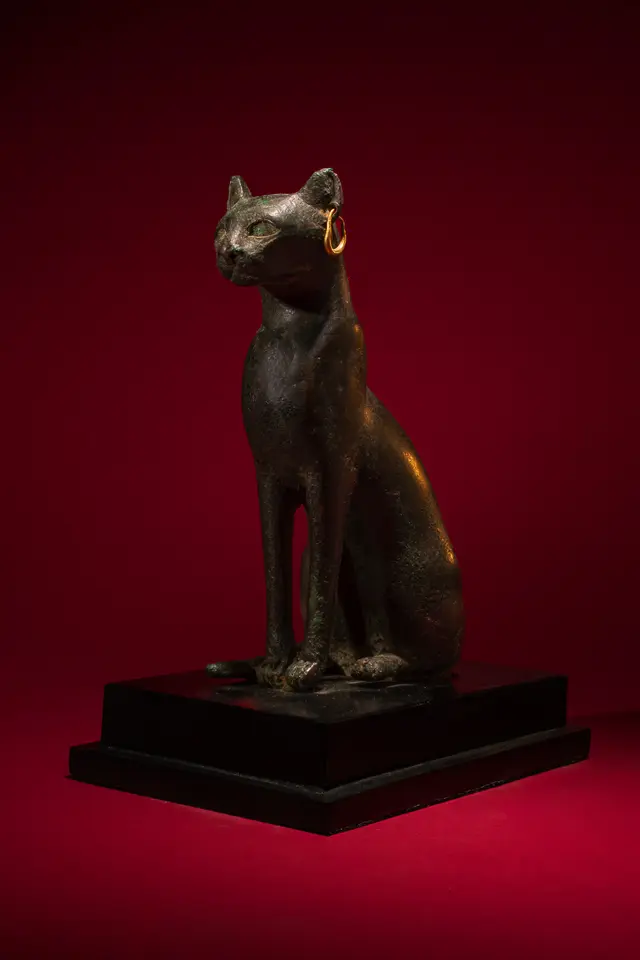
RARE EGYPTIAN BRONZE CAT STATUETTE WITH GOLD EARRINGS - LARGE SIZE
06/21/2026

£22,000
Est: £20,000
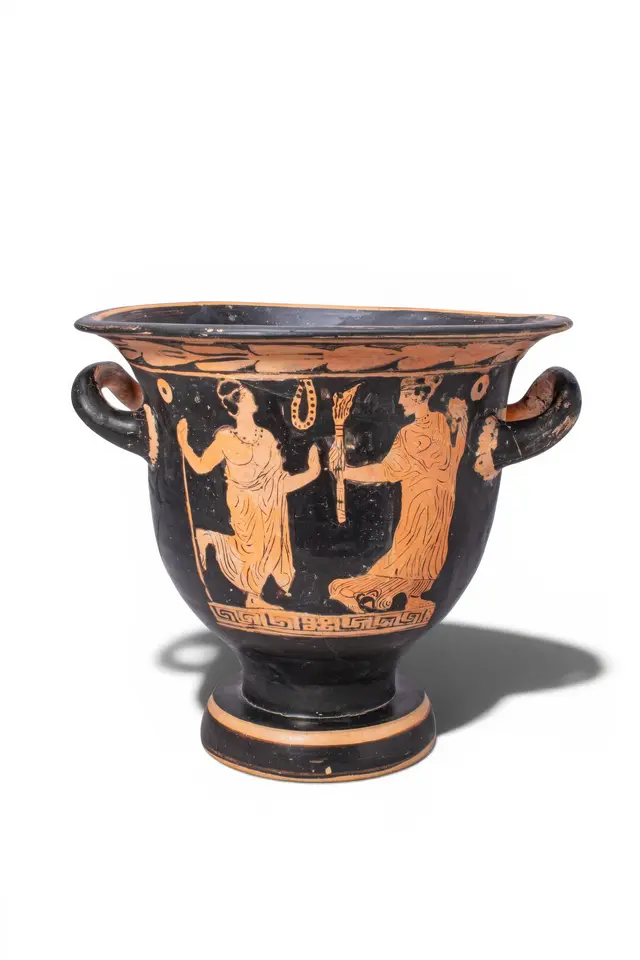
APULIAN RED-FIGURE BELL KRATER WITH KOMASTOS AND MAENAD - TL TESTED
06/21/2026
£2,600
Est: £2,000
NOV 7 | 5:00 PM


NOV 12 | 10:00 AM

NOV 8 | 1:00 PM
Bring your auction to collectors worldwide!
Get listed nowBy subscribing, you are agreeing to the privacy policy. Unsubscribe anytime.
Barnebys HQ
Brahegatan 10
BOX 5038
114 37 Stockholm
