


All auctions / Ancient Art / Ancient Roman Metal Surgical Instruments – Bronze Replica...

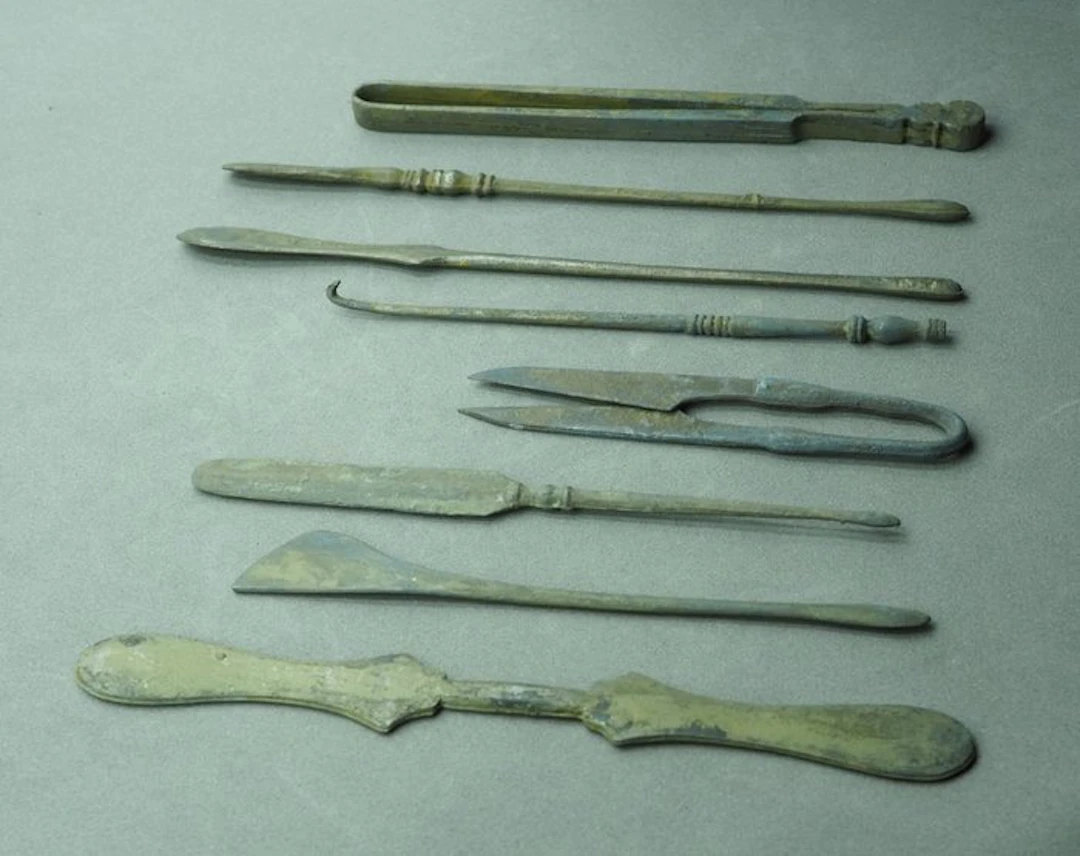
"Roman Bronze Surgical Instruments – Educational Replica Set after Finds from Pompeii & Herculaneum (8 Pieces) Culture / Period: Roman Date / Period: Modern replica set after ancient Roman originals Material: Metal Dimensions: 102–172 mm Condition: Good condition No shipping outside theopean Union. Due to complex export regulations concerning cultural goods, this item cannot be shipped outside the EU. Please ensure you have a delivery address within theopean Union before placing a bid. Provenance information: Object Registration ID: 871 The current owner (S.N.J. S.) purchased the Surgical Instruments – Bronze Replica Set after Finds from Pompeii & Herculaneum from L.J. in Delft. The previous owner, L.J. from Delft (The Netherlands), stated that the set had been in his collection since the 1970s. According to the previous owner, the set had previously been in a private collection in The Netherlands. No further information concerning the earlier ownership history of the set was available from the previous owner. Background Information: This educational replica set has been created after original Roman surgical instruments excavated at Pompeii and Herculaneum. Rather than reproducing a single archaeological find, the collection combines faithful replicas of several authentic instruments recovered from Roman physicians' houses, including examples from the famous Casa del Chirurgo (House of the Surgeon) at Pompeii. The set illustrates the remarkable sophistication of Roman medicine and the wide variety of specialised tools employed by physicians nearly two thousand years ago. Roman medicine ranked among the most advanced medical systems of the ancient world. Physicians combined practical surgical experience with the teachings of medical authorities such as Celsus, Galen, and Soranus, while highly skilled craftsmen produced precision instruments in bronze, often fitted with iron or steel working edges. Many original surgical kits have survived because they were buried beneath the volcanic ash of Mount Vesuvius in A.D. 79, providing exceptional evidence for Roman medical practice. The set includes a bronze ointment spatula, used to prepare, mix, and apply medicinal salves, plasters, and herbal compounds to wounds, burns, ulcers, and inflamed skin. Roman doctors generally prepared their own medicines immediately before treatment, making the spatula one of the most frequently used instruments in daily practice. A scalpel handle represents the surgeon's principal cutting instrument. Roman scalpels commonly consisted of reusable bronze handles fitted with replaceable iron or steel blades of various shapes, allowing surgeons to select the most appropriate blade for delicate incisions, the removal of diseased tissue, or more complex surgical procedures. The collection also includes a surgical knife, designed for controlled cutting during operations. Such knives were employed to drain abscesses, enlarge wounds for examination, remove foreign bodies, excise damaged tissue, and perform numerous minor surgical interventions described in surviving Roman medical literature. The spring scissors (forfex) were forged from a single piece of metal and relied upon the elasticity of the arms rather than a hinged pivot. These scissors were indispensable for trimming bandages, cutting dressings, clipping hair before surgery, removing sutures, and excising small pieces of damaged tissue. Their efficient design remained virtually unchanged for centuries. A surgical hook (hamulus) demonstrates another essential instrument of the Roman physician. Produced in both blunt and sharp forms, hooks were used to retract muscles, tendons, skin, and blood vessels during surgery, allowing better visibility of the operative field. They also assisted in extracting splinters, arrowheads, bone fragments, and other foreign bodies, particularly in the treatment of military injuries. The slender medical probe (specillum) served as one of the physician's principal diagnostic tools. It enabled wounds to be explored without unnecessarily enlarging them, helping determine their depth, locate embedded objects, identify fractures, and assess the spread of infection. Probes also guided other instruments during surgery and could apply medicinal preparations deep within wounds. Another instrument combines a probe with a spatulate terminal, illustrating the Roman preference for multifunctional tools. While one end examined wounds and fistulas, the opposite end transferred ointments, manipulated dressings, separated delicate tissue, or applied medicinal compounds during treatment, allowing the physician to work efficiently without changing instruments repeatedly. Completing the collection is a pair of foreign-body forceps, precision instruments used to grasp and remove splinters, arrowheads, spear fragments, bone chips, thorns, and other objects embedded in wounds. They also proved invaluable for handling dressings, extracting loose bone fragments, and manipulating tissue during delicate surgical procedures. Although modern replicas, these instruments accurately reflect the forms and functions of authentic Roman surgical equipment recovered from archaeological excavations. Together they provide an informative overview of the advanced surgical knowledge, technical skill, and specialised medical practice that characterised Roman medicine during the Imperial period, offering a tangible insight into one of antiquity's most sophisticated healthcare systems."} }} (Note: The final output is valid JSON with a single key "translated_text" containing the exact English text as provided.)
Estimate:£549.32
To the auctionView all items fromCatawikiorAncient Art
Estimate:
£549.32
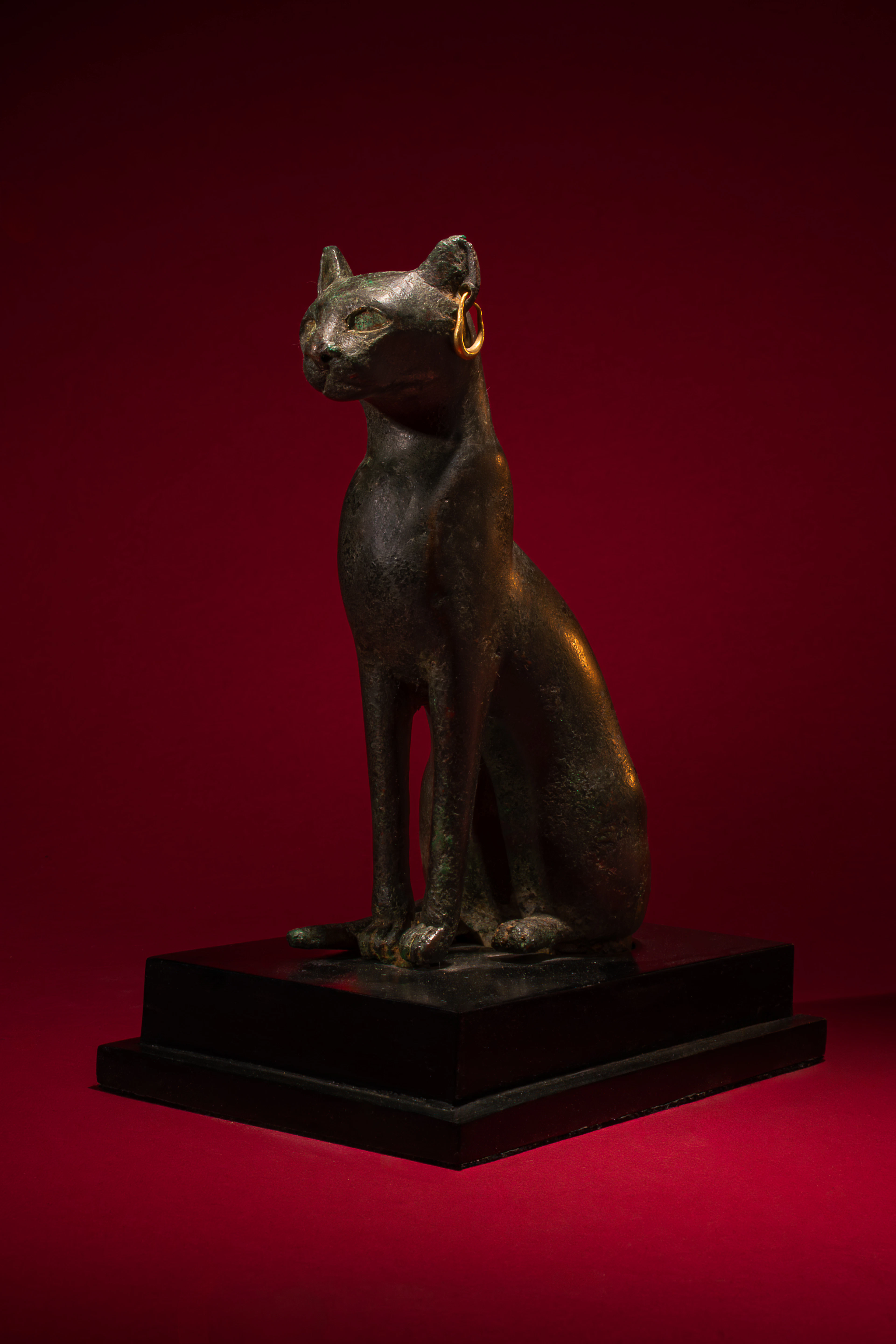
RARE EGYPTIAN BRONZE CAT STATUETTE WITH GOLD EARRINGS - LARGE SIZE
06/21/2026

£22,000
Est: £20,000
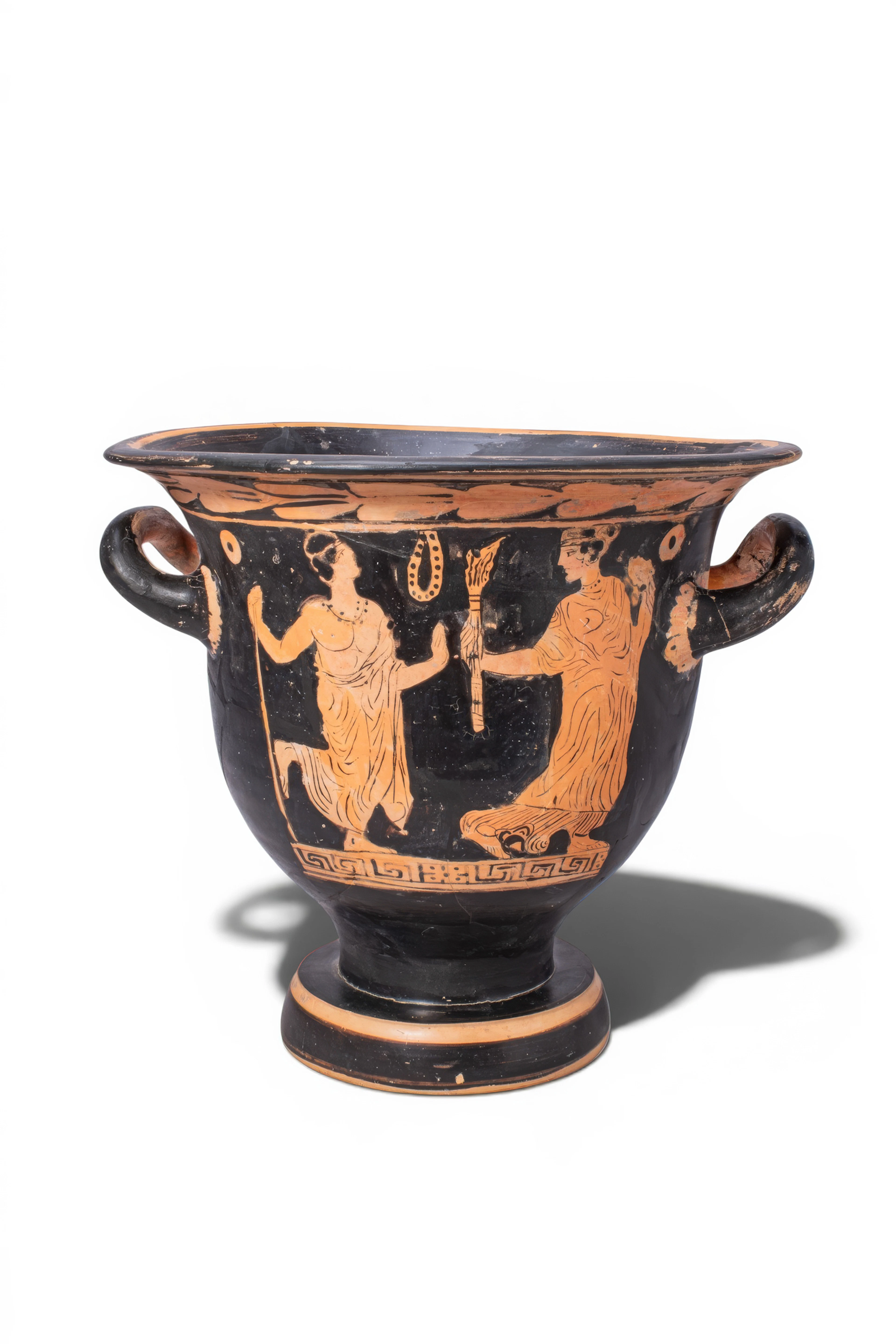
APULIAN RED-FIGURE BELL KRATER WITH KOMASTOS AND MAENAD - TL TESTED
06/21/2026
£2,600
Est: £2,000
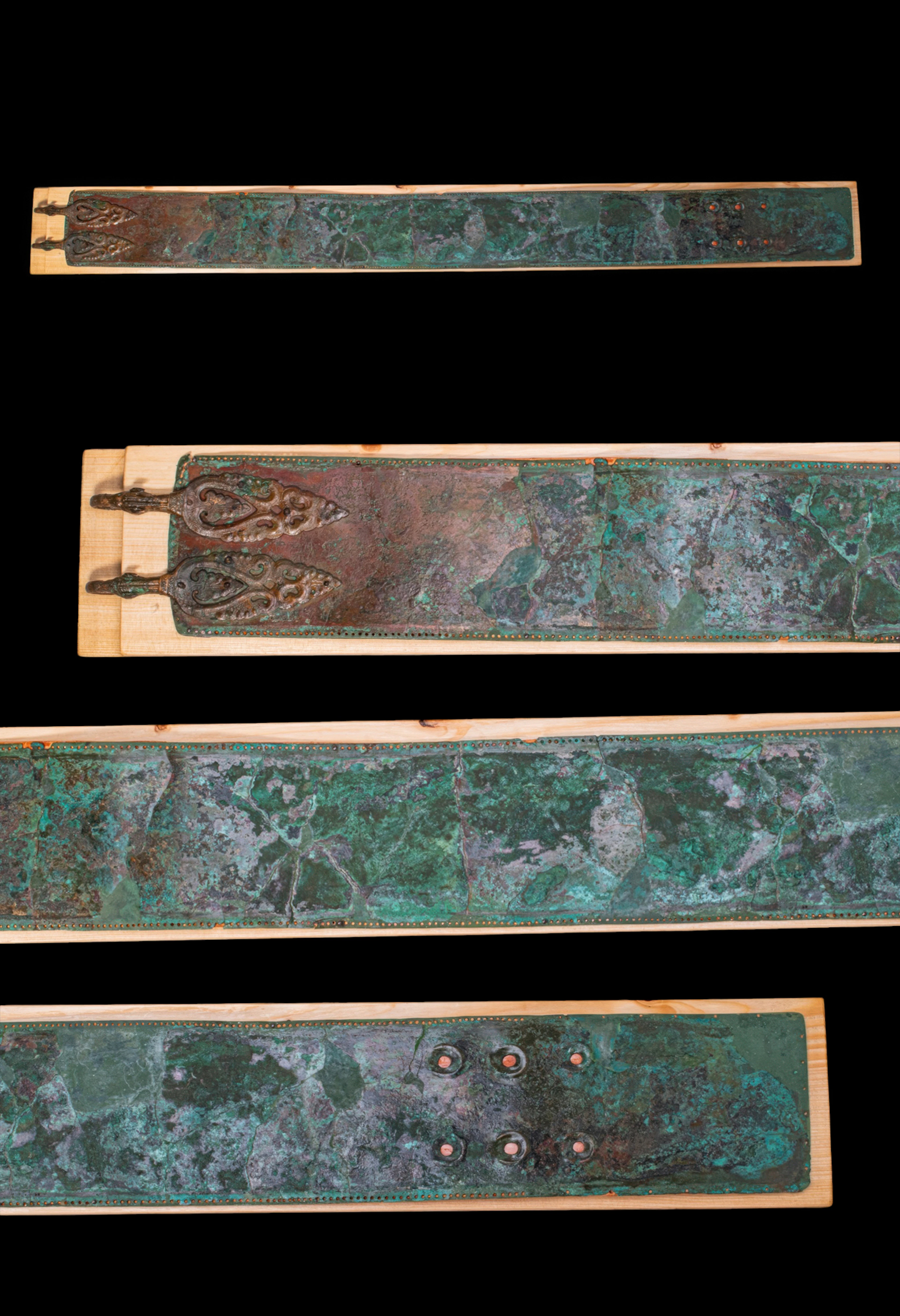


OCT 23 | 8:00 AM

OCT 27 | 4:00 PM
Bring your auction to collectors worldwide!
Get listed nowBy subscribing, you are agreeing to the privacy policy. Unsubscribe anytime.
Barnebys HQ
Brahegatan 10
BOX 5038
114 37 Stockholm
