




OCT 23 | 8:00 AM

All auctions / Furniture, Design & Mirrors / Antique dressed religious statue of the 'cap i pota' type – 47 cm - Wood

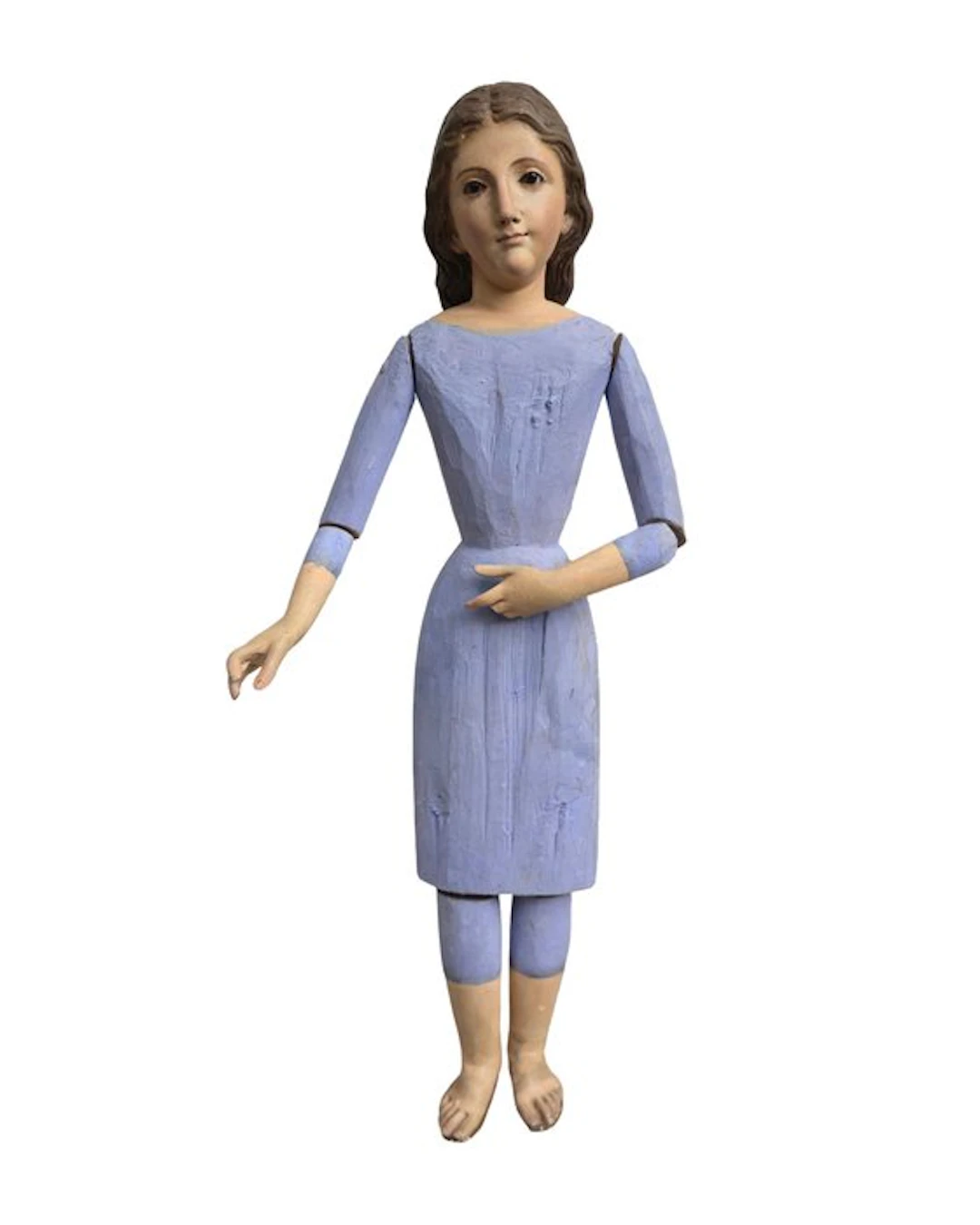
ANTIQUE RELIGIOUS FIGURE “CAP I POTA” – POLYCHROMED WOOD – 19th CENTURY – APPROX. 50 CM Ancient vestment-type religious image, “cap i pota,” attributed to the 19th century, made mainly of carved and polychromed wood. Interesting piece of popular/devotional imagery, about 50 cm tall, characterized by its stylized and functional construction, designed to be dressed with textile garments and originally complemented with religious attributes according to the depicted dedication. The figure retains a polychromed head and face, a blue-painted body, extended arms, individually carved hands and long legs ending in shod feet. The whole ensemble rests on its original or antique wooden base with a polygonal footprint. IDENTIFICATION AND TYPOLOGY Type: religious image to be dressed / devotional sculpture. Typology: “cap i pota.” Attributed period: 19th century. Main material: carved and polychromed wood. Height: approximately 50 cm, per indication. Author/workshop: not identified. Signature or mark: not visible in the photographs. Dedication: not identified with certainty. This last point is important. I would not attempt to sell it as a specific Virgin or saint without knowing its original attributes. The current appearance is iconographically incomplete: it was probably conceived to wear dress, mantle, crown, halo, or other attributes, and these elements could have allowed identifying the dedication. WHAT DOES “CAP I POTA” MEAN? In the Catalan context, the label “cap i pota” is used for vestment-type religious images whose execution concentrates especially on the parts that remained visible — head, hands and feet — while the rest of the body functioned mainly as a structure to support the garments. This piece presents precisely several characteristics compatible with this tradition: extremely stylized anatomy, arms separated from the torso, individualized hands, long legs, feet worked and body simplified that would have been largely hidden under the clothing. DETAILED DESCRIPTION The face is one of the most elaborated parts of the figure. It shows soft, elongated features, broad forehead, straight nose, small slightly open mouth and eyes painted with a melancholic or contemplative expression. The hair is gathered and painted dark brown. On the back of the head there is a hole, possibly related to an old attachment for an attribute, halo, or accessory. Without the original attribute, its exact function cannot be determined. The flesh tones are pale with slight rosy shading on cheeks and lips. The torso is extraordinarily stylized, with a narrow waist and a kind of inner body or dress painted in intense blue, with a pronounced neckline. The surface shows irregularities, marks, and wear typical of an antique handmade piece. The arms are open and slightly forward, probably in a position designed to interact with some attribute now missing. HANDS The hands are especially interesting and reinforce the artisanal character of the piece. They show individually defined fingers and simplified anatomy. There are cracks, wear, and losses. One hand has a significant loss of one finger, leaving visible interior material and traces of an old repair. The other hand preserves the finger structure better, though it shows superficial cracks, loss of polychromy, and small losses. Due to their fragility, I would expressly advise against handling the figure by the hands or arms. LEGS AND FEET The legs are long, slender, and almost straight, perfectly matching the structural function of an image meant to be clothed. The polychromy shows strong darkening and losses, especially in the lower zones. The feet are individually worked and appear to be wearing open sandals, with the outlines drawn in dark color. The toes are carved and defined individually. It is a notable detail that deserves to appear in the listing photos. BASE The image is mounted on a polygonal wooden base, wide relative to the figure to provide stability. The top surface is very dark with visible wood grain, wear, crazing, stains, and abrasions. There is a major longitudinal crack on one side of the base, as well as losses and chips around the perimeter. The bottom is unpolychromed, leaving the wood visible. There are marks, holes, and signs of mounting and aging. No label, signature, or clearly identifiable inscription appears in the provided photographs. MEASUREMENTS With the data you provided, I would publish: Total height: approximately 50 cm Other measurements should not be inferred from photos. For a professional listing I would state: Height: approx. 50 cm In an antique piece like this, those details are quite important for sale and transport. CONDITION The sculpture remains in antique condition, with wear and damage visible consistent with its age and use, not restored by us unless otherwise noted. There are losses and generalized wear of polychromy; dirt and superficial patina; scratches and chips; small cracks in various zones; pronounced wear on the legs and protruding areas; craquelure and cracks in the hands; partial loss/breakage of at least one finger; small holes and marks on the body and back; wear of the hair polychromy and flesh tones; and a visible crack in the base. There is also the previously mentioned hole in the back of the head, possibly originally intended for an accessory. The figure currently lacks clothing and attributes, if it originally had them, a circumstance that should be noted in the listing. I would not perform any aggressive cleaning, sanding, varnishing, or repainting before selling: in old imagery, improper intervention can significantly reduce the piece’s interest. Antique vestment-type religious image, “cap i pota,” attributed to the 19th century, mainly carved and polychromed wood. Approximate height about 50 cm. Interesting piece of popular devotional religious imagery, characterized by its stylized construction typical of images designed to be dressed. The figure preserves a polychromed head with delicate expression, body painted in intense blue, open arms with carved hands, long independent legs, and feet shod with sandals, with toes individually worked. The face stands out especially, with soft features and contemplative expression, with painted eyes, slightly open mouth, and hair gathered in a dark tone. On the posterior part of the head there is a small hole, possibly intended originally to fix an attribute, halo, or aureole, currently not preserved. The image sits on an old polygonal wooden base, with a dark surface and a marked patina. The piece shows evident signs of aging: wear and losses of polychromy, rubbing, stains, small cracks, craquelure, blows and material loss. One hand shows deterioration and partial loss of a finger. The base also shows wear and a longitudinal crack. Currently it is preserved without clothing or religious attributes, so we cannot determine with certainty the original dedication. No signature or maker’s mark is evident. The 19th-century attribution is made based on its typology and constructive characteristics, without documentation for an exact date. Approximate height: 50 cm. A very decorative piece with great character, especially interesting for collectors of sacred art, popular imagery, religious carvings, Spanish antiques, and “cap i pota” figures. Price as shown in the listing: exactly as photographed, which form part of the description.
Estimate:£380.77
To the auctionView all items fromCatawikiorFurniture, Design & Mirrors
Estimate:
£380.77
OCT 23 | 8:00 AM


OCT 27 | 4:00 PM


OCT 17 | 10:00 PM
Bring your auction to collectors worldwide!
Get listed nowBy subscribing, you are agreeing to the privacy policy. Unsubscribe anytime.
Barnebys HQ
Brahegatan 10
BOX 5038
114 37 Stockholm
