

OCT 23 | 8:00 AM

All auctions / Ancient Art / Beauty under the umbrella among plum blossoms – Ukiyo-e school - Paper

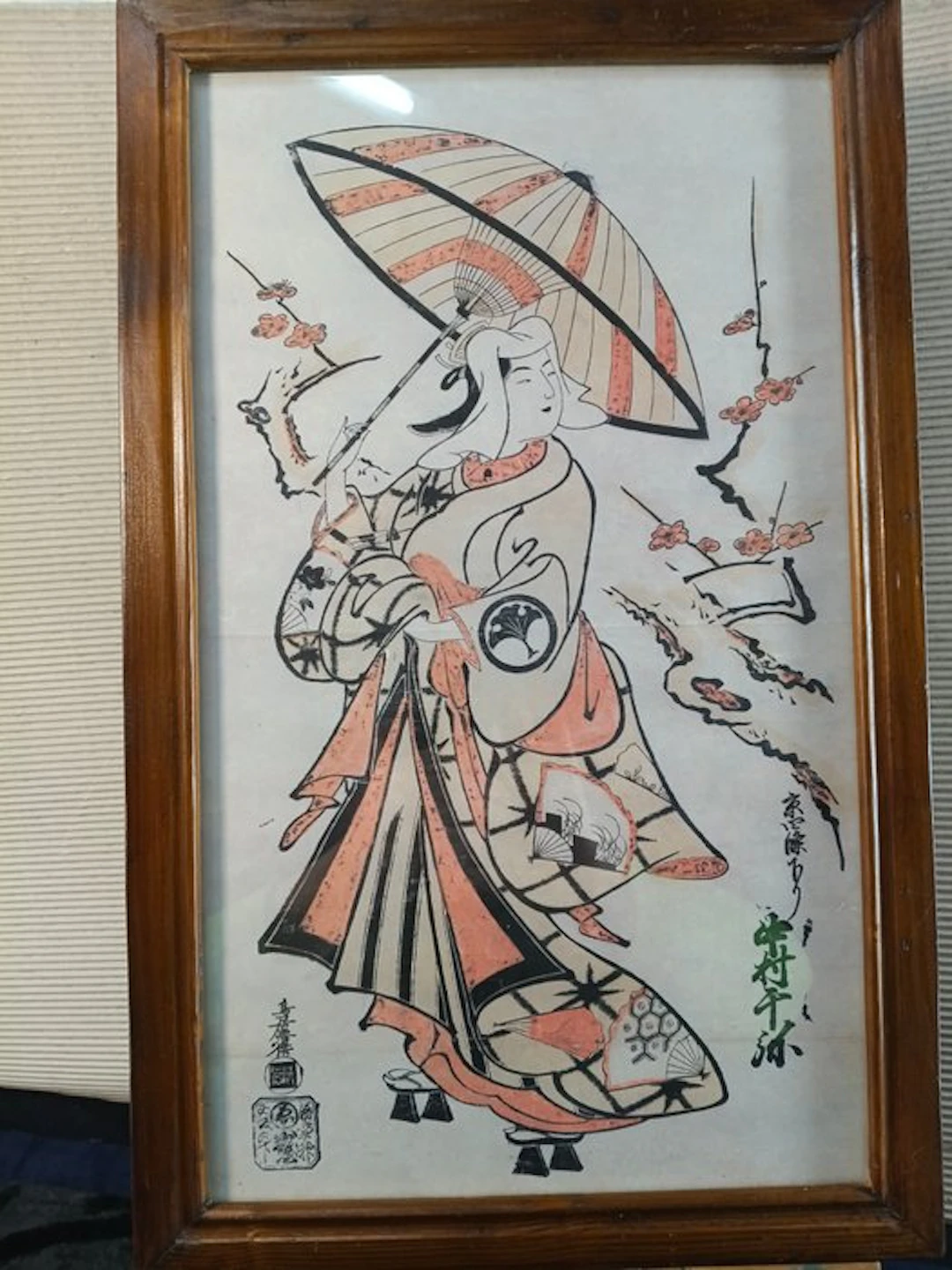
The Onnagata actor Nakamura Senya I, in the role of Tokonatsu in the comedy Mitsudomoe katoku biraki – copy of ukiyo‑e school – Paper, wood – after master of ukiyo‑e (Benizuri‑e style) – Japan, (late Meiji / early Taishō) Original: Ichidai Nakamura Senya no Onna Karö Tokonatsu initial generation female elder of Nakamura Senya and Konatsu dell'artist Torii Kiyomasu I (Japanese, active c. 1696–1716) editore Komatsuya (Kihachi, Densichirö, Denshirö) (circa 1710~1730) in the archive of the “Honolulu Museum” of hand‑colored woodblock printmaking Technique: Woodblock print. Hand colored, tan‑e (orange print). Asian art: Japanese woodblock prints no. 20497 Elegant Japanese print of the ukiyo‑e school, depicting a young beauty in a kimono walking outdoors under a large umbrella, among blooming Prunus branches, from a private collection. The female figure is shown full-length, in a slightly inclined pose as she proceeds wearing high geta sandals, gracefully holding the oblique umbrella that occupies almost the entire upper margin of the composition. She wears a rich kimono decorated with geometric motifs, stylized fans, and a conspicuous circular mon (heraldic crest) on the sleeve, elements typical of prints of beauties and actors in full dress of the Edo period, here reproduced with a revivalist taste. The background is animated by branches of cherry blossoms projecting diagonally into space, adding a seasonal and poetic dimension: budding prunus are symbols of early spring and graceful endurance of cold, a theme much loved by ukiyo‑e masters. The contrast between the black drawing, the white of the paper, and the pink‑orange blocks of the umbrella and kimono recalls the refined palette of the so‑called benizuri‑e, prints in which a few colors are overlaid on the main ink. In the lower left margin is a long vertical signature, accompanied by two seals, one round and one octagonal, imitating the structure of signatures of seventeenth‑ and eighteenth‑century masters. The calligraphy appears slightly rigid and regular, closer to a “manual” reproduction than an autograph, while the seals are simplified: clues that point to interpreting the work as a high‑quality “after” Edo ukiyo‑e master, plausibly produced in the first half of the XXth century for a collector audience. The technique is woodblock printing on paper, with black ink drawing and limited pink color blocks; in some areas there are slight irregularities and small pigment losses, compatible with a handmade edition with possible later hand touch‑ups, rather than a modern offset reproduction. The paper has a traditional appearance and shows a slight waviness and an even patina, consistent with about a century or a little more in age, with no signs of recent interventions or contemporaneous reprints on modern support. The print is mounted in a handmade oak hardwood frame, mitred joints, warm finish and a perforated metal grommet in an Asian taste, elements suggesting a framing carried out in the East for subsequent export to Europe. It is plausible that the whole was part of a small nucleus of prints “in the manner of Edo masters” intended for the japonisme market, when European collectors and artists sought Japanese images, original or reprinted, to decorate interiors. The subject does not represent a historical figure, but embodies the bijin ideal – refined beauty – walking under spring rain or late snow, captured in countless variants by ukiyo‑e masters. The combination of umbrella, blooming prunus, and rich kimono suggests an elegant strolling scene, perhaps leaving a pleasure district or a theater, leaving the viewer free to imagine the narrative context. This work offers a small but meaningful testament to the European fortune of ukiyo‑e and the taste for Japanese “beauties” between the late 19th and early 20th centuries, with a good balance between decorative value and historical interest. Provenance: European market (probably French), private collection. Origin: Japan, ukiyo‑e school, after Edo ukiyo‑e master. Technique: polychrome woodblock print with a few colors (benizuri‑e style), high‑quality copy from an 18th‑century model. Frame: East‑made solid wood, with traditional perforated metal mounting. Probable period: first half of the 20th century (late Meiji / early Taishō). Dimensions: 34.5 × 56 × 2.7 cm (moulding); 30 × 51.5 cm (sheet). Conditions: very good; light, uniform patina consistent with age, small signs of time and minimal color irregularities, no obvious structural damage. An ideal piece for collectors of Japanese art, for bijin‑ga enthusiasts, and for those who want a pair of decorative yet historically grounded prints that recall Edo masterworks without reaching the costs of the extremely rare seventeenth‑century sheets. Quickly well wrapped with foam and/or bubble wrap, and shipped with tracking and insurance by top shipping agencies. The shipping cost includes tracking, packaging materials, and insurance of the artwork. Due to customs duties issues and procedures, we do not ship to the U.S. Corsica to be agreed. This listing was prepared “also” with the help of Artificial Intelligence. (data checked and cross‑referenced with images and online research)
Estimate:£0.84
To the auctionView all items fromCatawikiorAncient Art
Estimate:
£0.84
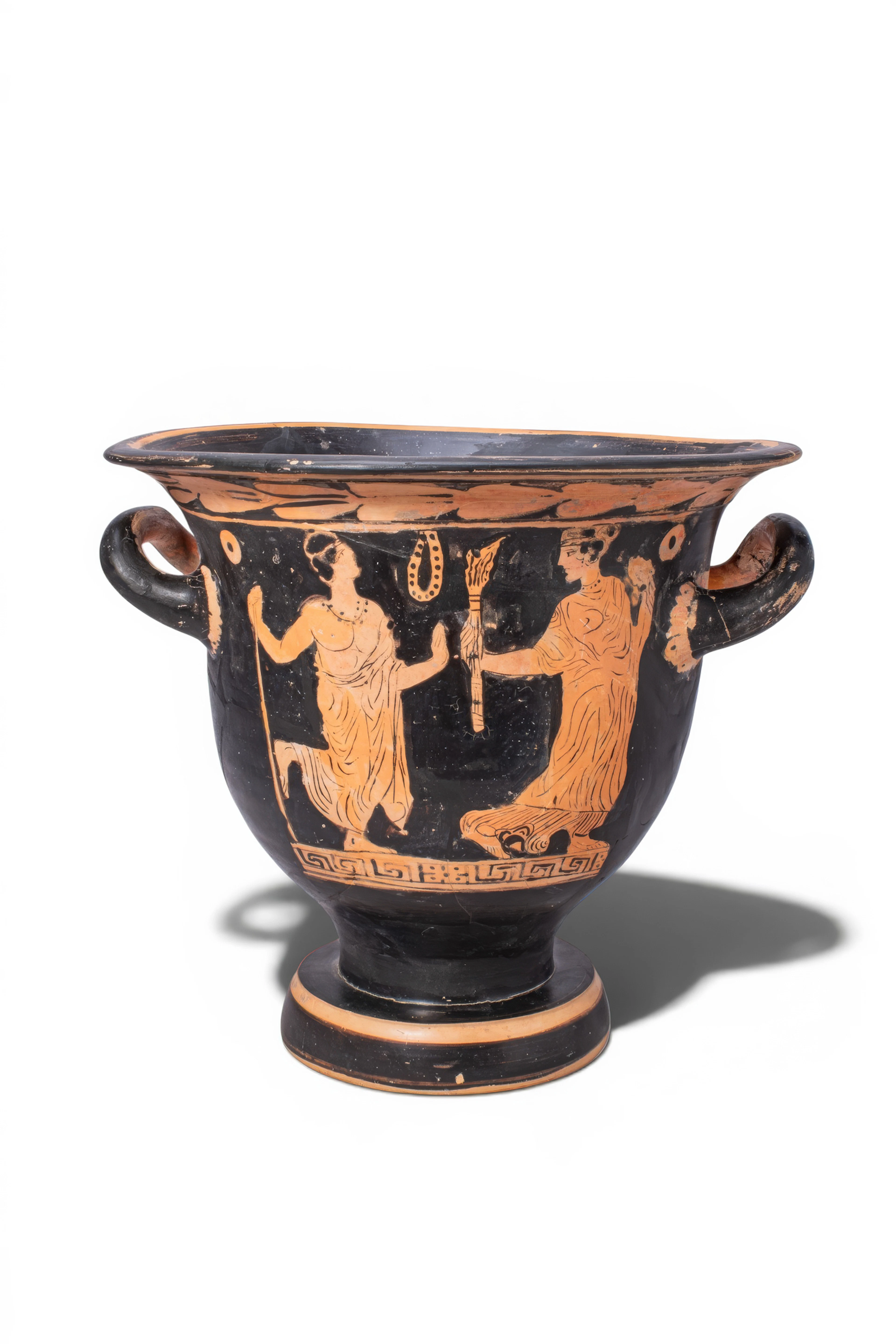
APULIAN RED-FIGURE BELL KRATER WITH KOMASTOS AND MAENAD - TL TESTED
06/21/2026

£2,600
Est: £2,000
OCT 23 | 8:00 AM


OCT 27 | 4:00 PM


OCT 17 | 10:00 PM
Bring your auction to collectors worldwide!
Get listed nowBy subscribing, you are agreeing to the privacy policy. Unsubscribe anytime.
Barnebys HQ
Brahegatan 10
BOX 5038
114 37 Stockholm
