





All auctions / Arts & Graphics / École française (XIX) - La Jeune Femme de profil - NO RESERVE

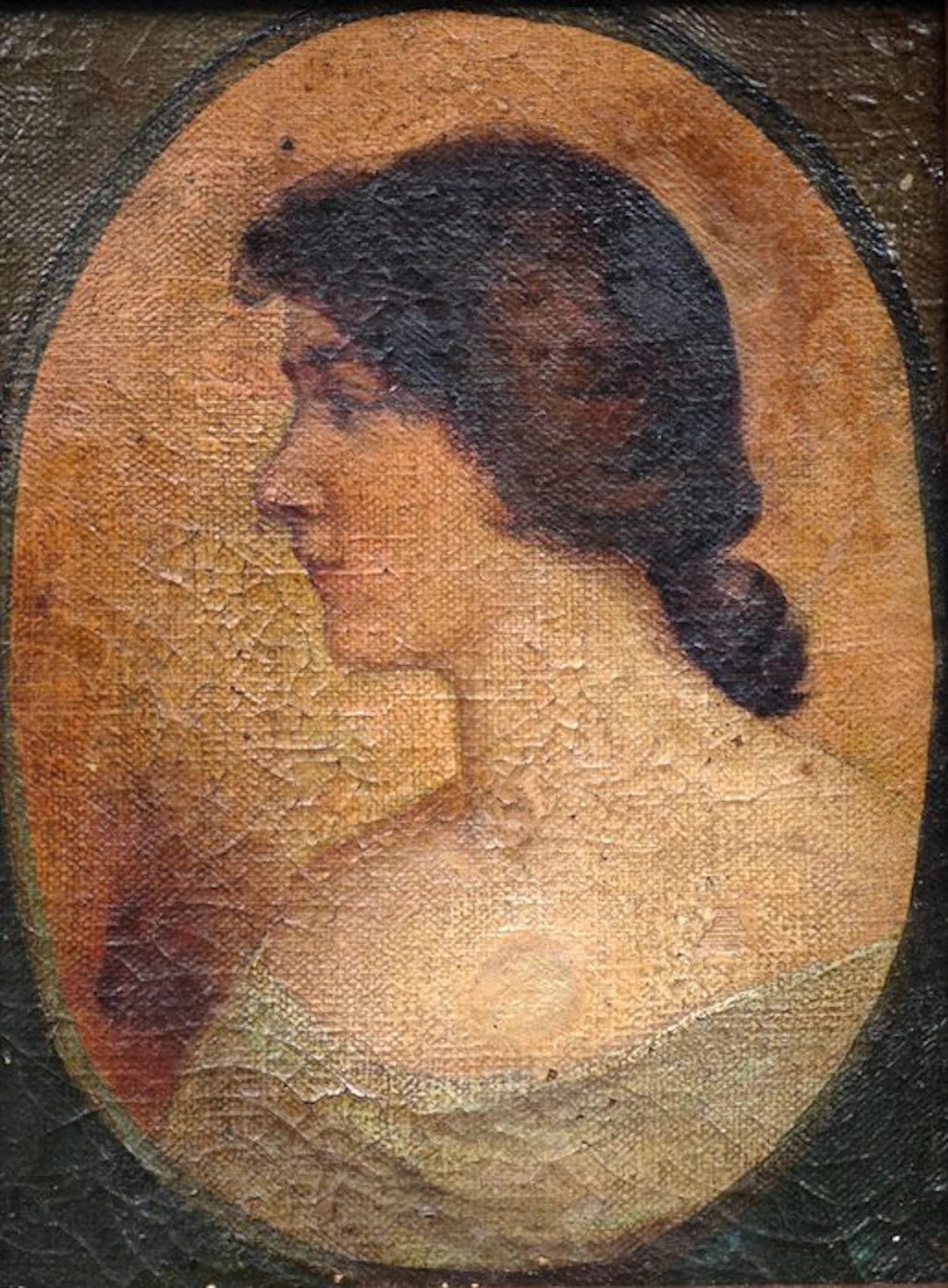
19th-Century French School Profile Portrait of a Young Woman – Oil on Canvas Interesting oil painting on canvas from the 19th-century French school, depicting the delicate profile portrait of a young woman, with dark hair pulled back and the shoulders partly exposed. The work stands out for the elegance of its composition, the softness of the female features, and its distinctive presentation within an oval gilded medallion, which contrasts with the dark background. The figure is shown bust-length, head turned to the left, with a serene and introspective expression. The treatment of the flesh tones, the delicacy of the face, and the attention given to the coiffure allow stylistic linkage of the painting with the tradition of French Romantic and Academic portraiture of the 19th century, as well as with certain decorative trends that achieved wide diffusion during the second half of that century. The work presents a pictorial surface with visible craquelure and signs of aging, which are part of its current aspect and must be taken into account when assessing its conservation. Description of the work The composition is dominated by a young woman depicted bust-length and in profile, in an attitude of introspection and serenity. Her face is oriented toward the left, showing a carefully defined profile line. The forehead, nose, lips, and chin are represented with smooth transitions between light and shadow. The artist pays special attention to the expression of the subject, avoiding any exaggerated gesture and conveying a sense of calm. The young woman has dark hair, styled back and gathered in a low bun at the nape of the neck. The volume of the hair is built with brown and black tones, with small warm highlights that help differentiate the various strands. The hairstyle contributes to reinforcing the elegance and classical character of the portrait. The shoulders appear partially uncovered, while a garment in greenish and grayish tones covers the lower part of the bust. The neckline has a wide and slightly diagonal arrangement, which adds naturalness to the composition. The flesh tones are worked with a warm color range, dominated by ochres, pinks, light browns, and ivory tones. The artist uses soft lighting to highlight the face, neck, and shoulders. The figure is set within a large oval of golden and ochre tones. This medallion presents a warm chromatic surface, functioning as the immediate background of the portrait. Around the oval appears a zone of very dark green, bordering on black, which creates a strong contrast with the flesh tones and the golden background. The combination of these elements generates a balanced composition with strong decorative character. The female portrait in 19th-century French painting During the 19th century, portraiture occupied a fundamental place within French painting. The growing importance of the bourgeoisie, the consolidation of new forms of social representation, and the development of academic painting contributed to the extraordinary diffusion of this genre. French artists developed different modalities of portraiture, from grand official compositions to intimate representations in small to medium formats. The female portrait acquired particular prominence. Models were depicted with a wide variety of compositional resources, paying special attention to expression, attire, hairstyle, and lighting. During the early decades of the 19th century, neoclassicism and romanticism exerted a deep influence on the representation of the human figure. Subsequently, academic painting continued to develop a language based on drawing, the idealization of forms, and the refined treatment of flesh tones. This work can be related to this tradition due to its interest in the elegance of the female profile and the use of a classically inspired composition. The absence of secondary narrative elements concentrates all attention on the figure. Influences of neoclassicism and romanticism The portrait shows affinities with certain manifestations of 19th-century French painting linked to late neoclassicism and romantic sensibility. Neoclassicism attached particular importance to clarity of drawing, harmony of proportions, and the revival of models from classical Antiquity. The representation of female profiles was one of the characteristic resources of this artistic language. Figures were frequently depicted with defined contours and restrained expressions. Romanticism, for its part, introduced greater attention to psychological individuality and emotional sensibility. In the present painting, the combination of an elegant profile and an introspective expression allows general relations to be established with both traditions. The artist seems interested in both the formal beauty of the face and the transmission of a serene atmosphere. The composition avoids dramatic contrasts and focuses on the delicacy of the figure. These affinities should be understood as stylistic references, without implying attribution to any specific painter. The oval format and the medallion portrait tradition One of the most interesting aspects of the work is the use of a large oval medallion as a compositional element. Portraits inscribed in ovals enjoyed considerable popularity during the 18th and 19th centuries. This format was associated with the cabinet portrait tradition, miniatures, and certain decorative compositions. The oval shape allowed focus on the face and shoulders of the figure. Moreover, it introduced a harmonious visual structure, especially suitable for the representation of female busts. In this painting, the oval is not formed by the outer frame, but appears integrated within the composition itself. The artist uses golden tones to build this surface, generating a contrast with the dark background. The result recalls certain decorative portraits inspired by classical aesthetics. The figure seems to emerge softly from the warm background, reinforcing the sense of intimacy. The treatment of the face and the flesh tones The face constitutes the main center of attention of the painting. The artist uses a color palette dominated by warm tones, with relatively soft transitions between illuminated areas and shadows. The forehead and cheeks display delicate lighting. The nose is defined by a clear profile line, while the lips are represented with small reddish accents. The chin and neck show a restrained chromatic treatment, intended to suggest the softness of the flesh tones. The young woman’s expression is serene and slightly contemplative. Her gaze is directed toward a point outside the composition. This device creates a sense of distance and inwardness. The artist avoids theatrical gestures, favoring an intimate and elegant representation. Hair and attire The hairstyle is an important element in characterizing the subject. The young woman has dark hair gathered into a low bun, arranged to leave the profile of the face unobstructed. The artist uses brown and black tones to build the volume. The surface of the hair shows small chromatic variations that help suggest its texture. The attire is depicted in relatively simple terms. A garment in greenish and grayish tones partially covers the bust, leaving shoulders and part of the neck visible. The absence of jewelry or prominent accessories allows focus to remain on the features. The ensemble presents discreet elegance, compatible with the tradition of classical-inspired female portraiture. The attire alone does not allow establishing a precise dating or identifying the social status of the model. Light and color The work presents a relatively reduced color palette, dominated by ochres, golds, browns, dark greens, and warm flesh tones. The oval background forms a wide luminous zone. Its golden hue contrasts with the dark green that occupies the ends of the composition. The figure is lit by a soft light, which highlights especially the face, neck, and shoulders. The dark hair introduces a chromatic mass that visually balances the composition. The green garment creates a transition between the flesh tones and the background. The use of subdued colors contributes to reinforcing the intimate atmosphere. The artist places special importance on overall harmony, avoiding excessively intense color contrasts. Composition and visual balance The painting presents a vertical composition organized around an oval medallion. The female figure appears centered, with the head turned to the left. The orientation of the face introduces a horizontal movement that contrasts with the vertical structure of the bust. The line of the shoulders forms a soft diagonal at the bottom. The golden oval acts as a unifying element, concentrating attention on the model. The dark outer background provides depth and enhances the radiance of the medallion. The composition is simple and balanced. The absence of secondary elements helps to highlight the elegance of the portrait. Technique: oil on canvas The work is executed in oil on canvas, a technique widely used by European painters during the 19th century. The surface shows a relatively restrained execution, with particular attention to the modeling of the face and chromatic transitions. In the flesh tones there are soft brushstrokes intended to render the volume of the figure. The hair and the dark background show a more compact execution. The golden area of the medallion presents tonal variations that provide texture and depth. The overall approach reflects a pictorial concept focused on figurative representation and the harmony of the composition. Conservation state The pictorial surface shows visible craquelure, especially noticeable in the flesh tones, the oval background, and certain areas of the attire. Small irregularities and signs of aging are also observed. These characteristics are compatible with an old pictorial surface, although they do not by themselves confirm the painting's date. The exact condition of conservation, as well as possible restorations or previous interventions, would require direct inspection. It is recommended to carefully observe the photographs, which form an integral part of the description, to adequately assess the current state of the work. Frame and presentation The painting is framed with an ornamental gilded frame with dark tones. The frame incorporates different relief decorative elements, with a traditional-inspired structure. The combination of golds, dark greens, and ornamental details harmonizes with the composition. The molding contributes to reinforcing the classical character of the portrait. Evidence of wear typical of its current condition is visible. The frame is offered as a gift to the buyer, with no commercial value, and is not part of the appraisal of the work. Any possible damages will not be the subject of complaint. Artistic and decorative interest The painting constitutes an interesting example of female portraiture in the academic tradition, cataloged as a French school of the 19th century. Its main attraction lies in the elegance of the profile, the delicacy of the flesh tones, and the classical-inspired oval composition. The serene expression of the model adds an intimate dimension. The contrast between the golden background and the dark tones contributes to creating an image with strong visual presence. The work is especially attractive for collectors of 19th-century French painting, female portraiture, Romantic and academic painting, and cabinet portraits. Characteristics - Artist: 19th-century French school. - Technique: oil on canvas. - Genre: female portrait. - Theme: profile of a young woman with hair gathered. - Style: French academic tradition, with Neoclassical and Romantic influences. - Era attributed: 19th century. - Signature: no signature identified in the provided image. - Condition: visible craquelure and signs of aging. - Presentation: framed. Shipping The work will be carefully and professionally packed, using appropriate protective materials to ensure its safety during transport. Shipments outside the European Union may be subject to taxes, duties, import fees, handling charges, and customs procedures. These potential costs will be the sole responsibility of the buyer and are not included in the winning bid price or shipping costs. Also, shipments to islands, insular territories, or remote or hard-to-access areas by transport companies may incur additional charges. Any surcharge applied by the transport company for this reason must be borne by the buyer. It is advisable to pre-check the customs conditions and the possible transport surcharges applicable to the destination.
Estimate:£0.83
To the auctionView all items fromCatawikiorArts & Graphics
Estimate:
£0.83
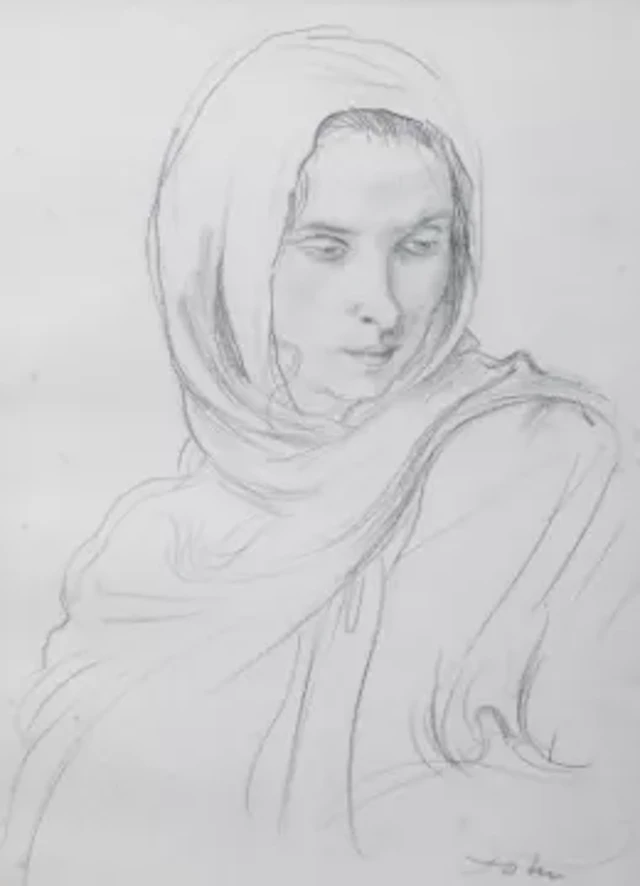
λ From the Collection of The Hon. Patrick and Lady Amabel Lindsay
10/21/2026
£9,000
Est: £10,000
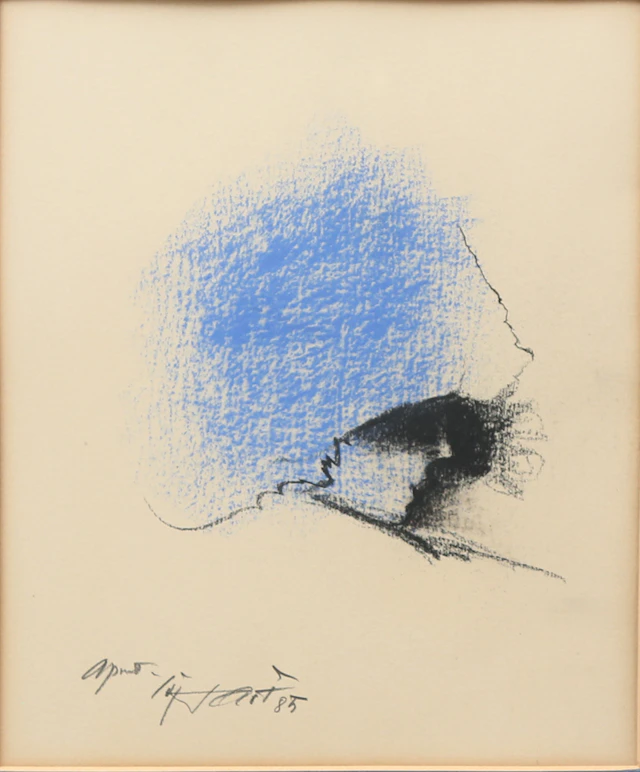


OCT 27 | 4:00 PM
Bring your auction to collectors worldwide!
Get listed nowBy subscribing, you are agreeing to the privacy policy. Unsubscribe anytime.
Barnebys HQ
Brahegatan 10
BOX 5038
114 37 Stockholm
