
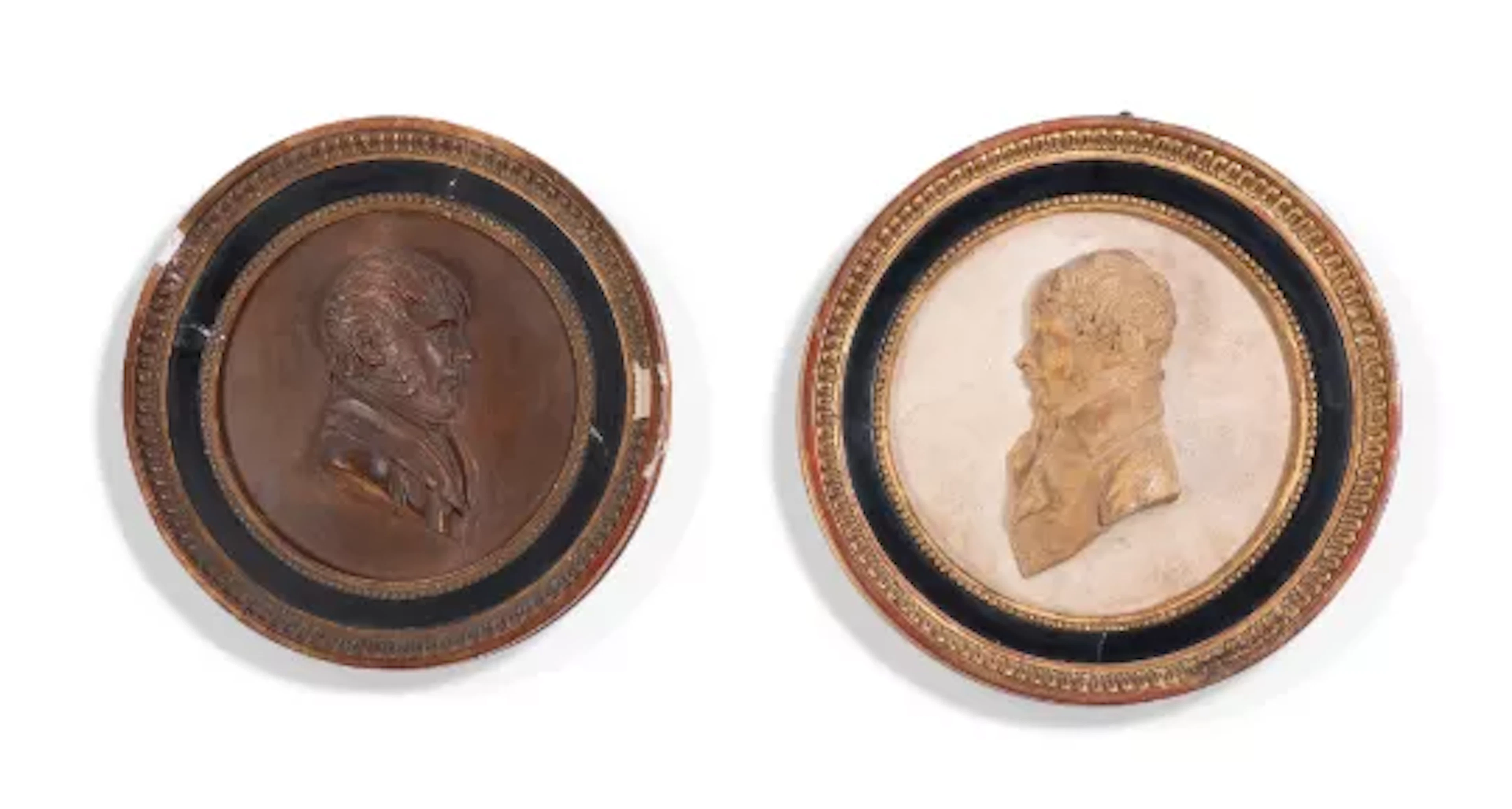



All auctions / Arts & Graphics / École impressionniste française (XIX-XX) - La Belle inconnue

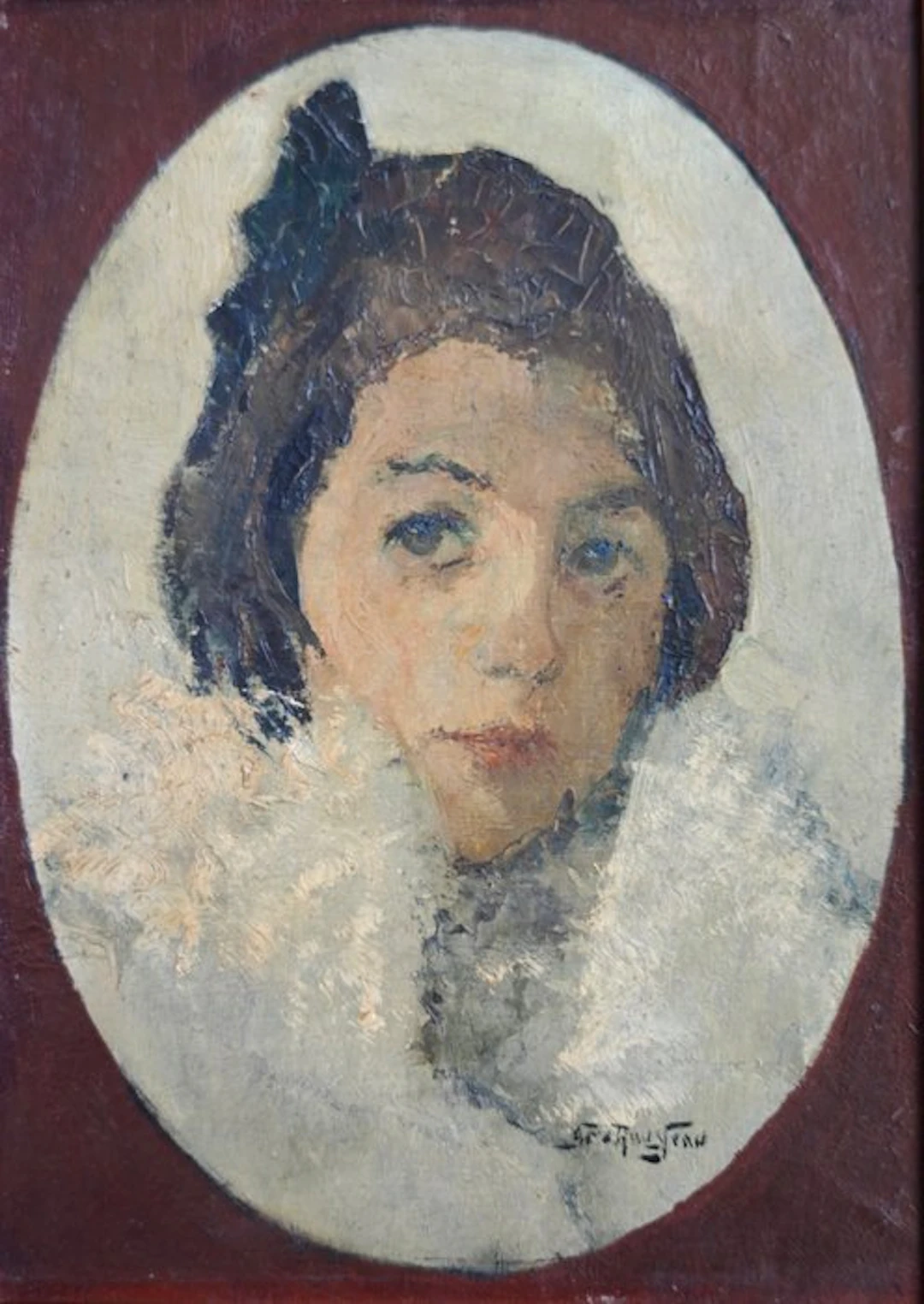
French School of the late 19th and early 20th centuries – Portrait of a Young Woman – Oil on canvas Interesting oil painting on canvas belonging to the French school of the late 19th and early 20th centuries, depicting a delicate intimate female portrait, executed with a free and expressive brushstroke. The work presents a figure of a young woman with dark hair gathered up and a flowing garment in white and gray tones, represented within an oval composition against a dark reddish background. The artist places special importance on the facial expression, the softness of the chromatic transitions, and the treatment of the painting material, especially visible in the areas corresponding to the hair and the clothing. The painting stands out for its psychological sensitivity, its melancholic atmosphere, and an execution that combines the tradition of naturalist portraiture with greater technical freedom, related to the transformations experienced by French painting between the 19th and 20th centuries. The work bears a signature in the lower right area of the composition, by means of an inscription that appears to correspond to the surname “Rousseau,” whose definitive identification has not been possible to establish. Description and artistic analysis The composition presents the bust of a young woman, depicted frontally with the face slightly turned, whose gaze is directed at the spectator. The figure is framed within an oval of light tone that contrasts with the dark reddish background, creating a presentation of classical and decorative character. The face is built through a combination of ochres, pinks, and grayish tones, with a loose brushstroke that suggests volumes without resorting to an excessively defined drawing. The dark hair shows a more impasted execution, with overlays of brown, bluish, and black tones that add depth to the composition. The attire, resolved through whites, grays, and soft bluish tones, acquires an especially expressive character thanks to the broad brushstrokes and the contrasts of painting material. The absence of secondary narrative elements concentrates all attention on the female figure and her expression. The young woman presents a serene and introspective attitude, with a slightly melancholic look that gives the portrait notable emotional sensitivity. The combination of a traditional framing and relatively free painting execution constitutes one of the main attractions of the work. The tradition of French portraiture between the 19th and 20th centuries The portrait occupied a fundamental place within 19th-century French painting, undergoing important transformations as naturalist, realist, and impressionist currents evolved. For a large part of the century, the academic tradition maintained a notable influence in the representation of the human figure, especially through attention to drawing, composition, and psychological characterization of the models. However, the progressive renewal of the pictorial language allowed increasingly spontaneous interpretations to develop, in which brushwork and color took on greater prominence. Artists began to assign growing importance to capturing personality and emotional states, sometimes moving away from the conventions of official portraiture. The present painting participates in this sensibility through a direct and restrained representation of the female figure. The face constitutes the emotional center of the composition, while the clothing and the background are resolved through a freer execution. This differentiation allows the viewer to focus on the young woman’s expression and reinforces the intimate character of the portrait. Thus, the work relates to an artistic tradition in which the interest in physical likeness coexists with the search for psychological and emotional impression. Naturalist, Impressionist, and Post-Impressionist influences From a stylistic point of view, the painting presents characteristics that allow it to be related to different currents developed in France during the final decades of the 19th century and the early 20th. The structure of the portrait and the attention given to the face show affinities with the naturalist tradition, especially for the interest in representing a recognizable human figure endowed with an individualized expression. However, the visible brushstroke and the freedom in the treatment of surfaces reveal a sensibility closer to the transformations introduced by impressionism and later currents. In impressionist painting, artists such as Pierre-Auguste Renoir, Berthe Morisot, and Édouard Manet contributed, from different approaches, to renewing the representation of the human figure through greater technical freedom and special attention to the relationships between light and color. In particular, the treatment of light surfaces with visible brushstrokes and the construction of the face through chromatic nuances allow establishing certain general affinities with this pictorial renewal. The work also presents characteristics related to Post-Impressionist sensibility, especially in the autonomy of the brushstroke and in the simplification of certain forms. During the early decades of the 20th century, numerous French painters continued exploring these possibilities, combining traditional representation procedures with more expressive techniques. The present portrait can be stylistically placed within this evolution, in which academic precision gives way to a freer and more personal interpretation of the figure. These references are understood as formal affinities and do not imply attribution or direct relation to the artists mentioned. Expression, color, and painting technique One of the most interesting aspects of the work is the contrast between the delicacy of the face and the more vigorous execution of the remaining surfaces. The artist uses a relatively contained palette, dominated by whites, bluish grays, ochres, browns, and reddish tones. The lighting is soft and diffuse, with no excessively dramatic contrasts, which favors an intimate atmosphere. The gaze of the young woman, slightly off-center, introduces a sense of introspection and helps endow the portrait with psychological character. The brushstroke presents different degrees of definition: more restrained in facial features and considerably freer in the hair and clothing. In the light areas there are overlays of paint and visible strokes that add texture and movement. The oval composition reinforces the prominence of the figure and recalls a presentation format widely used in the European portrait tradition. The contrast between the light oval and the dark reddish background provides chromatic balance and emphasizes the decorative character of the painting. The result is a work with intimate-sensibility, in which the expression of the figure and the freedom of execution are its main artistic values. Signature and cataloging The painting features a signature in the lower right area of the composition, rendered in a dark tone. The inscription seems to correspond to the surname “Rousseau,” though its reading does not allow a conclusive determination of the artist’s identity. The surname Rousseau is linked to various French painters of the 19th and 20th centuries, so nominal coincidence alone does not constitute sufficient proof to attribute the work to a specific author. For this reason, the painting is prudently presented under the designation “French School of the late 19th and early 20th centuries,” noting the presence of the seemingly legible signature as “Rousseau.” This cataloging allows assessing the artistic characteristics of the work without establishing a specific attribution that is not confirmed. Artistic and Collecting Interest The painting constitutes an attractive example of the female portrait developed within the French figurative tradition of the late 19th and early 20th centuries. Its main interest lies in the expressive sensibility of the figure, the delicacy of chromatic nuances, and the spontaneous treatment of the painting material. The combination of a classical composition with free brushwork allows relating it to the transformations experienced by French portraiture during this period. The introspective look of the young woman, the harmony of the tonalities, and the oval presentation give the work notable personality. It is a painting particularly interesting for collectors of female portraiture, French painting of the 19th and 20th centuries, naturalism, impressionism, and European figuration. Characteristics of the work Author: Signature apparently legible as “Rousseau,” with no conclusive identification. School: French. Era: Late 19th and early 20th centuries. Technique: Oil on canvas. Style: Figurative portrait in a naturalist tradition, with impressionist and post-impressionist influences. Genre: Female portrait. Theme: Bust of a young woman with light clothing. Composition: Portrait inscribed in an oval. Presentation: Framed. Frame and condition The painting is presented with an attractive historicist gilded frame, richly ornamented with plant motifs and reliefs of classical inspiration. The moulding features continuous decoration of leaves and volutes, with an inner gold band delimiting the pictorial surface. The frame’s ornamental richness contrasts with the simplicity of the composition and reinforces its traditional aesthetics. The frame shows visible signs of use that can be appreciated in the photographs. The frame is offered as a gift to the buyer, with no commercial value, and is not part of the painting’s economic appraisal. It is recommended to carefully review the photographs, which are an integral part of the description, to assess the condition and visible characteristics of the whole. Shipping The work will be carefully and professionally packed, using protective materials appropriate to its characteristics to guarantee its safety during transport. Shipments to destinations outside the European Union may be subject to taxes, duties, import fees, handling charges, and customs procedures. These potential costs will be the responsibility of the buyer and are not included in the hammer price or shipping costs. Likewise, shipments to islands, insular territories, or remote or hard-to-reach areas, as considered by the transport companies, may incur additional costs. Any surcharge applied by the transport company for this reason must be borne by the buyer.
Estimate:£422.56
To the auctionView all items fromCatawikiorArts & Graphics
Estimate:
£422.56
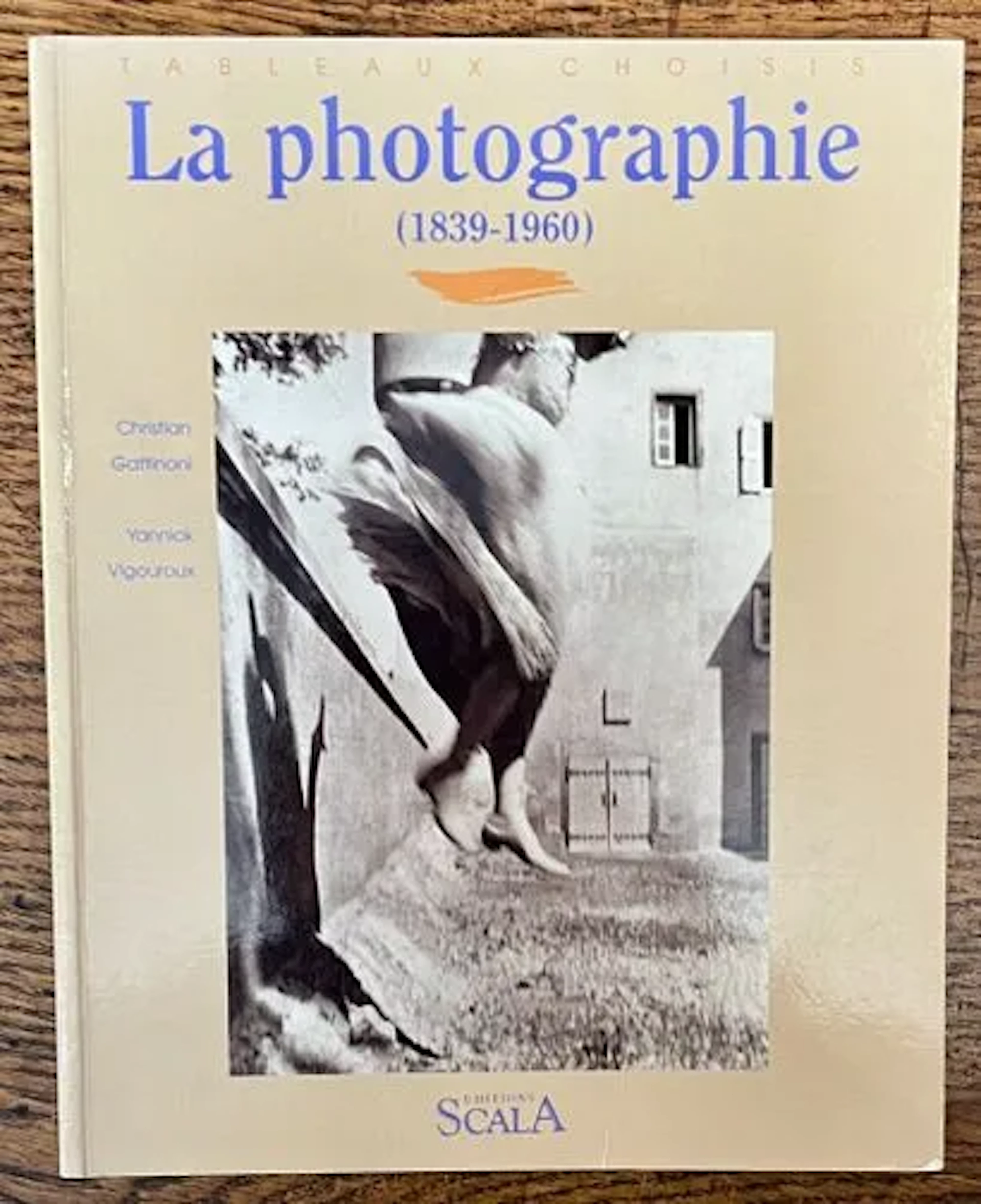
GATTINONI (Christian) & VIGOUROUX (Yannick). — Photograp - Lot 108
10/11/2026

£4.22
Est: £8.46
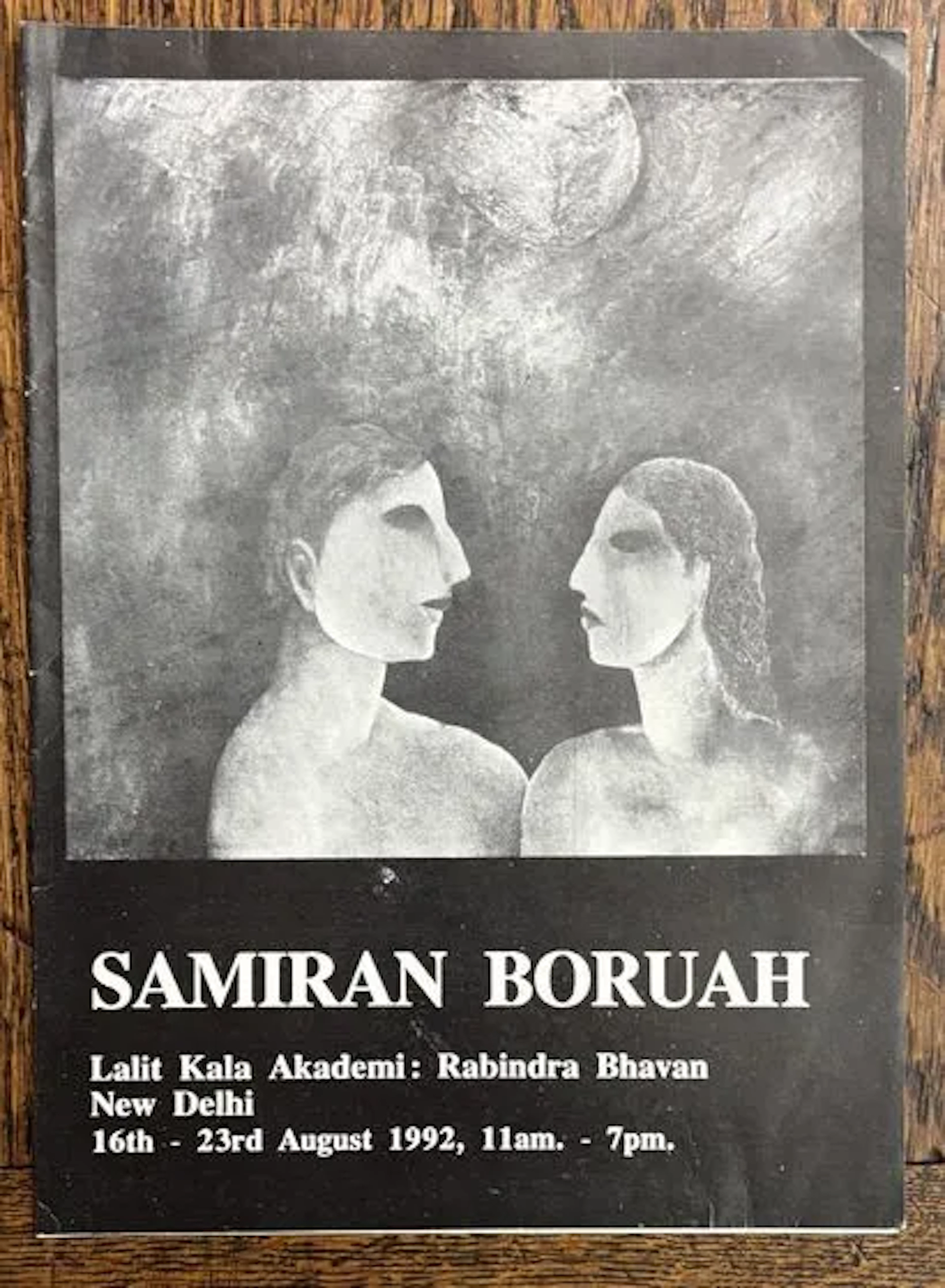
BORUAH (Samiran) — LALIT KALA AKADEMI EXHIBITION, NEW DELHI, - Lot 37
10/11/2026
£4.22
Est: £25.38
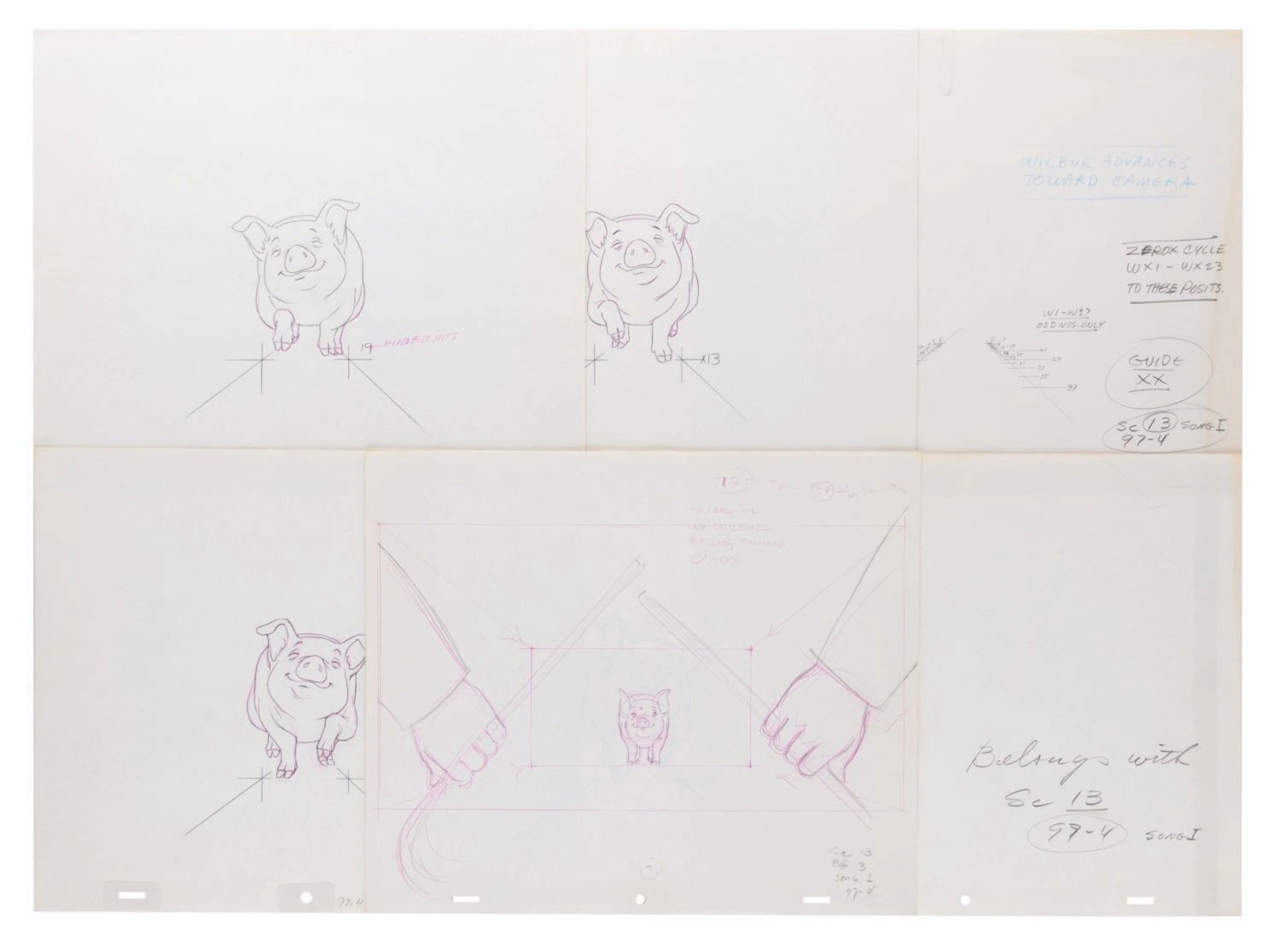
A Collection of "Charlotte's Web" Production Drawings.
10/10/2026
£132.19
Est: £151.02
A Collection of "Charlotte's Web" Production Drawings.
10/10/2026
£132.19
Est: £150.93


OCT 23 | 8:00 AM


OCT 27 | 4:00 PM
Bring your auction to collectors worldwide!
Get listed nowBy subscribing, you are agreeing to the privacy policy. Unsubscribe anytime.
Barnebys HQ
Brahegatan 10
BOX 5038
114 37 Stockholm
