



Bring your auction to collectors worldwide!
Get listed nowBy subscribing, you are agreeing to the privacy policy. Unsubscribe anytime.
Barnebys HQ
Brahegatan 10
BOX 5038
114 37 Stockholm
All auctions / Asian Art / Egyptian Predynastic Banded Alabaster Piriform Mace Head

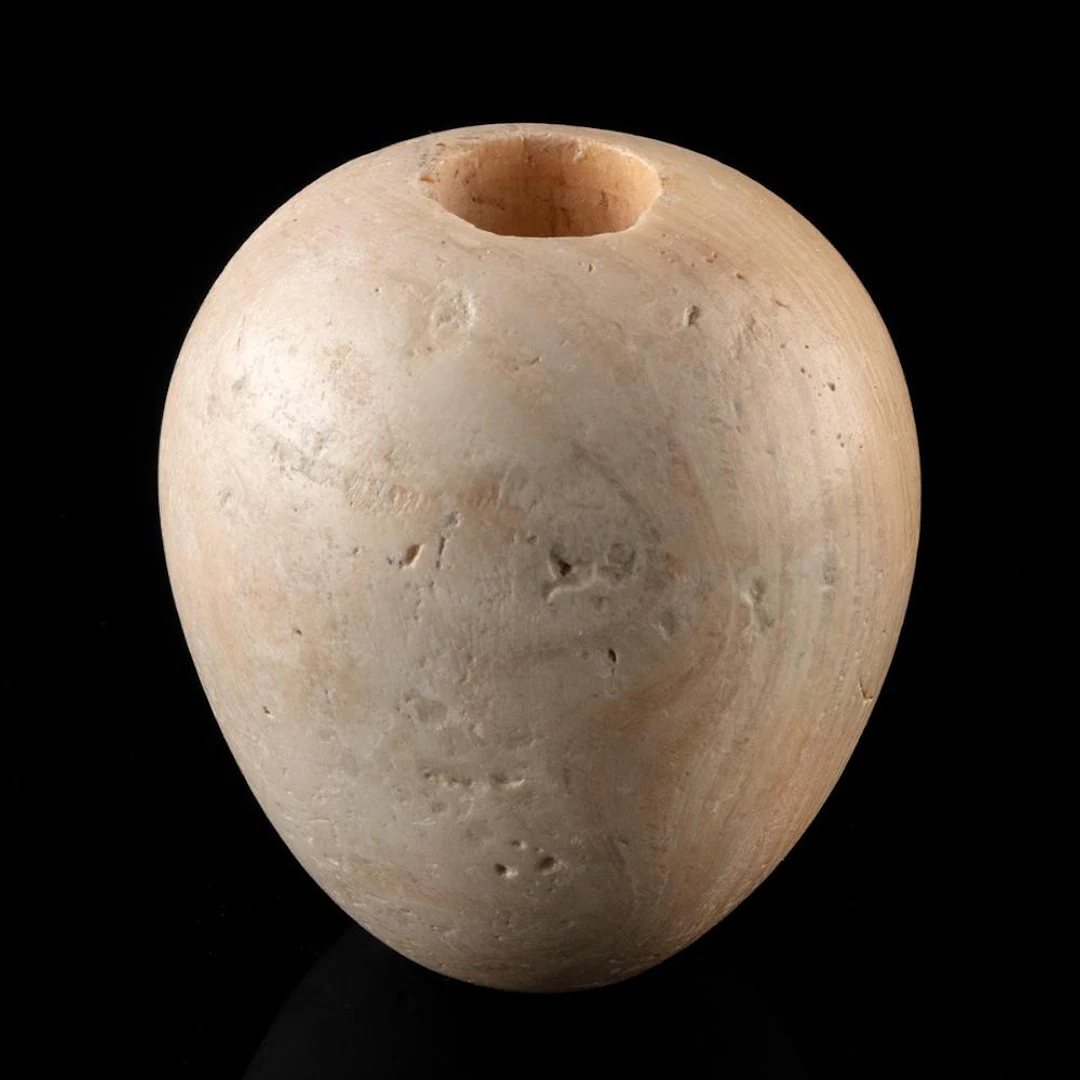
North Africa, Egypt, Predynastic period. A pear-shaped mace head ground from banded alabaster (travertine), its creamy body threaded with pale amber striations that swell and taper with the curve of the stone. The piriform profile, broad at the shoulder and drawn to a narrow crown, marks the later Predynastic departure from the earlier disc-shaped type, a change that made the weapon heavier at the point of impact. A cylindrical shaft hole was bored through the axis to receive a wooden haft. Maces of hard, decorative stone were laborious to produce and are widely understood as emblems of authority as much as instruments of combat, the same form later gripped by the smiting king in early dynastic relief. Mounted on an included custom acrylic stand. The shift from the disc mace of Naqada I to the piriform mace of Naqada II and III is one of the clearest typological markers in Predynastic Egyptian material culture, and it carried an ideological charge well beyond ballistics. By the threshold of the First Dynasty the piriform mace had become the king's instrument: the ceremonial limestone examples of Scorpion and Narmer, carved with scenes of ritual foundation and conquest, translate the everyday weapon into royal regalia. The gesture of the pharaoh raising a mace above a kneeling captive persisted in Egyptian art for three thousand years, from Narmer's palette to the temple pylons of the Ramesside period. Egyptian "alabaster" is not the gypsum alabaster of European sculpture but calcite travertine, quarried principally at Hatnub in Middle Egypt. Its banding results from the rhythmic deposition of calcium carbonate in spring-fed cavities, and Predynastic craftsmen exploited those bands deliberately, orienting the blank so the strata wrapped the finished form. Shaping was done with stone pounders and abrasive sand; the shaft hole was bored with a tubular drill fed with quartz sand slurry, a slow rotary process that left the smooth cylindrical channel seen here. Item # 204406
Estimate:£301.58
To the auctionView all items fromArtemis Fine ArtsorAsian Art
Estimate:
£301.58
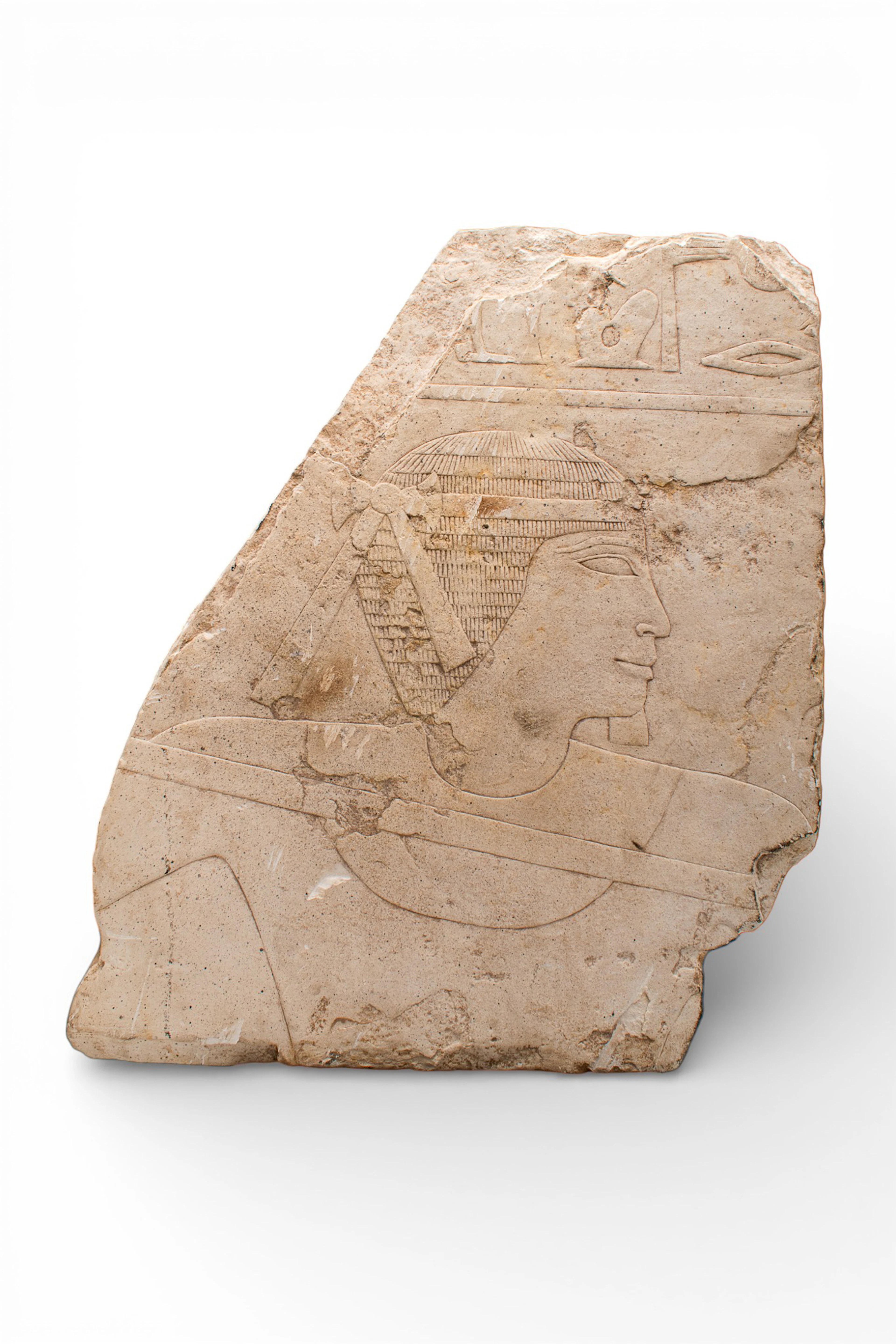
MONUMENTAL EGYPTIAN LIMESTONE RELIEF DEPICTING A NOBLEMAN FISHING
02/02/2026

£13,500
Est: £10,000
Bring your auction to collectors worldwide!
Get listed now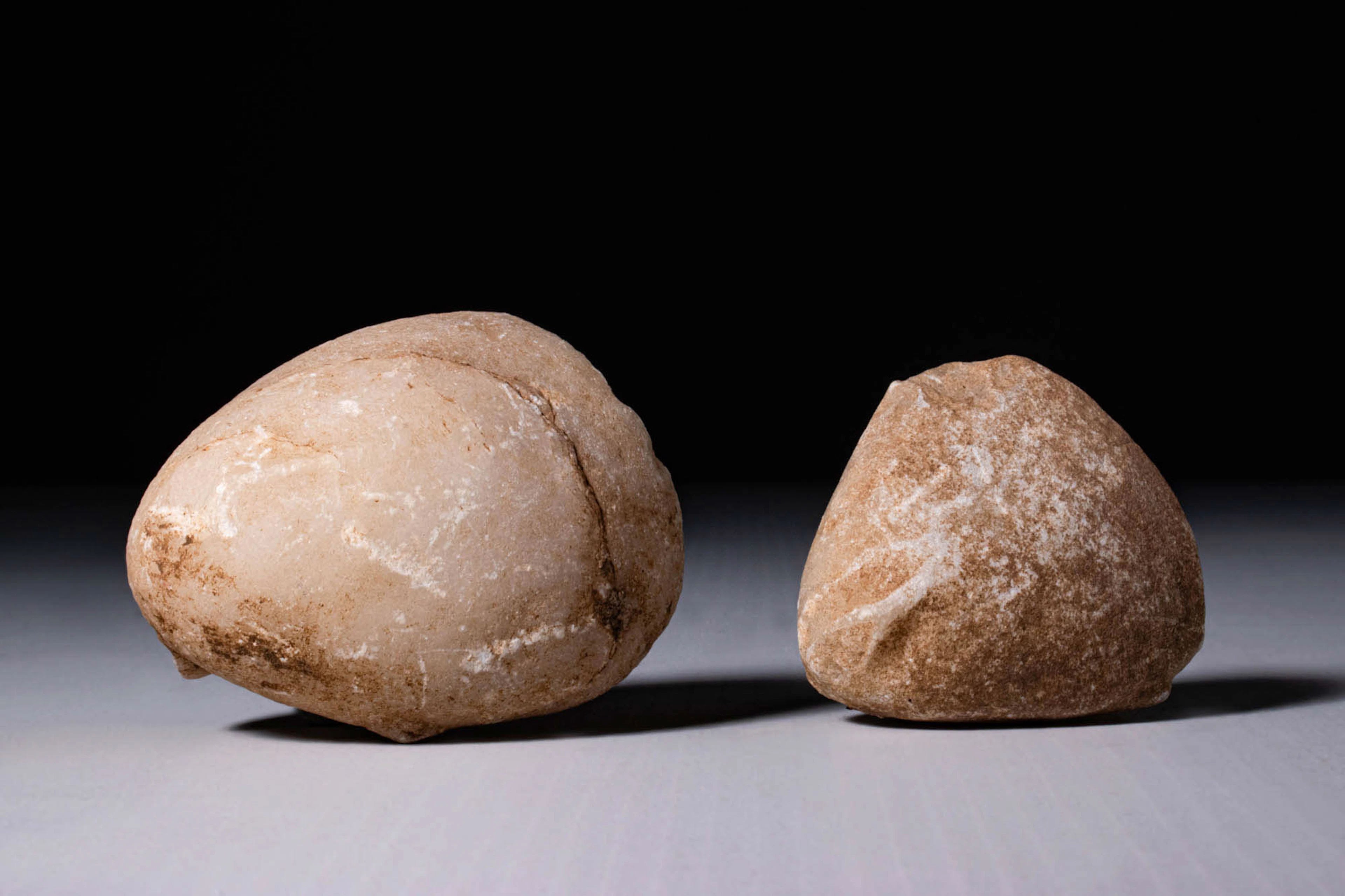
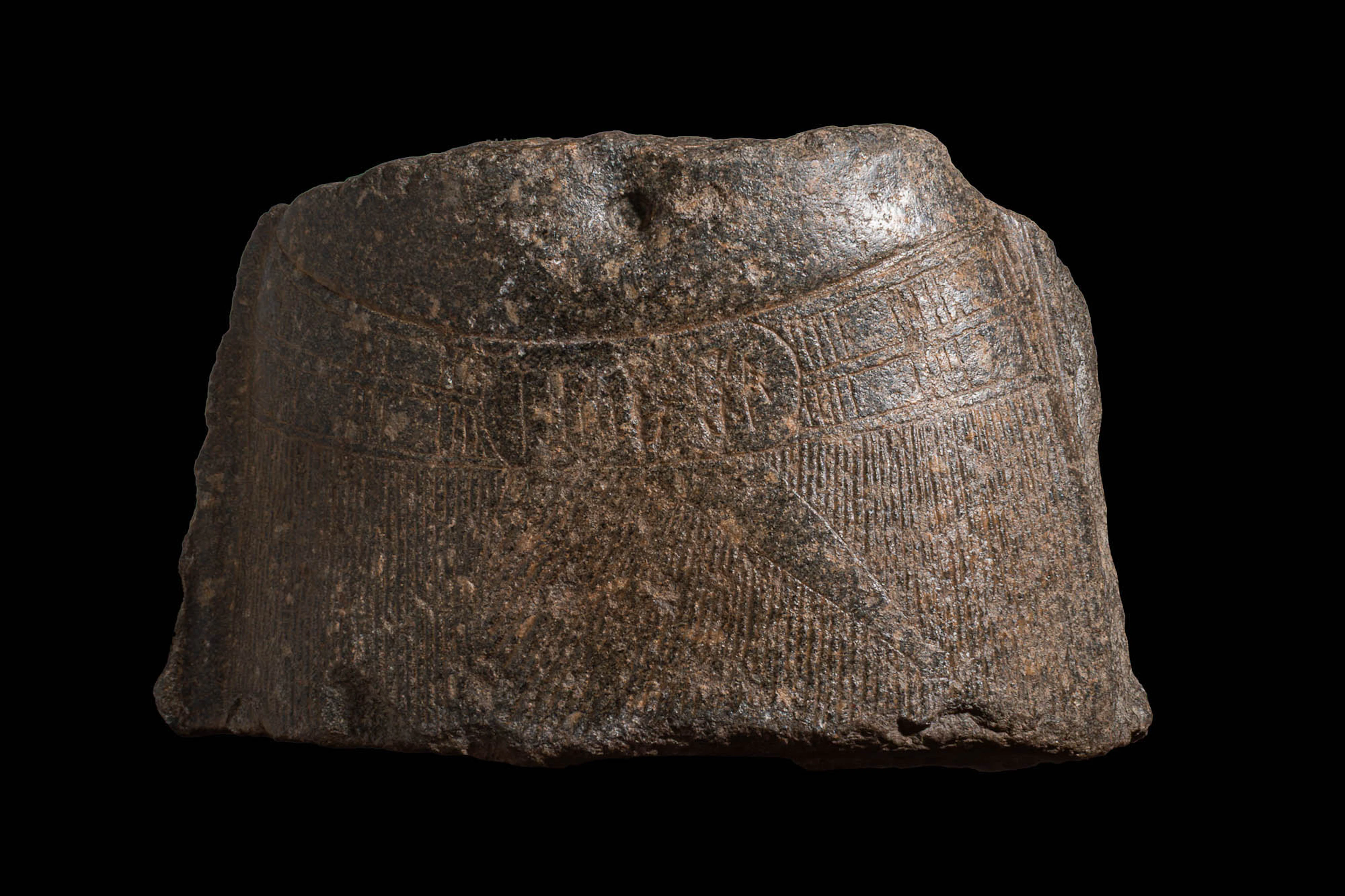
COLOSSAL EGYPTIAN BLACK STONE FRAGMENT OF STATUE OF THE PHARAOH RAMESSES II
10/05/2025
£10,000
Est: £10,000
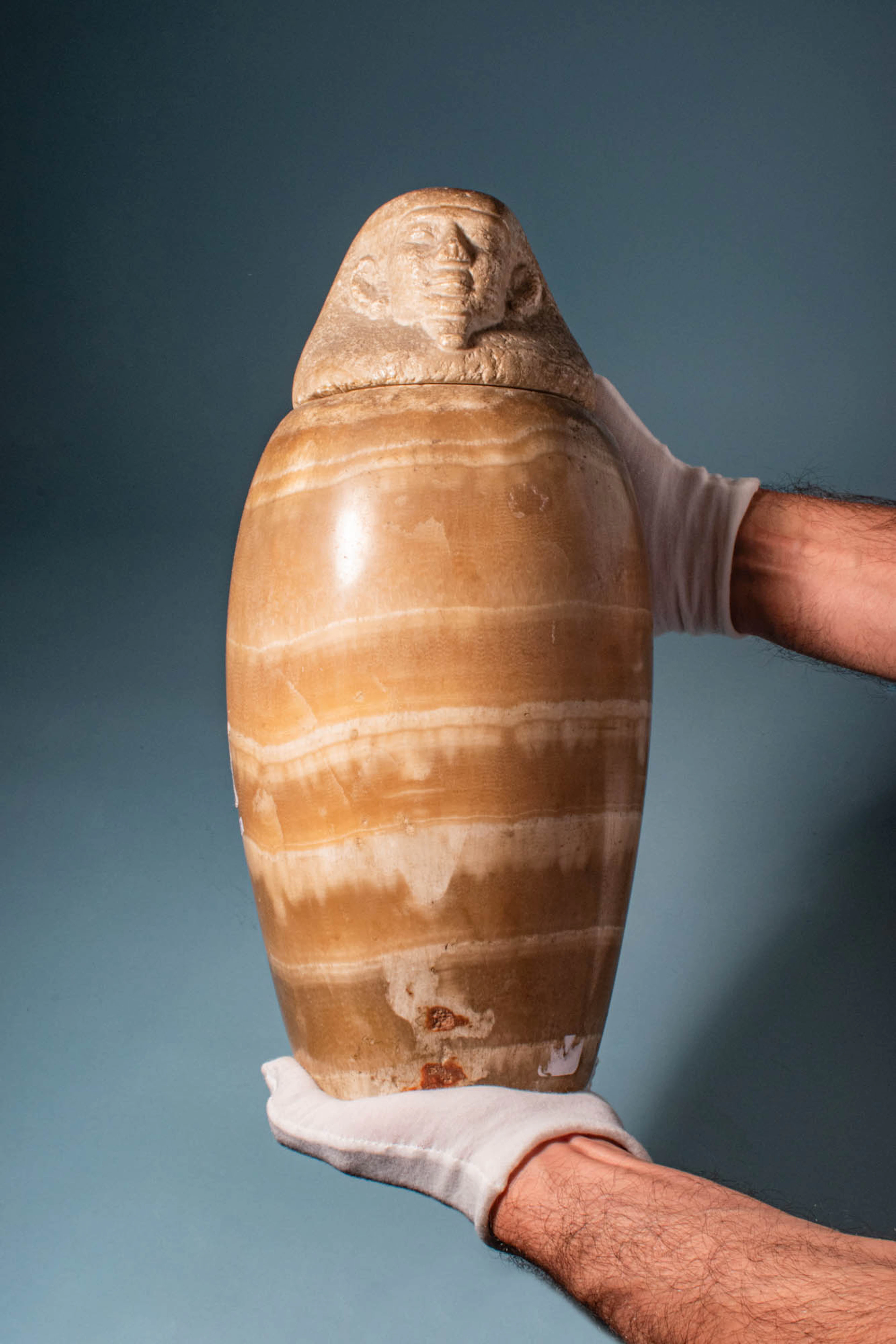
RARE EGYPTIAN ALABASTER CANOPIC JAR WITH HUMAN-HEADED LID (IMSETY)
07/27/2025
£10,000
Est: £3,000