


Bring your auction to collectors worldwide!
Get listed nowBy subscribing, you are agreeing to the privacy policy. Unsubscribe anytime.
Barnebys HQ
Brahegatan 10
BOX 5038
114 37 Stockholm
All auctions / Ethnographical / Exceptional fossil dragonfly

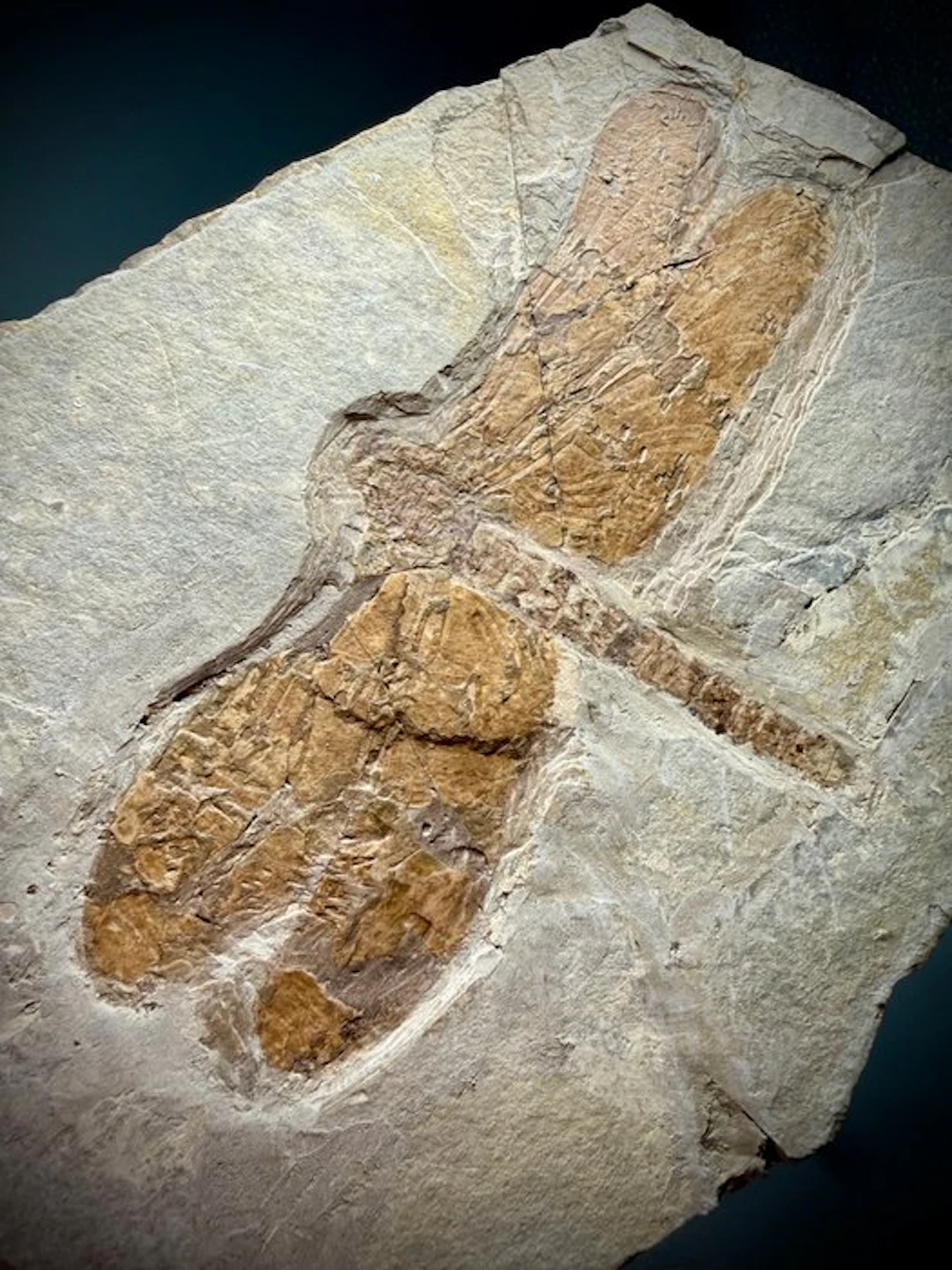
This is a particularly impressive and rare fossil dragonfly belonging to the extinct genus †Sinaeschnidia, represented here by a specimen traditionally identified as †Sinaeschnidia cancellosa. What immediately makes this specimen remarkable is its substantial overall preservation. The dragonfly retains both pairs of wings, with an impressive amount of the delicate three-dimensional body, thorax and abdomen still visible on the matrix. The wings extend to approximately 13 cm from wingtip to wingtip, giving the fossil a striking presence on the slab. The most spectacular feature is undoubtedly the fine fossilised wing venation. Numerous delicate veins can be followed across the wings, including the intricate branching and cross-vein pattern characteristic of these ancient dragonflies. The preservation is sufficiently detailed that the venation remains clearly visible even in the outer portions of the wings. Importantly, the wing venation is NOT painted or artificially drawn onto the fossil. The intricate network visible across the wings is part of the original fossil preservation and represents the naturally preserved venation of the ancient insect. The specimen also preserves the main body architecture, including the head/thorax region and a considerable portion of the abdomen. Condition & Restoration During extraction and preparation, the slab was broken, and the original fragments were subsequently carefully reassembled and glued back together. The breakage resulted in the loss of some portions of the extremely delicate wing margins, which remain absent today. Importantly, the missing areas have not been filled, painted or artificially reconstructed. The specimen is therefore presented in an honest state, with the original fossil preservation clearly distinguishable from the restored matrix. The fine branching veins and cross-veins are preserved directly in the fossil material, providing an exceptional view of the wing architecture of this Early Cretaceous dragonfly. This specimen is highly attractive for both collectors of fossil insects and specialists interested in the remarkable insect fauna of the Yixian Formation and the Jehol Biota. Slab is 17 x 15 cm Large fossil dragonflies are inherently difficult to preserve. Their wings are extremely delicate and are easily destroyed, separated from the body or fragmented during burial and subsequent preparation. Finding a specimen in which four wings, detailed venation and a substantial portion of the body occur together on a single slab is therefore considerably more unusual than finding an isolated fossil wing. The combination of 13 cm wingspan, four preserved wings, exceptionally visible venation, substantial body preservation and strong natural contrast against the matrix makes this a highly attractive specimen for both collectors of fossil insects and specialists interested in the remarkable insect fauna of the Yixian Formation and the Jehol Biota. A fossil with the visual impact of a dragonfly in flight, but preserved in stone for more than 120 million years.
Estimate:£1,542.81
To the auctionView all items fromCatawikiorEthnographical
Estimate:
£1,542.81
Bring your auction to collectors worldwide!
Get listed now
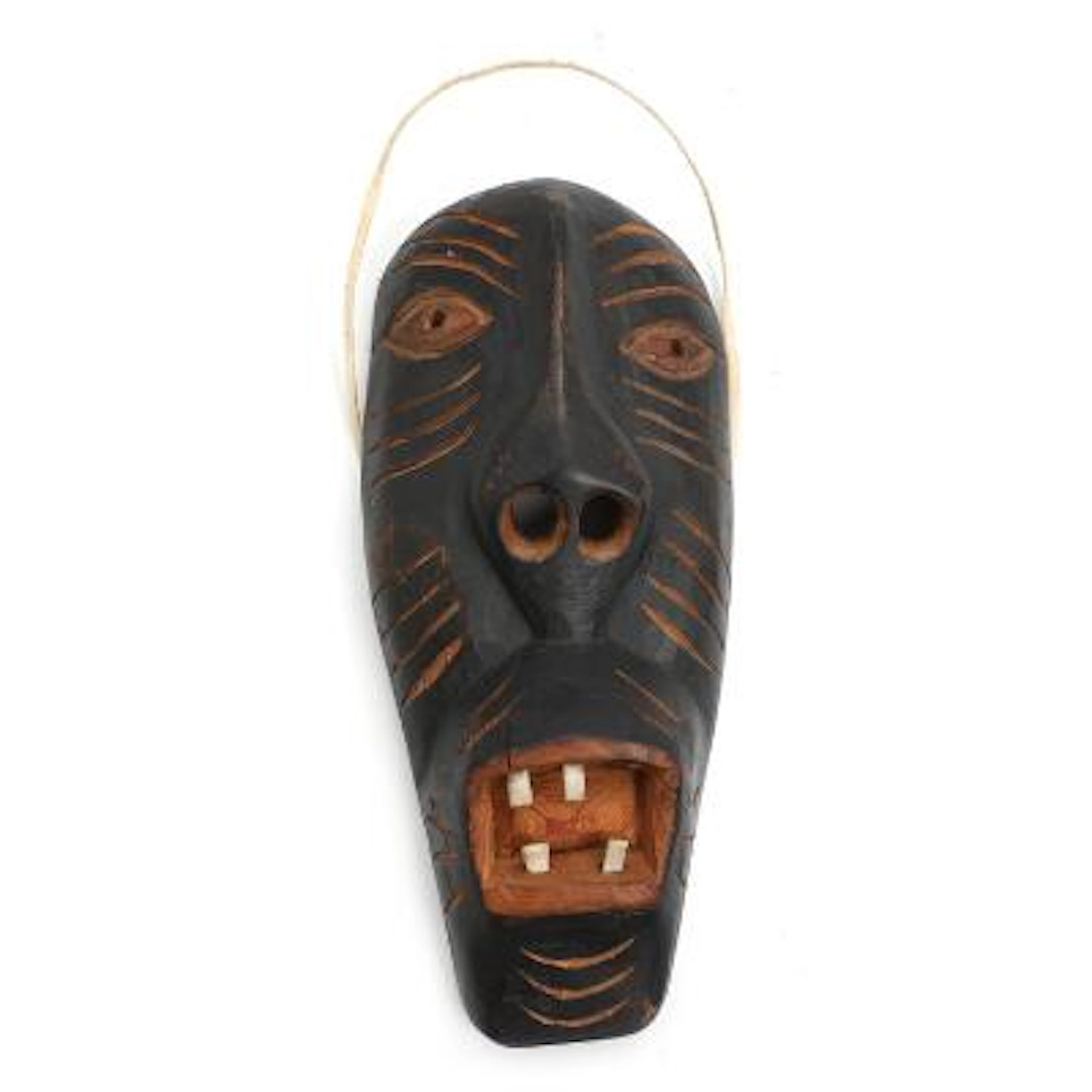
East Greenlandic mask of driftwood with strap of seal skin. Tasiilaq.
09/28/2026

£412.41
Est: £413.98
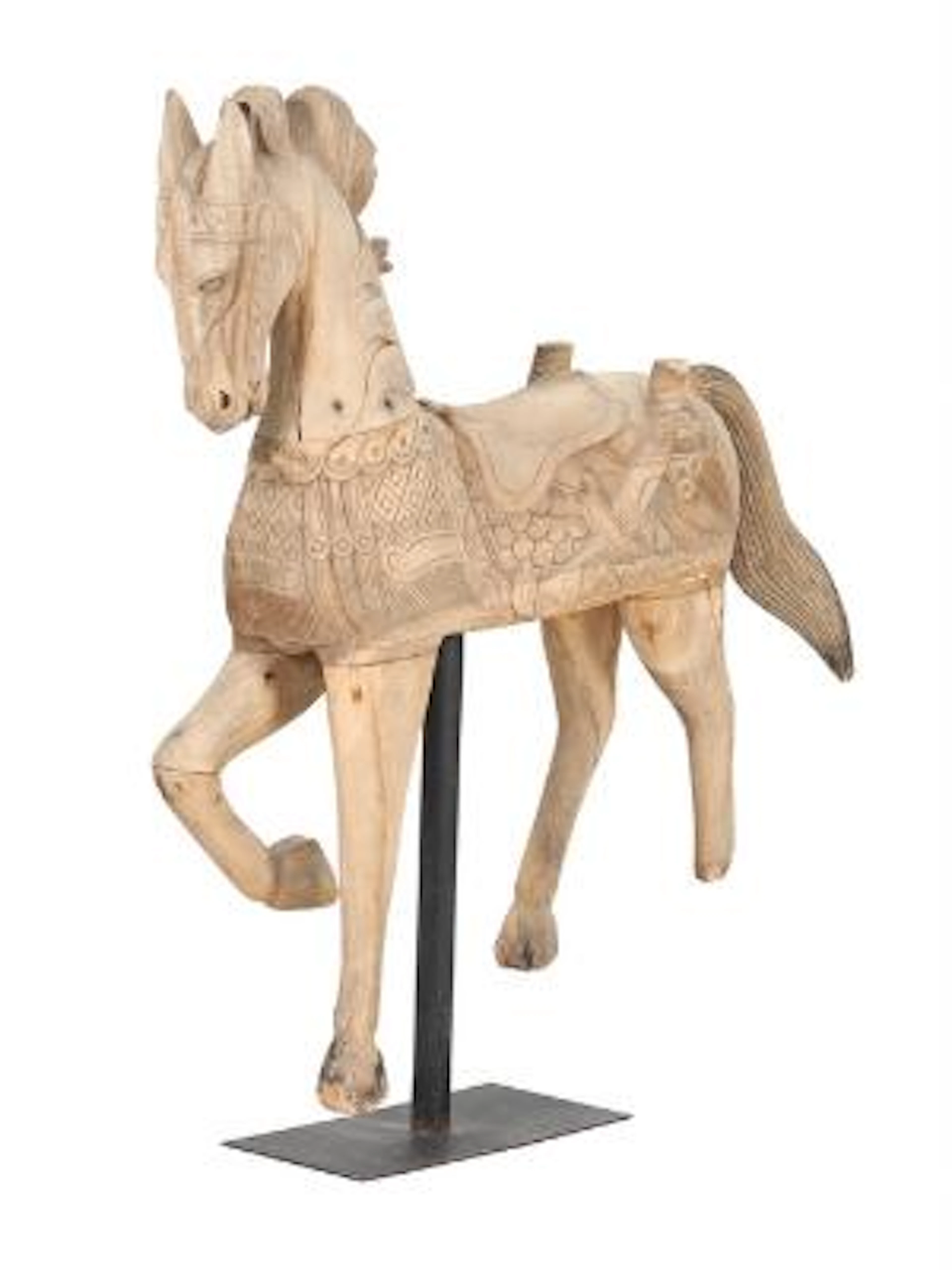
Carved wooden horse. Mounted on iron stand. Southeast Asia. 20th century.
09/28/2026
£120.28
Est: £229.15