
OCT 8 | 3:00 PM

Bring your auction to collectors worldwide!
Get listed nowBy subscribing, you are agreeing to the privacy policy. Unsubscribe anytime.
Barnebys HQ
Brahegatan 10
BOX 5038
114 37 Stockholm
All auctions / Ethnographical / Extremely rare Herkimer Diamond — 4.86 carats Exceptional...

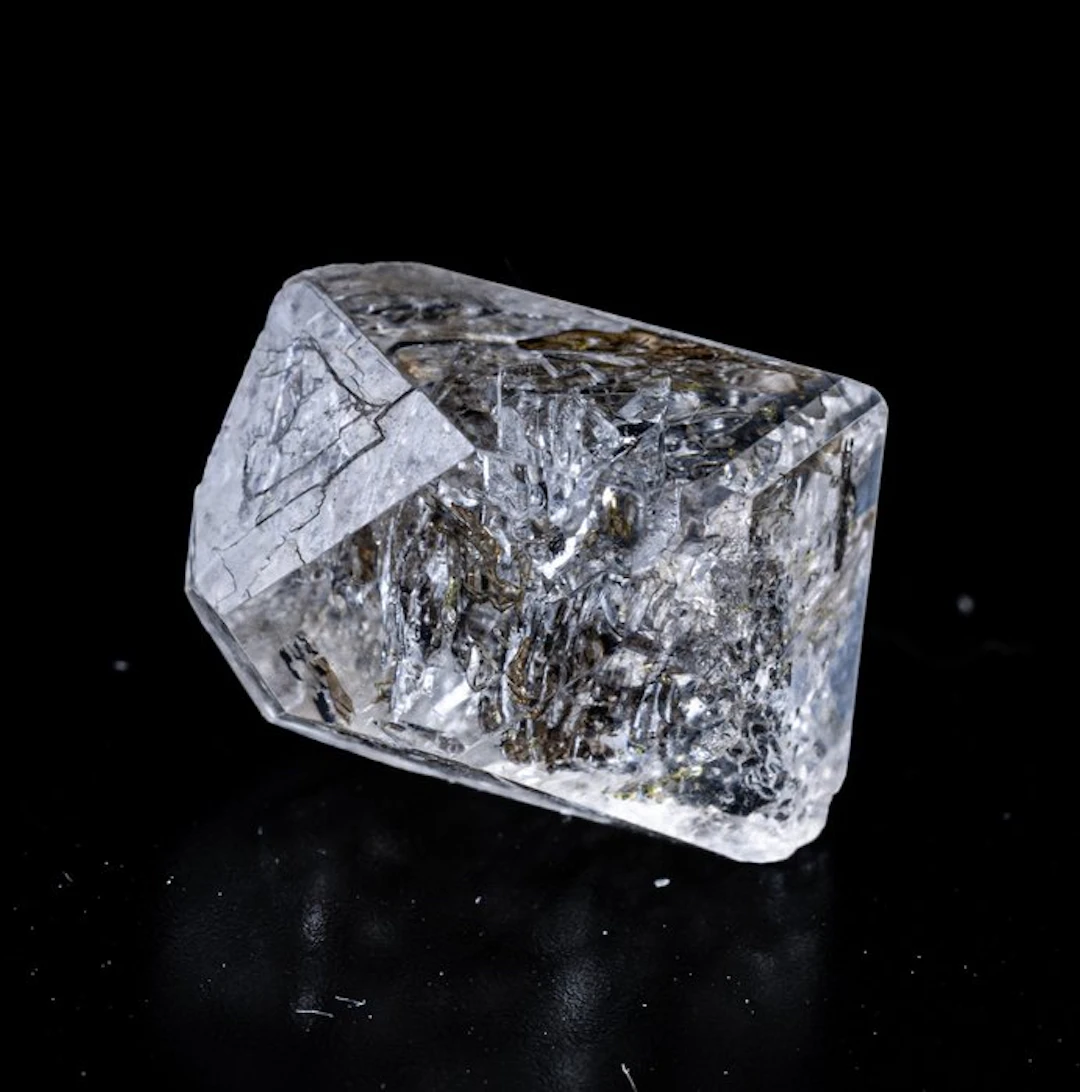
Exceptional natural 4.86-carat Herkimer Diamond, showcasing a remarkably striking combination of a strongly geometric crystal morphology, beautiful transparency, and a heart of spectacular complexity. The piece reveals a true internal architecture: successive veils, healed fractures, lamellar structures, reflective zones and inclusions with silvery to bronze-gold hues seem to organize on several levels inside the crystal. The clearest parts form real windows allowing observation of this deep construction, while the natural faces act as mirrors and radically alter its appearance depending on the light’s orientation. Each angle thus reveals a different scene. Despite the historical name of “Herkimer Diamond,” this is not a diamond in the mineralogical sense: this piece is a rare twin-terminated quartz specimen, sought here for its natural morphology, its transparency, and above all the extraordinary richness of its internal architecture. Characteristics - Collection name: Herkimer Diamond - Mineralogical nature: Natural twin-terminated quartz - Origin: Pakistan - Weight: 4.86 carats - Dimensions: 12.4 × 11.4 × 9 mm - Morphology: Natural twin-terminated crystal - Color: Colorless, with silvery inclusions and bronze-gold nuances - Transparency: Very good transparency on peripheral zones - Luster: Glassy, particularly bright - Crystal faces: Natural, geometrical and highly reflective - Internal structure: Extremely complex and three-dimensional - Particularities: Veils, internal planes, natural fractures and numerous visible structures - Interest: Mineral collection, crystallography, study of inclusions and macrophotography An extraordinary internal architecture This specimen immediately stands out for the exceptional richness of its core. The interior does not present a uniform structure: it seems instead composed of several generations of overlapped forms, giving a remarkable sense of depth. At the center, the transparent and silvery structures intersect with slightly darker zones, sometimes bronze-gold. Under directional lighting, some become extremely brilliant while others almost disappear. This alternation creates a true optical relief. The crystal can appear relatively transparent in one orientation and, a few degrees later, reveal an extraordinary concentration of details. A true miniature mineral landscape At only 12.4 mm in length, this piece conceals an astonishingly vast universe when viewed under magnification. Internal structures sometimes seem to form staircases, stacked plates or tiny crystalline constructions. Some areas reflect light with an almost metallic gleam, while others remain perfectly transparent and allow viewing several millimeters through the crystal. This combination is particularly interesting for macrophotography. At high magnification, the specimen ceases to appear merely as a crystal: it becomes a true three-dimensional geological landscape. A sought-after twin-terminated morphology The double termination is one of the fundamental characteristics of this type of crystal. Unlike a crystal whose one end remains attached to its matrix during growth, a twin-terminated specimen could develop terminal faces at both ends thanks to the particular space conditions in which it formed. This growth therefore requires a favorable geological configuration. On this piece, the morphology is particularly interesting for its compact, massive appearance: with 12.4 × 11.4 × 9 mm, the proportions are generous and give the crystal a remarkable presence for a weight of 4.86 carats. A spectacular natural geometry One of the most impressive features of this piece is the contrast between its highly geometric exterior and its extremely complex interior. The main faces are sufficiently neat to produce large reflective surfaces. Some areas appear almost cut as their geometry is pronounced, though they result from the crystal’s natural growth. The edges delineate different faces that successively catch the light as the stone is rotated. This geometry creates a nearly prismatic effect and further enhances the perception of the internal structures. Inclusions that tell its formation The numerous structures visible inside should not be considered mere imperfections. For the mineral collector, they are precisely a major part of this piece’s interest. The growth of a natural crystal is a complex process. It can involve different phases, changes in physico-chemical conditions, and events likely to leave traces in matter. Veils, inclusions, natural fractures, and growth planes then become witnesses of this history. The crystal is, in a sense, a three-dimensional mineral archive, preserving certain events of its formation. On this specimen, this history is particularly visible. A heart of remarkable complexity The central zone is undeniably the piece’s strongest feature. There is a spectacular concentration of angular and lamellar structures that overlap and sometimes seem to form multiple successive layers. Slightly smoked or bronze-gold nuances provide contrast to the perfectly colorless areas and enhance the perception of relief. Some structures appear to be suspended in the middle of the crystal. Others seem to emerge gradually from transparent zones before disappearing behind a new reflective plane. This complexity makes it virtually impossible to understand the entire structure from a single orientation. A piece that continually changes under light Light truly reveals the specimen’s character. Frontal illumination emphasizes its transparency and allows exploration of its core. Lateral lighting brings out the large faces and reflective structures. Under a spot light, certain internal zones suddenly illuminate while the rest of the crystal remains transparent. This continual interaction between transparency, reflection, and depth is one of its main attractions. The specimen should therefore be observed in rotation, ideally under directional light or with a loupe. The history of the “Herkimer Diamond” name The term “Herkimer Diamond” has a particular history in the world of mineral collecting. This designation is historically associated with the famous twin-terminated crystals discovered in the Herkimer region of New York State. Their remarkable transparency, brilliance, and naturally highly developed geometry earned them this diamond comparison. Over time, this spectacular morphology has become extremely popular among collectors. Comparable twin-terminated crystals also exist in other deposits around the world. That is why the specimen’s actual geographic provenance is clearly specified in its characteristics. A piece for the dedicated collector This specimen possesses a particularly pleasing balance between external geometry, transparency, and internal complexity. It is not merely a lucid crystal: its interest lies precisely in the wealth of information and structures it contains. Each inclusion, veil, and reflective plane gives it an absolutely unique identity. No second crystal can reproduce exactly this architecture. With its 4.86 carats and compact yet generous dimensions, it represents a remarkable piece for display, study, or macrophotography. A singular and spectacular twin-terminated specimen, whose beauty lies not only in its transparency, but in the extraordinary complexity of the mineral history visible at the crystal’s very heart. General Terms of Sale – MineralsOpals: At MineralsOpals, your satisfaction is a top priority. All orders are processed with the utmost care, from stone selection to final shipment. - Shipping & timelines: Shipping within 1 to 3 business days at most, typically the day after the order. Shipping Monday to Friday (excluding weekends and holidays). Each parcel is sent via La Poste with tracking number provided. Careful packaging: each stone is individually protected, then placed in a rigid secure carton. - Guarantee & customer service: 100% of shipments are guaranteed: if there is an issue, we always find a solution. You buy with complete confidence: full refund, replacement, or courtesy gesture in case of loss or proven problem. If you have questions, doubts, or a specific request, you can contact me at any time, and I will gladly respond as soon as possible. Trust & commitment Each stone is photographed with care to reflect its natural beauty. You benefit from personalized follow-up. My objective: to offer you a reliable, humane, and transparent purchasing experience. Thank you for your support. Feel free to browse our no-reserve auctions to discover other exceptional products and follow us to stay informed about our new offerings.
Estimate:£0.84
To the auctionView all items fromCatawikiorEthnographical
Estimate:
£0.84
OCT 8 | 3:00 PM


OCT 8 | 3:00 PM

Bring your auction to collectors worldwide!
Get listed now

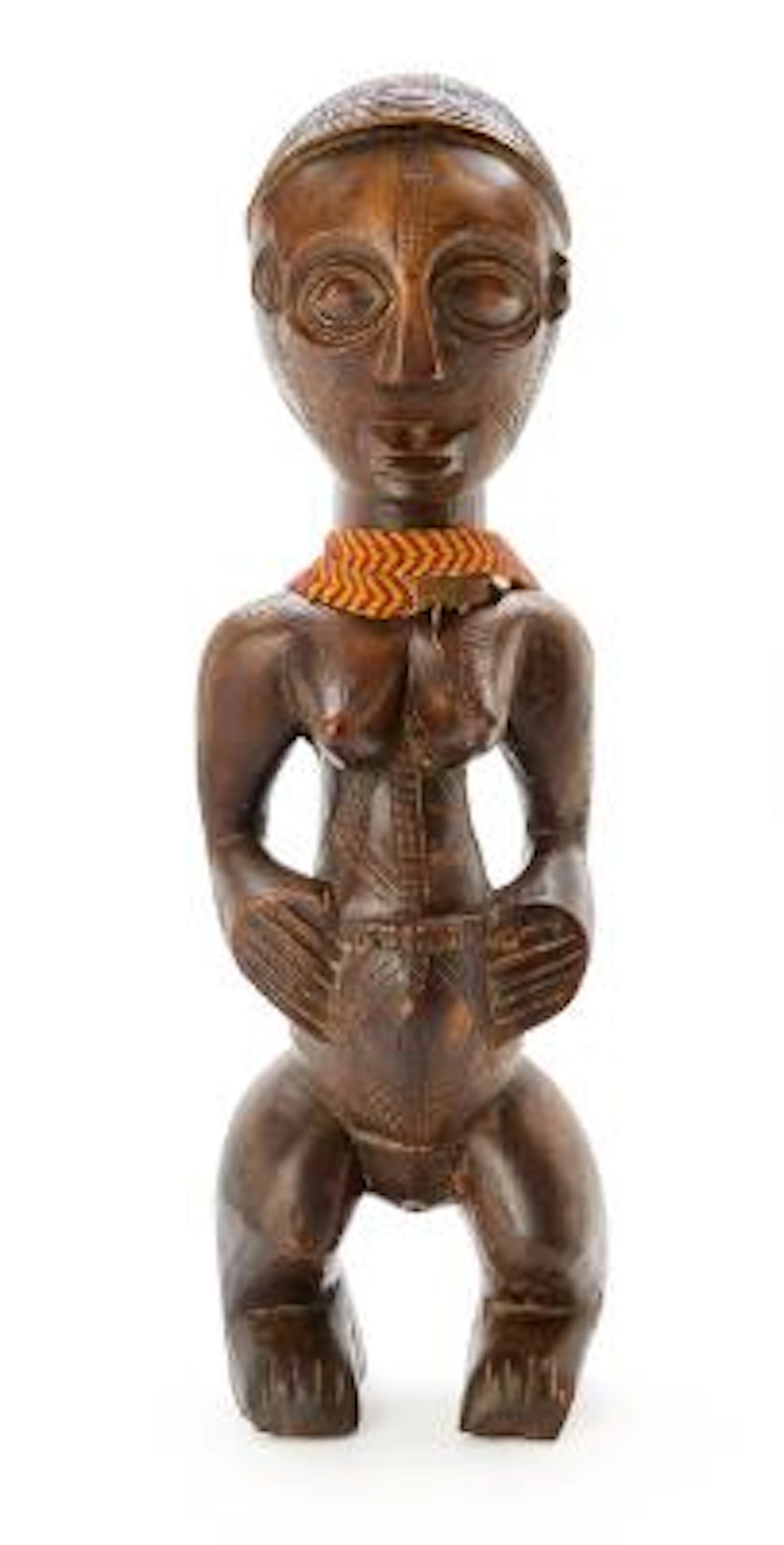
African Ancestral Figure, Hemba. Zaire. Inscribed monogram H with
10/05/2026

£249.42
Est: £229.58
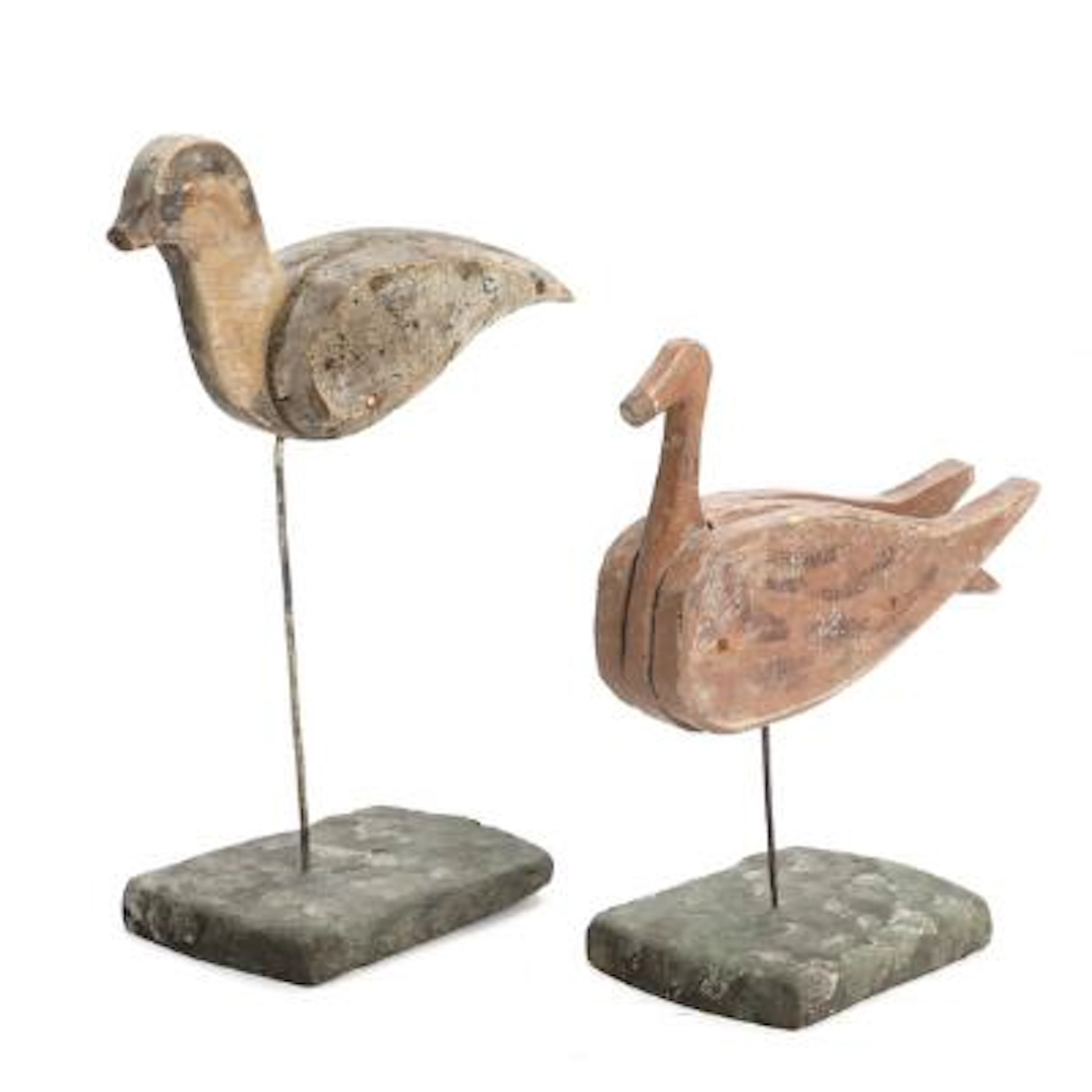
A pair of hand-carved decoy birds. Circa 1900. H. 40. W. 32 cm. H.
10/05/2026
£175.72
Est: £229.58