

OCT 17 | 10:00 PM

Bring your auction to collectors worldwide!
Get listed nowBy subscribing, you are agreeing to the privacy policy. Unsubscribe anytime.
Barnebys HQ
Brahegatan 10
BOX 5038
114 37 Stockholm
All auctions / Miscellaneous / Jean François Millet (1814-1875) - « L’Angelus » - after, by Marcel Jacque.

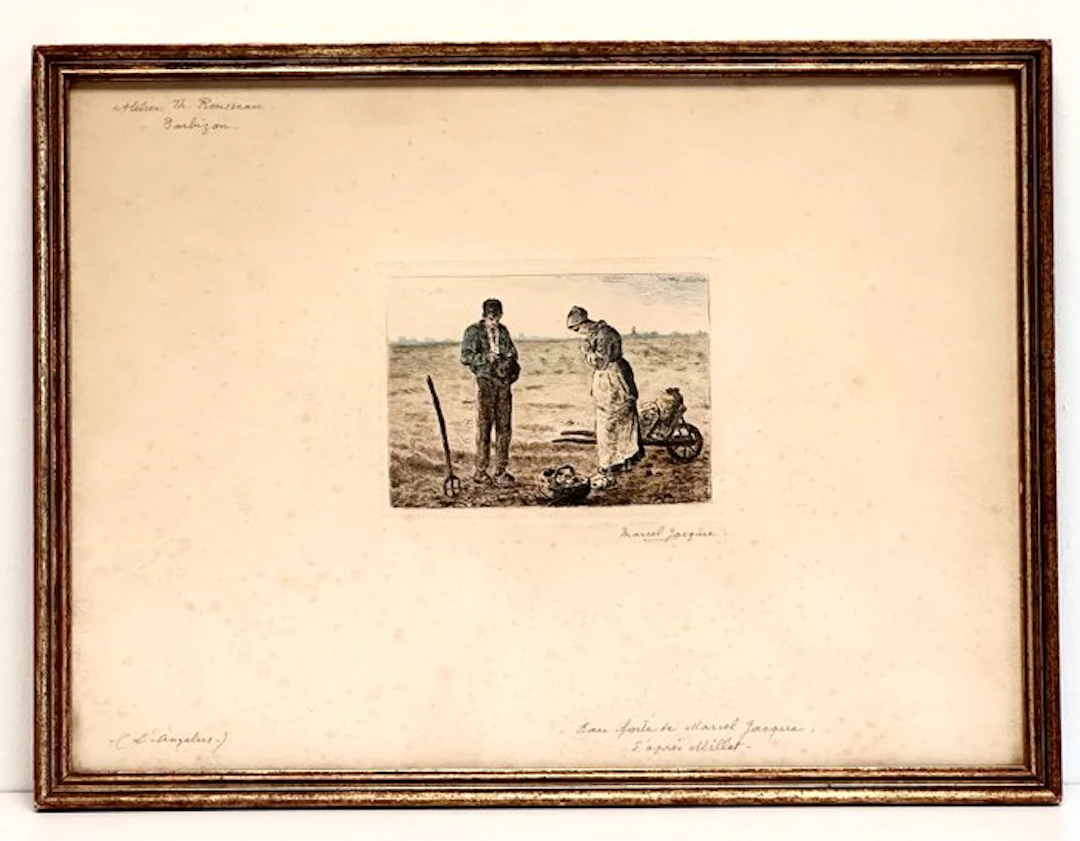
Jean-François Millet - The Angelus - Authentic Coloured Etching by Marcel Jacque after J.F Millet. Dual Signature! Marcel Jacque (1906-1981) after Jean-Francois Millet (1814 – 1875) “The Angelus.” 1858. I present here the authentic etching of the beautiful iconic artwork, “The Angelus.” - by Marcel Jacque after Jean-Francois Millet (1814 – 1875) - a French painter and one of the founders of the Barbizon school in rural France. Marcel Jacque was a French painter, etcher, and draftsman closely associated with the Barbizon School of landscape and realist art. He worked and studied closely within the tradition of the Barbizon School, famously studying under Théodore Rousseau for several years. This is Authentic etching and typically feature dual signatures in the plate—"J.F. Millet" on the lower right and "Marcel Jacque" on the upper edge! —————— “L’Angelus” 1858 The painting depicts two peasants during the potato harvest in Barbizon, in a field bowing over a basket of potatoes, while saying a prayer, the Angelus. At their feet is a small basket of potatoes, and around them a potato fork, the sacks and the wheelbarrow. The prayer and the ringing of the church bell mark the end of a day's work. The church steeple of Chailly-en-Bière is depicted on the horizon in the background. Millet said: "The idea for The Angelus came to me because I remembered that my grandmother, hearing the church bell ringing while we were working in the fields, always made us stop work to say the Angelus prayer for the poor departed The history of this legendary art piece is interesting. The painting was commissioned by Thomas Gold Appleton, an American art collector, based in Boston Massachusetts. Appleton previously studied with Millet's friend, Constant Troyon (the Barbizon painter). Completed between 1857 and 1859, it is an oil painting on canvas. When Appleton failed to take possession, Millet added a steeple and changed the initial title of the work, “Prayer for Potato Crop”, to “The Angelus.” - Why Angelus? The Angelus prayer played a significant part for some Christians in 19th century in France. The name of the prayer derives from the Angel Gabriel’s annunciation that Mary would give birth to Jesus, the son of God. For the Angelus the church bell would ring three times a day — dawn, noon and dusk. Rural nineteenth-century France was religious, and had a large portion of those who worked in agriculture, as Millet did when he was young. The Angelus was a prayer, and also gave a sense of structure to daily working life. The prayer begins: "The Angel of the Lord declared to Mary:/And she conceived of the Holy Spirit..." After his death in 1875, two auctions and an exhibition increased people’s understanding of his art. Two catastrophes, the Franco-Prussian War and the Paris Commune, caused people to search for unifying, national symbols and Millet’s art answered that desire and increased the appreciation for his paintings. Salvador Dalí in particular was fascinated by this work, devoting an entire book to him, El Mito Tragico De El Angelus De Millet. Variations of this painting by Millet appear in several of his own paintings. Original painting is preserved in Paris at the Musée d’Orsay. His Angélus was widely reproduced on different objects and supports and copied or reinterpreted by other artists of the 19th and 20th centuries. Details of the authentic etching: This is Authentic etching and typically feature dual signatures in the plate—"J.F. Millet" on the lower right and "Marcel Jacque" on the upper edge Pay attention and not compare with other etchings at the market. Only authentic etching has dual signature in the plate ! Titled: in the lower left corner: - (L’Angelus-) In the high left corner: Atelier Th.Rousseau. Barbizon. Handwritten inscription acknowledging Millet: “Eau forte de Marcel Jacque, d’apres Millet.” Framed and glazed Red-Gilded wood frame. Horizontal format. Artist: Marcel Jacque after Jean Francois Millet Date: 1921-1927 Dimensions: Frame size: 40 cm x 30 cm x 2 cm Etchings size: 12,5 cm x 9 cm About: Jean François Millet is a realistic painter who had a great influence on impressionists such as Claude Monet and Camille Pissarro, as well as on Vincent van Gogh, who interpreted some of his rural scenes. His work also influenced the Austrian Albin Egger-Lienz. Millet is noted for his paintings of peasant farmers and can be categorized as part of the Realism Art Movement. He found the theme an eternal one, linked to stories from the Old Testament. Toward the end of his career, he became increasingly interested in painting pure landscapes. He is known best for his oil paintings but is also noted for his pastels, Conté crayon drawings, and etchings. Attention to the details photographs. Any defect not mentioned in the description but visible in the photos is considered as described and cannot give rise to any claim. Careful packaging with double protection box including gift wrapping. Tracked Shipping (UPS or DHL) NB. Buyers outside the European Union are responsible for any customs and VAT charges
Estimate:£144.2
To the auctionView all items fromCatawikiorMiscellaneous
Estimate:
£144.2
OCT 17 | 10:00 PM


Bring your auction to collectors worldwide!
Get listed now£1,274.14
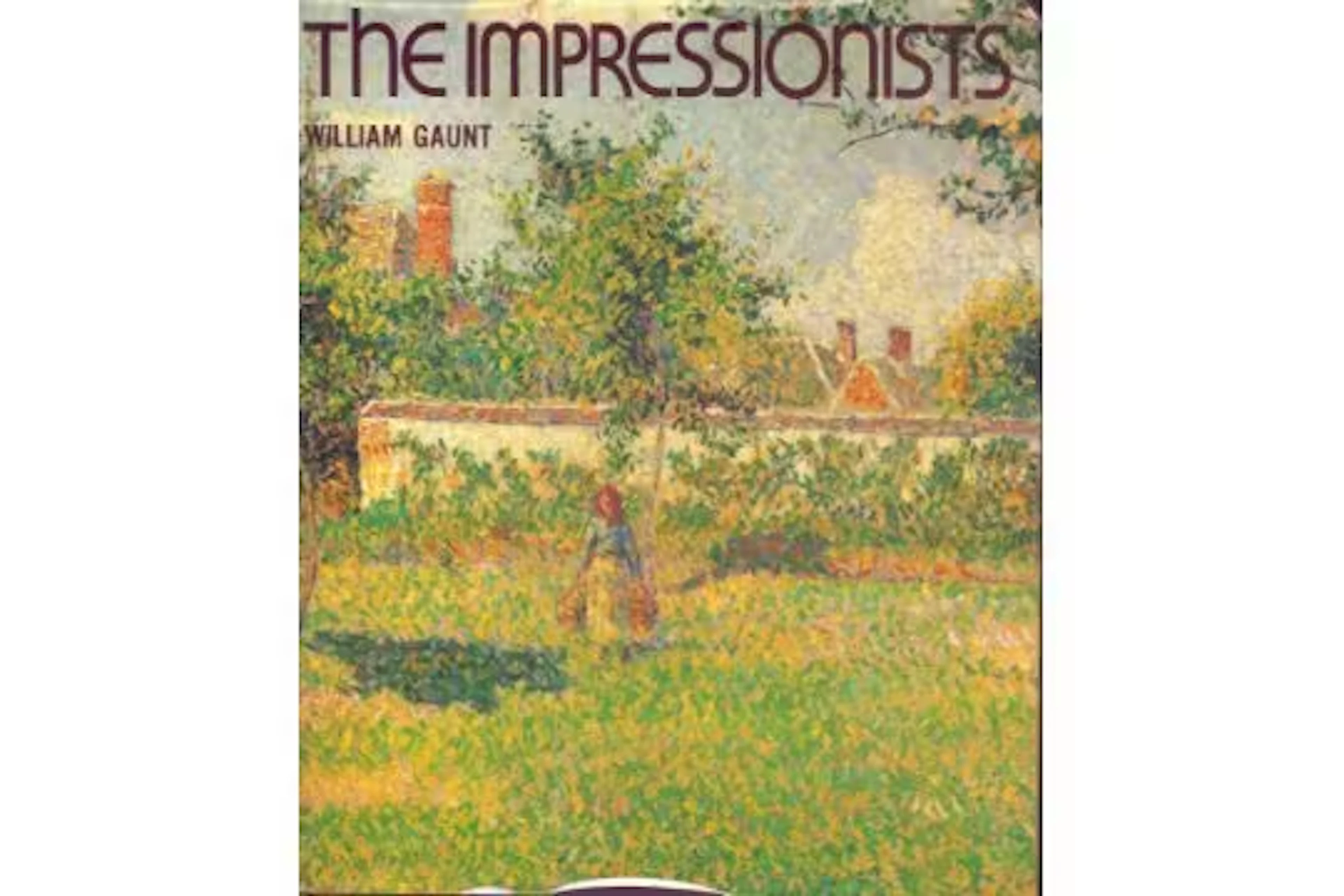
The Impressionists by William Gaunt hardback book. We combine shipping
11/03/2025
£4
Est: £8
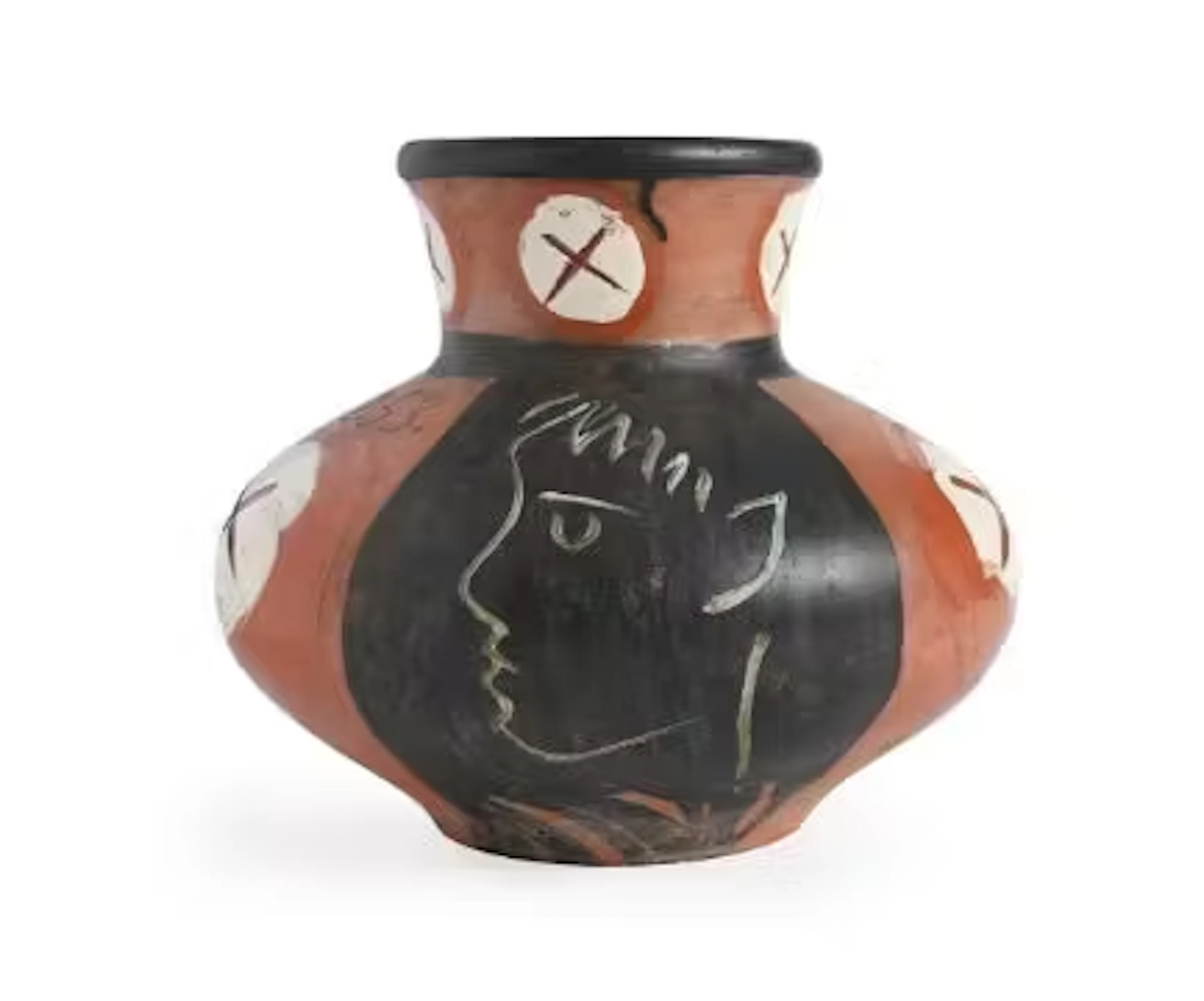
λ PABLO PICASSO (SPANISH 1881-1973), VISAGE DE PROFIL (ALAIN RAMIÉ 209)
10/29/2025
£18,000
Est: £15,000