






OCT 8 | 3:00 PM

Bring your auction to collectors worldwide!
Get listed nowBy subscribing, you are agreeing to the privacy policy. Unsubscribe anytime.
Barnebys HQ
Brahegatan 10
BOX 5038
114 37 Stockholm
All auctions / Arts & Graphics / Jean-Michel Basquiat (1960-1988) - Untitled (Tyrany)...

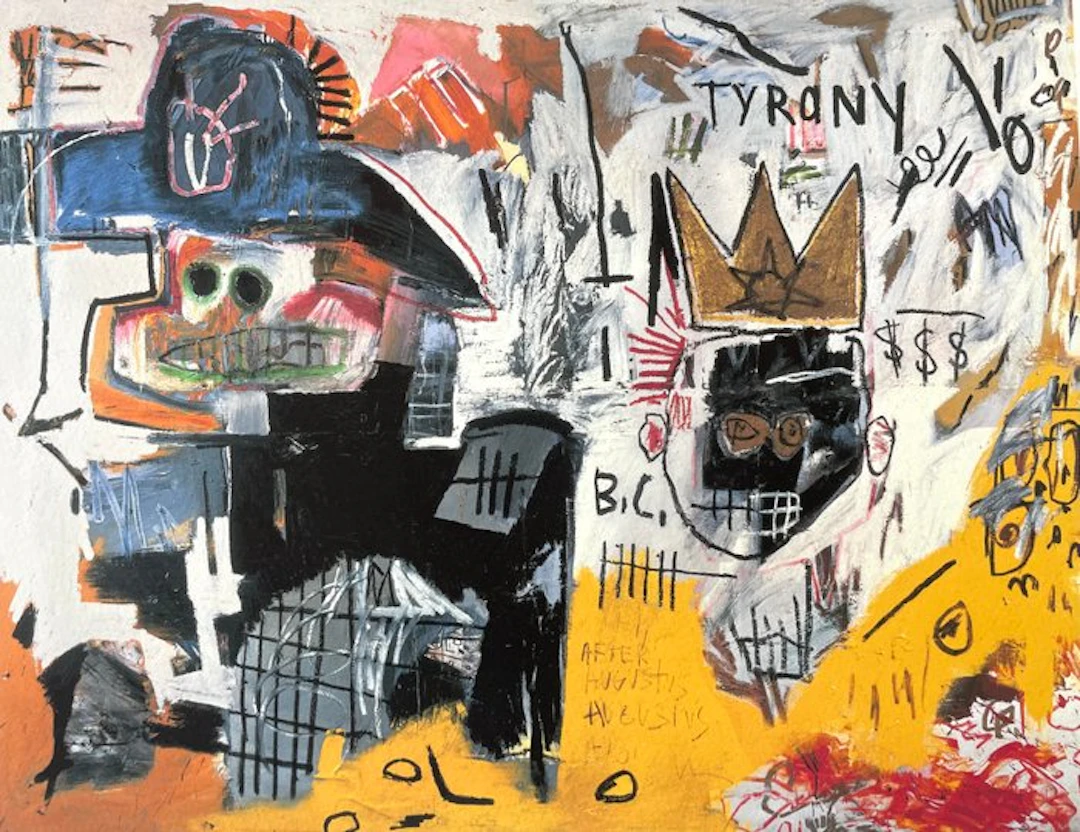
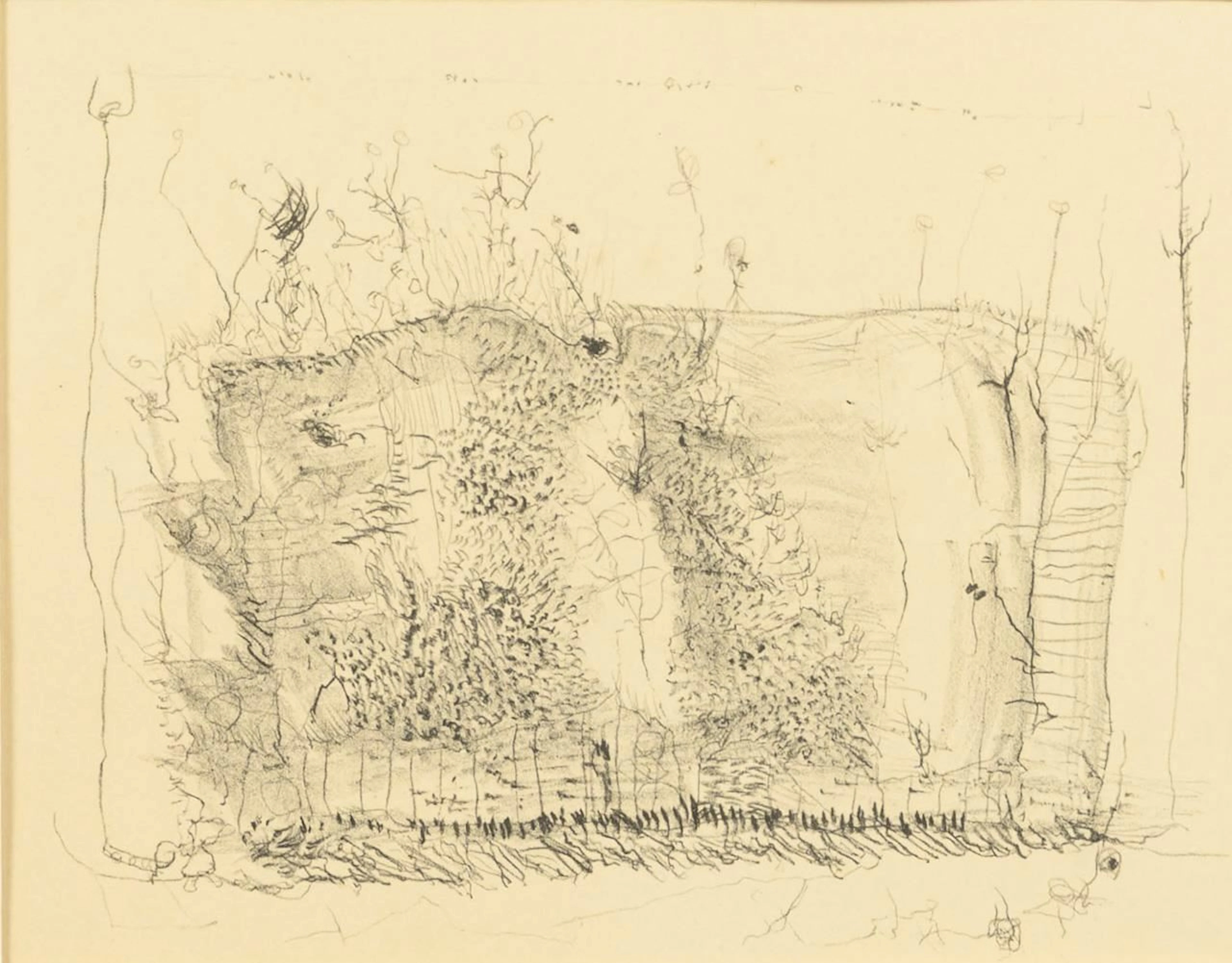
Giclée (*) print of Jean-Michel Basquiat (**) High-quality reproduction of the work “Untitled (Tyrany)” created by Basquiat in 1982. Luxury edition on Monte Carlo high-grade watercolor paper (300 g/m2) Print authorized by Artestar New York. Copyright of the Estate of Jean-Michel Basquiat. Includes Certificate of Authenticity (COA). Specifications: - Support dimensions: 40 x 33 cm - Stain/mark dimensions: 30 x 23 cm - Condition: Excellent (this work has never been framed or exhibited, and has always been kept in a professional art folder, so it is offered in perfect condition). The work will be carefully handled and packed in a reinforced flat cardboard package. Shipping will be insured with a tracking number, operated by the leading transport companies (UPS / DPD / DHL / FedEx). The shipment will also include full insurance for the final value of the work with full reimbursement in case of loss or damage, at no cost to the buyer. (*) Giclée is a term referring to a high-quality fine art printing process created digitally with inkjet printers. This process uses pigment-based inks and specialized papers to achieve great sharpness, color precision, and durability, ideal for art and photograph reproductions. (**) Jean-Michel Basquiat was the eldest of three children of Matilde Andrades and Gerard Basquiat. His father was a Haitian accountant of respectable economic solvency and his mother a Puerto Rican graphic designer of great prestige in her profession. Jean-Michel grew up in a torn family environment, his parents divorced and, due to this, he had to change schools many times. He studied at a private Catholic school, later at a public school and finally, at the age of 16, he enrolled in City-As-School, a school for highly talented adolescents, from which he was expelled, for rebelliousness, a year before graduating. Already in his youth he came into contact with the city’s subculture, related to drug use and street gangs. In 1977, together with Al Díaz, he entered the world of graffiti, painting on subway cars and in the SoHo area, a New York neighborhood where art galleries proliferate. The following year he left school a year before graduating high school and left home to live for two years on the streets, in abandoned buildings or with his friends in Lower Manhattan, surviving by selling postcards and T-shirts that he himself decorated. He continued working in graffiti, his paintings and writings had a lot of poetic and philosophical charge, but above all satirical. The alias of his shared alter ego with Al Díaz was SAMO (short for “Same Old Shit,” meaning “the same old crap,” with which they signed their tags and graffiti with cryptic messages. The use of this name was decisive in his life. These murals bore inscriptions such as “SAMO saves idiots” or “SAMO ends religious brainwashing, the politics of nothingness, and fake philosophy.” An article about SAMO’s street writing published in The Village Voice was the first sign that the art world was taking an interest in him. The artist had several relationships that influenced his work, one of the most significant being with the artist Andy Warhol. Likewise, romantically, he was involved with several women, one of the most well-known today being Madonna. Lower Manhattan was the area where they lived at the time; in 1982 they began to spend more time together and went out to parties in galleries. A theme that united them, she mentions in an interview: “I was a big fan of Miles Davis and Charlie Parker.” In 1988 exhibitions were installed in Paris and New York, and in April of that same year he tried to overcome his addictions and retreated to his home in Hawaii. He returned to New York in June, announcing that he had freed himself from addictions, but on August 12, 1988, at the age of 27, he died of a heroin overdose, becoming the most successful visual artist in the history of African-descendant art. He is buried in Green-Wood Cemetery, Brooklyn. Throughout his brief but intense artistic career he would hold more than 40 solo exhibitions and participate in around 100 group shows. Self-promotion and advertising appeal were priority factors for Basquiat, as they had been for Andy Warhol or Julian Schnabel beforehand. Neo-expressionism came to dominate over appropriationism, partly thanks to the economic strength that raised art and especially painting to high levels, and partly thanks to the support of gallerists and collectors. However, criticism was not unanimous in its assessment, and it was common to denounce the lack of theoretical grounding of neo-expressionist discourse. It was asserted that the art practiced by neo-expressionists lacked any political or social meaning, was merely a commodity, and thus subject to the fluctuations of the market. Neo-expressionist painting was reduced to a consumer product and, as such, a creatively disqualified and vulgar event.
Estimate:£127.53
To the auctionView all items fromCatawikiorArts & Graphics
Estimate:
£127.53
OCT 8 | 3:00 PM


OCT 8 | 3:00 PM

OCT 17 | 10:00 PM
Bring your auction to collectors worldwide!
Get listed now