


OCT 17 | 10:00 PM

Bring your auction to collectors worldwide!
Get listed nowBy subscribing, you are agreeing to the privacy policy. Unsubscribe anytime.
Barnebys HQ
Brahegatan 10
BOX 5038
114 37 Stockholm
All auctions / Books, Maps & Manuscripts / Laplace, Pierre-Simon


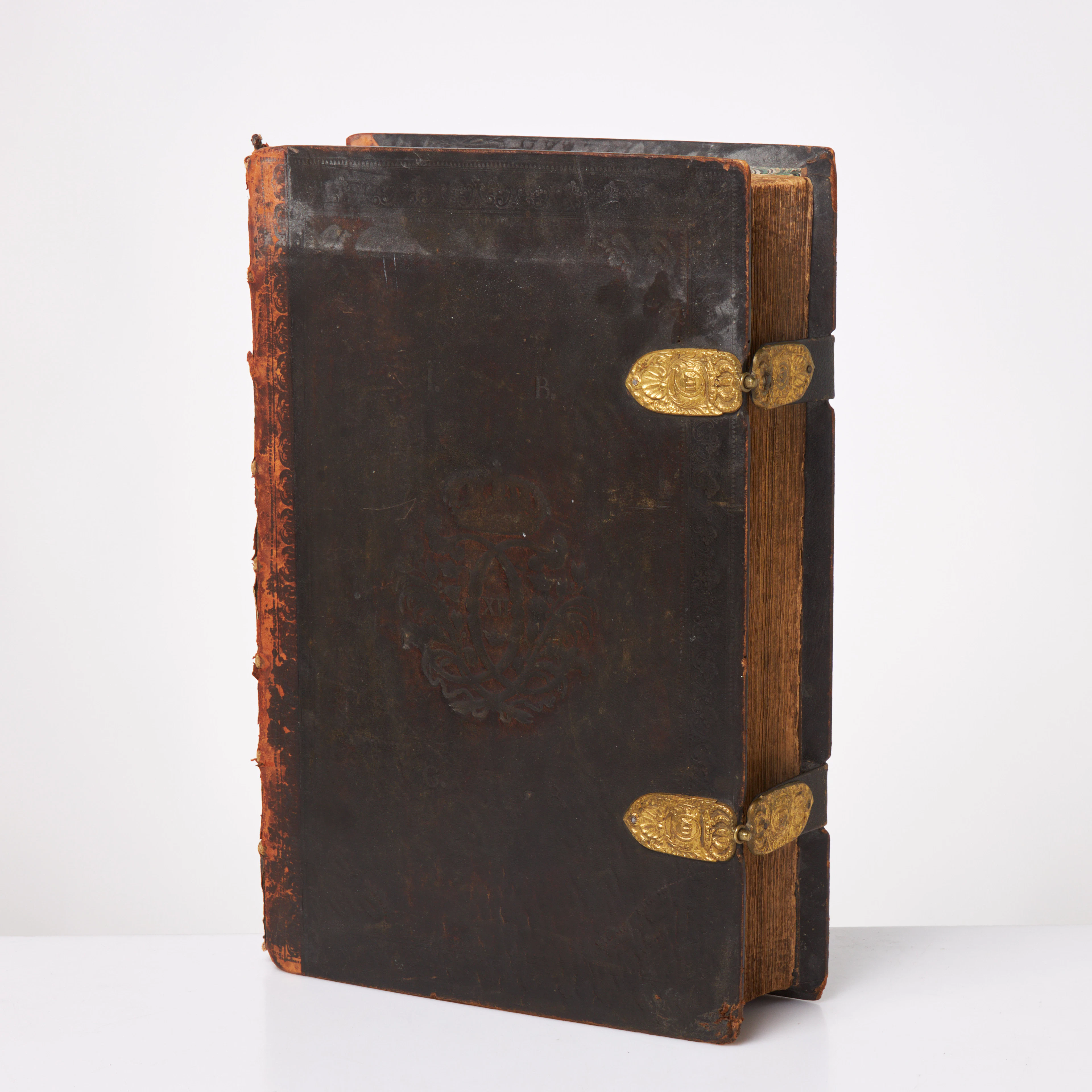
PIERRE-SIMON LAPLACE (1749–1827) Exposition du système du monde Paris, Imprimerie du Cercle-Social, An IV [1796] FIRST EDITION — ONE OF THE FOUNDATIONAL TEXTS OF MODERN ASTRONOMY AND THE FIRST PRINTED FORMULATION OF LAPLACE’S COSMOGONY 2 volumes, octavo (approximately 197 × 120 mm). Volume I: 314, [4] pages; Volume II: 312, [4] pages. With half-titles. Elegant contemporary tree-calf bindings, the covers framed with gilt dentelle borders, smooth richly gilt spines, red and green morocco lettering and volume labels, marbled edges and contemporary marbled endpapers. Some light foxing. Minor restorations to the headcaps and localized wear to the spines, particularly to the first volume. The hinges are slightly weakened, principally in volume I, but the bindings remain sound and functional. Provenance: Barrillot, signed on the front flyleaf of volume I. References: Sparrow 123; Houzeau & Lancaster 8940. ⸻ EXCEPTIONAL SCIENTIFIC IMPORTANCE First edition of one of the most important works in the history of astronomy and celestial mechanics. In Exposition du système du monde, Laplace undertook to present within a coherent framework the astronomical knowledge of his age and to explain the principles governing the motions of the heavenly bodies in a form accessible beyond the highly mathematical treatment of his later Mécanique céleste. The work therefore occupies a crucial position in the development and dissemination of Laplace’s astronomical thought. Its exceptional historical importance lies particularly in the sixth and final chapter of Book V, where Laplace considers the origin of the solar system. He advances the idea that the Sun and planets may have originated from a primitive rotating nebula, whose contraction could have led to the formation of the planetary system. This conception, subsequently known as the “Laplace nebular hypothesis,” became one of the most famous episodes in the history of cosmological thought. Laplace himself presented the proposition cautiously, as a speculation rather than a conclusion established directly by observation or mathematical calculation. Its historical importance lies precisely in this attempt to provide a physical explanation for the origin and architecture of the solar system, at a time when the formation of the Universe remained largely a matter of speculation. The work also treats the apparent and real motions of the heavenly bodies, the laws of motion, universal gravitation and the history of astronomy, making it a remarkable synthesis of late-eighteenth-century astronomical knowledge. Laplace’s influence upon mathematics, mathematical physics and astronomy was profound. His work occupies a central position in the development of celestial mechanics after Newton and contributed decisively to the formation of modern astronomical thought. The exceptional place occupied by Laplace in the history of science explains the appellation “French Newton”, subsequently adopted in international auction and bibliographical literature. ⸻ RARITY AND BIBLIOPHILIC SIGNIFICANCE The first edition of 1796 is of particular importance in the history of scientific thought: it preserves the first printed formulation of Laplace’s cosmological reflections on the formation of the solar system, before the further development of the hypothesis in later editions. The present copy is particularly attractive in retaining its contemporary French bindings, executed in elegant tree calf with gilt dentelle borders and richly decorated gilt spines, with contrasting morocco labels. The set thus preserves the character of a luxurious late-eighteenth-century scientific book. A highly significant first edition for a distinguished library devoted to the history of science, astronomy, mathematics and mankind’s understanding of the Universe. ⸻ PIERRE-SIMON LAPLACE (1749–1827) Exposition du système du monde Paris, Imprimerie du Cercle-Social, An IV [1796] FIRST EDITION — ONE OF THE FOUNDATIONAL TEXTS OF MODERN ASTRONOMY AND THE FIRST PRINTED FORMULATION OF LAPLACE’S COSMOGONY 2 volumes, octavo (approximately 197 × 120 mm). Volume I: 314, [4] pages; Volume II: 312, [4] pages. With half-titles. Elegant contemporary tree-calf bindings, the covers framed with gilt dentelle borders, smooth richly gilt spines, red and green morocco lettering and volume labels, marbled edges and contemporary marbled endpapers. Some light foxing. Minor restorations to the headcaps and localized wear to the spines, particularly to the first volume. The hinges are slightly weakened, principally in volume I, but the bindings remain sound and functional. Provenance: Barrillot, signed on the front flyleaf of volume I. References: Sparrow 123; Houzeau & Lancaster 8940. ⸻ EXCEPTIONAL SCIENTIFIC IMPORTANCE First edition of one of the most important works in the history of astronomy and celestial mechanics. In Exposition du système du monde, Laplace undertook to present within a coherent framework the astronomical knowledge of his age and to explain the principles governing the motions of the heavenly bodies in a form accessible beyond the highly mathematical treatment of his later Mécanique céleste. The work therefore occupies a crucial position in the development and dissemination of Laplace’s astronomical thought. Its exceptional historical importance lies particularly in the sixth and final chapter of Book V, where Laplace considers the origin of the solar system. He advances the idea that the Sun and planets may have originated from a primitive rotating nebula, whose contraction could have led to the formation of the planetary system. This conception, subsequently known as the “Laplace nebular hypothesis,” became one of the most famous episodes in the history of cosmological thought. Laplace himself presented the proposition cautiously, as a speculation rather than a conclusion established directly by observation or mathematical calculation. Its historical importance lies precisely in this attempt to provide a physical explanation for the origin and architecture of the solar system, at a time when the formation of the Universe remained largely a matter of speculation. The work also treats the apparent and real motions of the heavenly bodies, the laws of motion, universal gravitation and the history of astronomy, making it a remarkable synthesis of late-eighteenth-century astronomical knowledge. Laplace’s influence upon mathematics, mathematical physics and astronomy was profound. His work occupies a central position in the development of celestial mechanics after Newton and contributed decisively to the formation of modern astronomical thought. The exceptional place occupied by Laplace in the history of science explains the appellation “French Newton”, subsequently adopted in international auction and bibliographical literature. ⸻ RARITY AND BIBLIOPHILIC SIGNIFICANCE The first edition of 1796 is of particular importance in the history of scientific thought: it preserves the first printed formulation of Laplace’s cosmological reflections on the formation of the solar system, before the further development of the hypothesis in later editions. The present copy is particularly attractive in retaining its contemporary French bindings, executed in elegant tree calf with gilt dentelle borders and richly decorated gilt spines, with contrasting morocco labels. The set thus preserves the character of a luxurious late-eighteenth-century scientific book. A highly significant first edition for a distinguished library devoted to the history of science, astronomy, mathematics and mankind’s understanding of the Universe."
Estimate:£846.16
Sold for:-
View all items fromCatawikiorBooks, Maps & Manuscripts
Hammer price:
-
Estimate:
£846.16
OCT 17 | 10:00 PM


Bring your auction to collectors worldwide!
Get listed nowEst: £90.98


SERIETIDNINGAR, 57 st Fantomen, år 1950-56.
10/09/2026
£105.73
Est: £60.65