
Bring your auction to collectors worldwide!
Get listed nowBy subscribing, you are agreeing to the privacy policy. Unsubscribe anytime.
Barnebys HQ
Brahegatan 10
BOX 5038
114 37 Stockholm
All auctions / Ancient Art / Late Roman/Early Byzantine Bronze RARE Incense burner with Greek inscription

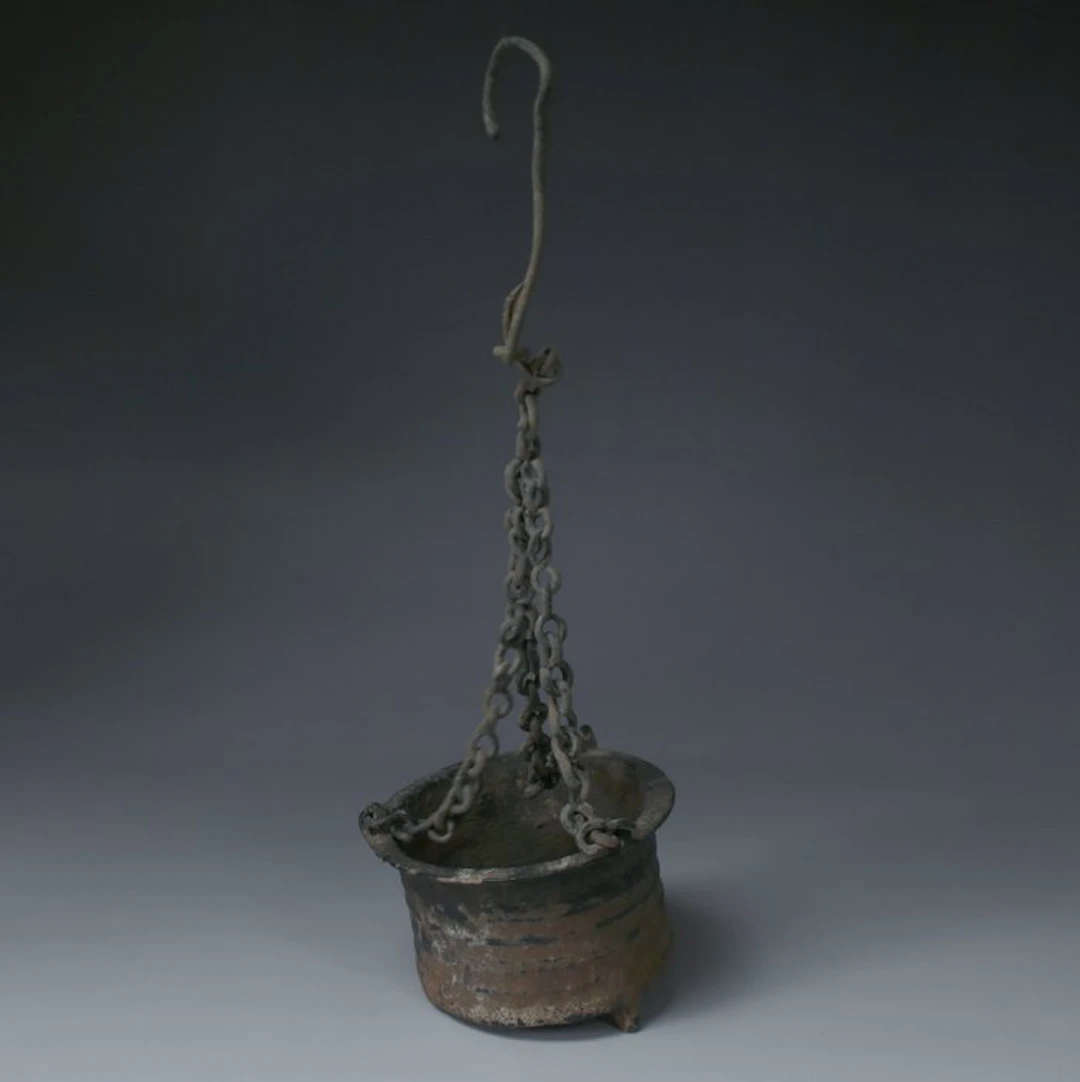
ITEM: Incense burner with Greek inscription MATERIAL: Bronze CULTURE: Late Roman / Byzantine PERIOD: 4th - 6th Century A.D DIMENSIONS: 295 mm x 87 mm diameter CONDITION: Good condition PROVENANCE: Ex German private collection, acquired between 1970 - 1980 Comes with Certificate of Authenticity and Export license. If you bid outside the European Union and win the item, we will have to apply for an export licence for your country and shipping will take 3 to 5 weeks. During the transition from the Late Roman to the Early Byzantine period, incense burners, or thymiateria, evolved from simple functional items into sophisticated symbols of both domestic luxury and religious devotion. Typically cast in bronze or copper alloys, these vessels often featured a tripod base and a perforated lid designed to allow the fragrant smoke of frankincense or myrrh to escape. While earlier Roman designs favored classical motifs like laurel leaves or feline paws, the later Byzantine influence introduced more architectural forms, with some burners resembling domed churches or miniature pavilions, reflecting the era's preoccupation with sacred space. The use of these objects extended beyond mere olfactory pleasure, serving as a vital component in the liturgy of the early Christian church. In ecclesiastical settings, the rising smoke symbolized the prayers of the faithful ascending to heaven, and the rhythmic swinging of suspended burners, or turibles, became a sensory hallmark of the Divine Liturgy. These hanging versions were often decorated with repoussé scenes from the life of Christ or the Apostles, transforming a utilitarian object into a "visual sermon" that could be appreciated by both the clergy and the congregation. Technological and artistic mastery in the 4th through 7th centuries allowed for intricate openwork designs that played with light and shadow. Artisans utilized the lost-wax casting method to create delicate geometric patterns and vine scrolls that were often gilded or inlaid with silver to catch the flickering candlelight of a basilica or a wealthy villa. As the Western Roman Empire shifted toward the Byzantine East, these incense burners became prized export items, carrying the aesthetic and spiritual identity of Constantinople across the Mediterranean and beyond.
Estimate:£1,031.37
To the auctionView all items fromCatawikiorAncient Art
Estimate:
£1,031.37
Bring your auction to collectors worldwide!
Get listed now