


OCT 8 | 3:00 PM

Bring your auction to collectors worldwide!
Get listed nowBy subscribing, you are agreeing to the privacy policy. Unsubscribe anytime.
Barnebys HQ
Brahegatan 10
BOX 5038
114 37 Stockholm
All auctions / Miscellaneous / Maiolica di Castelli Piatto ''Grande misura'' 30 cm...

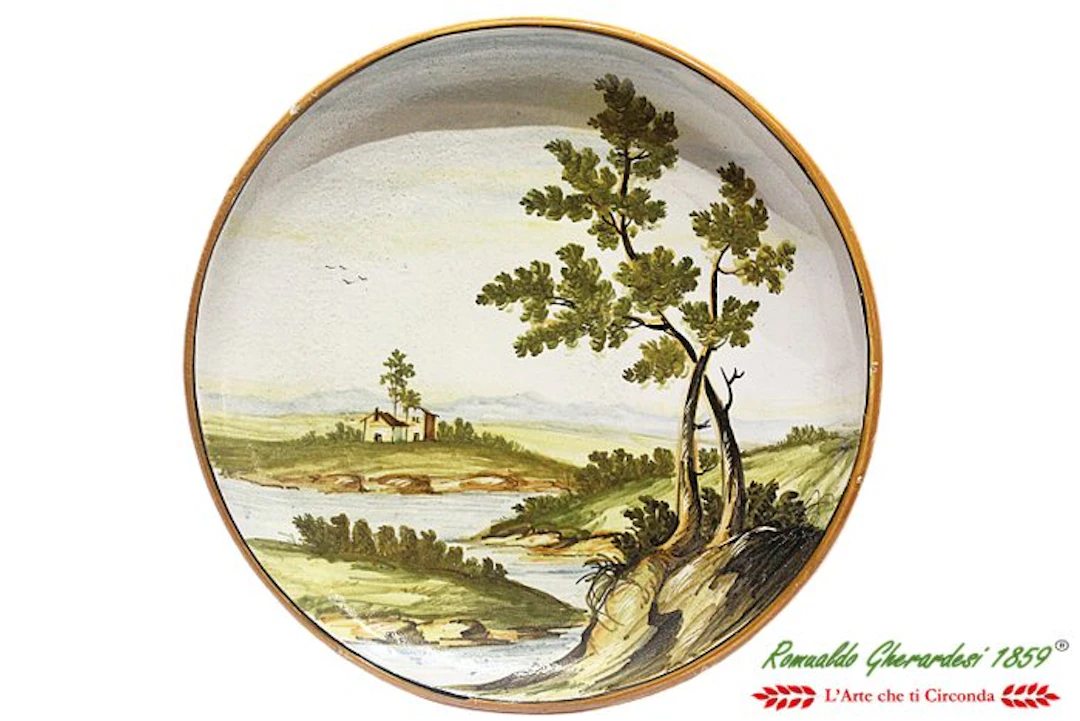
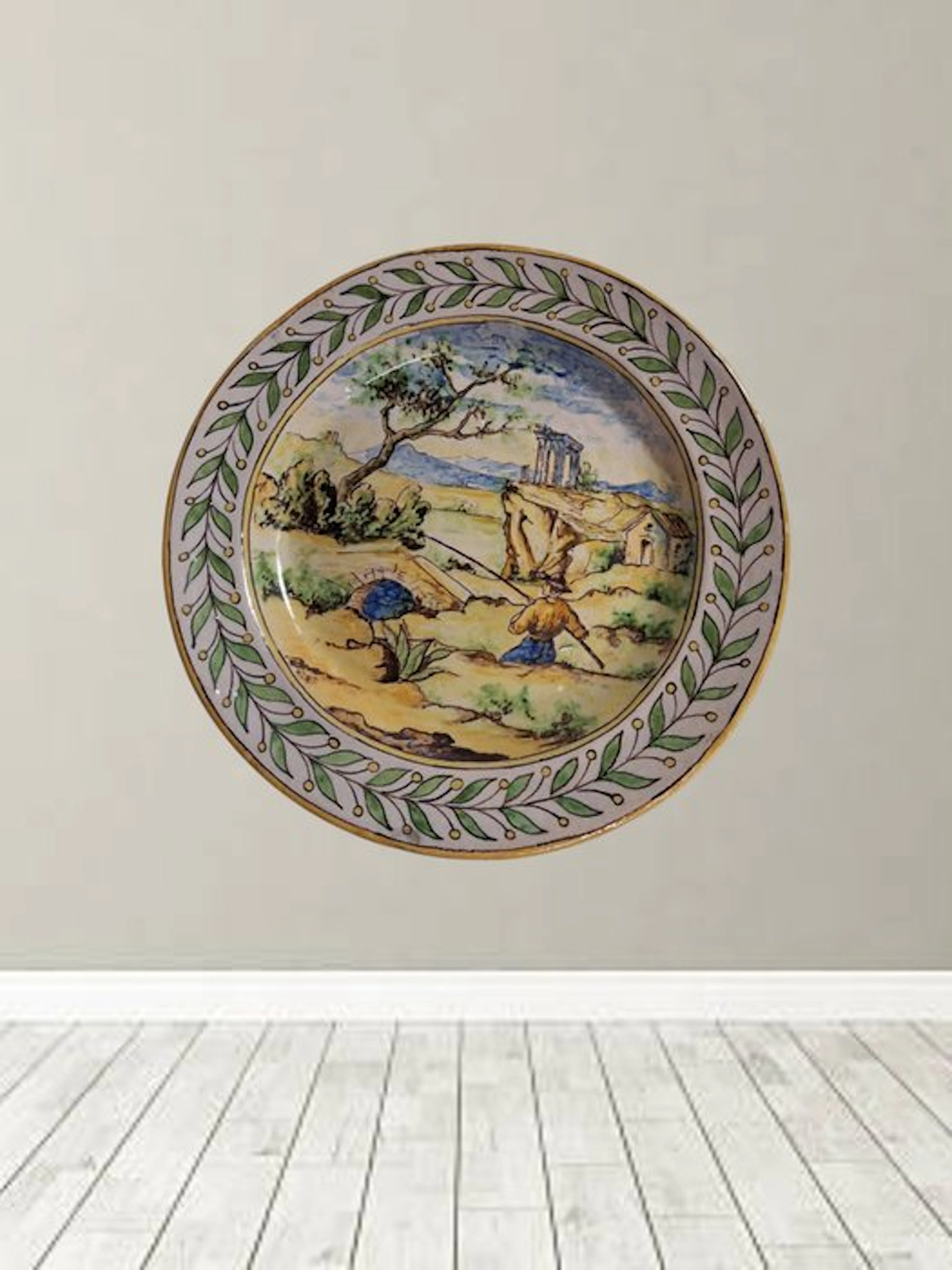
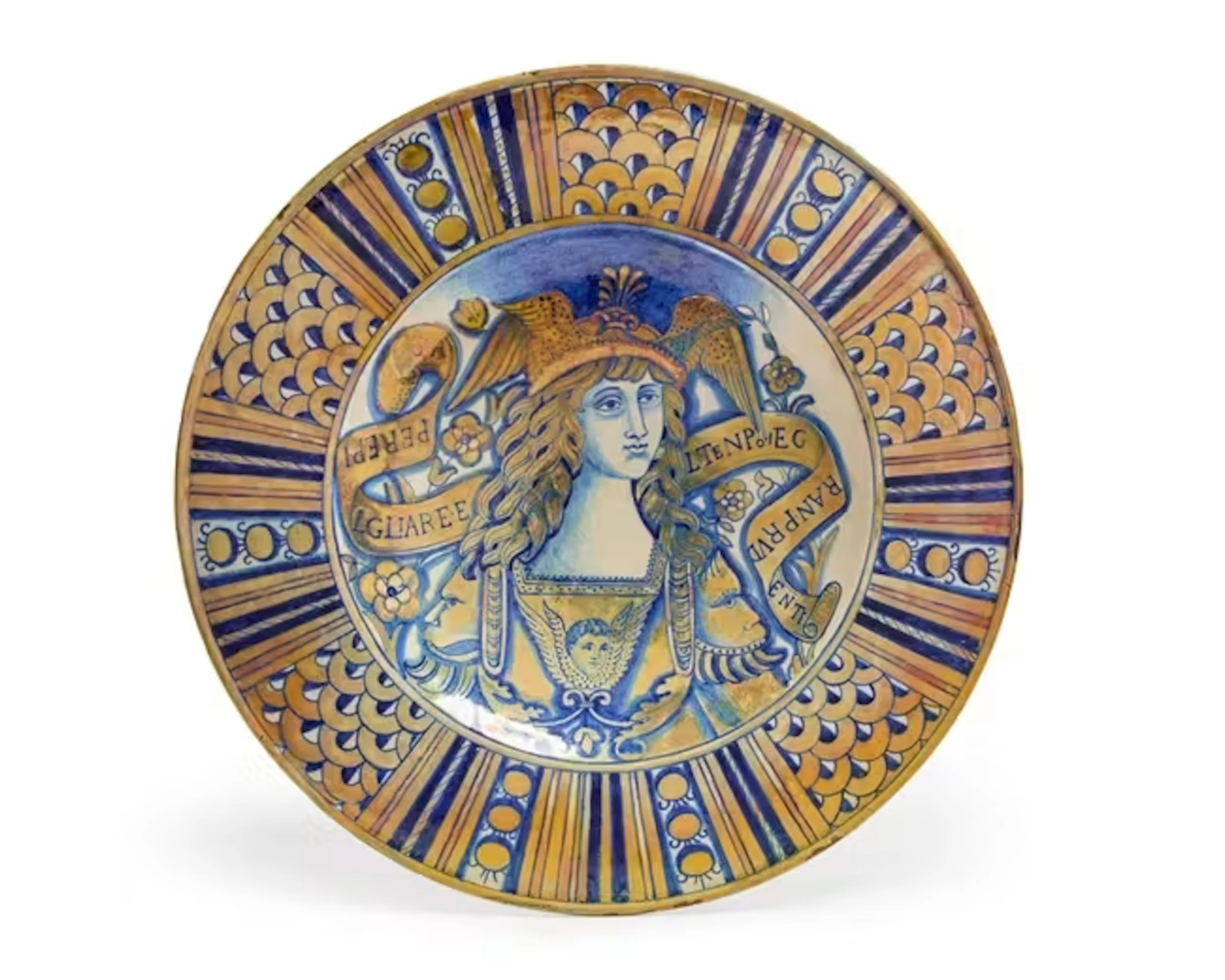
The ceramic art of Castelli, in Abruzzo, has very ancient origins, but it became famous in the sixteenth century. It was the high quality of maiolicas, the lively decorations, but also the affordability of the products, due to innovative production systems, that made Castelli one of the most appreciated centers for this art, especially in the seventeenth century. Although Castelli is a small town in the province of Teramo, its role in the history of Italian maiolica is of paramount importance, especially in the period from the sixteenth to the eighteenth century. Ciro the Younger meets Lisandro, a work by Francesco Grue, Acerbo Collection of the Civic Museums of Loreto Aprutino The sixteenth-century church of San Donato in Castelli constitutes, together with the contemporaneous pharmaceutical tableware called Orsini-Colonna, the ideal starting point for a subsequent production that enjoyed great fame in Italy and abroad; so much so that one of the most important collections of Castelli ceramics is today housed in the Hermitage Museum, in Saint Petersburg. The Grue family was the one that stood out most among the workshops, becoming master and model to follow, with Carlo Antonio Grue as its best representative, together with his son Aurelio Anselmo. In the decorations initially only five colors were used, with all the various shades, with the absence of red, which was introduced at the end of the eighteenth century by Gesualdo Fuina of Loreto Aprutino. The museum was established in Castelli in 1984 to promote the culture and art of maiolica, to safeguard local history and traditions. The museum building is housed in the ancient convent of the Minor Observant Friars of the sixteenth century; the convent housed the friars until 1866, afterwards, after the suppression, it became a storage; in 1905 it housed the first seat of the State Institute of Art “Francesco Antonio Grue”, to finally become a museum. Divided into two floors, on the ground floor one can observe the Renaissance cloister surrounded by a cycle of frescoes from 1712, of Baroque inspiration, with 21 lunette panels illustrating episodes from the life of Mary, mother of Jesus, each lunette intercalated by medallions depicting faces of saints and blessed who have devoted their lives to the religious work. The route runs through rooms where an ideal workshop of the sixteenth-seventeenth century has been reconstructed, to convey the manual labor involved in creating each single piece by the Grue and Gentili families; it is possible to see old clay decanting vats, the crushing and shaping of malleable clay, then the various forming, glazing and decorating techniques of the object, and finally the reproduction of the ancient kiln for firing the artifact, the so-called “breath kiln.” Product deliveries are entrusted only to Top couriers such as UPS, DHL and BRT, with delivery guarantee and insured. Price lists are publicly online. NOTE** Objects up for auction on Catawiki are subject to binding conditions for every offer. If a buyer does not make payment within three days from the end of the auction (or immediately via 'Buy Now'), Catawiki may take action on their account. Specifically, it may suspend the ability to bid and purchase until the due payments are settled. Moreover, non-payment may result in the cancellation of the sale; in some cases, the buyer may still have to pay the Buyers Protection fee. Until the Buyer Account is suspended. Please note that if a buyer wins more than one lot, they will be required to pay the shipping for each lot separately to ensure the integrity of the material sent. Exceptional Ceramic that represents a Serving Plate Artistic Ceramics Deruta Cama Raro Era 1900-2000 Designer / Artist / Creator Cama Deruta hand-painted ceramic plate in Raffaellesco decor, Large Size 39 cm Estimated period 1960-1970 Material Porcelain Country of origin Italy Condition Like new - never used Height 7 cm Width 39 cm Depth 39 cm Diameter 39 cm CAMA Deruta was a historic factory of ceramics and artistic maiolica founded in 1954 in Deruta, Umbria. Born as a workers’ cooperative, it became famous worldwide for its tableware and hand-painted decorative objects in Renaissance style, closing production at the end of 2011. Opened in 1954 by nine artisan partners in Deruta, an important center of ceramics. In the 1990s it achieved international fame, serving major stores in the United States. The abundance of clay deposits and the favorable position along important land and river routes favored the development of ceramic production in Deruta since the Middle Ages. With uninterrupted continuity for at least seven centuries, Deruta still represents today the center of greatest production of artistic maiolica in Italy. In this large ceramic cradle there are countless artisanal workshops, kilns where new clays were created and tested, new techniques experimented, new shapes imagined, new glazes and paints tried, new colors used and new decorations painted. From the earliest period, artistic production had an extraordinary advertising opportunity: the proximity of Assisi, a magnet and cosmopolitan political center of all Christian Europe. In the Franciscan Archives of Assisi there were found documents from 1358 and 1359 mentioning a potter, the wholesaler Cecce d’Alessandro, who sold hundreds of ceramic pieces to the monks of the Assisi Convent, for which the friars even paid transportation costs from Deruta. The Umbria ceramic production center was favored by its geographic position: on the Tiberina road which together with the Flaminia formed the most important axis for communications between Rome and the Adriatic. However, it is not possible to give a precise characterization of the “archaic Derutese,” also considering the fact that the extraordinary, rich and well-documented production of Deruta maiolica dates from the Renaissance and later centuries, which inexorably confined the archaic period to a shadowy zone. Yet it is in the XIII and XIV centuries (archaic period) that this production began to become particularly important for the city, with the creation of everyday and domestic items, ewers, basins and bowls. Objects were decorated with geometric, floral, and sometimes zoomorphic figures, with a palette limited to ramina green (copper oxide) and brown manganese, according to the canons of the archaic style. Around 1400 there is an evolution of shapes, with refining of the pottery wheel and decorations. Albarelli intended for pharmaceutical use and jugs with twisted handles, often bearing the effigy of noble Umbrian families, are from this period; scenes of war, hunting, amorous and allegorical subjects, heraldic symbols are depicted on “drum” plates. Around 1450 production further enriches with forms, decorations and techniques. Being an authentic vintage piece, it represents an elegant testament to the past and may show light signs of time, elements that add charm and authenticity to its history. Product deliveries are entrusted only to top couriers such as UPS, DHL and BRT, with delivery and insurance guarantees. Price lists are publicly online. NOTE** Objects up for auction on Catawiki are subject to binding conditions for every offer. If a buyer does not make payment within three days from the end of the auction (or immediately via 'Buy Now'), Catawiki may take action on their account. Specifically, it may suspend the ability to bid and purchase until the due payments are settled. Moreover, non-payment may result in the cancellation of the sale; in some cases, the buyer may still have to pay the Buyers Protection fee. Until the Buyer Account is suspended. Please note that, in the event that a buyer wins multiple lots, they will be required to pay the shipping for each lot separately to ensure the integrity of the material sent.
Estimate:£0.84
To the auctionView all items fromCatawikiorMiscellaneous
Estimate:
£0.84
OCT 8 | 3:00 PM


OCT 8 | 3:00 PM
Bring your auction to collectors worldwide!
Get listed now£127.16

OCT 17 | 10:00 PM