



OCT 8 | 3:00 PM

Bring your auction to collectors worldwide!
Get listed nowBy subscribing, you are agreeing to the privacy policy. Unsubscribe anytime.
Barnebys HQ
Brahegatan 10
BOX 5038
114 37 Stockholm
All auctions / Ethnographical / Mask of rejoicing - Baule - Côte d'Ivoire

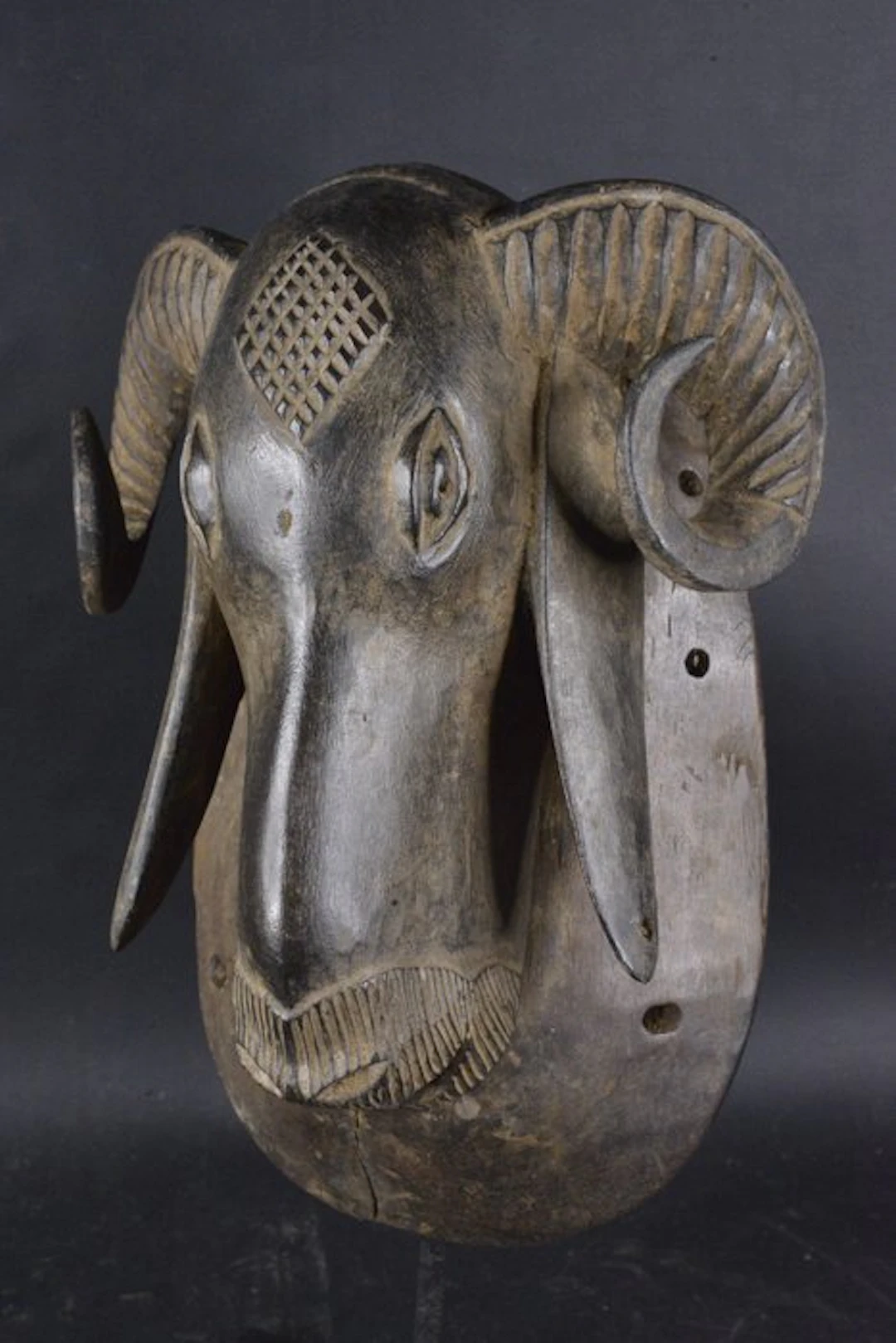
Côte d'Ivoire Baoulé Wood Height: 270mm Width: 205mm Depth: 120mm 1. Attribution and origin In light of the visible characteristics, this mask can reasonably be attributed to the Baoulé tradition, the Akan people from central Côte d'Ivoire. It belongs more precisely to the family of zoomorphic masks, much rarer than the famous Mblo anthropomorphic masks. The animal depicted is very likely a ram or sacred sheep, identifiable by its spiral horns and long snout. This type of mask is associated with village traditions where the qualities of certain animals were invoked as models of strength, fertility, and protection. 2. General description The mask stands about 27 cm high. It is carved from a single piece of relatively dense wood, covered with a dark brown to black patina, today largely softened by use and time. The face is markedly elongated by a straight snout occupying almost the full height of the face. The symmetric horns are particularly notable: they coil into broad lateral spirals, treated with deep radiating channels that enhance the decorative effect. The eyes are almond-shaped, slightly bulging, with a pierced pupil. The forehead features a carefully carved checkered pattern, while the mouth is reduced to a discreet geometric frieze. Overall it gives an impression of calm, balance, and monumentality despite its relatively modest dimensions. 3. Baoulé stylistic characteristics Several elements point to Baoulé production: • perfect symmetry of the composition; • very streamlined volumes; • a search for elegance rather than realism; • particularly refined sculpture; • uniform ancient patina; • limited yet precise carved decoration. Unlike Gouro masks, often more demonstrative and heavily loaded with decorative elements, this one favors sobriety of volumes. The combination of a stylized animal face with a highly balanced construction fits well with certain Baoulé workshops specializing in zoomorphic masks. 4. The symbolism of the ram Among the Baoulé, several animals hold significant symbolic value. The ram represents notably: • controlled power; • fertility; • agricultural prosperity; • protection of the lineage; • courage in the face of difficulties. Its spiral horns also evoke the continuity of the life cycle and creative energy. The animal is regarded less as a simple naturalistic representation than as the embodiment of spiritual qualities sought by the community. 5. Ceremonial use This mask was not meant to be displayed alone. The numerous peripheral holes visible along the edge were used to attach: • a full costume made of plant fibers; • a raffia headdress; • sometimes fabrics or plant elements. Once worn, only the carved face remained visible while the dancer disappeared entirely under the ritual costume. The overall ensemble formed a supernatural being rather than a simple masked character. 6. Ritual function A mask of this type could be used in several circumstances: • community ceremonies; • agricultural festivals; • fertility celebrations; • spiritual protection of the village; • manifestations of traditional societies. The dancer momentarily became the conduit for an invisible force believed to convey protection, balance, and prosperity. 7. Sculpture analysis The quality of sculpture appears superior to that of many contemporary tourist masks. The proportions are particularly well controlled. The snout is carved from a continuous volume without break. The horns are perfectly balanced. The surfaces are long-polished. The engravings are regular and executed with precision. These characteristics testify to an experienced sculptor. 8. Patina analysis The patina presents several interesting clues: • even wear on the reliefs; • natural rounding of the edges; • ancient dirt in the hollows; • homogeneous wood oxidation; • interior strongly polished. The interior also shows traces of older use, with a dark brown coloration characteristic of objects long handled. These observations are compatible with a mask that has indeed been used, though they alone do not guarantee antiquity. 9. Condition The mask shows several normal aged alterations: • vertical crack at the lower edge; • small impacts on the edges; • patina wear; • slight erosion of the engravings; • ancient perforations intended for fixing the costume. 10. Place in Baoulé art The anthropomorphic Mblo masks are the best known of Baoulé art, but they represent only part of the traditional production. Zoomorphic masks like this one are rarer and testify to another facet of Baoulé sculpture, in which the symbolic qualities of animals complement the repertoire of idealized human representations. 11. Summary This 27 cm mask can be attributed to the Baoulé tradition of Côte d'Ivoire. It represents a ram, an animal associated with strength, fertility, prosperity, and spiritual protection. Its balanced sculpture, the quality of its volumes, the sobriety of its decoration, and its ancient patina align with Baoulé aesthetic canons. Designed to be worn with a full plant-fiber costume, it participated in community ceremonies where the dancer embodied a protective supernatural power. Its refined craftsmanship and its condition make it a fine example of traditional Baoulé zoomorphic mask, a category rarer than the famous Mblo masks. Fast and protected shipping. Parcels are sent with tracking number. Delivery in France within 1 to 3 days by Chronopost, 2 to 5 days across the European Union by Chronopost International. Delivery by Colissimo International to the rest of Europe and worldwide We speak english. Mask african art Afrikanische Maskenkunst arte de máscaras africanas arte delle maschere africane statue african art Arte de estatuas africanas arte delle statue africane Afrikanische Maskenkunst Máscara de estatua de galería de arte africano
Estimate:£127.23
To the auctionView all items fromCatawikiorEthnographical
Estimate:
£127.23
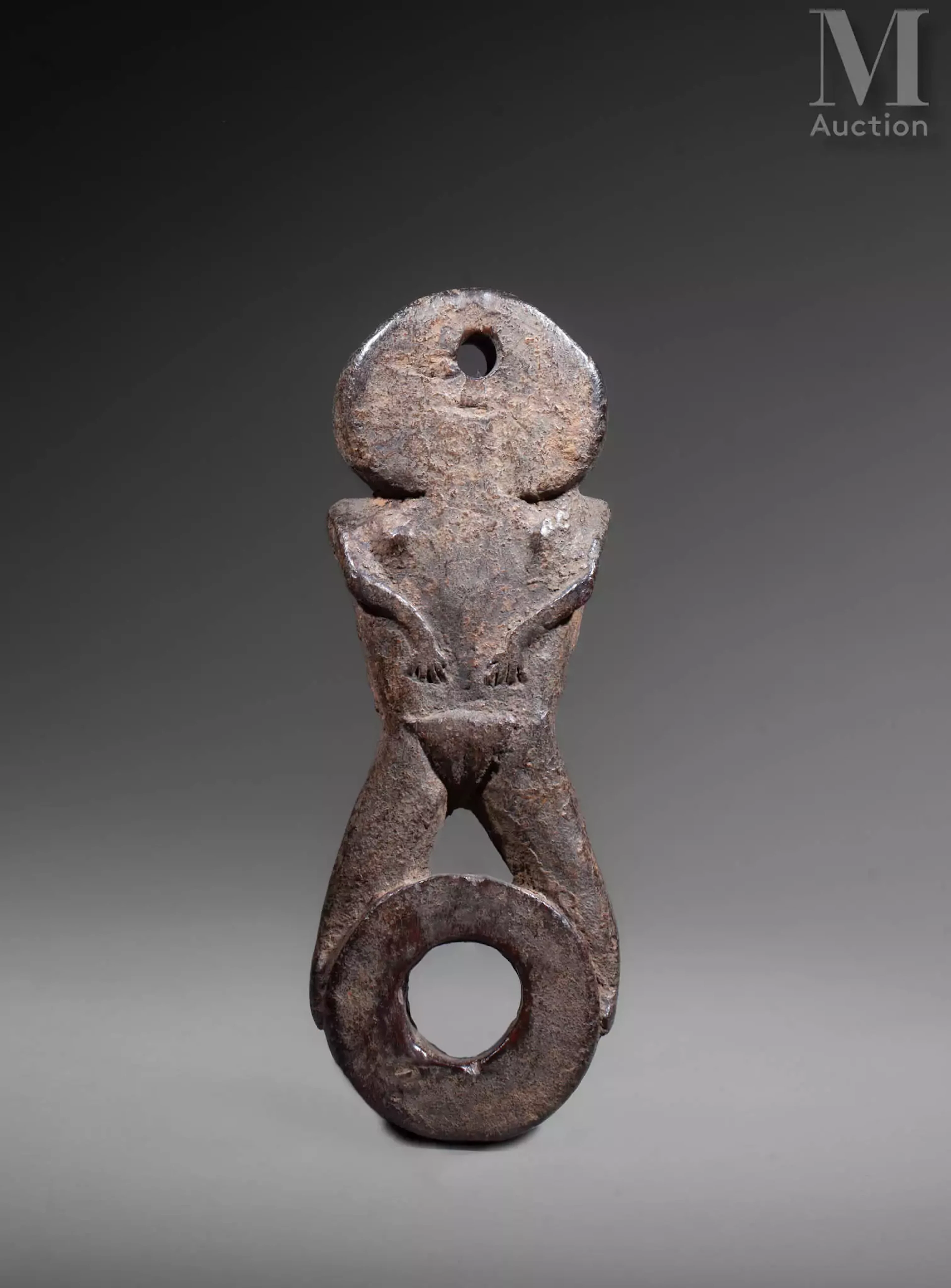
OCT 8 | 3:00 PM


OCT 8 | 3:00 PM

Bring your auction to collectors worldwide!
Get listed now£186.5
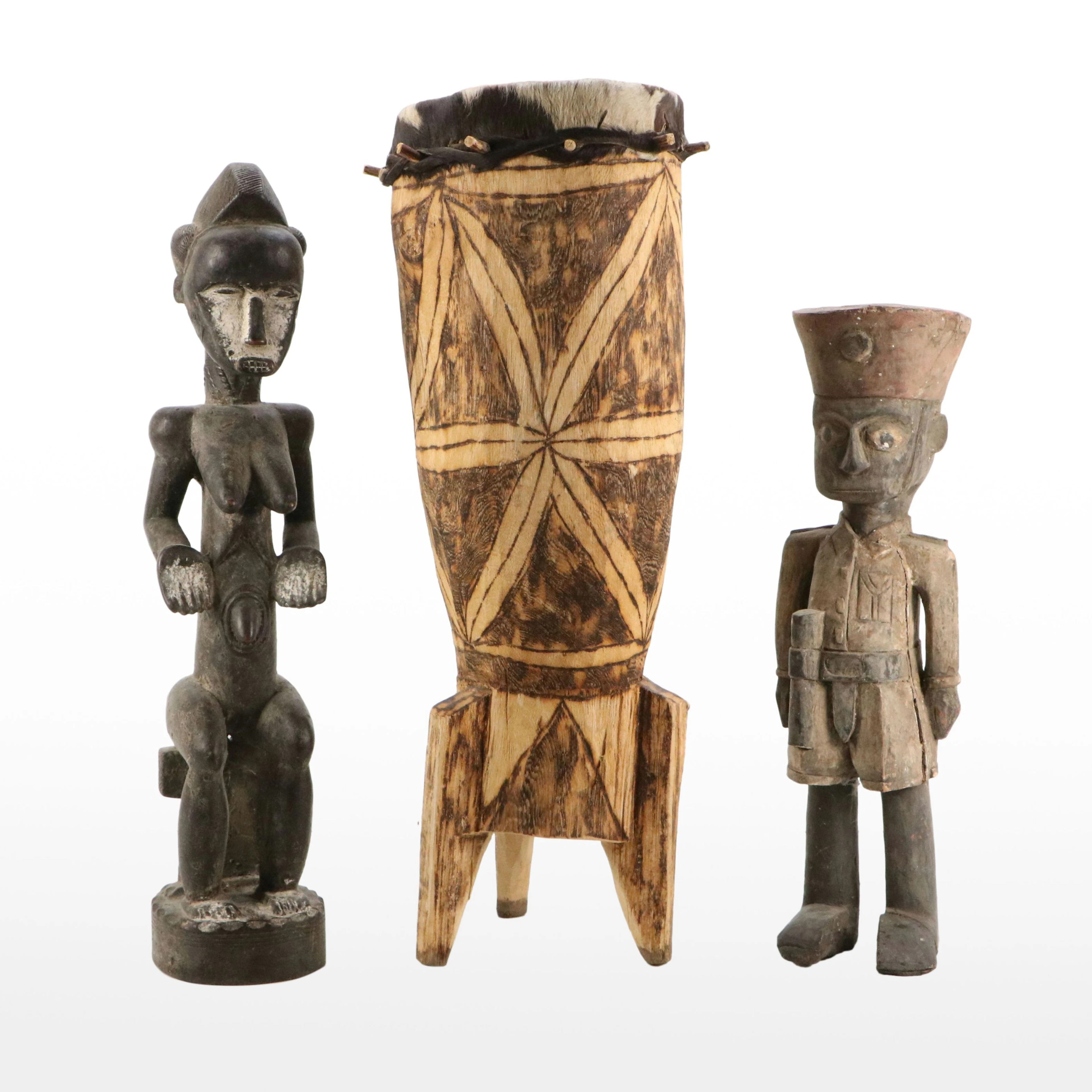
African Hand-Carved Wooden Drum with Cowhide and Figural Sculptures
08/18/2026
£0.73
Est: £0.73
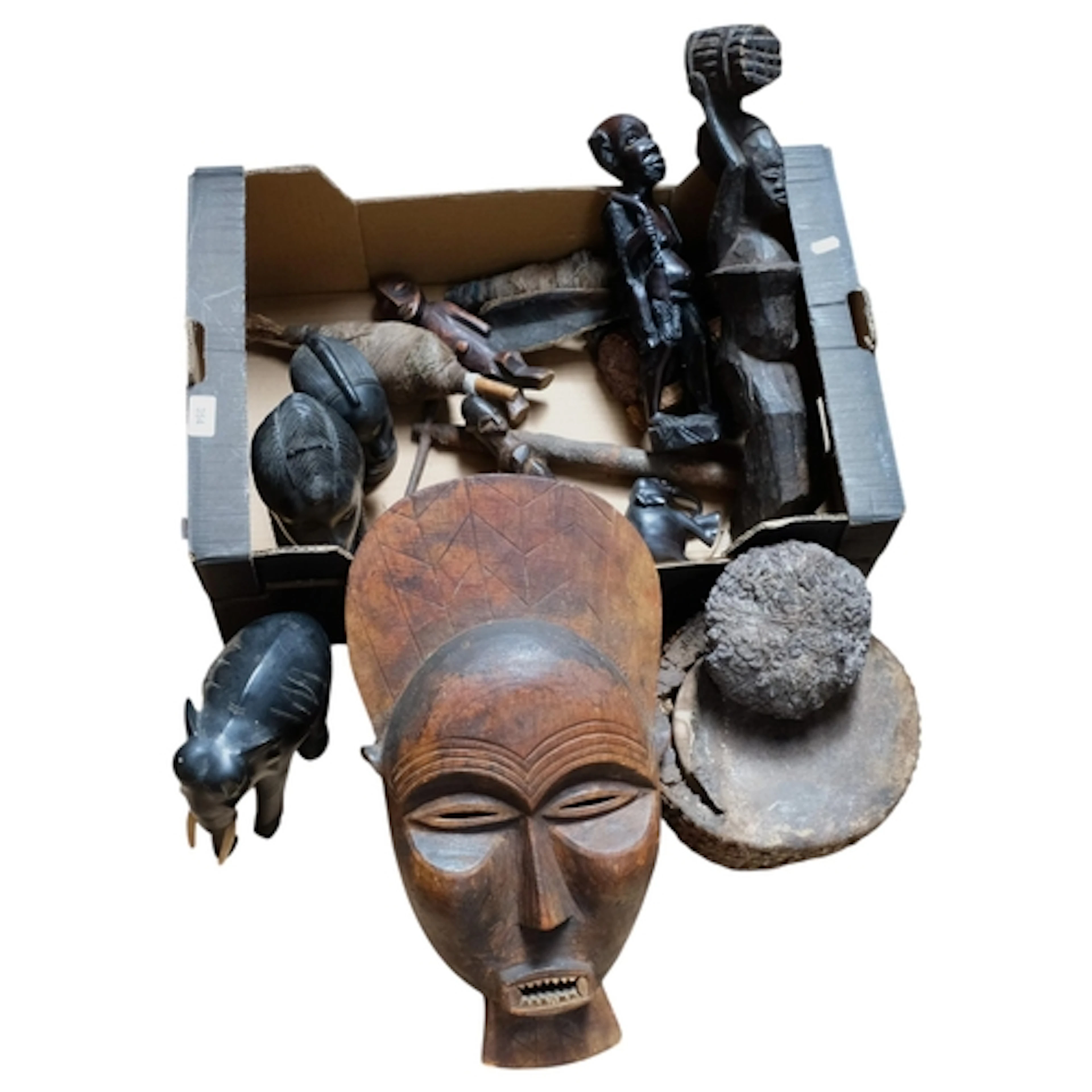
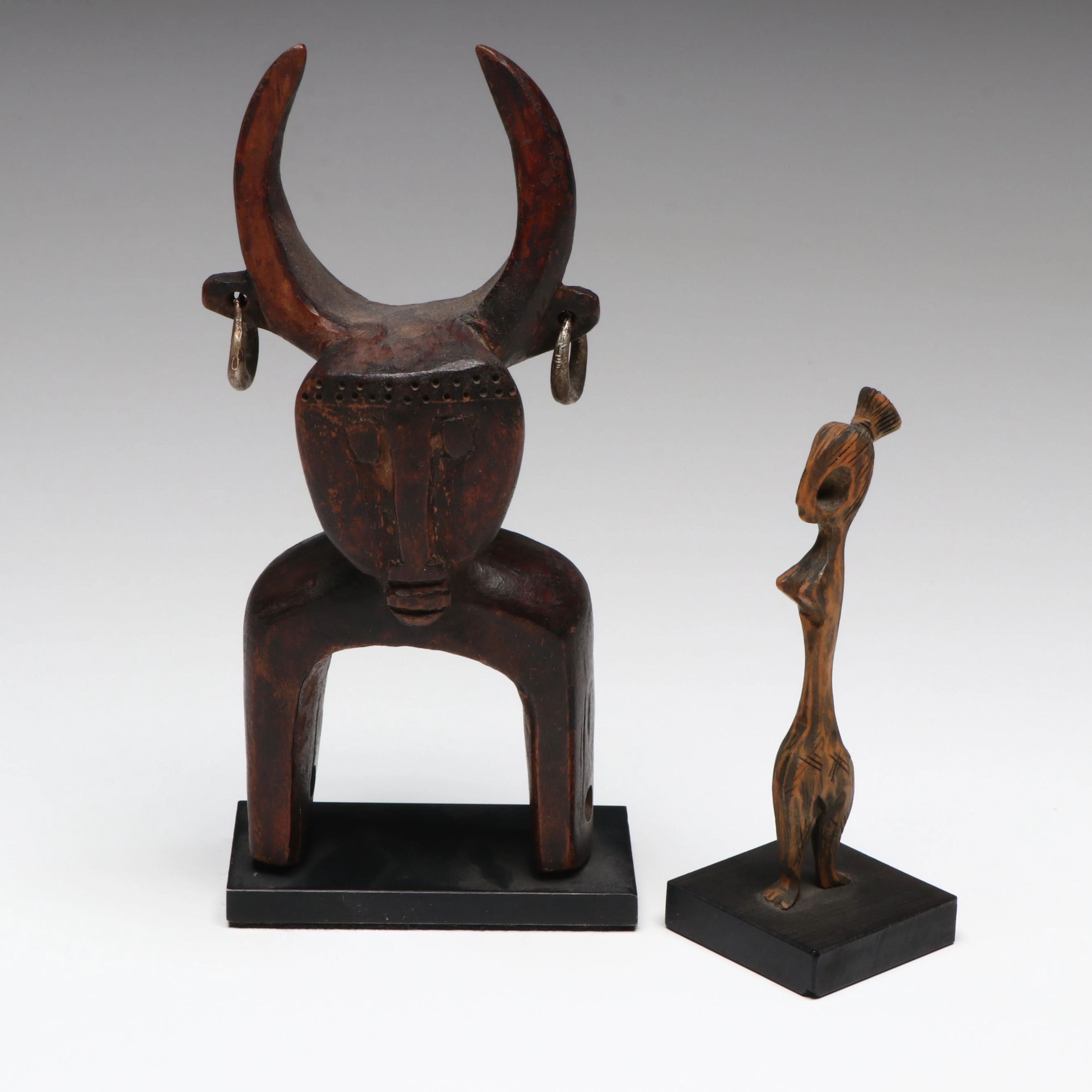
African Djimini Heddle Pulley and Israeli Wooden Sculpture, 20th Century
07/27/2026
£68.5
Est: £2.24