






All auctions / Asian Art / Oxblood vase - Porcelain - China - 20th century

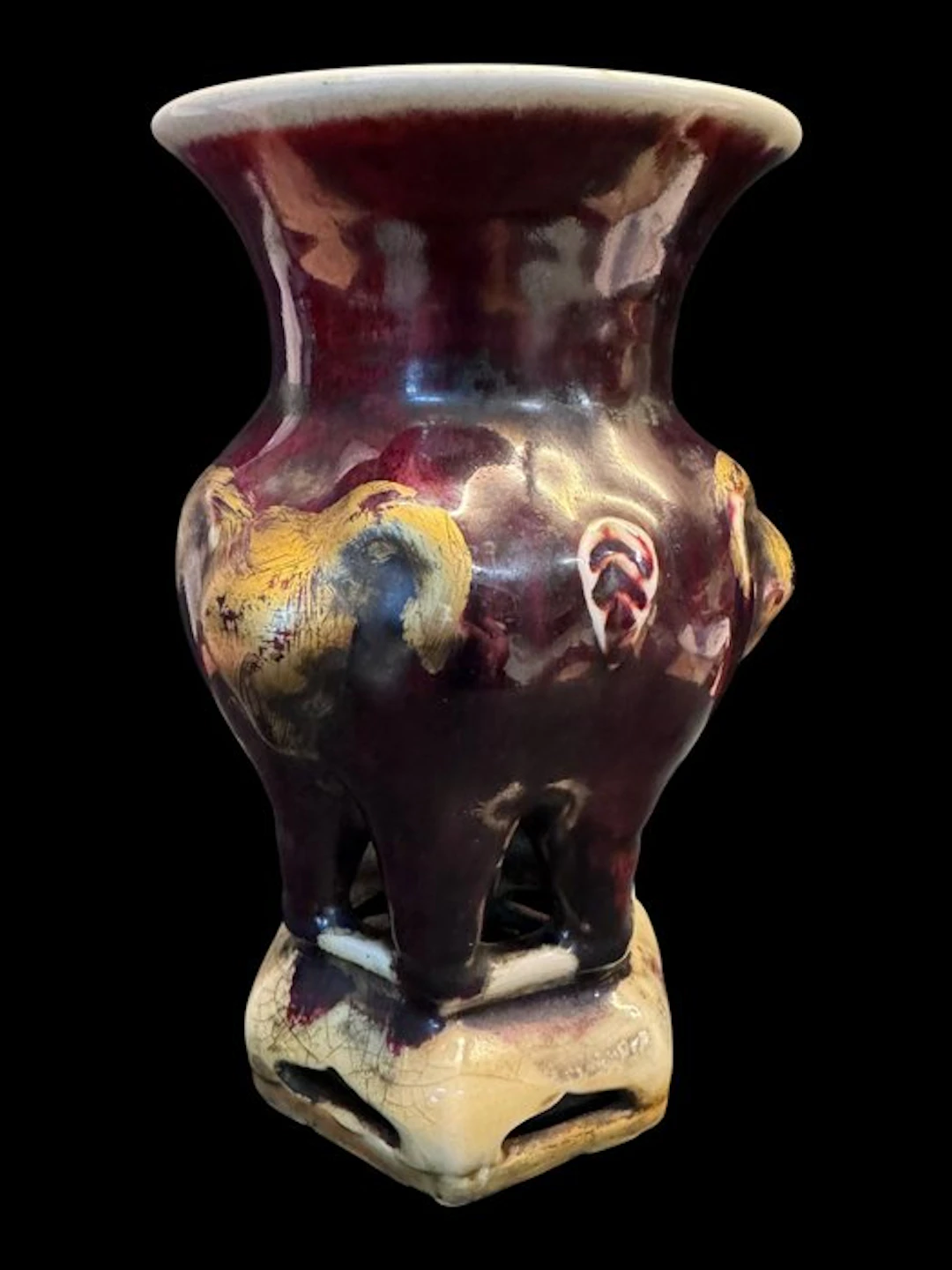
A distinctive biansato porcelain vase in oxblood red with a dark purple tone. The piece stands out for its complex structure and an earthy, antique or historicist decoration. Here are the main details: The body of the vase has a globular belly that narrows upward into a flared neck, ending with a wide circular lip. At the bottom, the base does not rest directly on the ground but is supported by six massive feet integrated into the body of the vase. These elements transfer the weight to a light-colored octagonal, perforated pedestal or plinth. On the central body rise three prominently reliefed animal-protrusion handles (likely ram heads or grotesque creatures) finished with brushstrokes of ochre enamel, gold yellow, and metallic reflections, creating a strong chromatic contrast with the surrounding dark surface. These animal heads were auspicious and in Chinese culture symbolize peace, fortune, and harmony. The glaze is glossy and dense, typical of high-fire or lustre wares. It shows iridescent shading, with golden and yellowish inclusions and drips that simulate the effect of gilded bronze or veined hard stones. The light-colored base, however, displays a clear crazing effect (a fine network of narrow glaze cracks), giving the piece a deliberately antique or patinated look. This type of vase serves several functions: 1. Ornament and Status Function (Primary) In late Qing reproductions, Republican era or 20th century pieces, this vase primarily serves decorative and collectible purposes. It was displayed on dedicated wooden furniture or shelves in the homes of the well-to-do to show off taste, wealth, and appreciation for traditional art. 2. Ritual and Symbolic Function (Historical Origin) The tripod form is directly inspired by ancient Chinese ritual vessels in bronze and earthenware (Ding or Li). Originally, these shapes were used for: • Ritual offerings: to hold food, wine, or incense during religious ceremonies and ancestor worship. • Symbol of power: In ancient China, possession of tripodal vases was closely tied to imperial authority and political prestige. At the base there is a customs seal in red-orange sealing wax (called Jianding) applied by Chinese authorities (from the mid-1920s to the 1960s/70s) on ceramics, porcelain, or artworks destined for the overseas market. The presence of this precise type of sealing wax suggests the object was exported or traded during the 20th century (very frequently between 1920 and 1950). Dimensions: H 20 x 12.5 x 12 cm; weight 1010 g. Insured shipping with professional packing.
Estimate:£0.84
To the auctionEstimate:
£0.84


OCT 23 | 8:00 AM


OCT 27 | 4:00 PM
Bring your auction to collectors worldwide!
Get listed nowBy subscribing, you are agreeing to the privacy policy. Unsubscribe anytime.
Barnebys HQ
Brahegatan 10
BOX 5038
114 37 Stockholm
