


OCT 8 | 3:00 PM

Bring your auction to collectors worldwide!
Get listed nowBy subscribing, you are agreeing to the privacy policy. Unsubscribe anytime.
Barnebys HQ
Brahegatan 10
BOX 5038
114 37 Stockholm
All auctions / Books, Maps & Manuscripts / Paolo Giovio and illustrated by Bernard Salomon

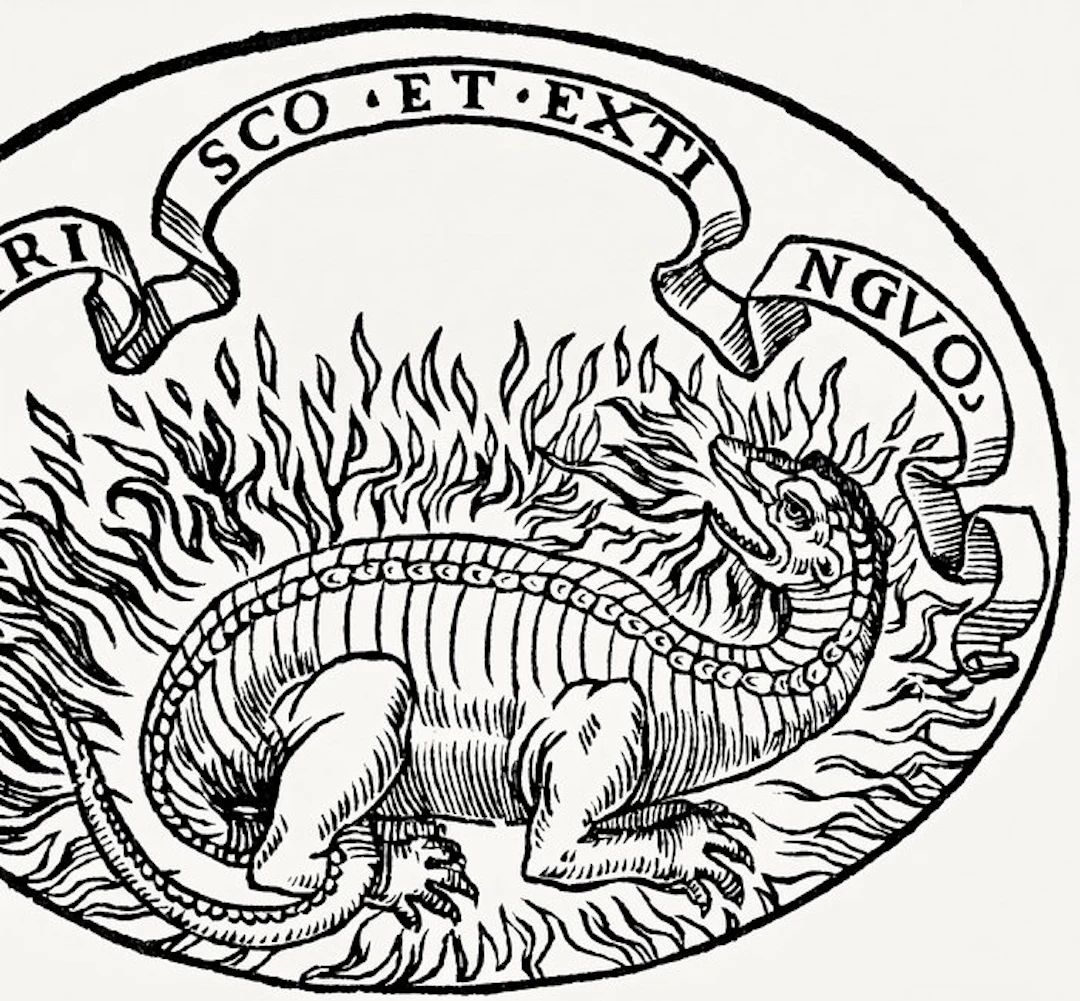
1574 FRENCH-ITALIAN BOOK OF EMBLEMS, COVERING HISTORY, ESOTERICISM, HERALDRY, COATS OF ARMS, SYMBOLISM, ANIMALS, NATURE, AND THE LIVES OF HUNDREDS OF FIGURES, by Paolo Giovio (1483–1552), a bishop, historian, physician, biographer, and museologist. The book is richly illustrated with 139 emblems created by Bernard Salomon (1506–1561) and Pierre Eskrich (c. 1518–1590), and subsequently adapted and expanded by the workshop and engravers of Guillaume Rouillé in Lyon. The mottos and devices are based on legends of real or imaginary animals and myths of the past, intended to inspire the individual to cultivate virtue, maintain courage, face enemies and misfortunes without fear, and fight valiantly—giving one's all—for oneself and one's family. In just a single page and a few lines, an emblem encapsulate a guiding principle through a motto paired with an image, alongside the coats of arms, histories, and major achievements of Italian and European figures and their noble houses. The book serves as both an artistic and historical document; these symbols functioned as personal emblems and official records, yet also appeared on buildings, flags, shields, and coins to symbolize power, resilience, and rectitude. It comprises two books in a single volume, though they differ in style: the second part is authored by Gabriele Simeoni (1509–1575)—a philologist and historian—and illustrated by the same engravers, likewise focusing on Renaissance emblems and historical figures. Bernard Salomon and Pierre Eskrich originally conceived some of these emblems while working for publishers in Lyon; however, they were later expanded, elaborated, and modified—with the addition of new scenes—for this edition printed by the Lyonnais publisher Guillaume Rouillé. Original contemporary stiff vellum binding in excellent condition, as shown in the photos. NO COPIES FOR SALE, the 1561 French version from the same publisher is for sale at US$ 5,800.00 here: https://www.abebooks.com/servlet/BookDetailsPL?bi=31996269174, the Italian edition is offered to you at a fraction of that price. The book presents numerous emblems or imprese—such as that of King Francis I of France, featuring a salamander that burns yet regenerates, accompanied by the motto "nutrisco et extinguo—I nourish and I extinguish" (first photo), and hundreds of other high-ranking figures with their emblems, such as...Pope Leo X, Pope Clement VII, King Louis XII, Caterina de' Medici, Alfonso III d'Avalos, Ludovico Maria Sforza, Cosimo I de' Medici, Ercole I d'Este, Philippo Sforza, the Duke of Bari, Ottaviano Sforza, Alfonso d'Este, Luigi Gonzaga "Rodomonte", the lawyer Camillo Giordani...etc. The book concludes with an emblem depicting a scepter and an agricultural hoe crossed beneath a human skull, bearing the motto "mors sceptra ligonibus aequat"—death makes scepters and hoes equal. In addition to hundreds of noble coats of arms, there are also dozens of emblems offering life lessons for everyone—featuring admonitions, warnings, and examples of vices and virtues—such as the one depicting a skeleton, the personification of Death, brandishing a staff over a man kneeling in submission and supplication. The lesson: it symbolizes how the cruel, ruthless, or wicked forces of the world cannot be appeased or softened by submission, service, or prayer—much like Death, which spares no one, no matter how humbly they plead. The book is dedicated to the Duke of Florence, Cosimo de' Medici. The first illustrated edition of Paolo Giovio’s work dates to 1559, while this is the second edition; however, since each edition differs—with emblems changing, being modified, or increasing in number, and with variations in frames, decorations, and text length—every edition can be considered unique. TITLE: Dialogo dell'imprese militari et amorose di monsignor Giovio vescovo di Nocera et del signor Gabriel Symeoni fiorentino. Con un ragionamento di messer Lodovico Domenichi, nel medesimo soggetto. (Dialogue on the Military and Amorous Devices of monsignor Giovio, Bishop of Nocera, and Sir Gabriel Symeoni, Florentine. With a discourse by Messer Lodovico Domenichi on the same subject). AUTHORS: Paolo Giovio (1483–1552) and Gabriele Simeoni (1509–1575), and illustrated by Bernard Salomon (1506–1561), Pierre Eskrich (c. 1518–1590), and subsequently adapted and expanded by the workshop and engravers of Guillaume Rouillé PUBLISHERS: Guglielmo Rouillio known as Guillaume Rouillé DATE: 1574, printed in Lyon, text in italian, latin and sometimes in spanish DESCRIPTION: In 8° size, height 174 x width 125 mm (6.9 by 4.9 inches). Pages 280, [16], and 139 illustrations. Original contemporary stiff vellum binding in perfect condition; minimal defects, occasional minor staining, no cuts, no cracks, or breaks; very sturdy and fully functional, as shown in the photos. Pages and emblems are well-printed with detailed engravings; the paper shows some age-related yellowing. The title page bears a signature of ownership and some crossed-out text, as well as the bookplate of Attilio Monaco—an Italian ambassador to China, South Korea, Brazil, Turkey, and African nations, who was also an Orientalist and a dedicated scholar. There is some scattered staining and oxidation, though nothing serious; the upper white margins of 20 leaves have undergone a small restoration. Eight leaves are missing and have been replaced with reprints on antique paper—professionally inserted to match the originals—likely by the former owner, Attilio Monaco (1858–1932), between the late 19th and early 20th centuries. EXAMPLES OF EMBLEMS OF FAMOUS FIGURES—KINGS, MILITARY LEADERS, JURISTS, EMPERORS, PUBLISHERS, POPES AND CARDINALS—IN THIS BOOK: The book presents numerous emblems or imprese—such as that of King Francis I of France, featuring a salamander that burns yet regenerates, accompanied by the motto "nutrisco et extinguo—I nourish and I extinguish" (first photo). There is the emblem of the Spanish viceroy Diego Enríquez de Guzmán, depicting a waterwheel that symbolizes life's ups and downs and the contrast between human suffering and hope, bearing the motto "De dolor los llenos de males míos—the full buckets of my grief/sorrows". Another example is the emblem of Emperor Augustus, showing a crab holding a butterfly—an idea later adapted by Titus Flavius Vespasian for his coinage, featuring a dolphin entwined around an anchor. Both versions shared the motto "festina lente—make haste slowly"—a philosophical paradox advocating that the best results arise from balancing rapid, decisive action with stability and caution—which was later adopted as a trademark by the publisher Aldus Manutius. Finally, the book features the emblem of Duke Cesare Borgia, depicting an ox amidst flames—a symbol long associated with physical and moral strength, courage in adversity, and noble pride. There is a historic emblem of an ostrich swallowing a horseshoe with the Latin motto "spiritus durissima coquit—the spirit digests the hardest things", Giulio Einaudi adopted this emblem as its official trademark when his publishing house was founded in 1933. Charles III Duke of Bourbon, Constable of France with the emblem of the winged stag and motto "Cvrsvm intendimvs alis—we direct our course with wings", it symbolizes high ambitions, swift movement, and soaring capability in military pursuits. The personal device of François Duke of Guise, featuring a crowned shield pierced by a sword and the Latin motto "perimit et tuetur—it destroys and protects". Another emblem depicting an elephant locked in combat with a dragon, featuring the Spanish motto "non vos alabareis—you will not exult over us". The device was created for the Genoese noblemen Sinibaldo and Ottobono Fieschi. The scene represents the revenge taken for the murder of their brother Girolamo by the Fregoso family. Both the elephant and the dragon deal each other mortal blows in the struggle, symbolizing that their rivals had no cause for celebration or triumph. The emblem featuring a globe with winds blowing upon it and the motto "non cedit umbra soli—the shadow does not yield to the sun", was used by Alfonso Duca di Ferrara to symbolize his steadfastness and resolve during military campaigns, such as the Battle of Ravenna in 1512. Another emblem depicts a unicorn dipping its horn into a stream, accompanied by the Latin motto "venena pello—I drive away poisons"; people believed the unicorn purified poisoned waters with its horn before other forest animals could drink them, thereby symbolizing protection against deceit, malice, or poison. The emblem of a crocodile with the motto "crocodili lachrimae—crocodile tears", alluding to the mythical tears of a crocodile luring its prey—was notably dedicated to Cardinal Sigismondo Gonzaga. The emblem with eagle and the ring inscribed with "semper—always" represent constancy, loyalty, and eternal power, historically associated with figures like the Medici family. The emblem with a two-tailed siren or mermaid standing between two columns, flanked by banners with the Latin mottos "contemnit tuta procellas—she defies the storms while safe", was the device of Stefano Colonna (colonna in italian means column), a prominent general serving the Duke of Florence, Cosimo I. The emblem featuring a Sphinx with a snake biting its tail (ouroboros symbolizes time and eternity) on an ornate pedestal, accompanied by the Latin motto "incerta animi decreta resolvet—resolves the uncertain decisions of the mind", this specific emblem is for the jurist Camillo Giordani, who felt hesitant and torn over making a major decision and looked to time and reason to clear his doubts. The emblem featuring a central scorpion without head surrounded by a ribbon inscribed with the Latin motto "qui vivens laedit morte medetur means—who wounds when alive, heals when dead", in Renaissance the scorpion was an ambivalent symbol. Its venomous sting causes pain or death, but traditional belief held that crushed scorpion ashes or oil could act as an antidote or remedy for its own sting. This specific device/emblem/impresa belonged to Luigi Gonzaga, known as Rodomonte, a Italian general and member of the House of Gonzaga in Mantova. A prancing griffin enclosed in an ornate circular border with a billowing Latin ribbon motto "unguibus et rostro atque alis armatus in hostem—armed with claws, beak, and wings against the enemy", the emblem is associated with the military leader of Giampaolo Baglioni. The personal device of Marcantonio Colonna featuring a tunic of asbestos burning in flames with the Latin motto "semper pervicax—always unyielding", the asbestos, an ancient mineral fabric known to Pliny the Elder that purifies itself and resists being consumed by fire. Marcantonio Colonna adopted this emblem to demonstrate his steadfast courage, resilience, and unyielding constancy against enemy forces during wartime. The emblem with a camel reflects an ancient belief that this animal purposefully muddies clear water with its foot before drinking so that it can enjoy it better or confuse others.This act symbolized troublemakers, agitators, or divisive figures who prefer confusion, discord, or "muddy waters" over clarity, peace, and straightforward truth. ACCORDING TO PAOLO GIOVIO, THE FIVE CONDITIONS FOR A PERFECT EMBLEMATIC DEVICE ARE: A calculated balance between the soul (the motto) and the body (the image) of the *impresa*, each emblem is set within an oval containing the motto, with two or three lines of commentary underneath; A middle ground between an interpretation that is too obscure and one that is too obvious; Pleasant subjects—such as animals or natural elements—for the images (stars, sun, moon, water, elephants, eagles...); The exclusion of the human figure; Brevity—specifically, two or three words (unless it was a line of verse)—for the motto, which had to be composed in a foreign language. Among these conditions set forth by Giovio, the fourth posed a problem for Simeoni; he created *imprese or emblematic devices* featuring the human figure and rightly argued that a number of the *imprese* collected by Giovio himself failed to meet this requirement. LITERATURE & REFERENCES; WORLD CAT n°1112348460; USTC n°83325 & 141168; Brunet III 583; Henri-Louis Baudrier and Julian Baudrier, Bibliographie lyonnaise, IX pp. 348-349; Sybille von Gültlingen, Bibliographie des livres imprimés à Lyon au seizième siècle n°X p. 181: 799; EDIT 16th Century Italian Editions n°21242; Landwehr 337; Praz 352; Vinet 845; Gueltlingen, Rouille' 447 & 456; Liège, Belgium, Bibliothèque universitaire Shelfmark: R03471A. SHIPPING: via UPS, DHL, National Postal Services, protected, INSURED and fully tracked package. Estimated time for Europe 3-5 working days. Shipping within one working day, you can combine shipping if you purchases several items from us, saving money and time.
Estimate:£2,121.25
To the auctionView all items fromCatawikiorBooks, Maps & Manuscripts
Estimate:
£2,121.25
OCT 8 | 3:00 PM


OCT 8 | 3:00 PM
Bring your auction to collectors worldwide!
Get listed now£257.04
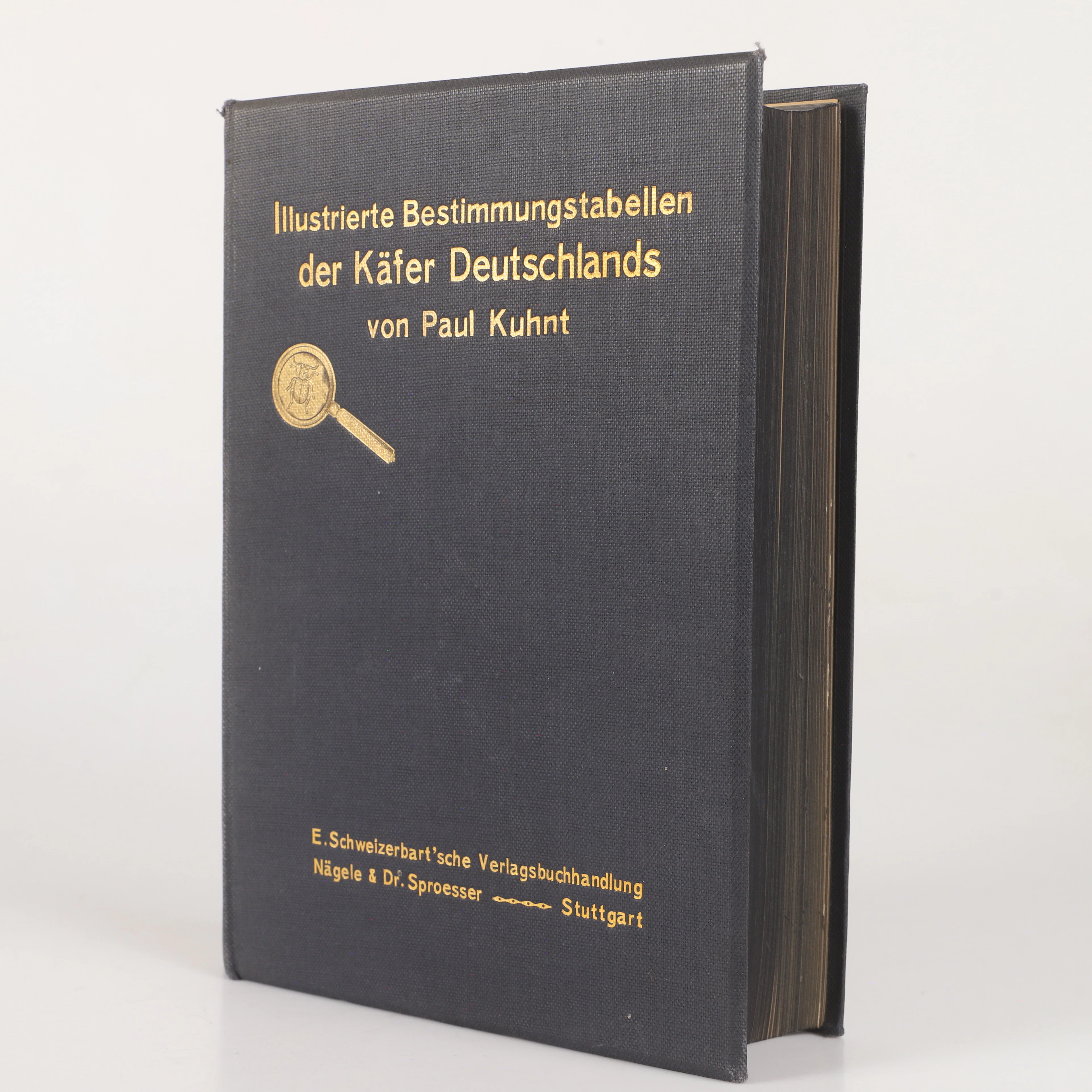
BOK, "Illustrierte bestimmungstabellen der käfer Deutschland"Paul
10/06/2026

£22.7
Est: £30.25


OCT 17 | 10:00 PM