






All auctions / Books, Maps & Manuscripts / Petrus Dathenum - De CL

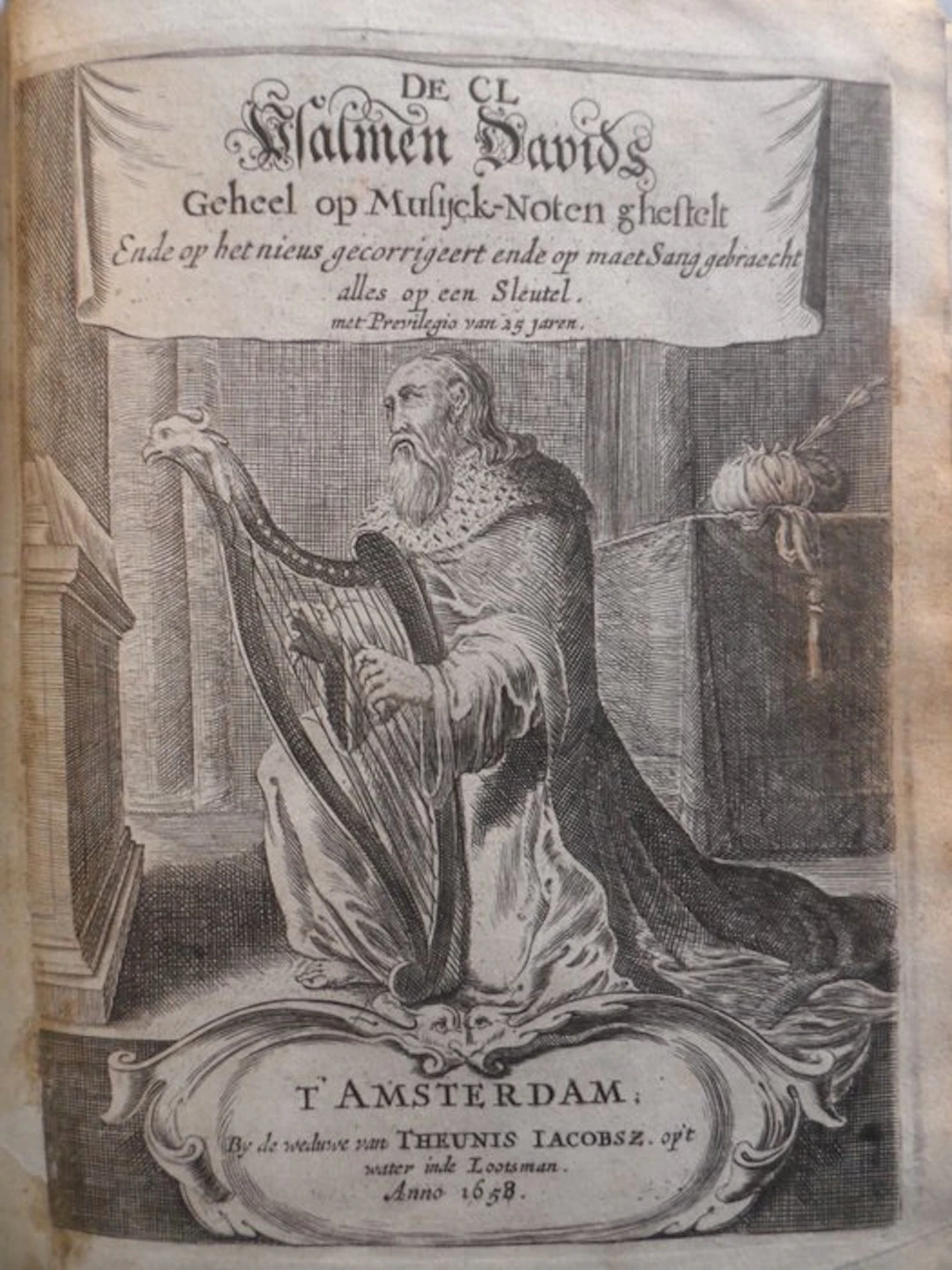
Petrus Dathenum: The CL. Psalms of the Royal Prophet David. Also some other laudatory songs: From the French into Dutch verse translated by Petrus Dathenum. Together with the arguments or the content for each Psalm / and placed on the side of the text of the Psalms: And also The Christian Catechism, Confession of Faith, and the Liturgy or Forms of the Dutch Church. All following the latest translation and correction, done by order of the High Herrschaft: the States General of the United Netherlands, and according to the decision of the National Synod, held at Dordrecht. In the year 1618 and 1619. Entirely set to music-notes / all misstatements purged / and brought on a single key / remaining on the same vowels: with a short instruction / so that through this a key may be learned very briefly and more easily. Amsterdam, printed by the Widow of Theunis Jacobsz, living on the Water / in the Loots-man / Year 1658. Colophon: To Amsterdam, printed by Jacob Theunisz Loots-man, living on the Water / in the Lootsman / 1658. 4o: Complete with the title page. Unpaginated. Bound in an original leather binding with ribbing. spine somewhat worn and minimally damaged. Corners slightly worn and bent. Binding good, here and there some small discolorations or a crease in the corners. ** Petrus Datheen, also known as Pieter Datheen, Pieter Dathen or Petrus Dathenus, (Kassel in the county of Flanders, c. 1531 – Elbing in West Prussia, 17 March 1588) was a person who played an important role in the Calvinistic Reformation in the Southern Netherlands. He became, after wandering in exile, one of the leading theologians in the Nederduits Gereformeerde Kerk, the official Protestant church in the Northern Netherlands, in which he chose the orthodox party. His youth he spent in the Carmelite monastery in Ypres to be trained there as a priest. When Datheen witnessed a nineteen-year-old boy being burned for his faith, he decided to leave the order and sought rapprochement with Calvinism. Because of the persecution of Protestants in the Netherlands, Datheen fled to the Dutch exile community in England (London). After Mary Tudor ascended the throne and the violent re-Catholicization of England, he fled with his community to Emden in East Frisia. Afterwards he settled in 1555 in the Lutheran city of Frankfurt am Main. After seven years he had to leave Frankfurt and was allowed to settle with his community in nearby Frankenthal in the Electoral Palatinate. The Palatinate count favored Calvinism and from 1567 to 1578 Datheen held the position of court preacher. In the remarkable year 1566 he stayed in the Southern Netherlands. He did not participate in the Iconoclast Storm, but he supported the armed rebellion. The assembly of pastors held there at Nieuwkerke was chaired by him. Datheen became in 1578 the chairman of the Dordrecht Synod. From 1578 to 1584 he was city preacher of Gent, then regions radical Calvinism. In this city he, together with Herman Moded, led the orthodox party, and he came into conflict with the tolerant William of Orange. Orange believed that everyone had freedom of conscience, but Datheen maintained that the state must choose for the true religion and that, consequently, a Protestant government did not have to tolerate Catholic churches. He also spoke out against the French policy of Orange. This conflict led in 1583 to Datheen’s imprisonment, who was subsequently banished from the Netherlands in 1584. He lived in several North German cities and earned his living as a doctor. Religiously he distanced himself from his Reformed ideas and sought alignment with those of the Anabaptist David Joris. In 1587 he became city physician in the West Prussian Elbing. In this city he died a year later at the age of 57. He was also buried there. Datheen was mainly known for his Dutch translations from the Heidelberg Catechism and for rhymed translations of the Psalms. The latter were based on the Genevan melodies, which in French were rhymed by Clément Marot and Théodore de Bèze. Datheen’s psalms were already sung at the great heat-preaching of 23 July 1566 at Ghent and have since gained rapidly growing popularity. From 1566 to 1773 the Datheen psalm rhymes formed the main hymn book of the Nederduits Gereformeerde Kerk, later called the Nederlandse Hervormde Kerk. Because of the style and the non-melodic form, Datheen’s rhymes were criticized from the start. For a long time no new rhymes gained sufficient support to replace his. Therefore it took until 1773 before a new rhyming version was introduced. Today Datheen’s psalm rhymes are still sung in about thirty church communities of a very orthodox character, especially in (old) Reformed communities and in Zeeland. Bookseller Petrus Dathenus, who claimed to be a descendant of Datheen, came into conflict in 1745 with the Middelburg pastor Andreas Andriessen, who deemed Datheen’s psalm rhymes unsuitable. This renewal of the discussion about Datheen’s psalm rhymes was one of the impulses for the creation of a new psalm rhyming, the Rhyming of 1773."
Estimate:£125.63
To the auctionView all items fromCatawikiorBooks, Maps & Manuscripts
Estimate:
£125.63
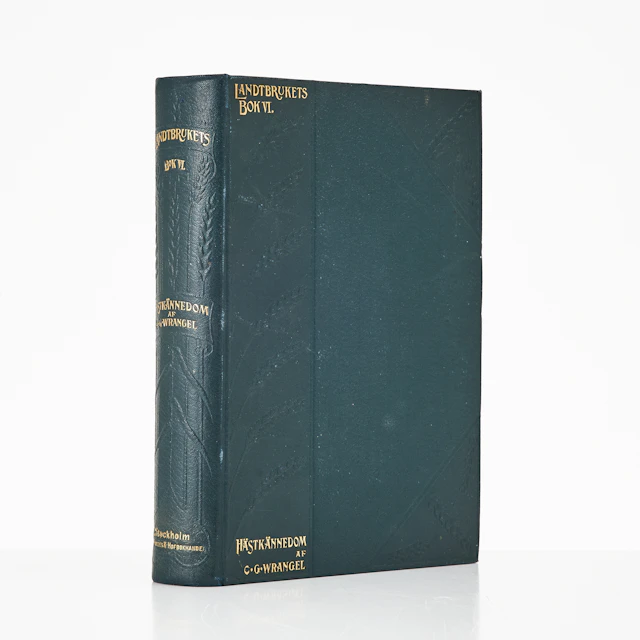
WRANGEL, HIPPOLOGIA. HANDBOK I HÄSTKÄNNEDOM 1906.
10/22/2026
£67.75
Est: £135.85
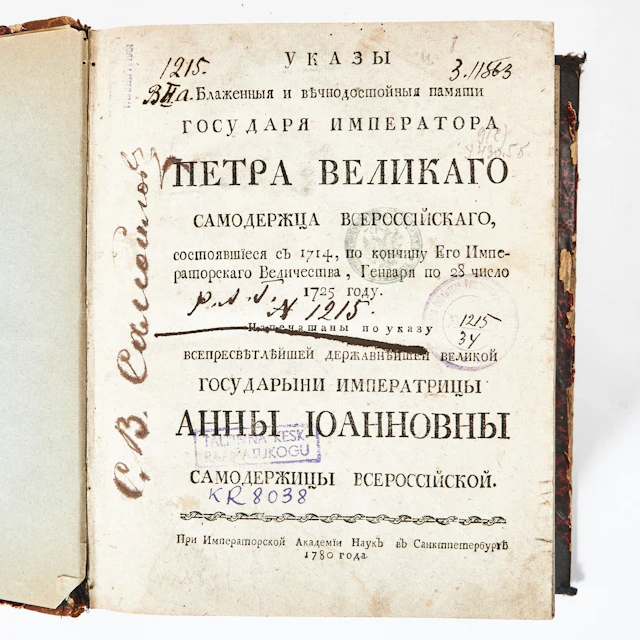
RYSK BOK RÖRANDE LAGAR OCH FÖRORDNINGAR, ST. PETERSBURG 1780.
10/22/2026
£343.06
Est: £113.21


OCT 27 | 4:00 PM
Bring your auction to collectors worldwide!
Get listed nowBy subscribing, you are agreeing to the privacy policy. Unsubscribe anytime.
Barnebys HQ
Brahegatan 10
BOX 5038
114 37 Stockholm
