


OCT 8 | 3:00 PM

Bring your auction to collectors worldwide!
Get listed nowBy subscribing, you are agreeing to the privacy policy. Unsubscribe anytime.
Barnebys HQ
Brahegatan 10
BOX 5038
114 37 Stockholm
All auctions / Jewellery & Gems / Rare Micromosaic In Aluminum, Set In Gilt Silver, 1860s & Later

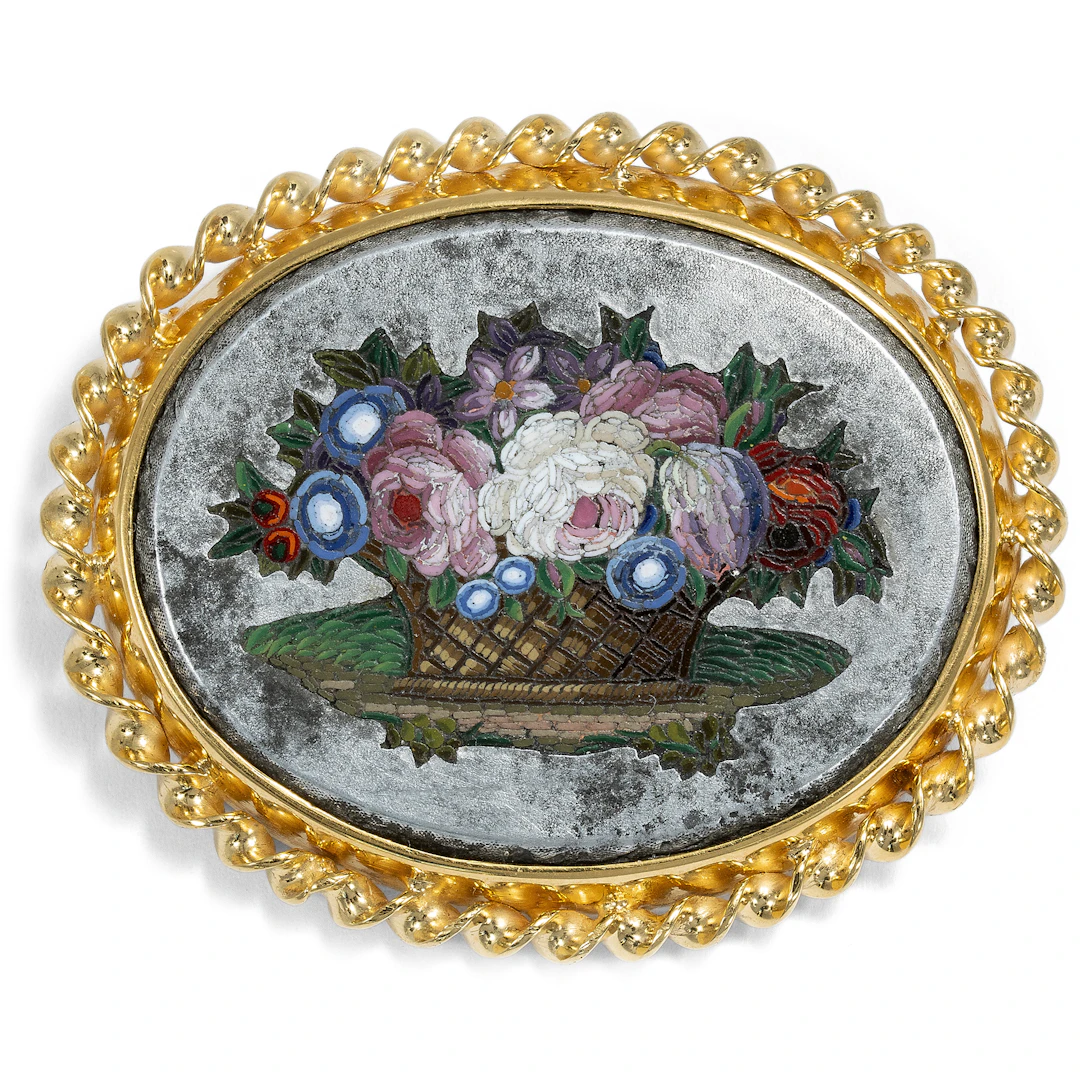
From today's perspective, the use of aluminum in 19th century jewellery is a very surprising chapter in the history of jewellery. In the middle of the 19th century, this metal, which is rather inexpensive today, was traded at around twice the price of gold. Extracting it was complicated and so was processing it: perfect conditions for it to become a sought-after jewelry material. Aluminum first entered the big stage at the 1855 World Exhibition in Paris: Napoleon III purchased a parure made of the new material, which was usually cast into stars or flowers and then engraved. As aluminum could not be soldered, it was set in gold frames like precious gemstones. A very typical bracelet in this style can be found today in the collection of the British Museum, Inv. No. 1991,0106.1. Queen Victoria also owned a bracelet made of the modern material. In the 1860s, aluminum initially retained its status as a special treasure, and jewellery from this period is rare. In the following decades, however, the price fell in line with the discovery of new methods of producing the metal more easily and on a larger scale. But even at the end of the 19th century, jewellery was still being made from aluminum, albeit now mostly set in gold-plated metal and as a kind of cheaper costume jewelry. The brooch shown here is a plaque made of aluminum from the early phase of its use in jewellery. A micromosaic is recessed into its center. The mosaic shows a richly filled basket of flowers. Roses are arranged close together in various shades of pink, red and white. In between are blue flowers, red berries and feathery green leaves. The basket, made of yellow wickerwork, stands on a green bowl. This type of micromosaic is typical of the mid-19th century, which also helps to date the plaque. The aluminum plate, in which the mosaic is recessed, is slightly beveled around the edge and engraved there. Our goldsmiths have added a gold-plated silver setting to make the plate wearable as a brooch. In addition, the warm sheen of the gold complements the piece of jewellery in exactly the same way that aluminum jewellery was set in its time of origin. For the history of aluminum jewellery, see Charlotte Gere/Judy Rudoe: Jewellery in the Age of Queen Victoria, London: British Museum Press 2010, p. 204f., and Shirley Bury: Jewellery 1789-1910. The international Era, 2nd vol., Woodbridge 1991, here vol. 1: 1789-1861, pp. 351-353.
Estimate:£2,964.51
To the auctionView all items fromHofer AntikschmuckorJewellery & Gems
Estimate:
£2,964.51
OCT 8 | 3:00 PM


OCT 8 | 3:00 PM
Bring your auction to collectors worldwide!
Get listed now
£428.98

OCT 17 | 10:00 PM