


OCT 8 | 3:00 PM

Bring your auction to collectors worldwide!
Get listed nowBy subscribing, you are agreeing to the privacy policy. Unsubscribe anytime.
Barnebys HQ
Brahegatan 10
BOX 5038
114 37 Stockholm
All auctions / Arts & Graphics / Renzo Piano (after) - Centre Pompidou Paris 1977

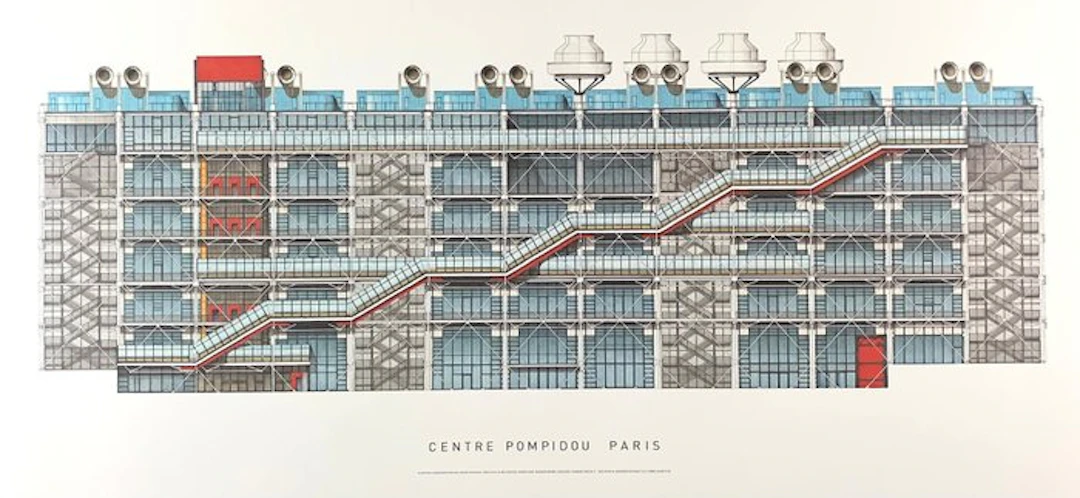
Beautiful, expressive art print of the Centre Pompidou in Paris designed by Renzo Piano. The work is a high-quality offset print on sturdy paper and in very good new condition. Title: Paris, Centre Pompidou Architect: Renzo Piano Art: Architecture poster print Technique: Offset printing Originality: Reproduction Sheet dimensions: 47 x 100 cm Condition: As new Origin: Art publishing house Era: Contemporary art Nationality: Italian art Renzo Piano: Renzo Piano, born September 14, 1937 in Genoa, Italy, is one of the most important architects of our time. Known for his innovative and technologically advanced designs, Piano has created a number of iconic buildings that have gained worldwide recognition. His architecture is characterized by a harmonious integration of form, function, and technology, inspiring generations of architects. Piano studied architecture at the Politecnico di Milano, where he was influenced by Franco Albini, a representative of Italian rationalism. Albini emphasized the connection between architecture and technology, an approach that is also evident in Piano’s later works. After his studies he worked with various architects, including Louis Kahn, whose monumental yet sensitive designs left a lasting impression on Piano. Kahn’s ability to use light and space in a poetic way influenced Piano’s own approach to building design. A breakthrough in Piano’s career came with his collaboration with Richard Rogers on the Centre Georges Pompidou in Paris, which opened in 1977. This project revolutionized architecture with its high-tech approach and its inverted structure, in which the technical elements such as pipes and conduits are visible on the exterior of the building. The Centre Pompidou sits in line with the work of architects such as Norman Foster and Santiago Calatrava, who are also known for their high-tech architecture. Foster and Calatrava created buildings that, like Piano, push the boundaries of engineering and architecture. Foster’s Reichstag in Berlin and Calatrava’s Turning Torso in Malmö are examples of the influence of this high-tech philosophy. Piano’s work is characterized by a close connection between architecture and engineering. This is especially evident in projects like Kansai International Airport (1994) in Osaka, Japan, where he created a flowing, aerodynamic form that is both aesthetically pleasing and functional. This fusion of form and function recalls the work of Eero Saarinen, who was also known for his sculptural yet functional designs, such as the TWA Flight Center in New York. Saarinen’s ability to combine architecture with a clear, functional aesthetic is reflected in Piano’s work as well. Another significant project by Piano is The Shard (2012) in London, the tallest building in the European Union. With its glass façade and pointed form, The Shard stands as a striking example of Piano’s ability to combine futuristic design with technological precision. This building engages in dialogue with the works of Helmut Jahn and Jean Nouvel, who are also known for their bold and innovative skyscraper designs. Nouvel’s Tour Horizons in Paris and Jahn’s Sony Center in Berlin show similar approaches to using glass and steel to create iconic urban structures. Piano has also created significant cultural buildings, including the Whitney Museum of American Art (2015) in New York. This project, developed in collaboration with engineering firm Arup, is notable for its flexible interior layout and its striking façade. The Whitney Museum is juxtaposed with other cultural projects such as Frank Gehry’s Guggenheim Museum in Bilbao, famous for its sculptural form and innovative use of materials. Gehry’s deconstructivist approaches, seen in projects like the Walt Disney Concert Hall in Los Angeles, reflect Piano’s willingness to challenge traditional architectural concepts and redefine them. Another highlight in Piano’s career is the Jean-Marie Tjibaou Cultural Centre (1998) in Nouméa, New Caledonia. This project, which combines traditional Melanesian building practices with modern materials and techniques, demonstrates Piano’s sensitivity to cultural contexts and sustainable construction. This approach is comparable to the work of Glenn Murcutt, an architect known for his environmentally conscious and context-responsive designs. Murcutt’s “simple, sustainable design” and respect for nature find echoes in Piano’s projects, which also respect context and the environment. Piano has also made significant contributions to museum architecture. The California Academy of Sciences (2008) in San Francisco is an example of his expertise in creating sustainable and environmentally friendly buildings. The academy features a living roof that improves energy efficiency while providing a habitat for local plants and animals. This project aligns with the work of Herzog & de Meuron, whose design for the Elbphilharmonie in Hamburg also pursues innovative approaches to energy efficiency and sustainability. Herzog & de Meuron’s Tate Modern in London and Piano’s Zentrum Paul Klee in Bern illustrate the transformation of existing structures into modern cultural centers. Another notable project is the Stavros Niarchos Foundation Cultural Center (2016) in Athens, Greece. This multifunctional complex houses the national library and the Greek National Opera and is distinguished by its elegant structure and the integration of public green spaces. Piano’s design promotes interaction between the buildings and their surroundings and shows parallels to the urban design concepts of Rem Koolhaas and the Office for Metropolitan Architecture (OMA), who likewise emphasize the relationship between architecture and urban context. Koolhaas’ CCTV Headquarters in Beijing and the Casa da Música in Porto show similar ambitions to redefine urban spaces through innovative architecture. Renzo Piano has had a lasting impact on contemporary architecture through his innovative and technology-oriented approach. His ability to fuse aesthetics with functionality has revolutionized how buildings are designed and constructed. Piano’s work stands in a long tradition of architects who have pushed the boundaries of architecture, from Louis Kahn and Eero Saarinen to Richard Rogers and Norman Foster, and to contemporary visionaries such as Santiago Calatrava and Jean Nouvel. These architects share Piano’s commitment to technological innovation and aesthetic excellence. His influence is far-reaching and continues to inspire architects worldwide to design sustainable, aesthetically compelling, and functional buildings. From his early projects to his latest masterpieces, Renzo Piano’s architecture demonstrates a deep devotion to innovation, technology, and improving the built environment. Works like the Parco della Musica in Rome or the Zentrum Paul Klee in Bern show how he continually expands traditional boundaries of architecture and creates new ways for the interaction between people and space. Shipping information: We roll prints onto sturdy rigid cardboard tubes, wrap them in corrugated cardboard, and ship them in particularly stable, protective boxes. Shipping includes a tracking number for shipment tracking. About us: We have been active in the art market for over 20 years and have extensive experience in the professional handling and shipping of artworks.
Estimate:£127.16
To the auctionView all items fromCatawikiorArts & Graphics
Estimate:
£127.16
OCT 8 | 3:00 PM


OCT 8 | 3:00 PM
Bring your auction to collectors worldwide!
Get listed now
£76.86

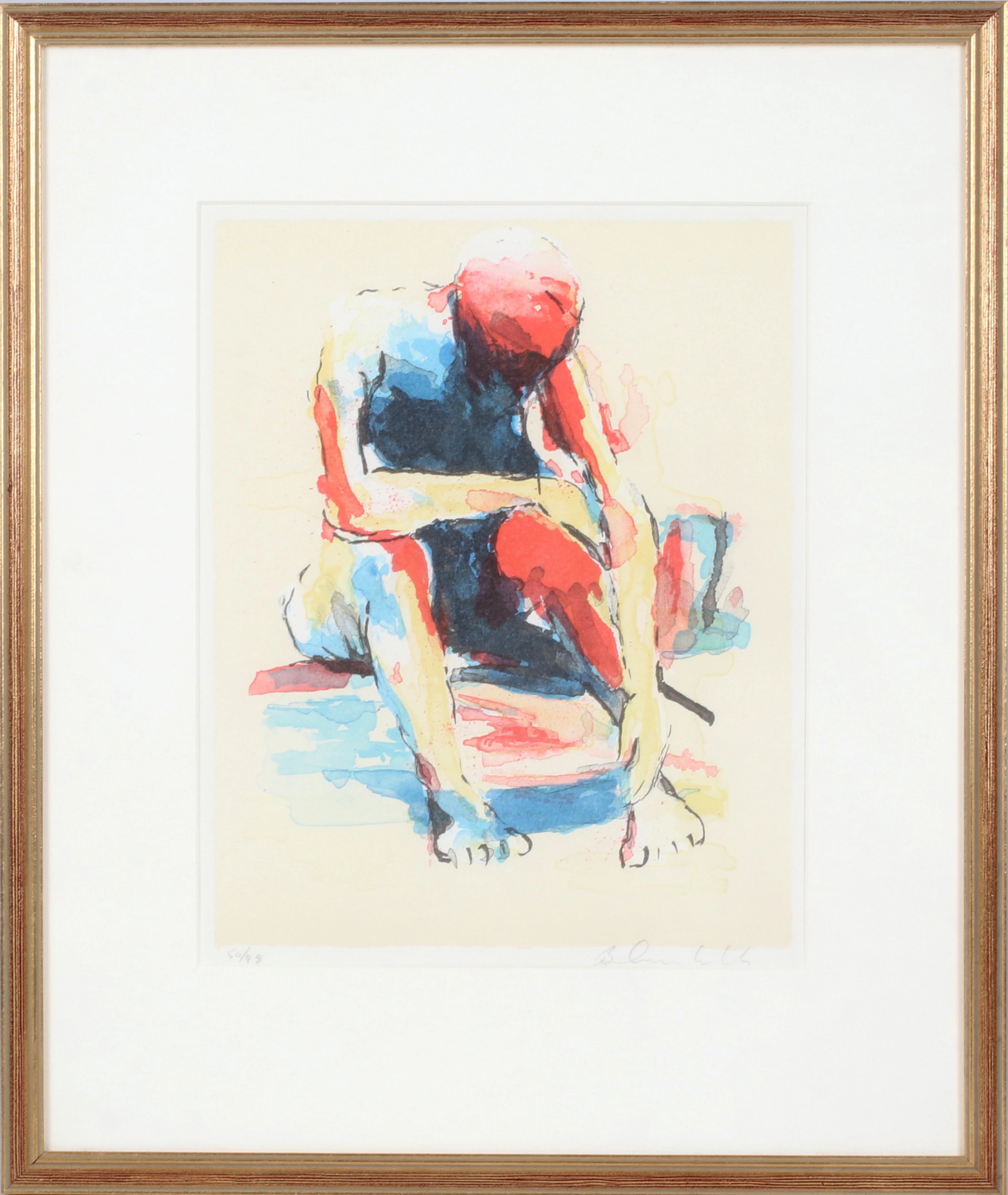
BJÖRN AUREBEKK. Sittande kvinna, litografi, signerad och numrerad 50/99.
10/06/2026
£22.7
Est: £37.68


OCT 17 | 10:00 PM