





OCT 17 | 10:00 PM

All auctions / Asian Art / Roman Carnelian Intaglio of Minerva-Fortuna with Rudder and Patera

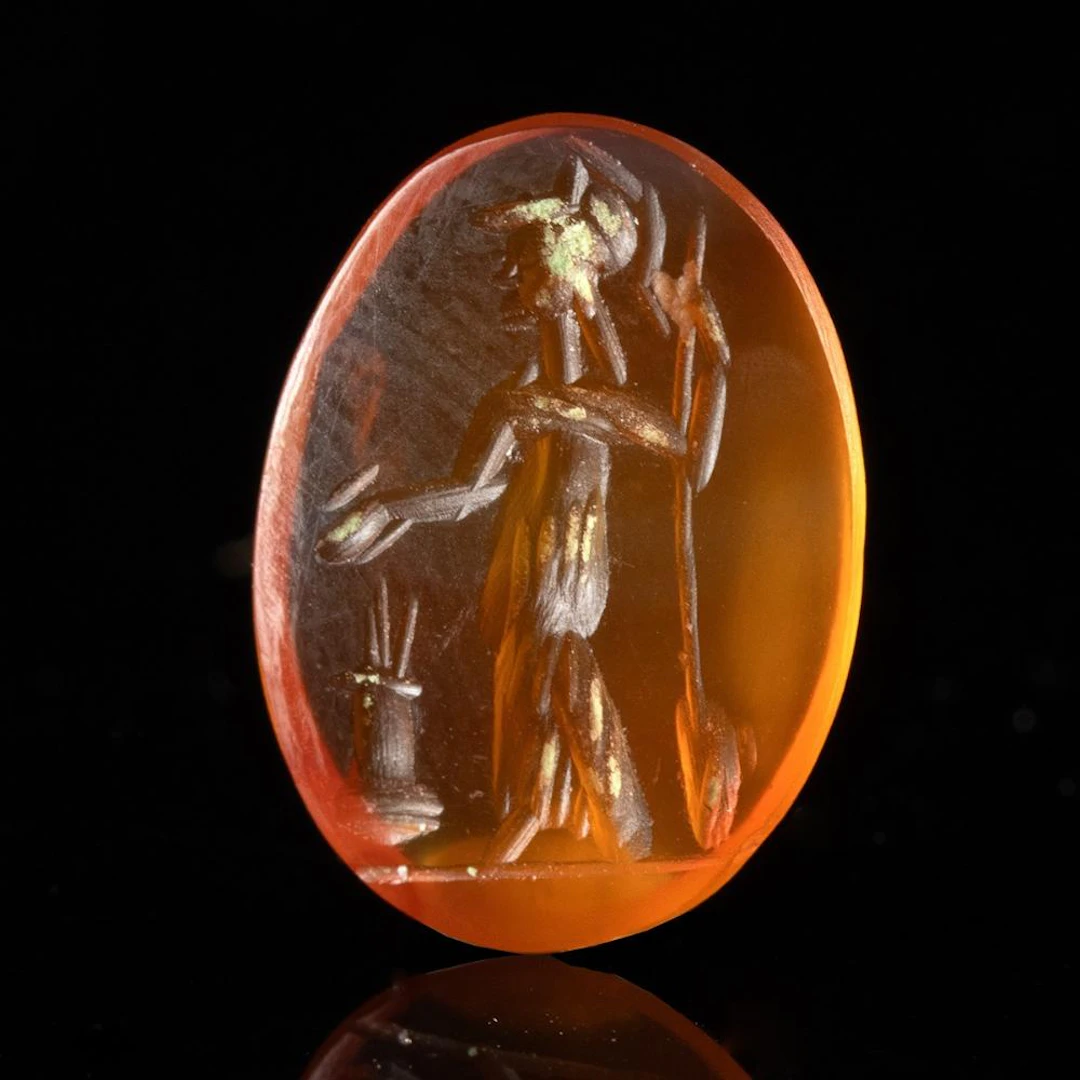
Roman, Imperial period. An oval intaglio of translucent orange carnelian. It is engraved in reverse with a helmeted goddess standing to left in a long robe. She holds a patera, the shallow dish used for libations, in her outstretched right hand. Her left hand rests on a ship's rudder set behind her, and a quiver of arrows stands on the ground in front of her. The helmet identifies Minerva, while the rudder belongs to Fortuna, so the figure is likely the combined goddess known as Minerva-Fortuna, or Athena-Tyche in Greek. The cutting is quick and sure. The engraver used fine drill and wheel strokes to show the folds of the robe and the crest of the helmet. The gem would have been set in a finger ring and used as a personal seal. It probably also worked as a small amulet, asking for both wisdom and good luck. Roman religious art of the Imperial period often combined deities on a single figure. Engravers gave one body the attributes of several gods, so that the owner of a small seal could call on more than one protector at once. The rudder is Fortuna's sign in her role as the goddess who steers human fate. The patera is a sign of correct religious practice, and the helmet belongs to Minerva, the goddess of wisdom and skilled crafts. Adding a quiver, which usually goes with Diana, points toward the "pantheistic" figures popular on Roman gems of the second and third centuries. These are images that bring together the favor of several gods in one compact scene. Item # 205246
Estimate:£301.42
To the auctionView all items fromArtemis Fine ArtsorAsian Art
Estimate:
£301.42
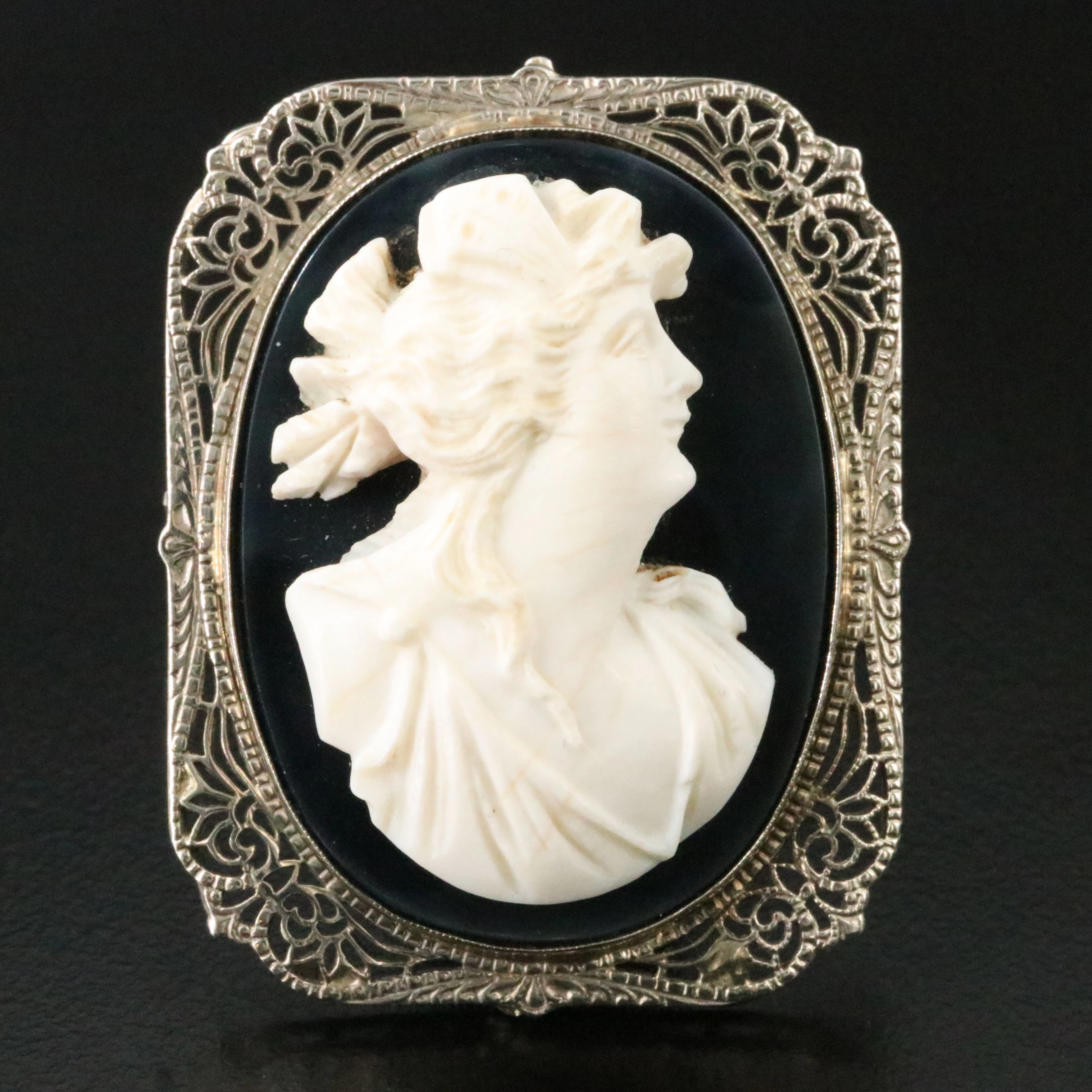
Art Deco 14K Goddess Psyche Latticework Brooch
10/14/2026
£257.71
Est: £124.9
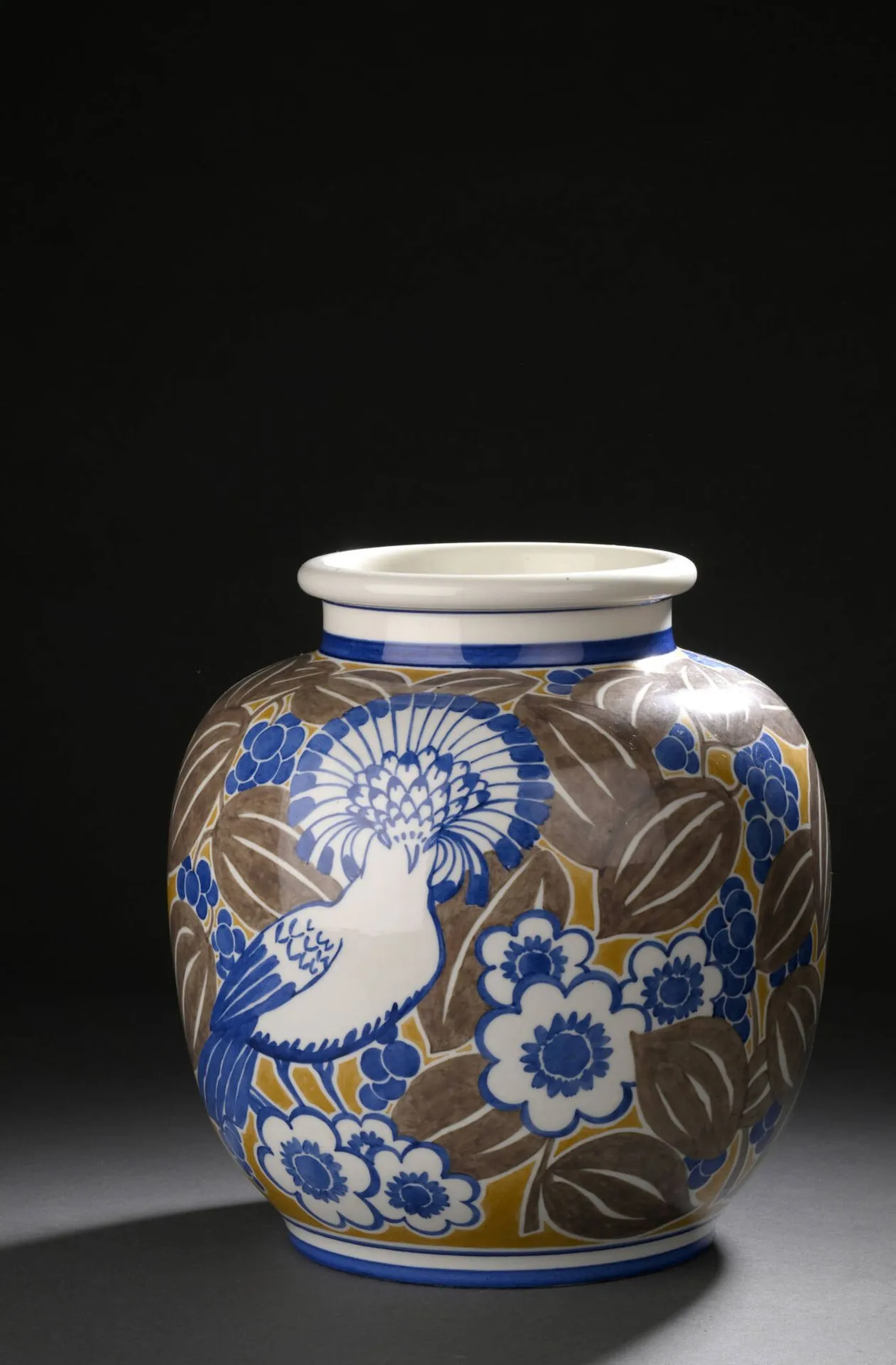
SÈVRES & Henri PATOU (active 1922–1942), designer of dec - Lot 60
10/07/2026

£847.61
Est: £859.78
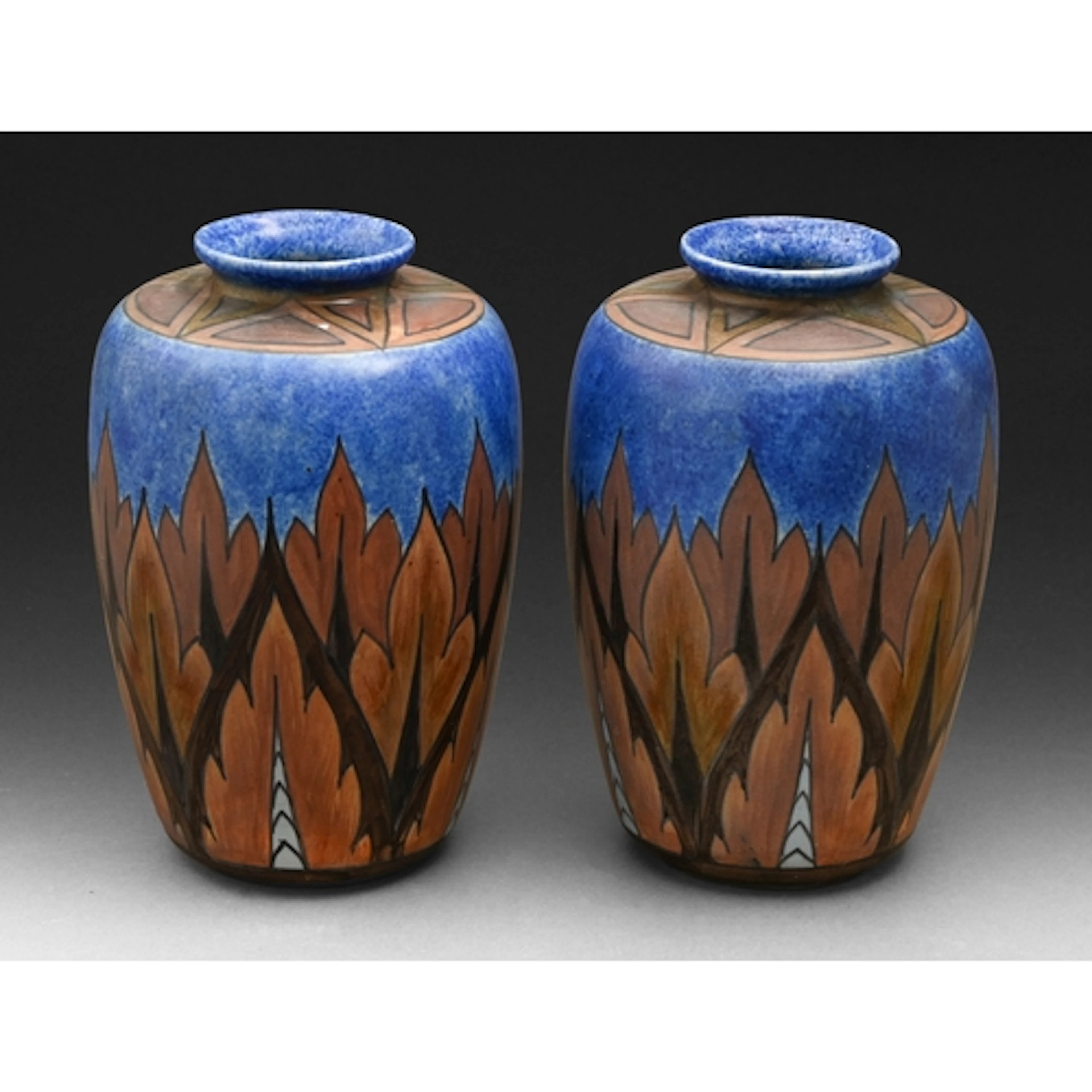
OCT 17 | 10:00 PM




OCT 23 | 8:00 AM
Bring your auction to collectors worldwide!
Get listed nowBy subscribing, you are agreeing to the privacy policy. Unsubscribe anytime.
Barnebys HQ
Brahegatan 10
BOX 5038
114 37 Stockholm
