

OCT 23 | 8:00 AM

All auctions / Ancient Art / Saitō Toshimitsu - Biographies of the Heroes of the...

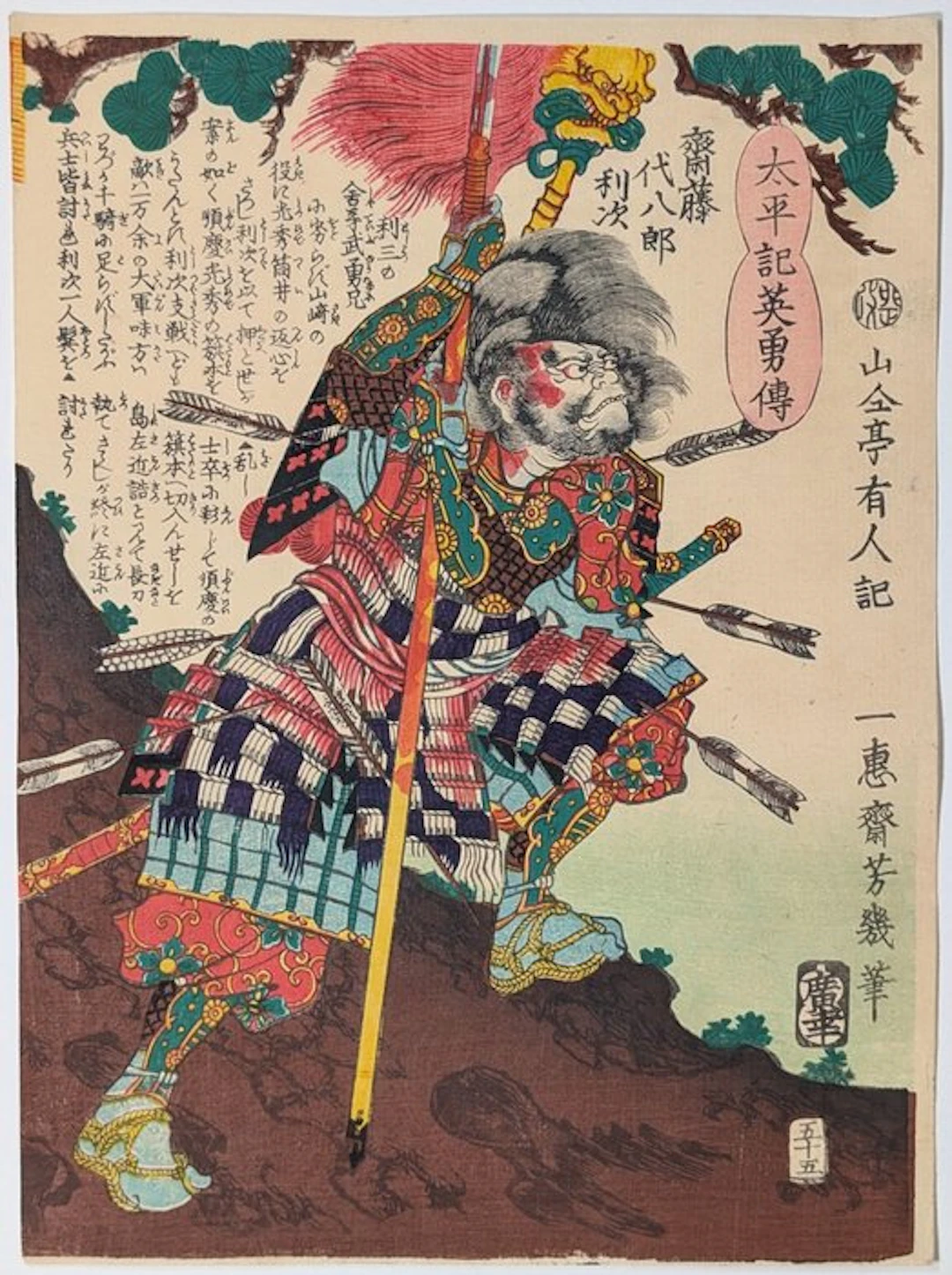
** The Man Who Destroyed Nobunaga — And Whose Daughter Saved the Shogunate ** Artist: Utagawa Yoshiiku (1833–1904) Title: Saitō Daihachirou Toshitsugu (齋藤代八郎利次) — the historical Saitō Toshimitsu (斎藤利三, 1534–1582) Series: Taiheiki Eiyūden – Biographies of the Heroes of the Taiheiki - 太平記英勇伝 Date: Japan, 1867 (late Edo period) Publisher: Hirookaya Kōsuke (Kikujudō) Format: Chūban, approx. 24 × 18 cm CONDITION Excellently preserved. All colors retain their original vibrancy. The bokashi is very well preserved. The paper is very well perserved with no flows to mention. A museum-quality impression! THE SCENE Yoshiiku depicts Saitō Toshimitsu in the thick of battle — blood-spattered, teeth clenched in a furious grimace, gripping a spear adorned with a golden dragon head and a flowing crimson plume. Arrows protrude from his armour at every angle: lodged in his shoulder guards, buried in his sleeve, bristling from his torso like the quills of a cornered animal. He has taken hit after hit and keeps fighting. The composition is a masterpiece of diagonal energy — the long spear cuts from lower left to upper right, the warrior's body leans forward into the attack, and the pine branches framing the upper edge press down on the scene like the weight of fate itself. The biographical text alongside the figure — written by Sansantei Arindo, the series' literary collaborator — narrates the Battle of Yamazaki and Toshimitsu's role as the chief lieutenant of Akechi Mitsuhide. In the coded naming system of the Taiheiki, where 16th-century figures were disguised under altered names to satisfy Tokugawa-era censorship, the historical Saitō Toshimitsu (斎藤利三) appears here as "Saitō Daihachirou Toshitsugu" (齋藤代八郎利次) — the characters altered just enough to maintain the fiction of historical distance, while remaining perfectly transparent to any educated reader of the day. The real Saitō Toshimitsu (1534–1582) was one of the most consequential samurai of the Sengoku period — not for the territory he held, which was modest, but for the single devastating act in which he played a central role. As chief retainer and close kinsman of Akechi Mitsuhide, Toshimitsu was instrumental in planning and executing the Honnō-ji Incident of 1582 — the sudden assault on the temple where Oda Nobunaga, the most powerful man in Japan, was staying with only a small guard. Nobunaga died in the flames. It was the most shocking political assassination of the entire Sengoku era, and it changed the course of Japanese history. From Honnō-ji to Yamazaki — Thirteen Days That Changed Japan The aftermath was swift and brutal. Toyotomi Hideyoshi, learning of Nobunaga's death while campaigning in western Japan, force-marched his army back to Kyoto with astonishing speed — the famous "great return from Chūgoku" — and met Mitsuhide's forces at the Battle of Yamazaki just thirteen days after the Honnō-ji attack. Mitsuhide's allies, including Tsutsui Junkei, wavered or failed to appear. The Akechi forces were routed. Mitsuhide himself was killed fleeing the field — cut down, according to tradition, by a peasant's bamboo spear. Toshimitsu fought at Yamazaki and, by most accounts, was captured and executed at the Higashiyama Awata execution grounds in Kyoto. His friends — the painter Kaihō Yūshō and the tea master Tōyōbō Chōsei — are said to have recovered his severed head and buried it at Shinnyodō, a temple in eastern Kyoto. But history had one more astonishing turn. Toshimitsu's infant daughter, Fuku, survived the destruction of the Akechi faction. Raised by aristocratic relatives, she went on to become Lady Kasuga (春日局) — the wet nurse of the third Tokugawa shōgun, Iemitsu, and ultimately one of the most powerful women in the entire Edo period. The daughter of a traitor became one of the pillars of the very regime that defined Japan for the next two and a half centuries. It is one of the great reversals in Japanese history — and it begins with the blood-soaked warrior depicted in this print. About the Taiheiki Heroes Series: This series ranks among the most technically demanding chūban prints of the Edo period. Each print required over eight different woodblocks with precise registration and elaborate bokashi techniques. But these are not merely visually complex works of art—many of these prints hold genuine historical significance. It's like collecting pieces of a puzzle of Japanese history! The texts on the reverse and the characters depicted offer insights into one of Japan's most turbulent eras. With 100 prints in the complete series, collecting them is a true pleasure—each print tells the story of a different hero.
Estimate:£126.91
To the auctionView all items fromCatawikiorAncient Art
Estimate:
£126.91
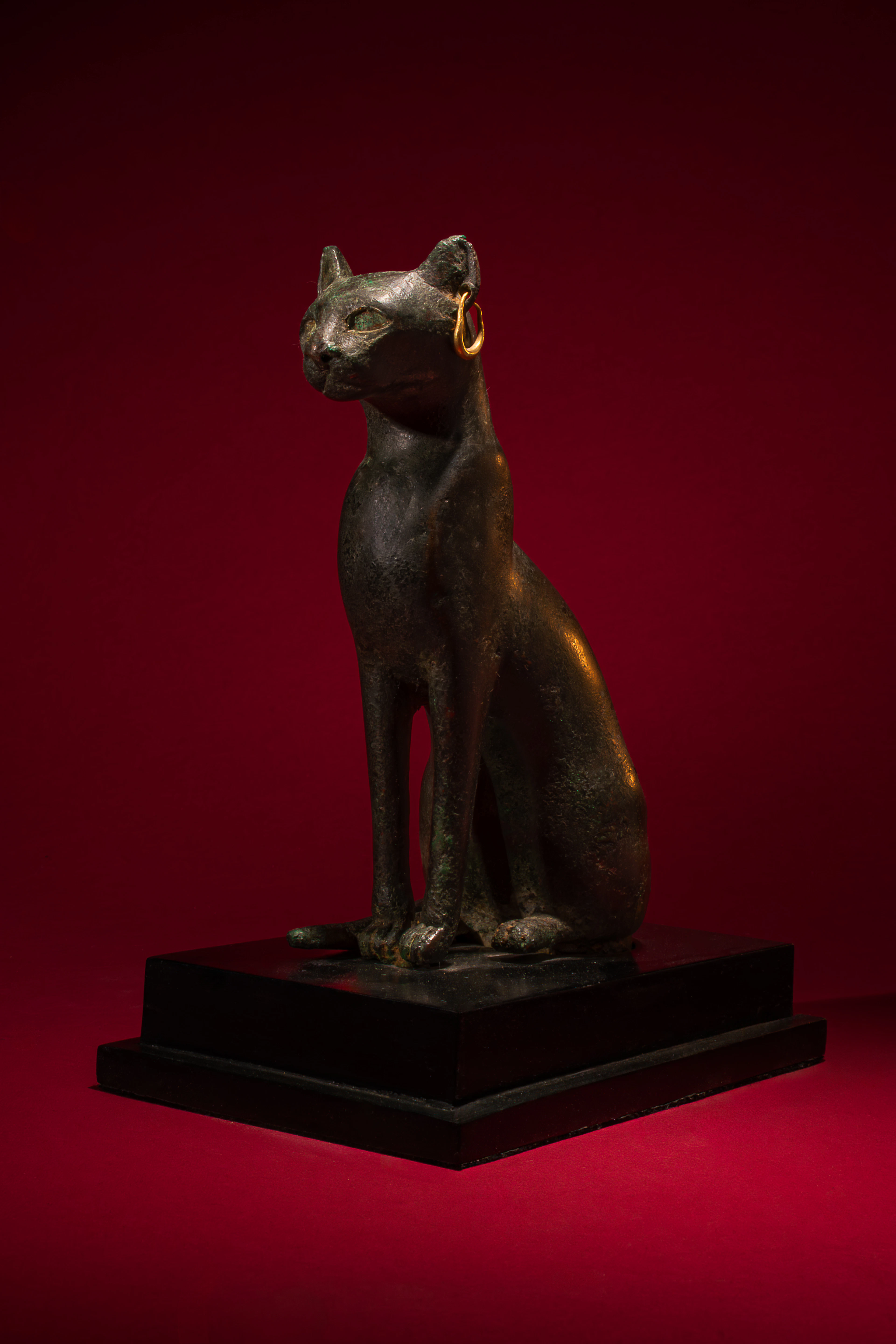
RARE EGYPTIAN BRONZE CAT STATUETTE WITH GOLD EARRINGS - LARGE SIZE
06/21/2026

£22,000
Est: £20,000
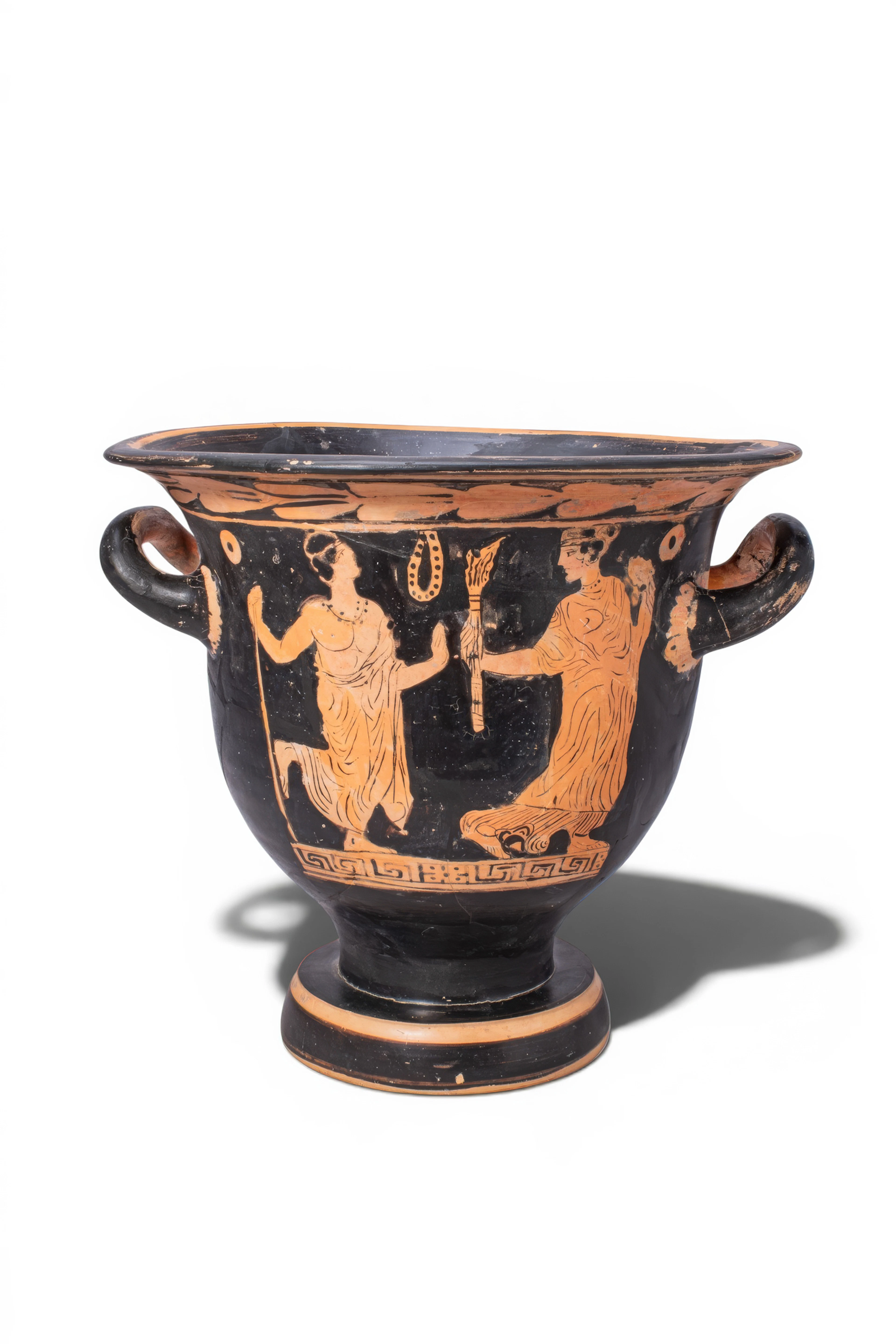
APULIAN RED-FIGURE BELL KRATER WITH KOMASTOS AND MAENAD - TL TESTED
06/21/2026
£2,600
Est: £2,000
OCT 23 | 8:00 AM


OCT 27 | 4:00 PM


OCT 17 | 10:00 PM
Bring your auction to collectors worldwide!
Get listed nowBy subscribing, you are agreeing to the privacy policy. Unsubscribe anytime.
Barnebys HQ
Brahegatan 10
BOX 5038
114 37 Stockholm
