



All auctions / Arts & Graphics / Scuola lombarda (XV) - San Rocco - XL format

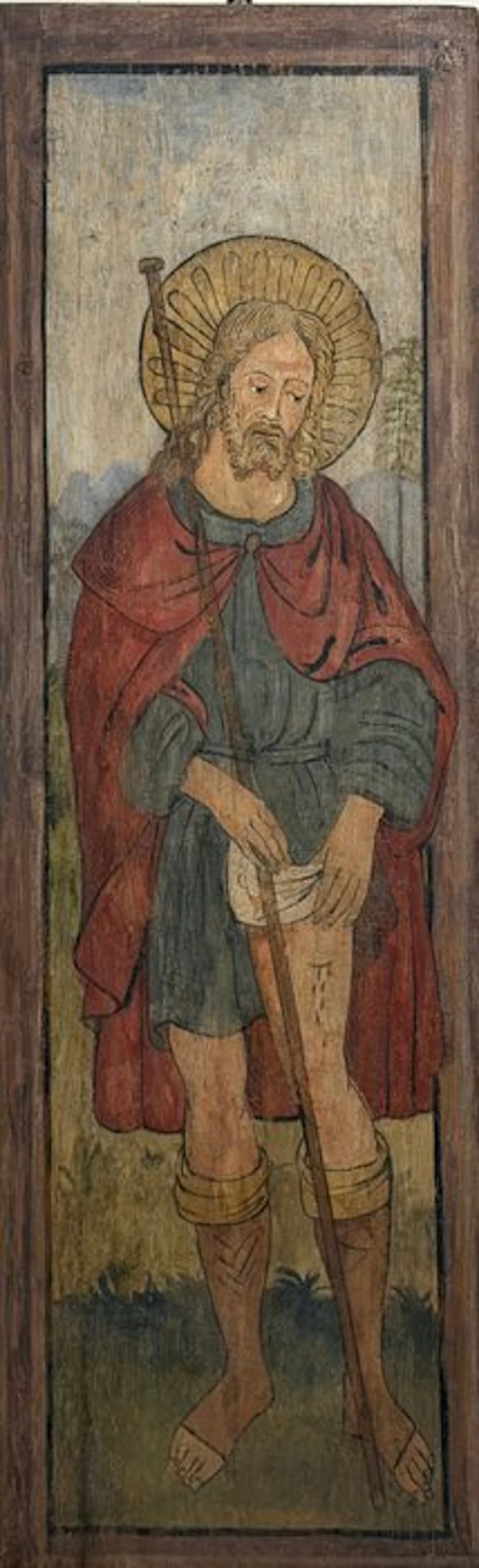
Painter of northern Italy, Lombard area, late 15th century. San Rocco Egg tempera on panel, 132 × 44 cm Work from an Italian museum collection 15th century, 1450/1480 The panel depicts Saint Roch in full figure, following an iconographic model that enjoyed particular fortune in northern Italy at the end of the fifteenth century. The saint is shown in pilgrim dress, with the long staff, while he lifts his cloak at the thigh to reveal the wound, the main attribute tied to his protection against the plague. The spread of the cult of Saint Roch and the related iconography in Italy intensifies precisely in the 15th century. The figure, monumental despite the narrow, strongly vertical format of the panel, almost entirely occupies the pictorial space. The red cape, the tunic in green-blue tones, the large radiant nimbus, and the roughly outlined landscape in the background construct a devotionally legible composition. Particularly characteristic are the pronounced outline drawing, the linear rendering of the hair and beard, the simplified folds of the drapery, and the use of clearly defined color fields. These elements, together with the frontal nature of the representation and the sober narrative, recall a figurative culture still deeply linked to the late Gothic tradition of northern Italy, yet already close to popular and devotional experiences developed between Lombardy and neighboring areas at the end of the 15th century. For contextual comparison, in the Lombard area there are documented 15th-century depictions of Saint Roch set according to the same pilgrim iconography with staff and visible wound. Of particular interest is the wooden support, preserved in its imposing vertical structure. The back shows wide planks with clearly visible grain, numerous traces of time and a horizontal crosspiece for consolidation; there are also ancient holes attributable to xylophagous attack and subsequent modifications to the suspension system. The painted surface shows widespread wear, abrasions, small gaps and conservational interventions layered over time, yet without compromising the full legibility of the image. Given the size and setting, it is plausible to suppose an original ecclesiastical destination, possibly as part of a devotional apparatus or a more articulated structure; labeling it as a panel of a polyptych, however, would require a direct examination of the carpenter's work. Autonomous panels and compartments with Saint Roch are nonetheless well documented in northern Italian production from the late 15th to the early 16th century. The panel constitutes a significant testimony of late medieval devotional painting in northern Italy, particularly suggestive for the archaic language of the figure, the important format, and the preservation of the ancient wooden support. CONDITION REPORT The painting appears in good overall preservation, compatible with its age and the natural aging of the work. The pictorial surface shows widespread and marked craquelure, especially evident in the dark areas, along with physiological color unevenness, abrasions, and traces of previous conservation interventions and pigment reintegration. Overall the work retains good legibility of the image, in particular of the face and hands, maintaining evident the material characteristics and signs of time typical of a very ancient painting. ~ Historical-collector note ~ Due to antiquity, iconography, format and devotional character, this 15th-century panel depicting Saint Roch presents characteristics fully compatible with display in a museum context, and in particular within a Diocesan Museum or a collection dedicated to ancient sacred art. It is not merely decorative, but a tangible testimony of the religious and figurative culture of northern Italy in the Quattrocento, come down to us through more than five centuries of history. Acquiring a work of this level thus means safeguarding an authentic fragment of Italian historical-artistic heritage. The chronological rarity, the presence of the ancient wooden support, the immediately recognizable iconography, and the strong historical identity all increase its interest for the specialized collector. From a patrimonial point of view, ancient works of this nature can also represent an interesting form of diversification and long-term value preservation, provided they are purchased under market-consistent conditions and accompanied by adequate documentation and scientific study. Unlike reproducible goods, a fifteenth-century panel is inherently a unique, finite, unrepeatable asset: its primary value remains cultural and collecting, while any future economic revaluation cannot be guaranteed. *** Photographic note The photographic images of the work have been made with the aid of studio professional lighting and spotlights to enable better legibility of the composition, details, and painting matter. This lighting may cause slight variations in color perception and brightness compared with viewing the work directly. The photographs are intended for illustrative and documentary purposes only. Certified shipment Attribution Expertise *** For historical-interest reasons the work cannot be shipped outside the European community
Estimate:£4,225.61
To the auctionView all items fromCatawikiorArts & Graphics
Estimate:
£4,225.61
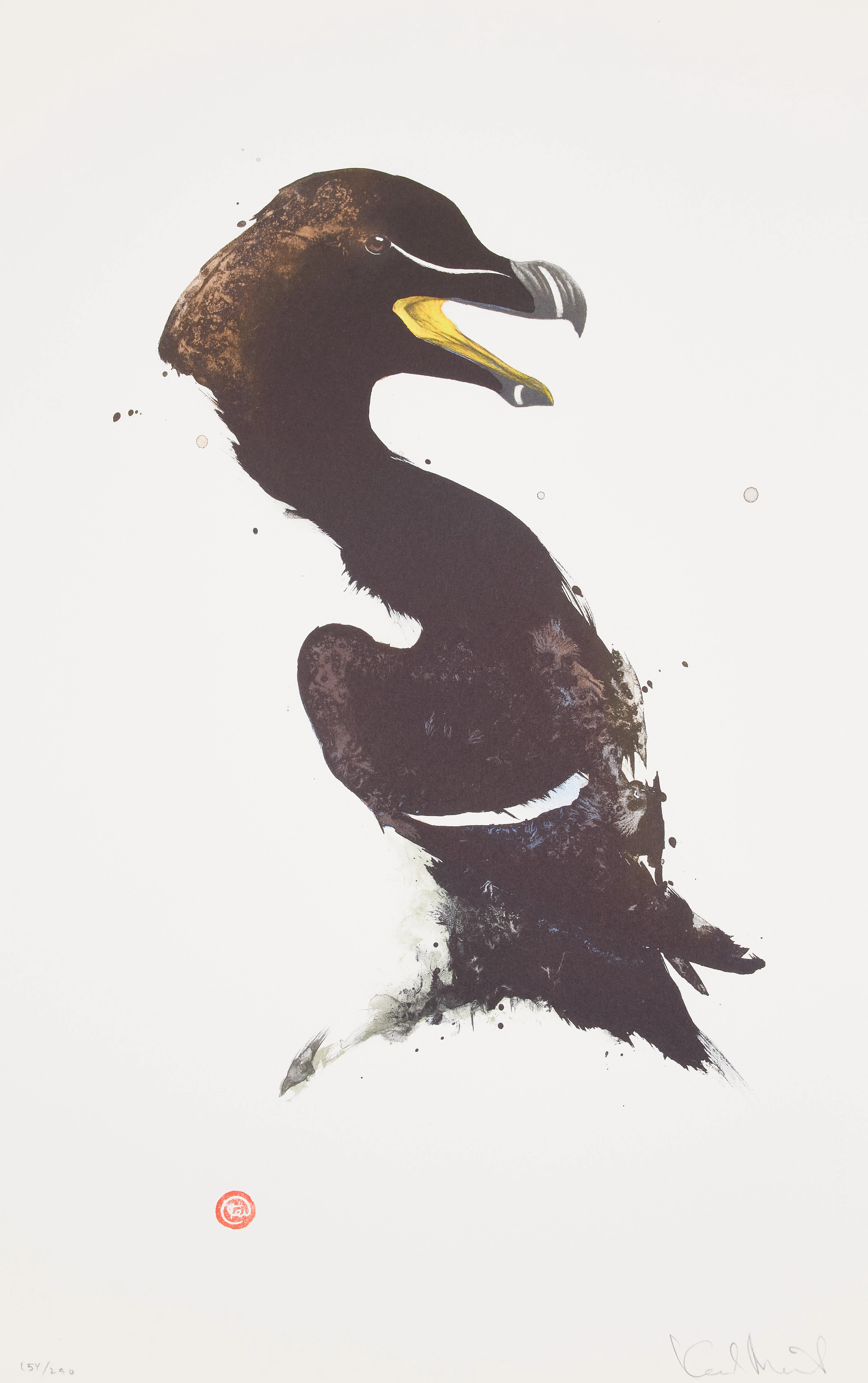
KARL MÅRTENS, "Tordmule", färglitografi, signerad och numrerad 154/290.
10/16/2026
£53.11
Est: £151.4
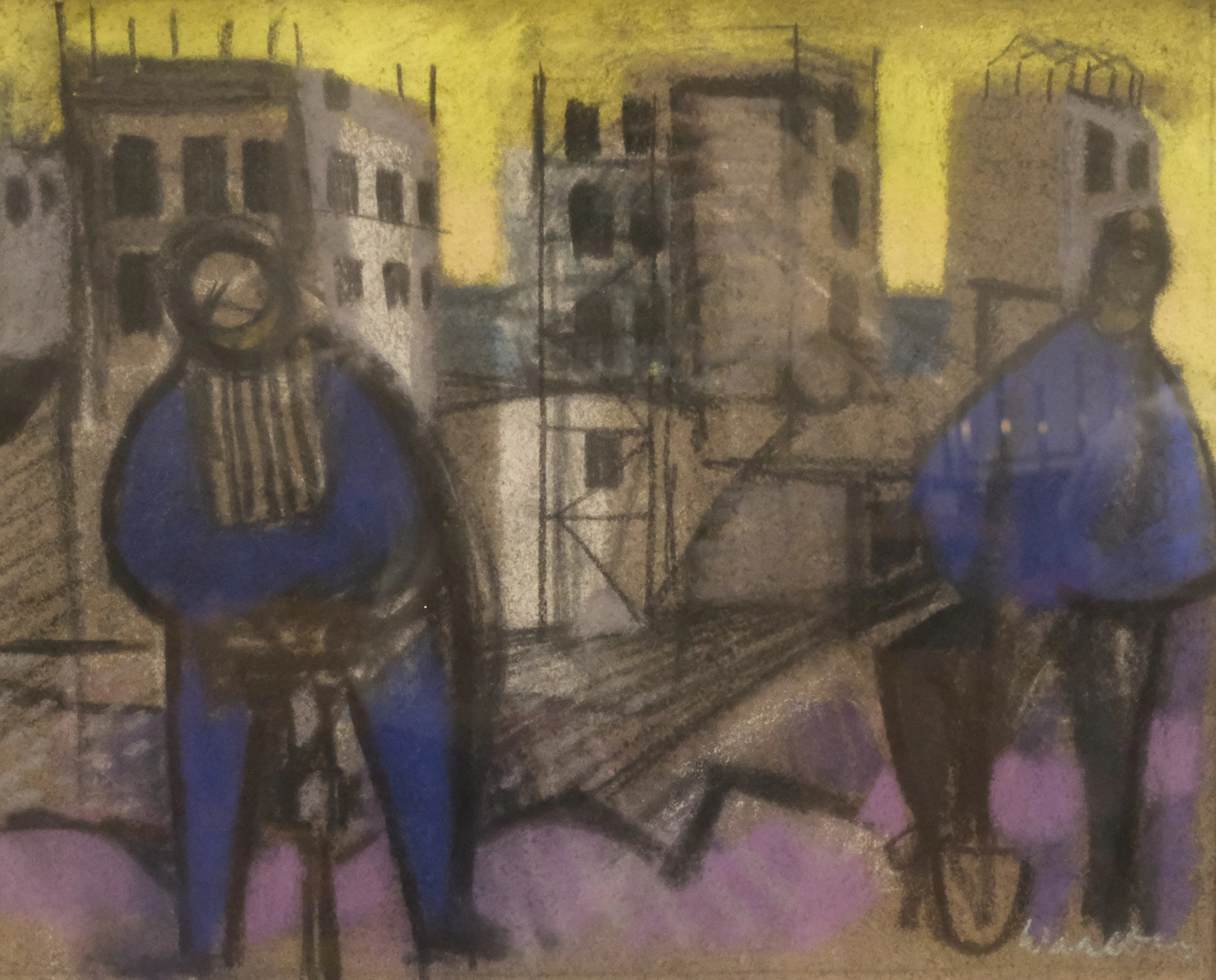
BERTIL WAHLBERG. PASTELL. ABSTRAKT KOMPOSITION, STADSMILJÖ MED ARBETANDE
10/16/2026

£22.76
Est: £37.85

PER JULIUS. Oljemålning på duk. "Tängvattnet, Hemavan, Lappland".
10/16/2026
£531.17
Est: £227.1
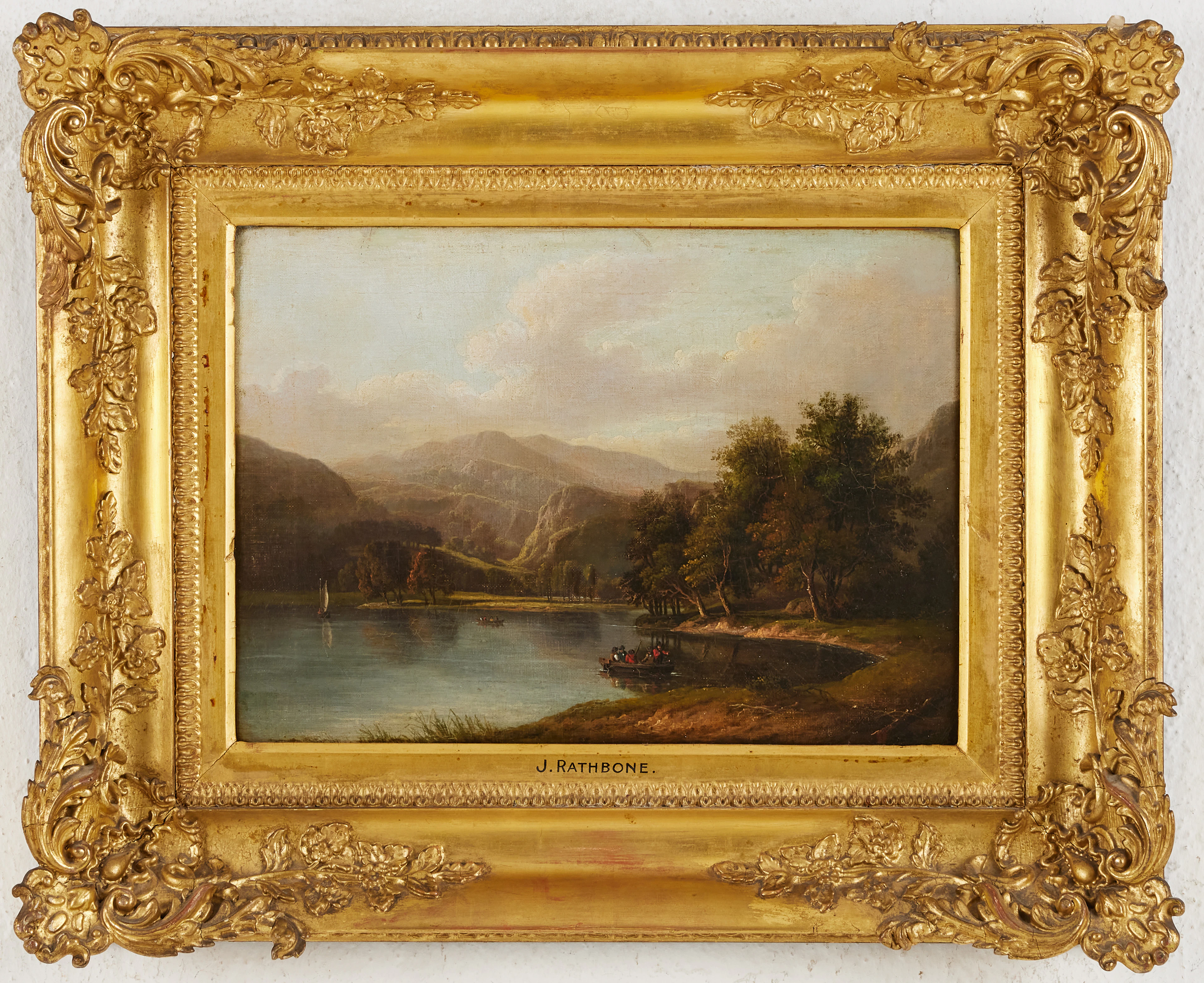
JOHN RATHBONE. (England, 1750-1807). Engelskt landskap, olja på duk.
10/16/2026
£455.23
Est: £605.6


OCT 23 | 8:00 AM


OCT 27 | 4:00 PM
Bring your auction to collectors worldwide!
Get listed nowBy subscribing, you are agreeing to the privacy policy. Unsubscribe anytime.
Barnebys HQ
Brahegatan 10
BOX 5038
114 37 Stockholm
