





OCT 17 | 10:00 PM

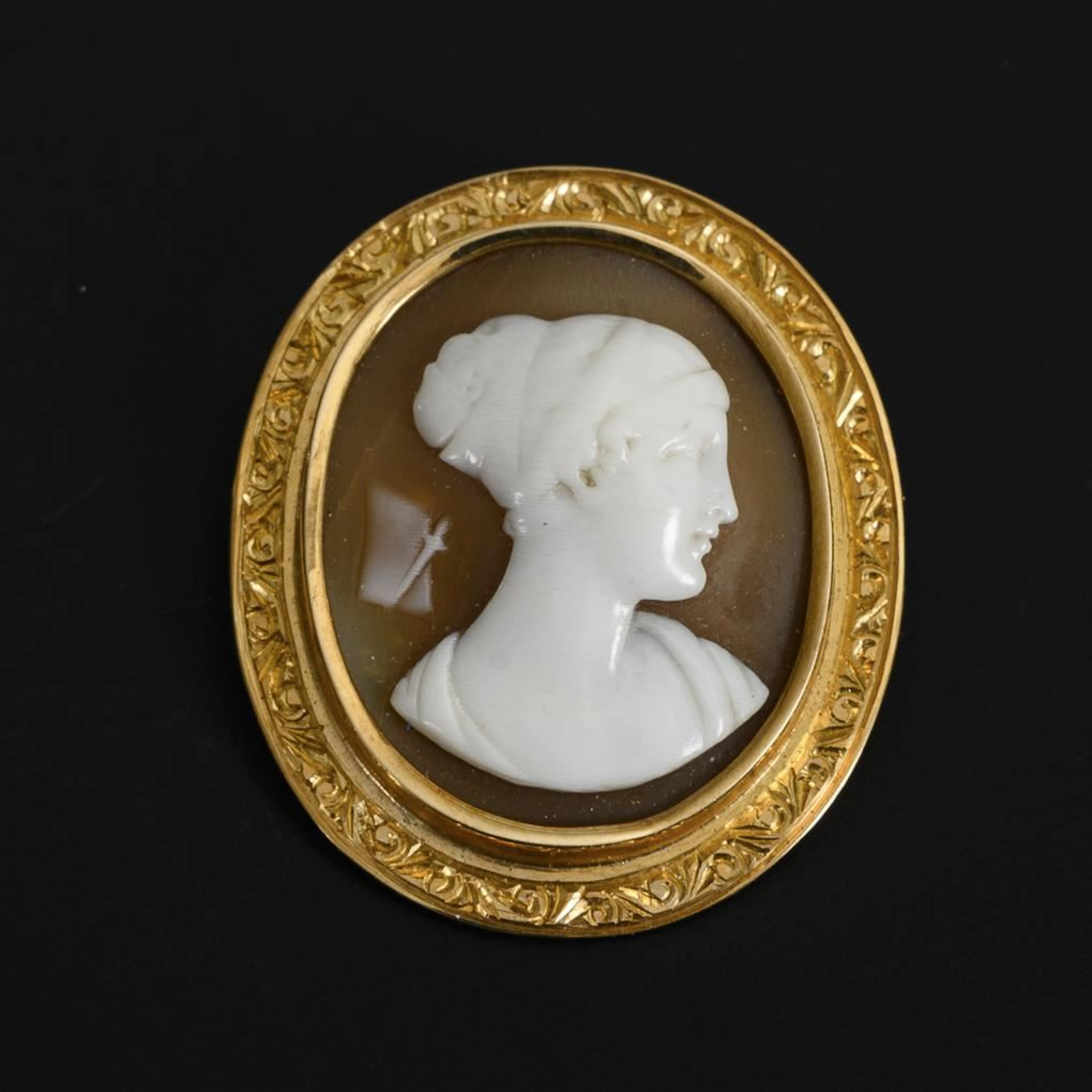
All auctions / Jewellery & Gems / Shell Cameo in a Neo-Gothic Gold Setting as a Brooch, c. 1840s

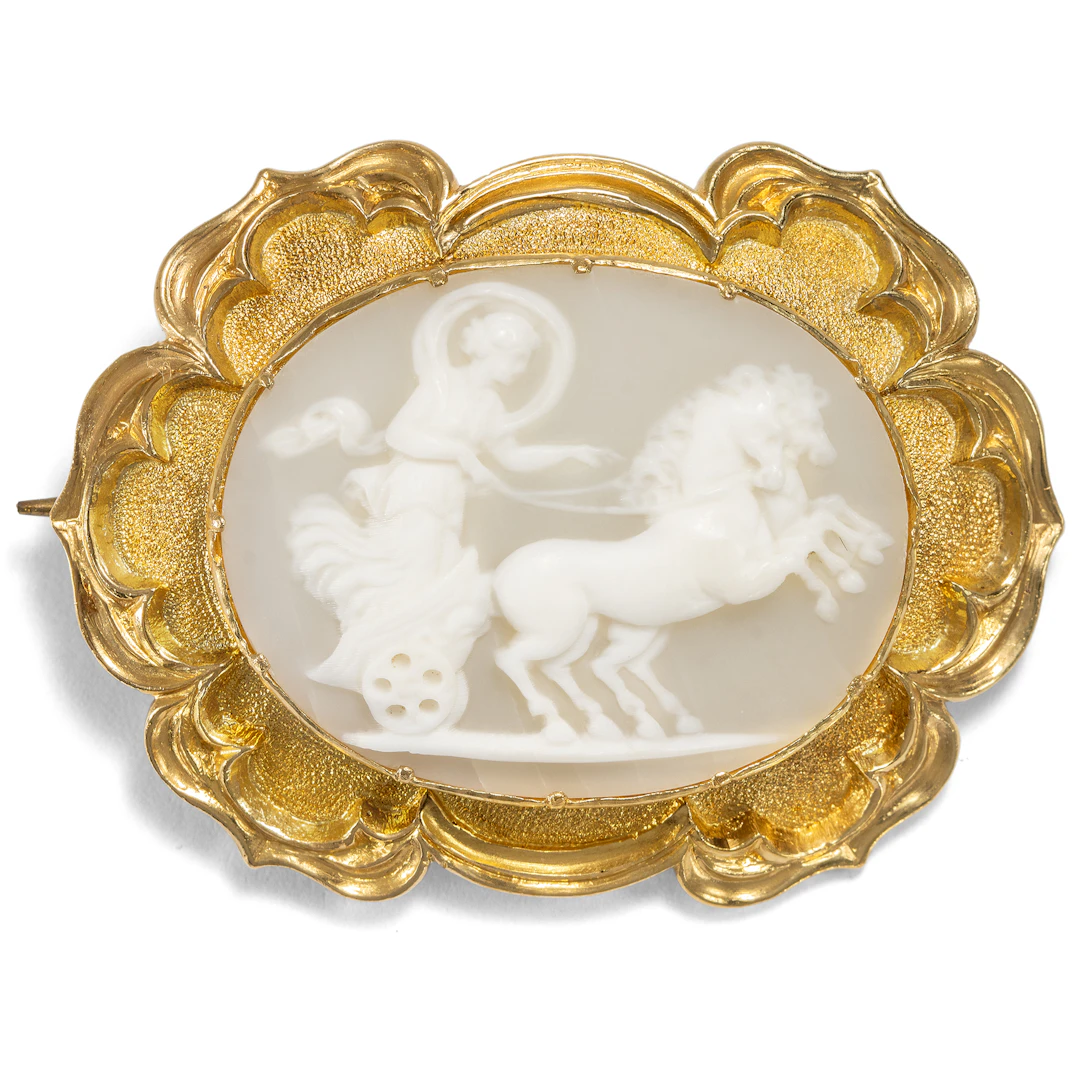
In the ancient world’s imagination, all of nature’s peculiarities and all changes in the world were rooted in the realm of the gods. Their actions determined the passage of time and also caused catastrophes such as volcanic eruptions or earthquakes. Although people remained helpless in the face of the often hostile forces of nature, attributing a higher meaning to them helped make these phenomena—at least to some extent—understandable. The changing of the hours of the day was the work of the sun god and his sister, the dawn. Eos, as she was called by the Greeks, or Aurora, as the Romans called her, had her throne at the source of the world ocean. Every morning she emerged from the waters of Oceanus with her chariot team; hence she bore the epithet Erigeneia, “the Early-Riser.” She preceded her brother Helios in her own chariot as he journeyed across the sky. Her horses were named Phaethon (“Shimmer” or “the Shining One”) and Lampos (“Radiance” or “the Bright One”). Homer describes Eos as a graceful deity with beautiful curls, rose-colored arms, and rose-colored fingers, dressed in a saffron-colored gown. This ideal of beauty had a lasting impact: Numerous depictions in the arts portray the dawn as a beautiful young woman—not least in the medium of the cameo. Examples of this have been handed down from antiquity; the Museum of Fine Arts in Boston has a very beautiful example in its collection (Inv. No. 99.108). Here we have a depiction from the mid-century, executed in the medium of shell cameo. The goddess of the morning stands on her chariot, drawn by two rearing horses. Her cloak billows with dynamic energy, yet her reins are loose: the horses know their way and thus ensure the ever-reliable return of the morning. The finely cut scene is set in gold. The setting displays typical English Tudor Neo-Gothic forms; a pin transforms the scene into a brooch. We discovered this finely cut shell cameo, dating from around 1845, in London.
Estimate:£1,435.53
To the auctionView all items fromHofer AntikschmuckorJewellery & Gems
Estimate:
£1,435.53
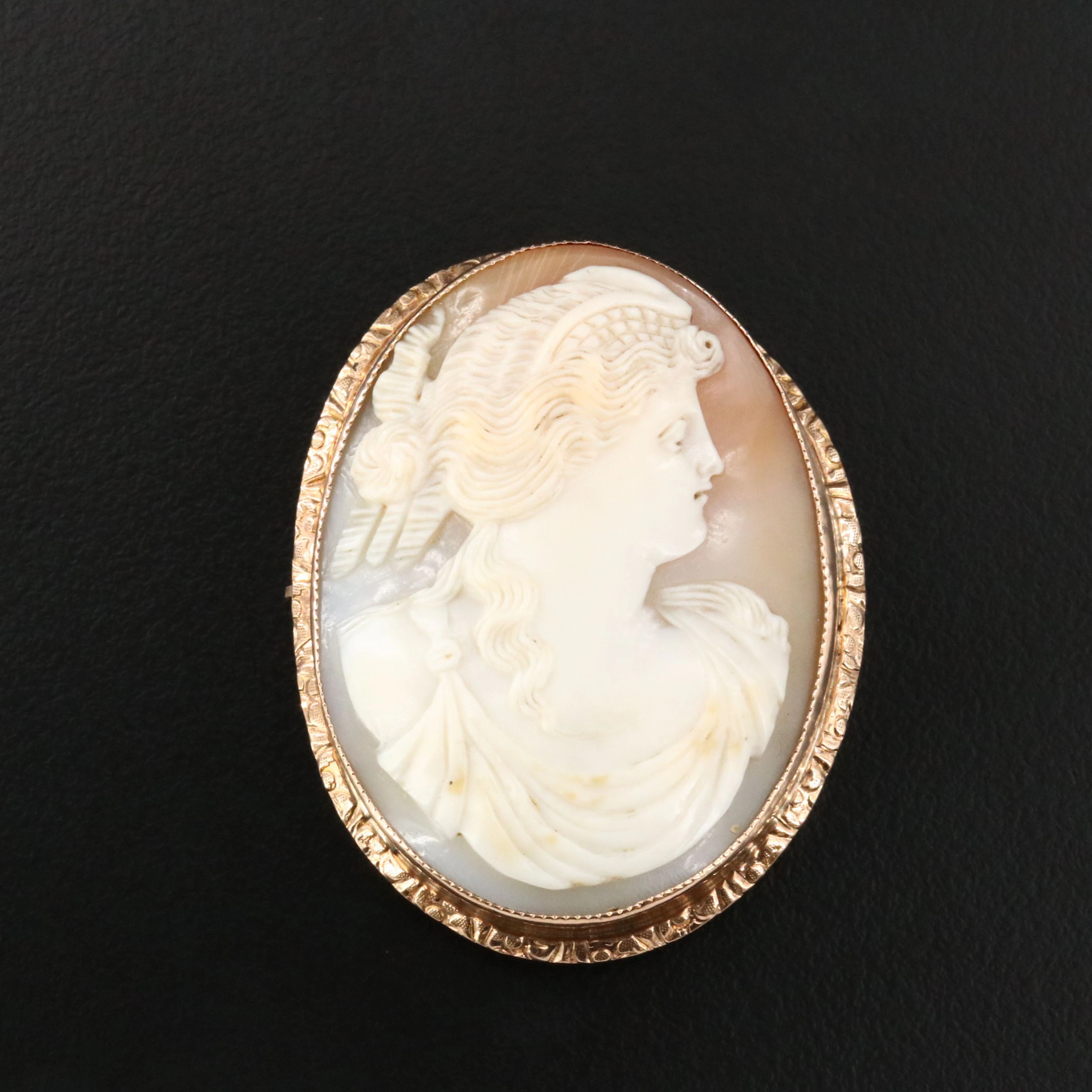
George L. Paine Early 1900s 10K Shell Greco-Roman Lady Cameo Brooch
10/09/2026
£55.88
Est: £3.78
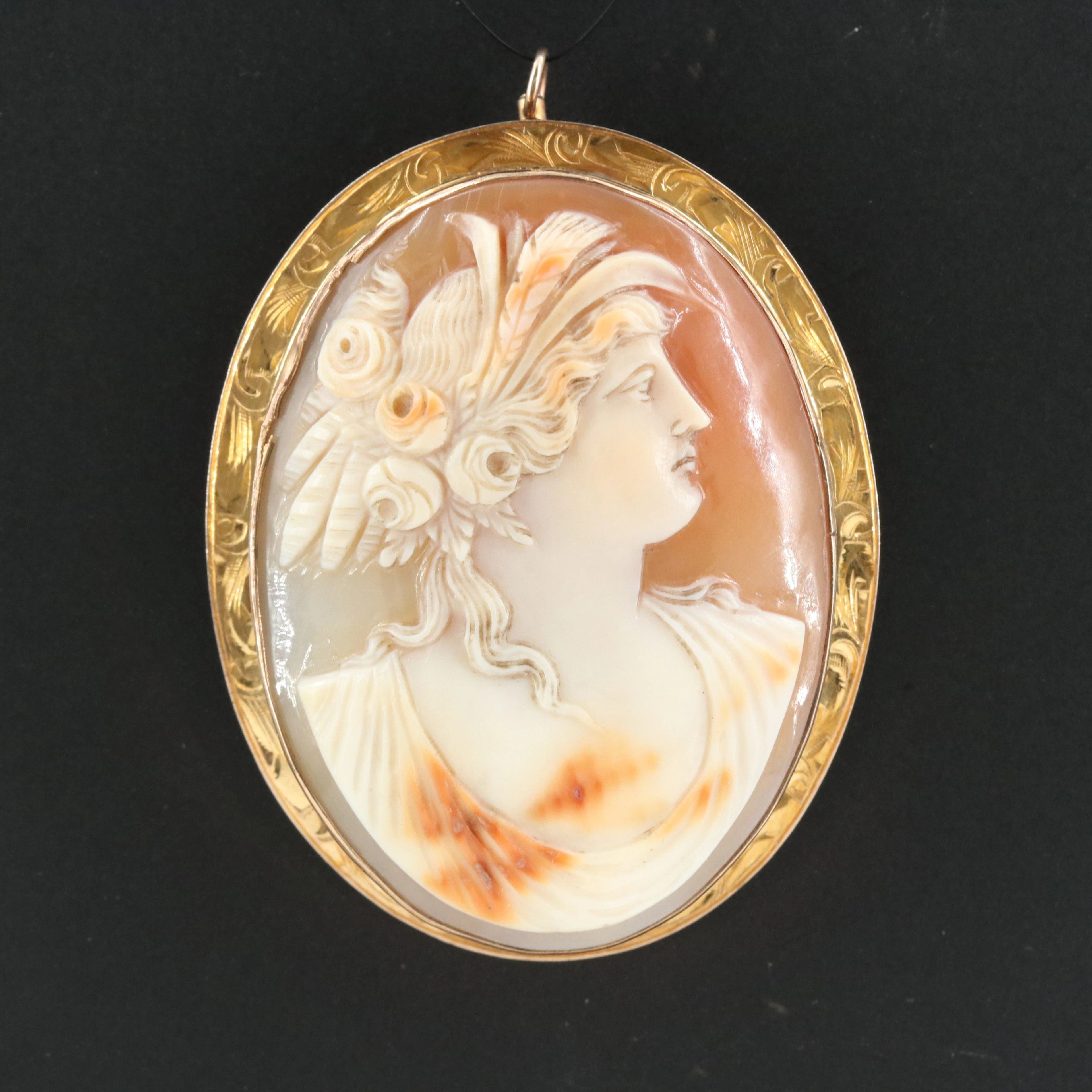
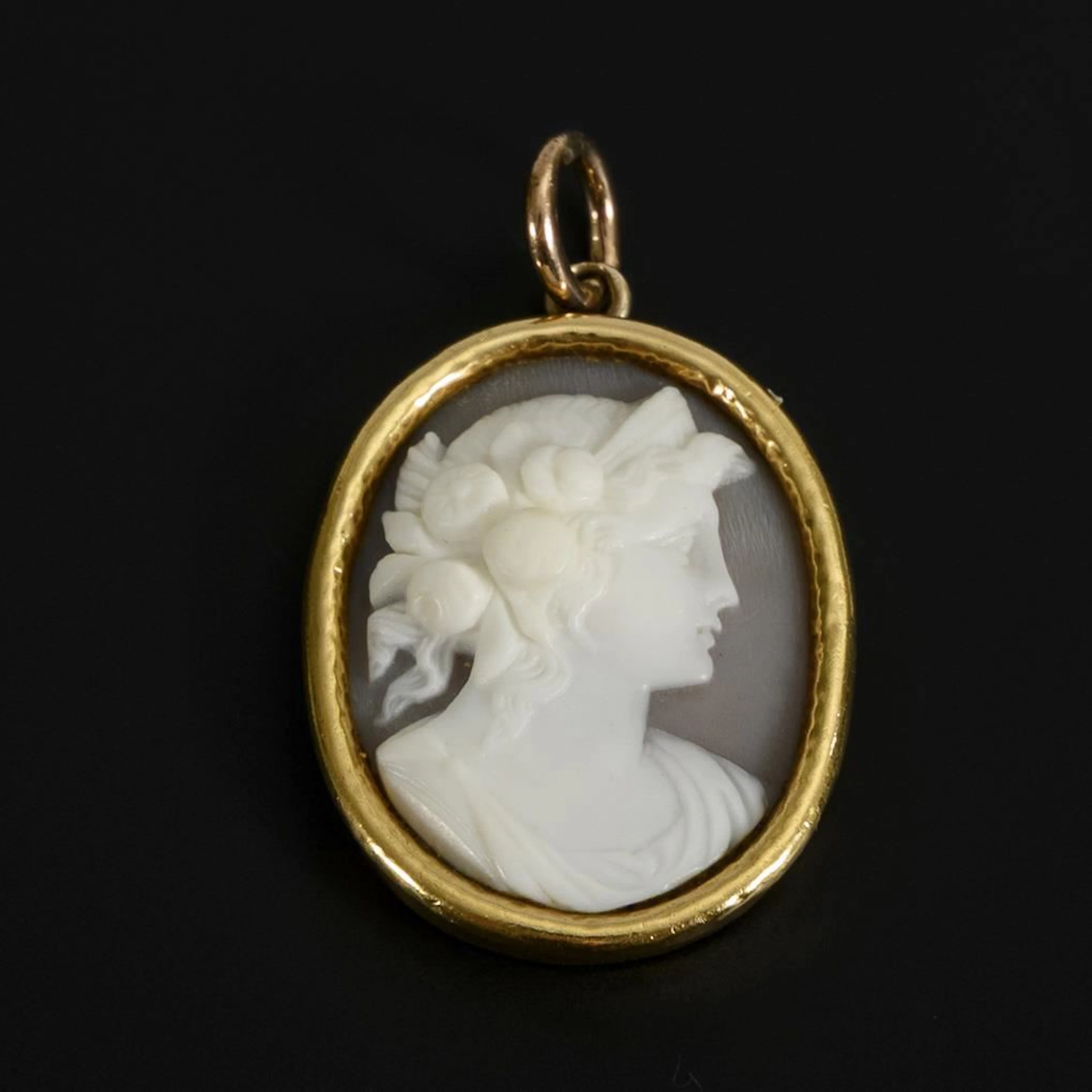
Antique Greco-Roman Revival 10K Goddess Demeter Cameo Brooch/Pendant
10/07/2026
£170.08
Est: £113.48
OCT 17 | 10:00 PM


Bring your auction to collectors worldwide!
Get listed nowBy subscribing, you are agreeing to the privacy policy. Unsubscribe anytime.
Barnebys HQ
Brahegatan 10
BOX 5038
114 37 Stockholm
