



All auctions / Arts & Graphics / Simon Johannes van Douw (c.1630-c.1680) - Veldslag met Paarden (No Reserve)

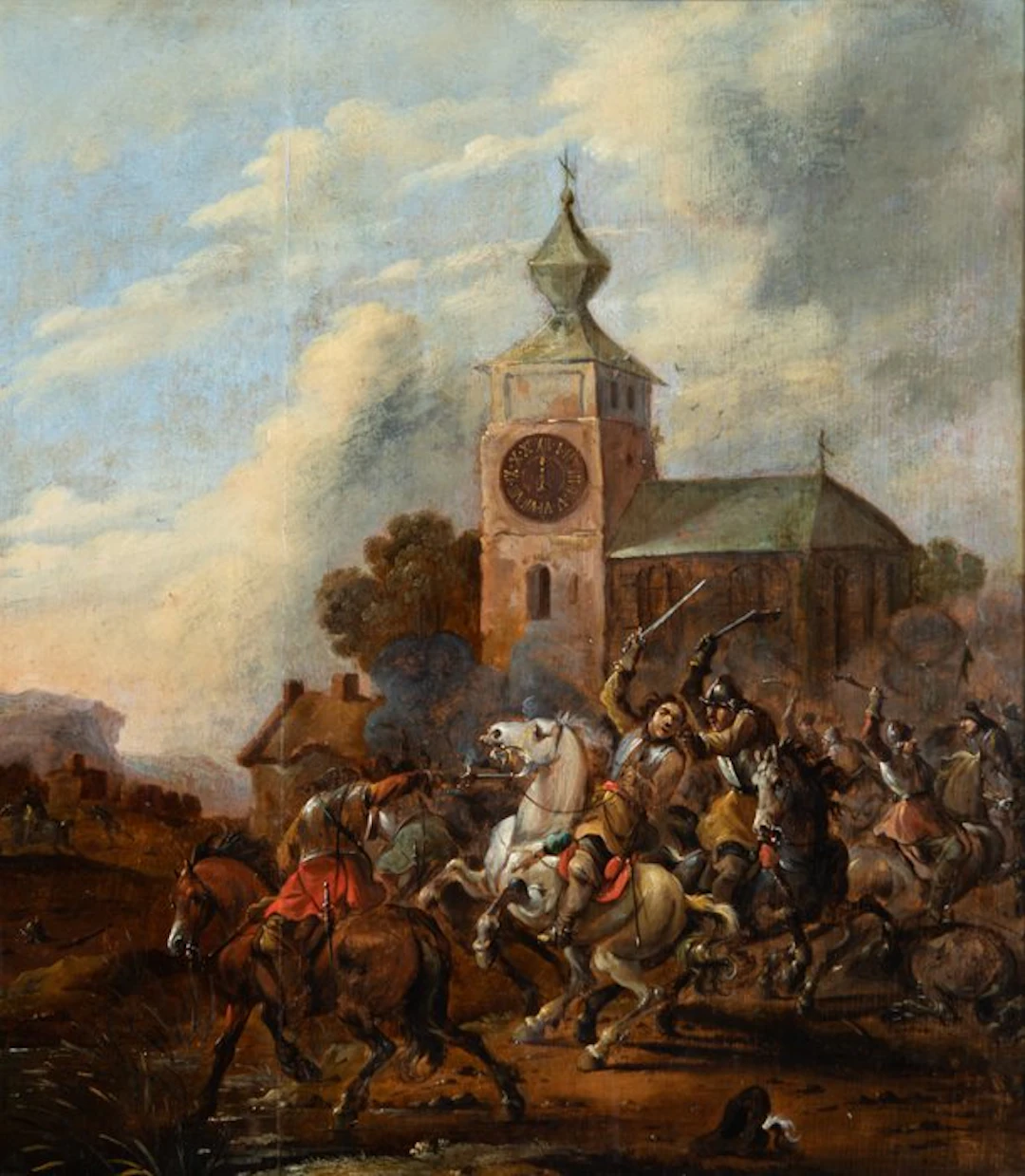
Simon Johannes van Douw (c. 1630–c. 1680) "Battlefield by the Church Tower" Oil on panel Panel size: 51.5 × 44.4 cm, height × width Framed dimensions: 64.5 × 58 cm Signed lower right: "S. V. Dou’" Dating: second half of the seventeenth century Art-historical and technical research report available In "Battlefield by the Church Tower" Simon Johannes van Douw brings together a tightly packed group of fighting riders before a monumental church building. Horses bend in different directions, riders pivot in the saddle, and raised weapons slice through the space. The scene focuses on close combat: the distance between the combatants is small, and the overlapping figures amplify the impression of a sudden, fierce confrontation. The light horse at the center forms the main focal point. Its raised head, open mouth, and lifted forelegs give the combatants a strong upward motion. To its left a man in red clothing rides a brown horse that is mostly shown from behind. His twisted torso and outstretched arm connect the foreground to the central action. To the right, armored riders and dark horses complete the group, while smaller figures in the background continue the fighting action. The fallen hat with a light feather and the scattered objects in the foreground bring the consequences of the strike up close to the lower edge. Behind the combatants rises a church with a distinctive round clock face and a bulbous tower crown. Its long roof and tall windows form a broad architectural backdrop. To the left of the tower stand trees and a lower building with chimneys; further left a landscape opens up with a low horizon. This alternation between enclosed buildings and an open pastoral view lends the scene spatial depth. Van Douw uses the vertical format to place the movement of the riders against the church’s vertical structure. The battle primarily occupies the lower half of the image, while the tower and the shifting cloudy sky above take up much space. The slanting weapons, twisted horse necks, and raised arms guide the viewer’s gaze from the foreground upward. The diagonal trajectories of the clouds continue this movement. Thus a composition emerges in which the architecture provides a stabilizing anchor for the unrest of the fight. Color, light and painting technique The painting is sustained by warm brown, ochre, and earth tones. In contrast are the cooler colors of the sky and the church roof. The red in the clothing and saddle provides a powerful accent against the dark bodies of the horses. The light coat of the central horse links the brightest parts of the combat group with the illuminated clouds. The painting technique alternates broad, relatively thinly worked passages with compact, opaque strokes. In the sky the brush follows the extended cloud forms; in the figures the detailing concentrates on faces, drapery, tack and weapons. Short highlights on helmets and cuirasses suggest metal gleam and clarify the rotation of the bodies. The horses are modeled with cohesive light and dark areas, after which slender brushstrokes refine anatomy and gear. The smoke in front of the church links the foreground action with the landscape’s atmosphere. The scene belongs to the autonomous genre of the equestrian combat. The emphasis is on movement, mutual confrontation, and painterly variation, without identifying a specific historical battle or church. The artist and his circle Simon Johannes van Douw worked in both the Southern and Northern Netherlands. In April 1654 he became a master of the Antwerp Sint-Lucas Guild. He subsequently worked in Middelburg, where he was entered into the local guild in November 1656. His presence in Rotterdam is documented from 1659; in 1666 he is listed there as a painter and citizen. From that year he is again connected with Antwerp. His last known dated work dates to 1677. This career sequence between Antwerp, Middelburg and Rotterdam places Van Douw within the exchange of painting motifs between the two regions. His repertoire includes cavalry combats, horse markets, hunting parties, and figures in landscape settings. The horse occupies a central place as both subject and vehicle to organize movement, spatial compression, and light distribution. Influences recognizable in his work include Nicolaes Berchem, Pieter van Laer, and Philips Wouwerman. Especially the combination of horses, lively groups of figures, and carefully constructed landscapes aligns with this painting tradition. Van Douw integrated such examples into compositions with their own order and character. Among his documented pupils are Pieter van Bloemen, Carel Fonteyn, and Nicolaes de la Haye. Franciscus Hamers also copied his compositions. Van Douw’s significance thus also lies in his role in spreading cavalry and landscape motifs within the Antwerp painters’ milieu. Placement within the oeuvre "Battlefield by the Church Tower" directly aligns with Van Douw’s specialization in equestrian pieces. Characteristic are the attention to the varied poses of the horses, the tightly integrated group of figures, and the alternation between dark masses and targeted light accents. Within this repertoire the panel stands out for its vertical composition and the large share of architectural elements. The church tower acts as a second focal point above the fighters. The round clock face forms a clearly defined motif against the irregular movement of horses, weapons, and clouds. The battle thus takes on an emphatic place within a broader spatial environment. Signature and technical examination The signature is located in the lower right on the brown ground and reads "S. V. Dou’". The dark letters are incorporated into the painted surface beneath the scattered stones. Infrared scanning reveals underdrawings and the tonal arrangement of the horse-and-rider group. Especially at the hindquarters and legs of the brown horse on the left and in the rider’s clothing folds, the preparatory modeling is more legible. These observations clarify the structure of the figures and the connection between the initial painting plan and the final execution. UV-registrations document differences in surface response and record the panel seam and local surface structures. On the reverse there are seven wooden strengthening wedges along the vertical join. These belong to the material and conservation history of the panel. Condition The panel and the paint layer are stable. Small point-like losses of paint and retouchings occur in scattered areas. The panel seam is visible on the front. The scene, the painterly execution, and the signature are all clearly legible. Provenance via RKD archive: Private collection. The painting was offered in April 2015 at Bernaerts in Antwerp, lot 163. The work "Battlefield by the Church Tower" is housed in a classical wooden museum-quality frame Total dimensions: 645 × 580 mm Medium dimensions: 444 × 515 mm Free Delivery The client is responsible for any customs duties and additional charges that may apply when delivering abroad. We strive to deliver your artwork safely and in optimal condition, paying careful attention to packaging and shipping procedures. If you have questions or special requests, you can always contact Catawiki customer service. From the moment your purchase is confirmed, we treat every shipment as a bespoke project. Each painting is carefully packaged with high-quality, professional shipping materials, and we select the most suitable carrier based on destination, transit time, and handling requirements. We monitor every package closely until delivery is completed. Because no two works of art are the same, we often make on-demand, handmade shipping crates or boxes tailored to the size, frame, and fragility of the painting, as well as the distance and transport conditions to your address. This guarantees the best possible protection throughout the journey. To support a smooth international shipping process, we prepare the correct paperwork and shipping documentation, including customs codes and export-related information if needed. In some cases we proactively contact you to confirm that your package has arrived safely, that the painting is in good condition, and to answer any questions you may have. We usually call the phone number provided to Catawiki, and this call will be in English. If preferred, you can also reach us by email or via the Catawiki chat.
Estimate:£3,769.15
To the auctionView all items fromCatawikiorArts & Graphics
Estimate:
£3,769.15
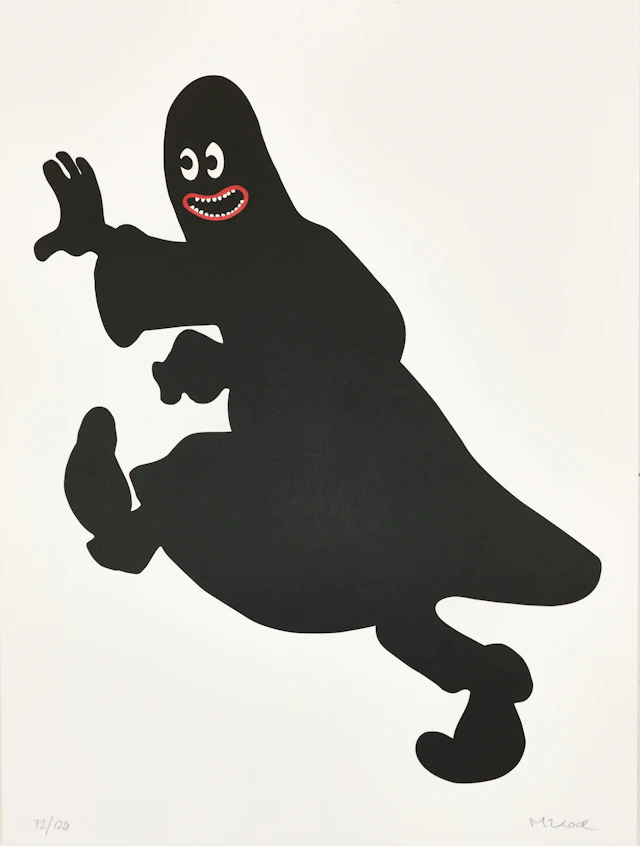
MAKODE LINDE (Sverige, född 1981). "Phantom Blot", signerad och numrerad
10/23/2026
£109.98
Est: £188.25
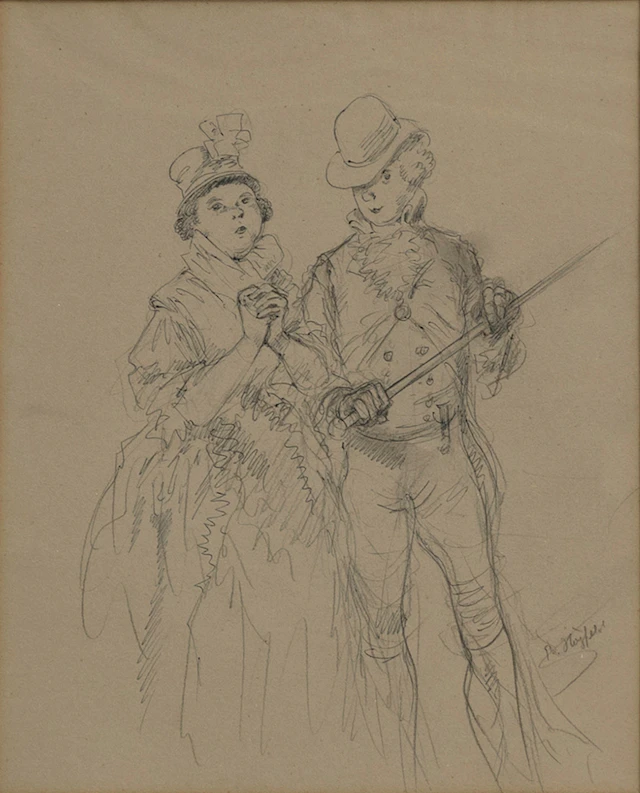
ROBERT HÖGFELDT. Komposition, blyertsteckning, signerad.
10/23/2026
£26.34
Est: £75.3
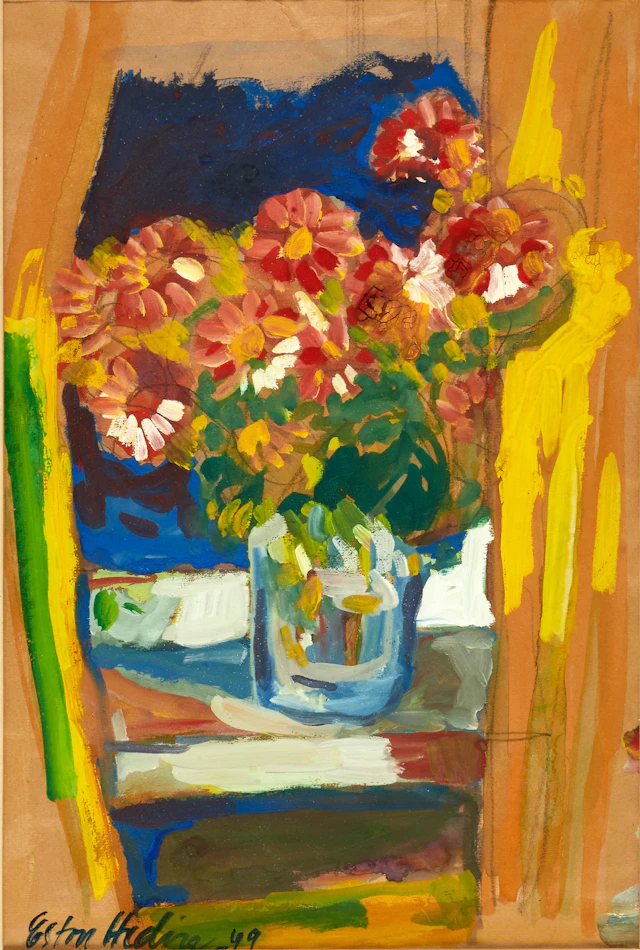
OIDENTIFIERAD KONSTNÄR. Blomsterstilleben, signerad och daterad -49, gouache.
10/23/2026
£22.58
Est: £60.55


OCT 27 | 4:00 PM
Bring your auction to collectors worldwide!
Get listed nowBy subscribing, you are agreeing to the privacy policy. Unsubscribe anytime.
Barnebys HQ
Brahegatan 10
BOX 5038
114 37 Stockholm
