



OCT 23 | 8:00 AM

All auctions / Arts & Graphics / Soldiers Playing Cards David Teniers d. J.

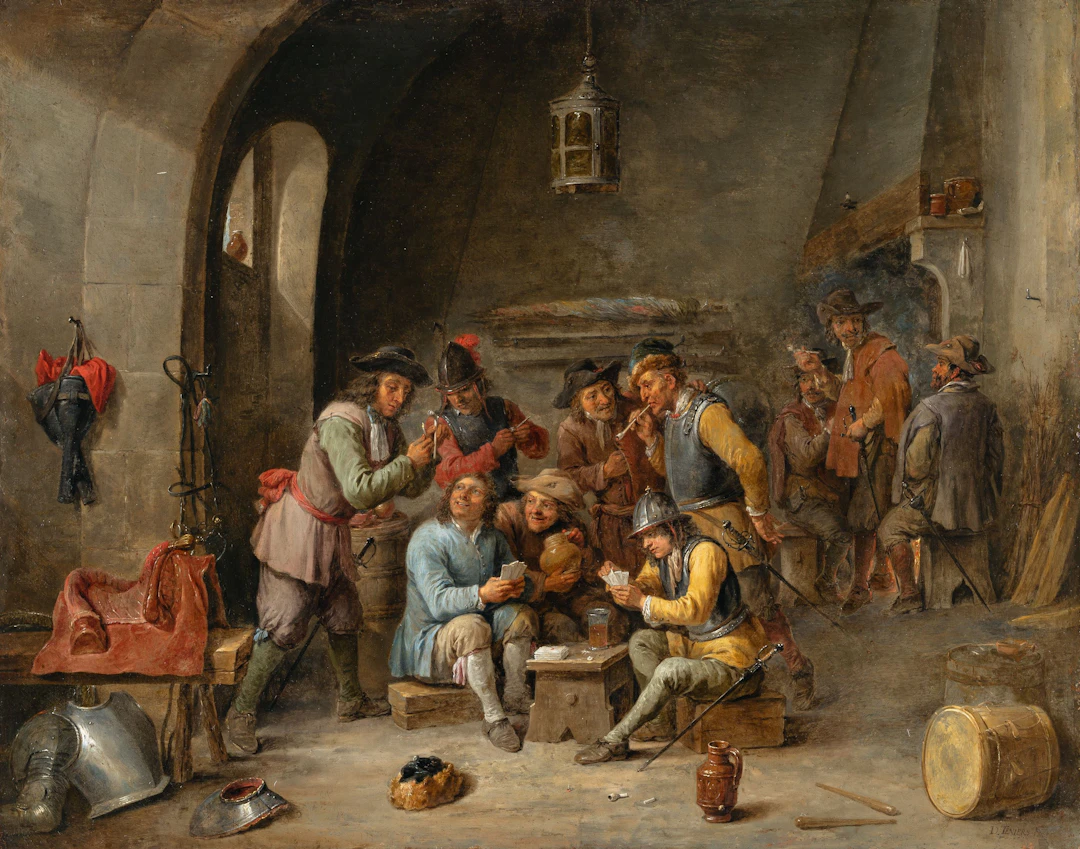
A table, a few cards and a small group of soldiers are all David Teniers the Younger needs to transform an everyday pastime into a narrative that is as vivid as it is finely observed. Gathered closely around the table, the men are engrossed in their game. Their gazes wander between the cards and their fellow players; hands intervene in the action; bodies lean forward or lean back expectantly. Teniers depicts that fleeting moment of intense attention in which the characters’ personalities reveal themselves almost incidentally. Soldiers passing the time away from their military duties by drinking, smoking, playing dice or playing cards are among the recurring motifs in the artist’s oeuvre. As early as the 1630s and 1640s, Teniers had been exploring the theme of gambling in taverns and guardrooms. In this respect, he initially followed in the tradition of Adriaen Brouwer, whose rough-hewn peasant and tavern scenes were of great significance to his early development. Teniers, however, gradually moved away from Brouwer’s often caricatured exaggerations. His figures became more individual, the spaces brighter and the narratives more subtle; from the peasant milieu, an increasingly refined genre painting emerged. Like the ‘Temptation of Saint Anthony’ (Lot 6), this painting also belongs to Teniers’ late oeuvre of the 1670s. In this mature phase, the peasants and revellers of his earlier paintings are increasingly joined by more elegantly dressed figures and a more refined depiction of their world. This painting illustrates particularly well how precisely Teniers perceived his own contemporary world: the soldiers do not appear in a timelessly conceived military uniform, but as men of their era. One striking detail, for instance, is the blue bow under the chin of one of the figures – a small yet colourfully effective accent that emphasises the man’s fashionable appearance. The decorative details on his trousers are rendered with equal care. Such seemingly minor details characterise the figures, enliven the colour scheme and firmly anchor the scene in the world of the late 17th century. In doing so, Teniers tells his story with remarkable economy. He needs neither grand gestures nor a spectacular event. The real drama arises from the relationship between the figures: each seems to react to the game in their own way – focused, wait-and-see, self-assured or curious. The cards become the focal point of a small social choreography, which Teniers depicts with subtle humour, without exposing his protagonists to ridicule. The painting derives a particular charm from its copper support. Teniers frequently used copper plates for particularly finely executed cabinet paintings; what is remarkable here, however, is the comparatively large size of the copper plate. The perfectly smooth surface allows for precise application of paint and an extraordinarily nuanced rendering of the finest details. In this painting, this benefits the delicately rendered facial features just as much as the costumes and their subtle fashion details. Fabrics, buttons, bows and cards are characterised with just a few confident brushstrokes. Viewed up close, an astonishing wealth of painterly details is revealed, whilst from a slightly greater distance these coalesce into a perfectly cohesive scene. It is precisely here that the mastery of the late Teniers is evident. The subdued colour scheme of the surroundings allows the figures to stand out clearly. Individual light areas and coloured accents give structure to the group and guide the eye from face to face and finally back to the game on the table. Nothing appears ostentatious or overloaded. A few figures and objects are sufficient to create an entire social microcosm. The ‘Soldiers Playing Cards’ thus reveal a Teniers at the height of his mature genre art. From a motif as simple as can be, he develops, with a light touch, a rich depiction of human attention and conviviality. It is the seemingly casual details that interest him – a glance, a hand gesture, a blue bow, the posture of a player leaning over his cards. From such details emerges that narrative artistry, as true to life as it is elegant, which characterises his finest genre paintings. | 1610 Antwerpen - Brüssel 1690 | 15.-18. Jahrhundert | Gemälde | Nummer: 26x1611 | Provenance: Privatsammlung, Nordrhein-Westfalen (seit mehreren Generationen in Familienbesitz).
Estimate:£30,416.83
To the auctionView all items fromKarl und FaberorArts & Graphics
Estimate:
£30,416.83
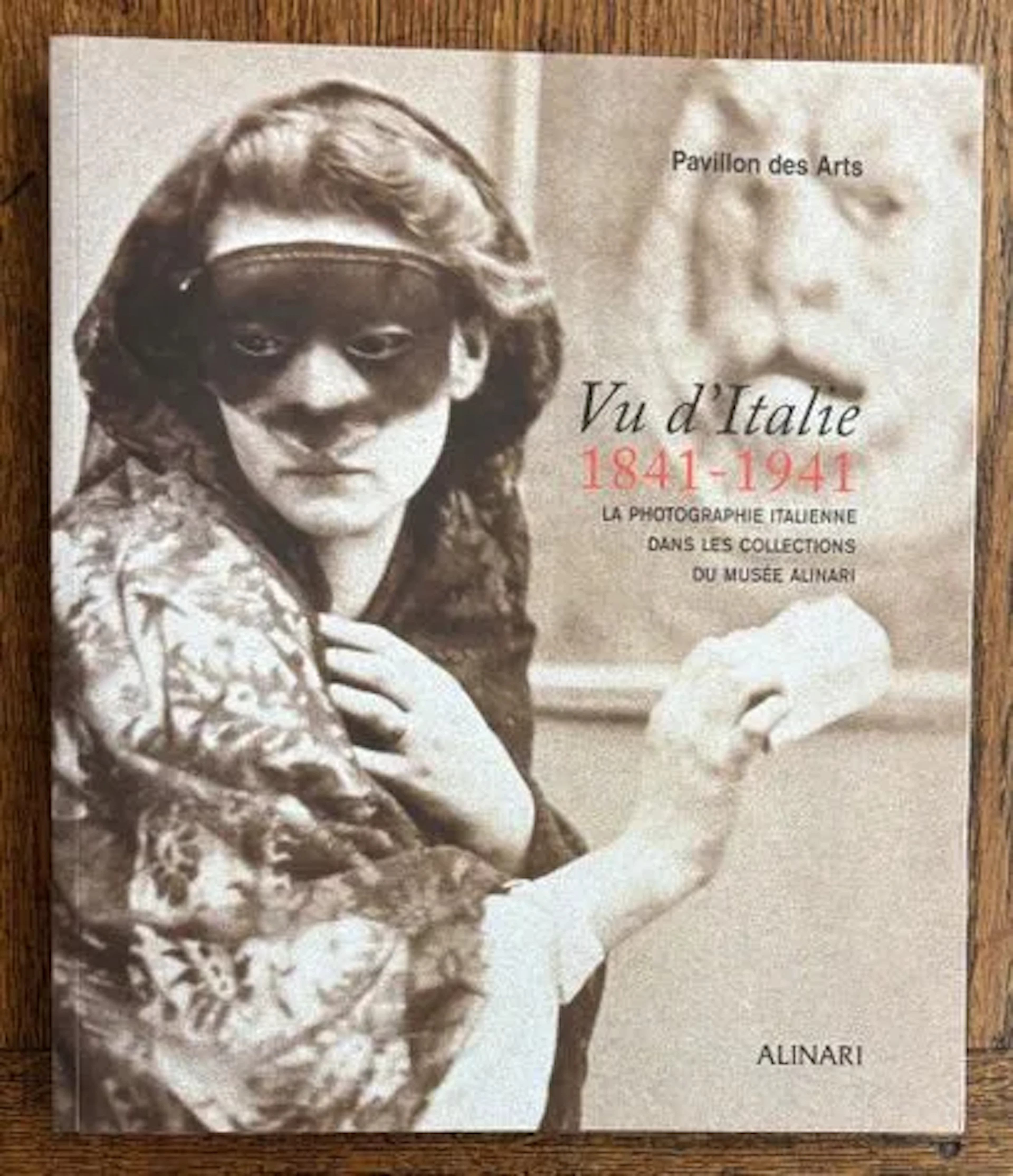
VU D'ITALIE 1841-1941 — LA PHOTOGRAPHIE ITALIENNE DANS LES C - Lot 299
10/11/2026

£5.91
Est: £16.92
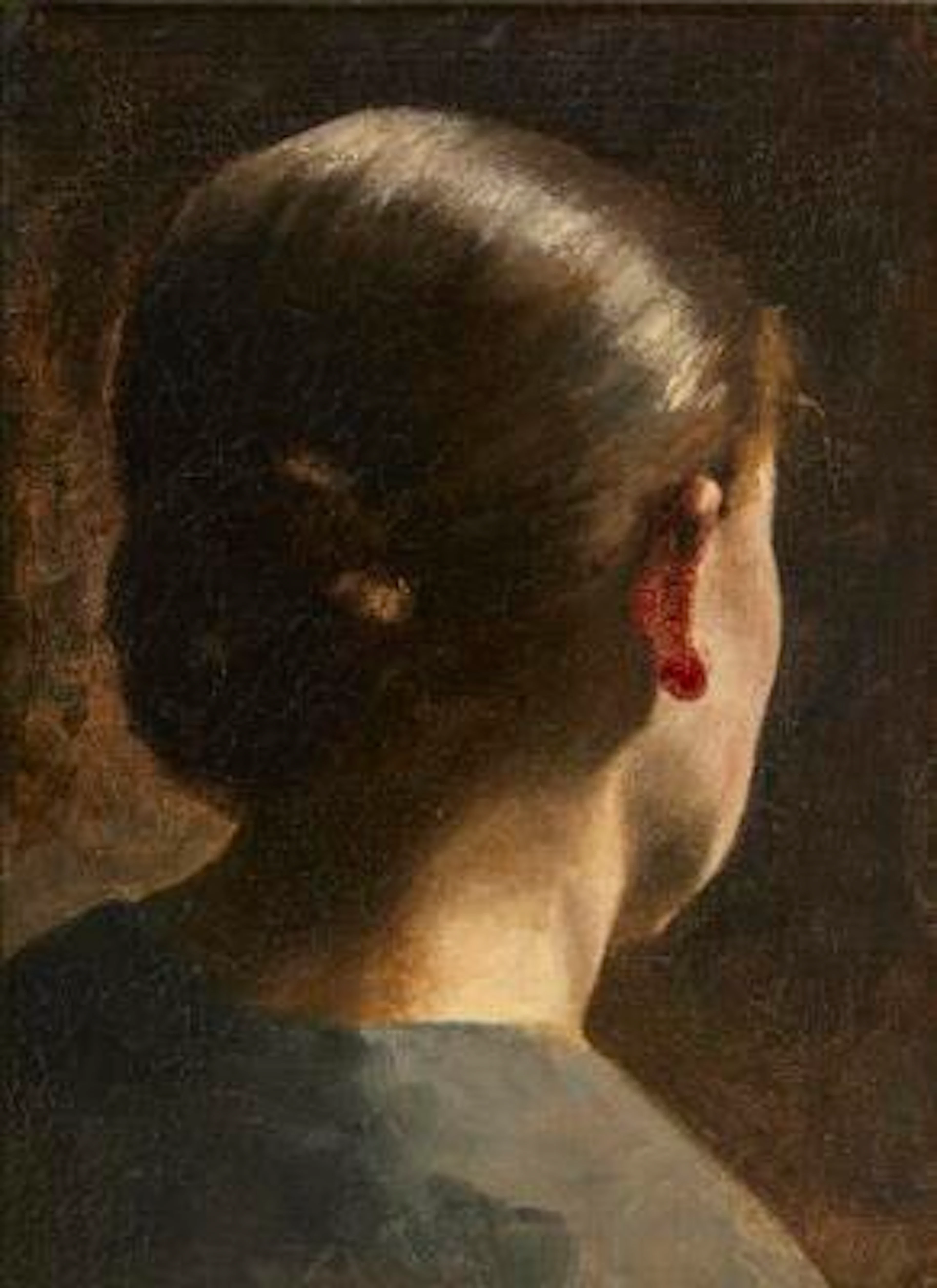
Vilhelm Hammershøi: The artist's sister Anna Hammershøi. Unsigned.
10/08/2026

£282,947.5
Est: £171,717
OCT 23 | 8:00 AM


OCT 27 | 4:00 PM


OCT 17 | 10:00 PM
Bring your auction to collectors worldwide!
Get listed nowBy subscribing, you are agreeing to the privacy policy. Unsubscribe anytime.
Barnebys HQ
Brahegatan 10
BOX 5038
114 37 Stockholm
