
OCT 17 | 10:00 PM

Bring your auction to collectors worldwide!
Get listed nowBy subscribing, you are agreeing to the privacy policy. Unsubscribe anytime.
Barnebys HQ
Brahegatan 10
BOX 5038
114 37 Stockholm
All auctions / Ancient Art / South India – Vijayanagara tradition Terracotta Shiva Nataraja in

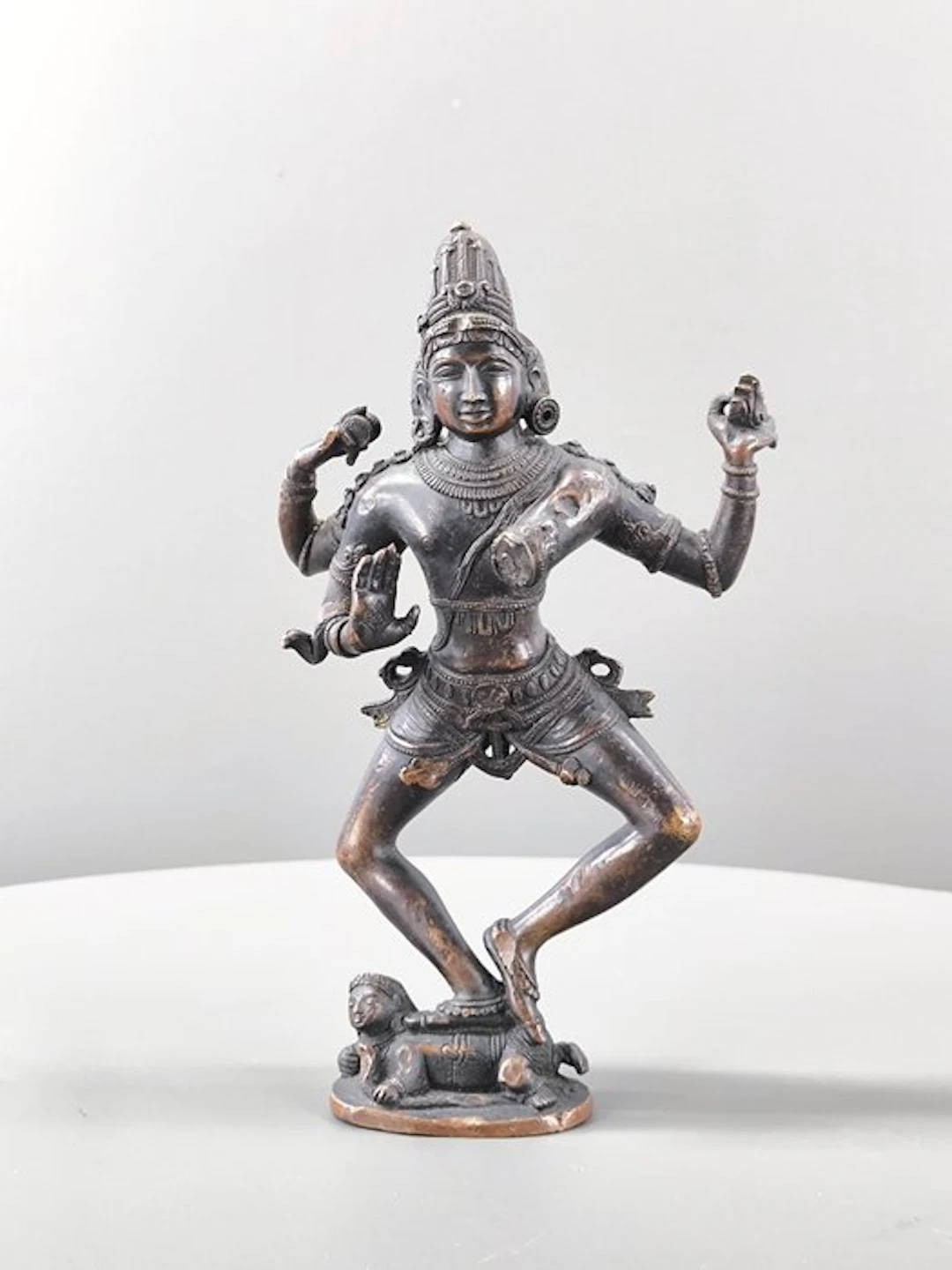
Important bronze figure of Shiva Nataraja – South India, Vijayanagara tradition, 15th–16th century, probably 16th century. Beautiful and particularly dense sculpture in copper alloy representing Shiva Nataraja, the “Lord of the Dance,” one of the most emblematic expressions of South Indian Hindu iconography. Shiva is depicted in a dynamic dancing pose, the body animated by crossed legs and the unfolding of his four arms. Under his feet appears Apasmara, the dwarf embodying ignorance vanquished by the god’s cosmic dance. The iconography remains particularly legible. The foremost right hand is raised in abhaya mudra, gesture of protection and absence of fear, while a back hand is associated with the damaru, the small drum symbolizing the rhythm of creation. The other attributes are partially preserved. The sculpture is notable for the richness of its treatment: tall conical headdress finely structured, large circular earrings, stacked necklaces, bracelets, arm ornaments, and a richly detailed short garment. Behind the head remains a remarkable openwork disk with a floral decoration. The casting is particularly heavy and compact: despite a height of only 21 cm, the sculpture weighs 1.420 kg. The arms widely detached from the body, the crossed legs, and the fully modeled figure of Apasmara give the whole piece a true sculptural presence. The bronze shows a deep brown-black patina, nuanced by areas of wear revealing sometimes the warmer tones of the copper alloy. These variations today give great relief to the modeling and to the ornaments. Stylistic study ties the piece to productions of South India of Vijayanagara tradition, with a proposed dating to the 15th–16th centuries, probably the 16th century. The compact silhouette, the robust construction of the body, the high architected coiffure, and the emphasis given to decoration and jewelry are characteristic of this late tradition of South Indian metal statuary. The sculpture shows wear, small accidents and losses consistent with its material history. Several peripheral elements or attributes are incomplete, and the great prabhavali, the flamboyant halo that traditionally surrounded Shiva Nataraja, is no longer conserved. The floral disk placed behind the head, however, is still present. Despite these losses, the figure retains a very beautiful presence and an immediately recognizable iconography. Provenance: German art market; acquired in a public sale in 2023; private Belgian collection. A Mimosa detailed study certificate, including iconographic and stylistic study, surface analysis, condition report, provenance and comparisons, accompanies the work. Dimensions: 21 × 11.5 × 5 cm Weight: 1.420 kg video link: https://www.dropbox.com/scl/fo/wda0uv7xu9f5sxbkljjnt/ANYH7j8ltDnVF01oLJAejI4?rlkey=qplzqqkko531qr2bhsvue7pe5&dl=0
Estimate:£2,720.67
To the auctionView all items fromCatawikiorAncient Art
Estimate:
£2,720.67
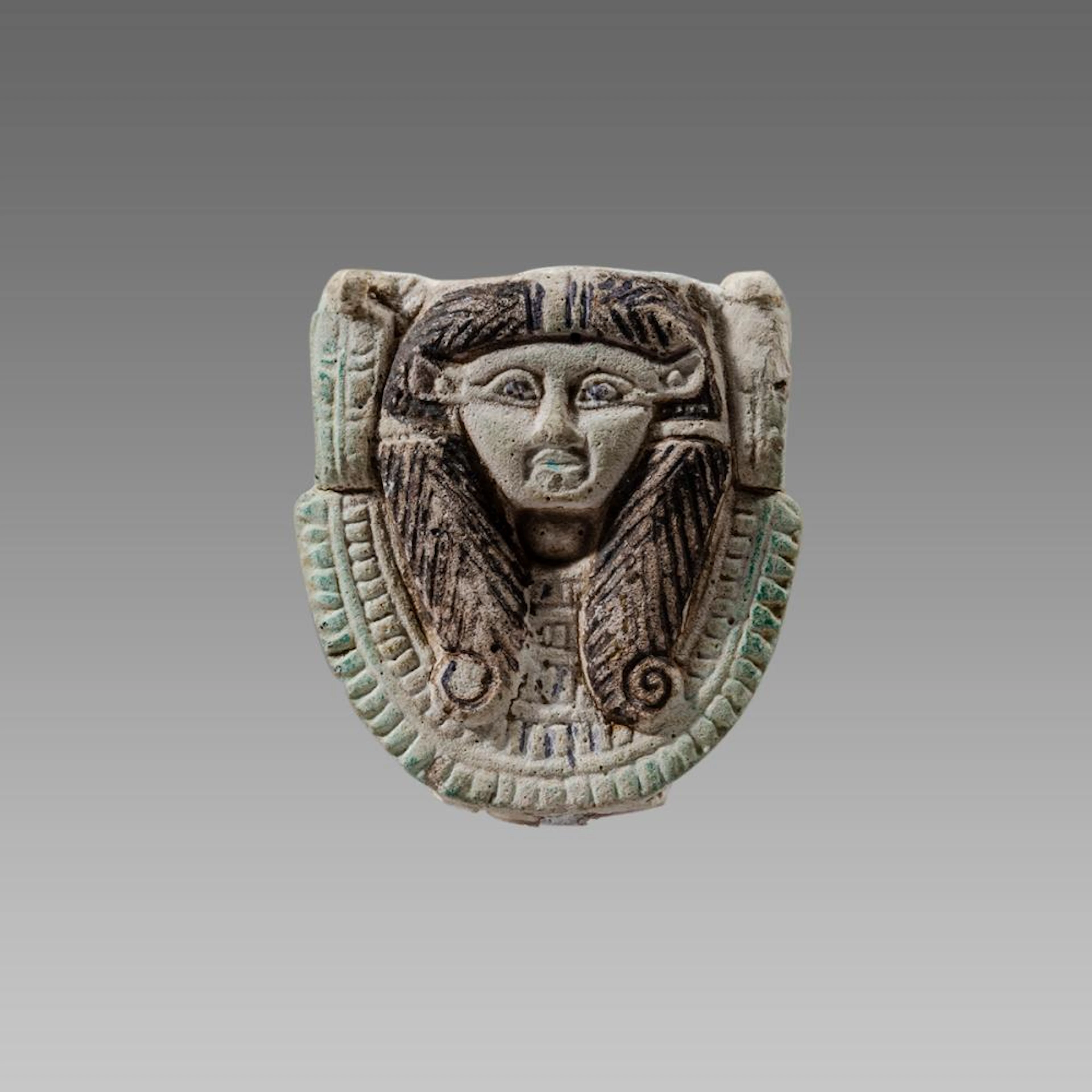
Ancient Egyptian Faience Amulet Hathor c.664-300 BC.
05/23/2021
£1,084.5
Est: £1,084.5
OCT 17 | 10:00 PM


Bring your auction to collectors worldwide!
Get listed now£254.55
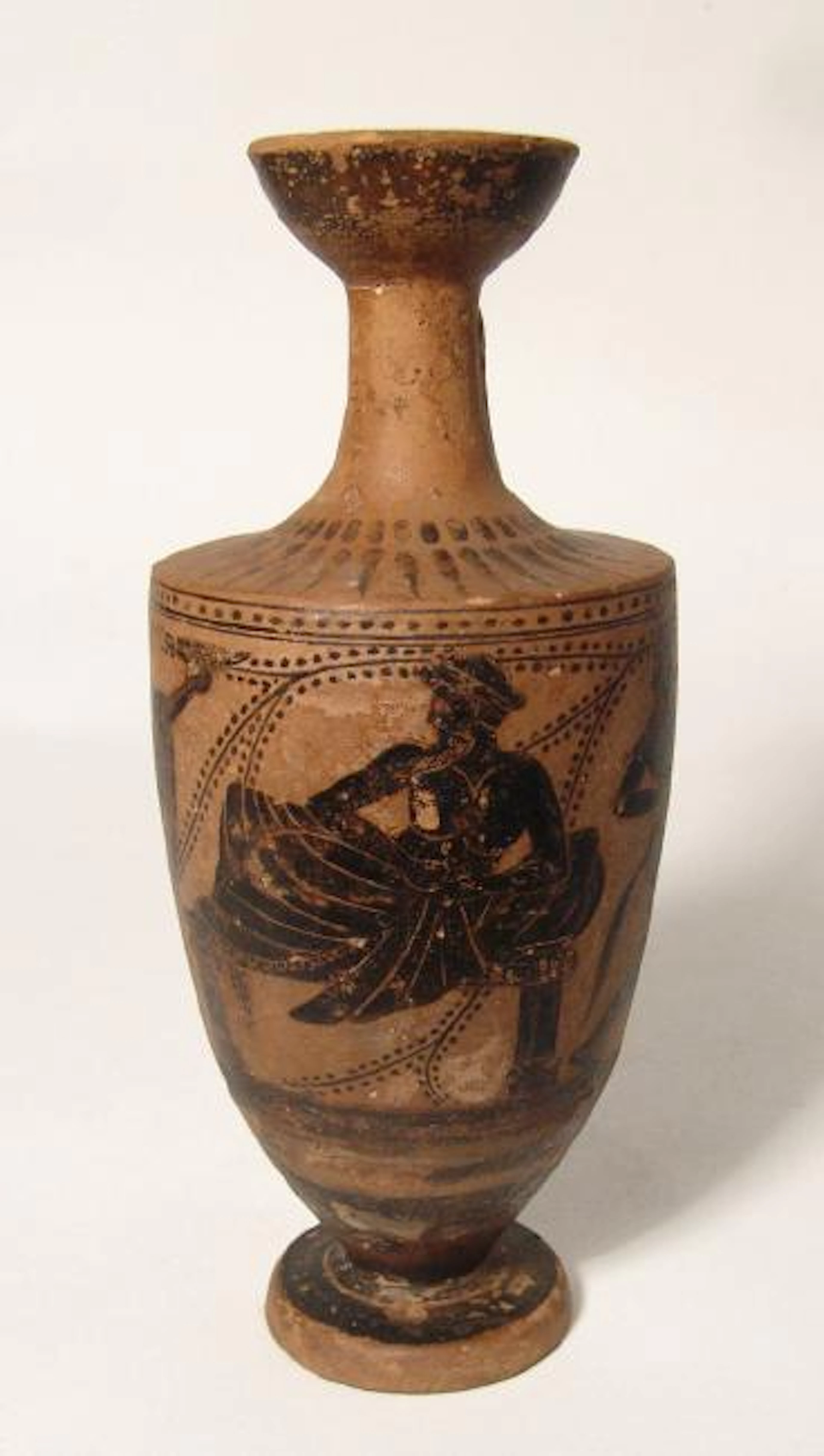
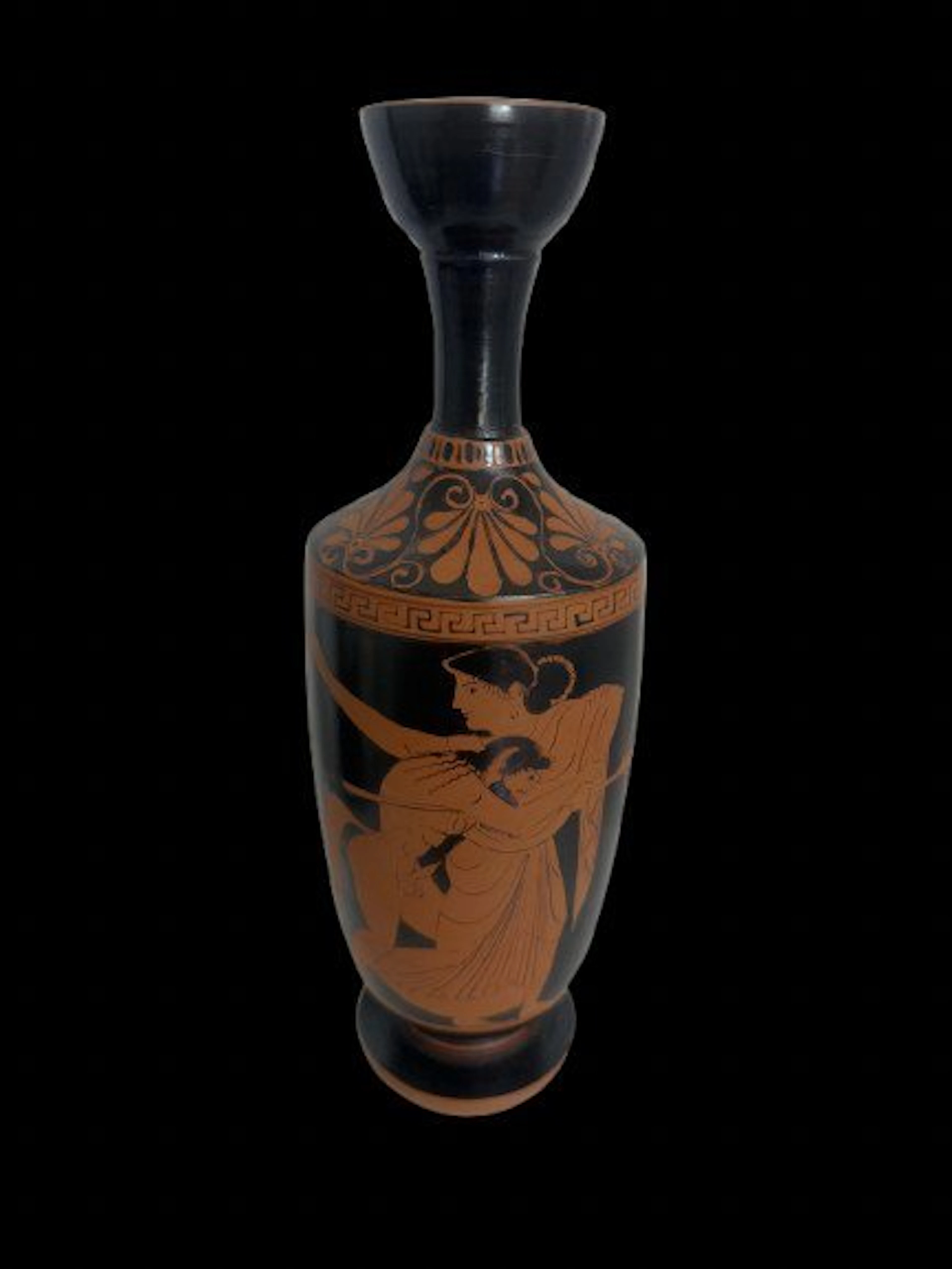
Stunning Greek black-figure lekythos w/ three figures
09/10/2017
£1,544
Est: £2,702