


OCT 17 | 10:00 PM

All auctions / Toys & Collectables / Tamiya + Academy - Toy Lotto 'Germania Panzer 1943/45'...

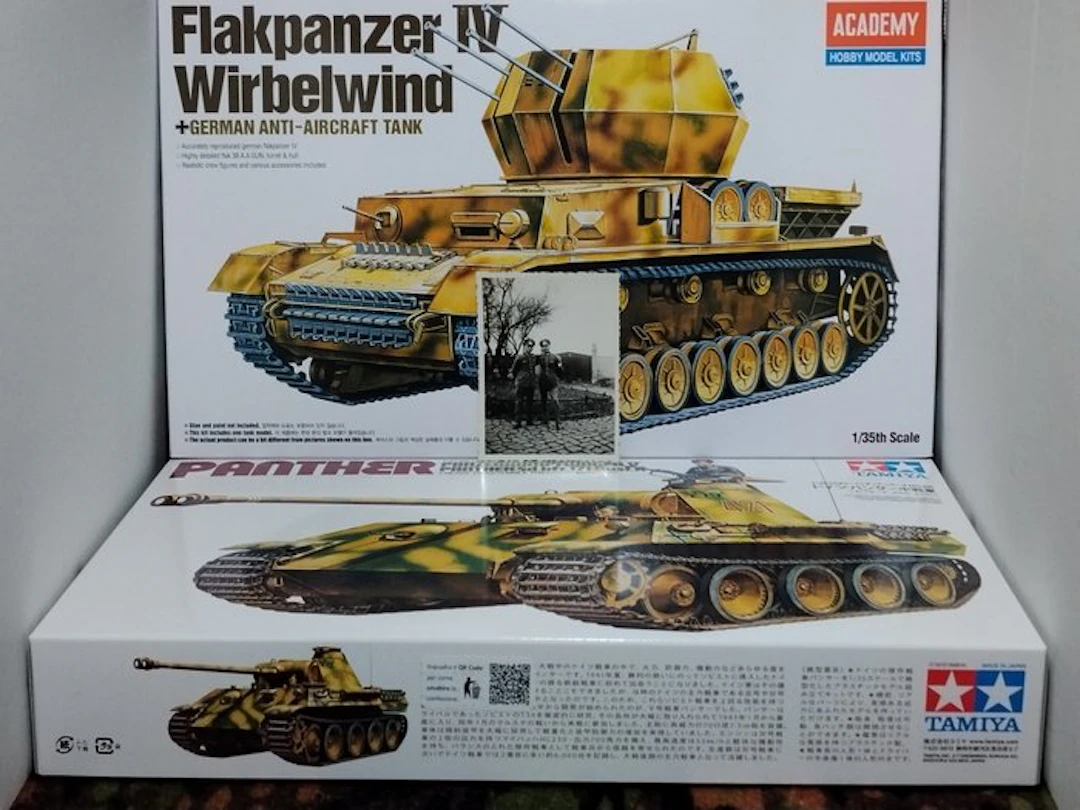
- Lotto 'Panzer Germania 1943/1945' with 1 photograph + 2 new plastic kits to assemble and paint at 1:35 scale, for diorama/model enthusiasts of armored vehicles present in the German divisions in World War II: A) 1 Panzer with 2 crew figures B) 1 anti-aircraft self-propelled gun with 4 crew figures C) 1 collectible photograph The lot contains in total: 1 Panzer + 1 self-propelled gun + 6 figures + 1 photograph. - New items coming from official distribution network. - Static modeling of military vehicles lets you immerse yourself in the history and technology of the machines used in war. You will be able to faithfully reproduce artillery, tanks, half-tracks, wheeled and tracked vehicles, dedicating many hours to building the models and using materials such as plastic, metal and wood. With this hobby you will appreciate the beauty and complexity of these vehicles, as well as their strategic importance. Your finished-model collection will be a true miniature museum, telling the history of many conflicts and battles. Discover the pleasure of building your own collection of miniature military vehicle static modeling, and immerse yourself in the history and technology of the vehicles used in war. A) Flakpanzer IV Wirbelwind German anti-aircraft tank - Academy - code: 13236 - scale: 1:35 - country: Germany - period: 1944/1945 - type: self-propelled anti-aircraft gun - includes: 1 self-propelled gun + 4 crew figures - kit in-tact/sealed bags - plastic kit to assemble and paint - glue and paints not included - Plastic 1:35 scale kit of the German anti-aircraft vehicle, includes four German crew figures. The figures are included to add realism to the model and are designed to be positioned inside or around the open turret of the vehicle, intended to operate the anti-aircraft weapon. They wear reversible late autumn/winter 1944/45 suits. B) German Panzerkampfwagen IV 'Panther' (Sd.kfz.171) Ausf. A - Tamiya - code: 35065 - scale: 1:35 - country: Germany - period: 1943/1945 - type: medium tank - includes: 1 Panzer + 2 figures - kit in-tact/sealed bags - plastic kit to assemble and paint - glue and paints not included Manufacturer information: Plastic assembly kit in 1/35 scale depicting Ausf. A, a variant of the famous Panther tank deployed by Germany at the end of World War II. From the sloped armor to the complex suspension, the form is recreated in style. It features movable hatches and numerous accessories such as spare tracks, tow cables, tools and more. The kit includes a full-figure commander and a torso. C) Collectible photograph - German soldiers - dimensions 8 cm x 6 cm - normal signs of use and aging - The Flakpanzer IV Wirbelwind was a self-propelled anti-aircraft gun used by the German army in the late stages of World War II, whose job was to defend motorized columns from Allied air forces. From late 1942, the danger posed by Anglo-American air forces to German ground formations became increasingly concernsome, and as the war progressed it became clear that towing artillery requiring long setup times could not effectively defend moving columns, and using light machine guns mounted in turrets of tanks or on other vehicles was no longer sufficient to repel low-altitude air attacks. In December 1943, the design of proper anti-aircraft self-propelled guns began, but technical difficulties slowed progress. Urgent demand for such vehicles led to the creation of the Flakpanzer 38(t), a provisional and emergency solution of modest performance. In spring 1944 the Heereswaffenamt released specifications for a self-propelled gun based on the Panzer IV medium tank chassis. Ostbauwerke of Sagan was tasked, completing a prototype in May 1944 in time for an inspection by General Heinz Guderian to review all anti-aircraft self-propelled gun projects; the simple design and rapid production convinced Guderian to accept it into service. The Wirbelwind was built by Ostbauwerke starting in July 1944; often it involved converting damaged Panzer IVs returning from the front, so the base vehicle varied between the more common Ausf. F and G versions. This may explain the disagreement among sources on the propulsion system. The assembly line worked until November, when the Red Army had pushed far into German territory threatening the Silesian industrial region; Ostbauwerke was evacuated to Teplitz and Duisburg, and by that date between 87 and 105 units had been completed. In operation the vehicle proved deadly against low-flying aircraft despite the slow rotation of the hull's casemate, but by late 1944 the reliable FlaK 38 was no longer a weapon capable of threatening high-flying enemy aircraft, so the Wirbelwind was replaced by the Flakpanzer IV Ostwind equipped with the more powerful Flak 43 37 mm. The crew consisted of 5 men: the driver sat in the front-left hull, with a protected visor; he steered using the Krupp-Wilson system with two levers to lock the tracks and synchronized use of the clutch and mechanical disc brakes for steering. In the exposed casemate the commander also acted as gunner and was assisted by two loaders who stood at the sides of the firing system, each responsible for two guns; to the right of the driver was a machine gunner with a 7.92 mm MG 34, housed in a ball mount: more than 1,300 rounds were carried for this weapon. The crew had a FuG 5 radio with a 2-meter tall whip antenna for communications. - Produced in 6,283 units during World War II, in 1943 an unusually fast European front medium tank appeared and distinguished itself within the German mechanized division. This was the Panther, with formidable attack power and rapid maneuverability, soon becoming a terror to Allied forces, showing improved offensive and defensive powers and precise field maneuverability, and quickly becoming Germany's main battle tank. The Tiger I with its 88 mm gun would seem superior at first glance in offensive power, but from the perspective of armor-piercing performance, the Panther, with its 75 mm KwK 42 gun and sloped side armor, delivered far more real combat power than the Tiger I’s 56 mm KWK 36 gun. The Tiger II, which should be called the “improved Panther,” was much stronger in both attack and defensive power than the Panther. Germany’s early war main tanks were all unique in that their designs were entirely based on German plans and ideas. But the Panther was influenced by the Soviet legendary T-34, seen for the first time on the Eastern Front. In early 1942, to fight the T-34, the German army ordered a new tank from Dymler-Benz and M.A.N. with the following specs: weight 35 tons; speed 60 km/h; armament 75 mm cannon, armor 60 mm on the front of the hull, 35 mm on the rear, and 100 mm on the front of the turret. Finally, it was specified to be equipped with a Maibach HL210, 12-cylinder V water-cooled engine. In May of the same year, the M.A.N. model was chosen without waiting for a completed prototype. However, there were two major changes. First, to meet military demand, the weight had to exceed the original 35 tons. Second, the army ordered a change in the thickness of the front armor from 60 mm to 80 mm. Because of these changes, the engine type had to be changed from HL210 to HL230. Thus, to accommodate this engine, better gearing was needed, but mass production began without this final modification, leading to frequent gear failures and related problems. This became the Panther’s greatest flaw. In the same year, Dymler-Benz and Henschel received orders to produce the Panther. Production thus increased significantly and a total of 6,283 Panthers were produced, second only to the PzKW-4 in number. The first Panther type D produced in series did not have a machine gun, but after close-range combat experience, an MG 34 7.92 mm was added to the right front hull starting from type A. The Panther’s special feature was the left-right steering mechanism. This created movable interchangeability using a torsion-bar suspension system. In 1944, the Panther was further improved from Type A to Type G with a change in its side profile. It continued fighting the Allies during the second half of the war. One famous battle it undertook in this period was probably against the new Soviet heavy JS II on the Eastern Front. The Panther at that time was the main battle tank of Großdeutschland, the strongest German mechanized division, under General Hasso von Manteuffel. Reportedly, the Panther in battle destroyed 350 JS II tanks and another 20 armored vehicles. General notes: • Product Guarantee: New items sourced from official distribution network. The kit is untouched, never assembled, and with the inner component bags (sprues) still factory-sealed. • Description and Photos: Box photos and visible contents are an integral and binding part of the description. Please study each image carefully before bidding to verify the lot’s condition. If there are discrepancies, images override the written text. • Contents of the Sale: Images of the assembled and painted model are for illustrative purposes only. The kit is to be assembled and painted. Glue, paints and accessories visible in the demonstration photos are not included. • Exclusion from Return (Opened Bags): In accordance with Catawiki Consumer Rights Policy (section Items Excluded from the Right of Withdrawal for Sealed Items), the right of withdrawal expires if the inner bags of the components are opened or if the factory seal is broken after delivery. • Shipping and Extra Costs: Tracked shipping with professional packing. For shipments to islands, overseas territories and non-continental destinations, additional costs will apply to be paid post-auction prior to shipment. Any customs duties or import duties are the buyer’s responsibility.
Estimate:£3.38
To the auctionView all items fromCatawikiorToys & Collectables
Estimate:
£3.38
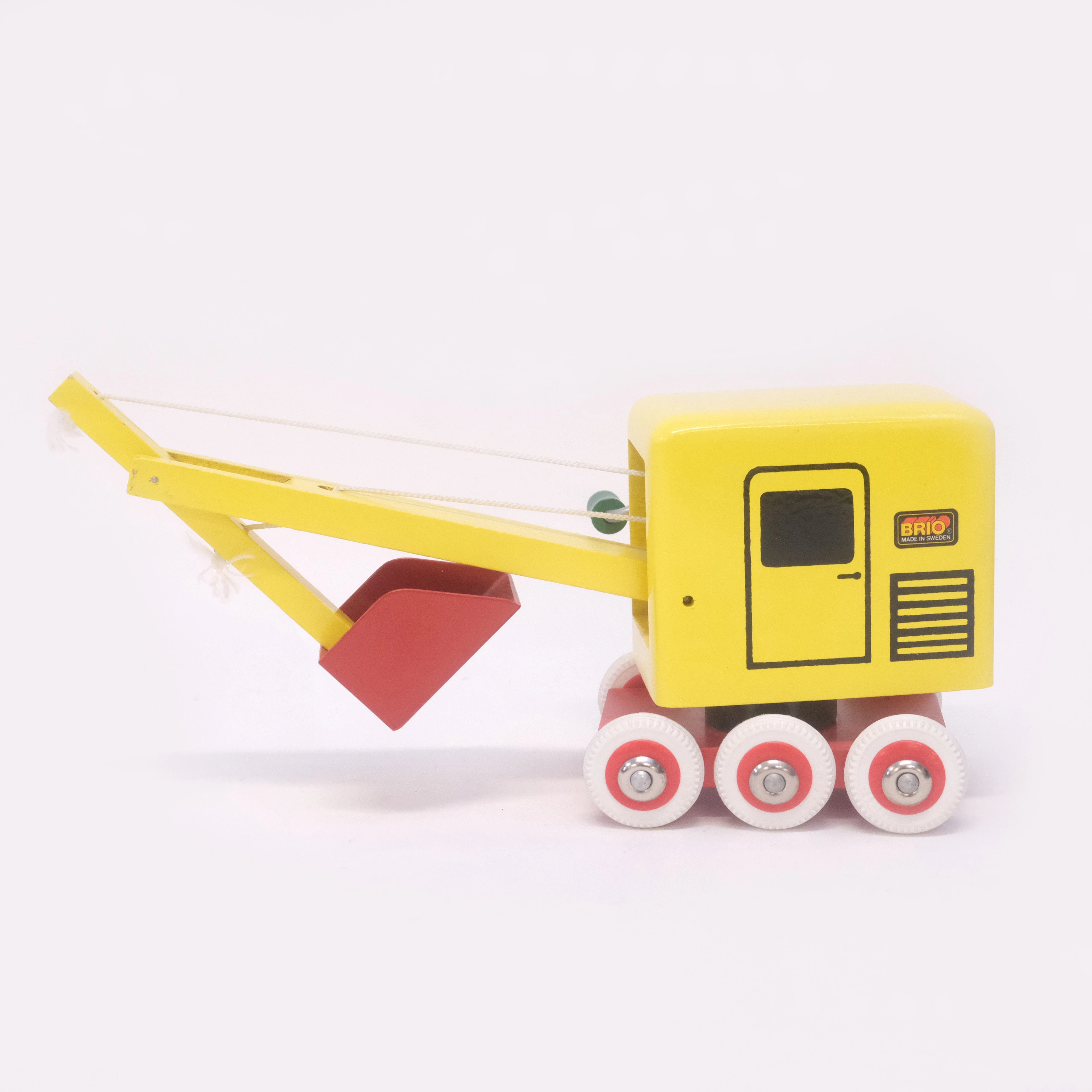
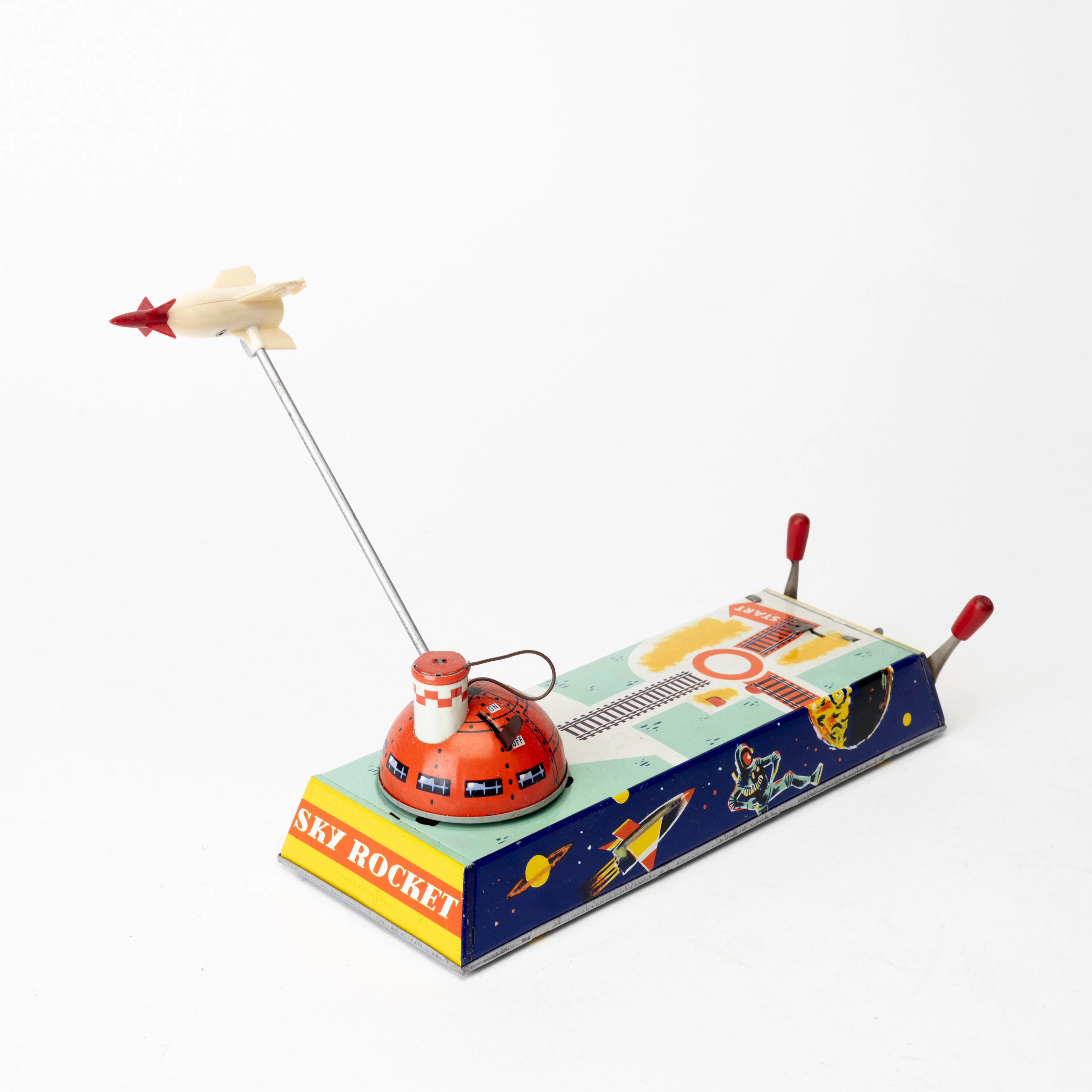
Mekanisk leksak, litograferad plåt, " 120 - Sky Rocket", Biller, Västtyskland
10/09/2026
£60.42
Est: £113.72
OCT 17 | 10:00 PM


Bring your auction to collectors worldwide!
Get listed nowBy subscribing, you are agreeing to the privacy policy. Unsubscribe anytime.
Barnebys HQ
Brahegatan 10
BOX 5038
114 37 Stockholm
