





OCT 23 | 8:00 AM

All auctions / Photographs / Tidiani Shitou (1933–2000) - Toi et moi (1975)

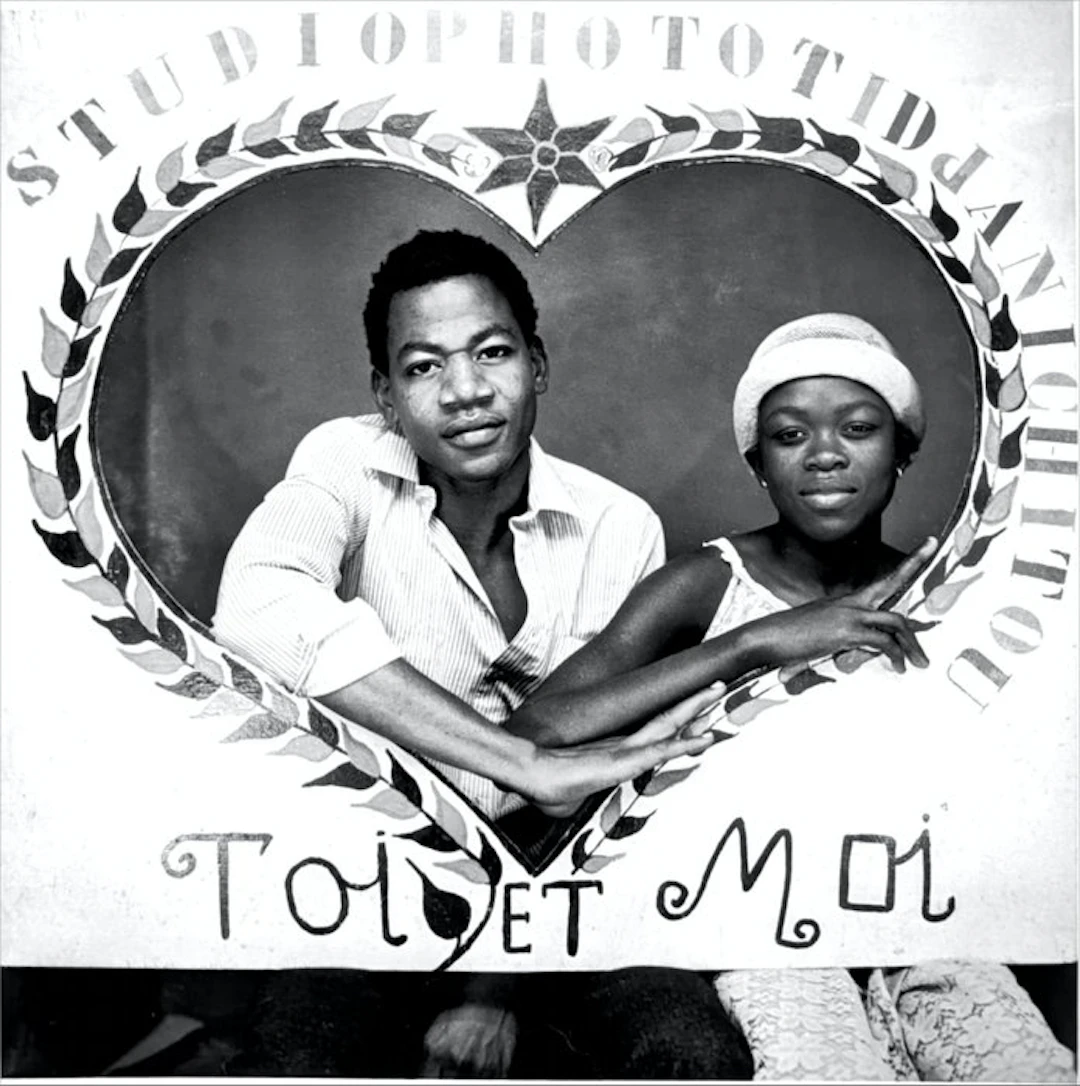
Silver print - Signed Through the names of Seydou Keita or Malik Sidibé, a African photography in which the human figure is dominant has become popular in the West, highlighting the popularity of photography studios from the 1960s to the 1990s. But a multitude of other photographers, also working in studio, remain to be discovered. And this is the first time, in Lyon, that an art and photography gallery offers this possibility. The astonishing images of the doppelgänger of Malian artist Tidiani Shitou (1933-2000) draw their source from the artistic and cultural specificities of West Africa. Formal peculiarities: think of symmetry, hieratic stillness and the contained energy of statuary, and symbolic specifics. His double portraits, portraits of parents, of friends, far from being limited to depicting a feeling of fraternal love (badenya, born of the same mother), convey other types of affective relationships between individuals. They emphasize the deep bond that unites two people. The photographer’s art lies in translating this link through a symbolic likeness, by exaggerating the similarity between them through pose, clothing (sometimes lent), accessories, the symmetry of composition, up to creating the illusion of total identification, of the same doubled self. His portraits then celebrate a relationship even as they represent it, using symbols: stereotyped twin-like images that are also found in sculpture and in many other everyday objects in West Africa. They are not the immediate realistic image of individuals but rather the illumination of the duality of the person and the ideal model that constitutes the founding twin pair in the original myths. Protected by the gods, twins (though sometimes perceived as malevolent) bring good luck and symbolize harmony and fairness. They are a reminiscence of the origins of the world and they feed a highly fertile imagination in sub-Saharan Africa. This idea that each person is seeking his alter ego, his complementary soulmate – his twin – constitutes the very popular theme in West Africa of the double portrait often equated with a twin portrait. A portrait in which the individual does not disappear in favor of the double but, on the contrary, grows through the doubling. Tidiani Shitou demonstrates, in portraits of great historical, ethnological and artistic value, that a resolutely contemporary aesthetics can be put at the service of traditional thought. He also shows that, thanks to photography, clients were able to reclaim their image, even recreate it, by playing with the different strata of their realities and by inventing their own modernity and their own history. An idea animates this “image maker,” an intermediary between the visible and the invisible: to reach, through mastery of an appropriate medium, the mental image of a radical duality of the person. C. Angelo Micheli El Hadj Tidiani SHITOU (1933 - 2000) Studio Photo Kodak Olore, Mopti, Mali Tidiani Shitou, long regarded as the best photographer in his region, produced, from the 1970s to 2000, in his Studio Photo Gangal in Mopti, a considerable body of work. It consists of portraits but also images of celebrations and ceremonies, made in black and white then in color. Yoruba born in Nigeria, he had first been a tailor and merchant. In Mali from the late 1950s, he stopped in Gao in 1962 where he was trained by Nigerian photographer Mahamane Awani, then in Bamako where he formed a friendship with Malick Sidibé, before arriving in Mopti. There he continued his training alongside Malian photographer Bosco Maïga and opened his studio in 1971. But curious about everything, he never ceased to travel across sub-Saharan Africa to soak up new ideas in contact with photographers and artists. His keen, tender and amused gaze rested on his fellow citizens in a wide variety of portraits. The Peul, Bozo, Dogon, Sarakole, Bella and Yoruba people came to the Mopti Kodak Photo Studio (a very commercial city at the crossroads of the Djenné, Timbuktu and Dogon country routes) for the diversity of poses, the many accessories at their disposal and the quality of the images. At the crossroads of models drawn from Western studio photography and a local traditional heritage, he spread his knowledge in Mali. He is certainly one of the great propagators of the Ibeji portrait, a double portrait double-exposed, developed by the Yoruba in the context of the cult of twins. He used 6x6 cameras and then a single-lens reflex for color. If his portraits today testify to the elegance and whimsy of an era, if they are rich historical and anthropological documents on cultures, they are above all the reflection of artistic work linked to the dreams of the models who aspired to another ideal reality. Some photographs by Shitou have entered private collections and the Sokkelund Museum in Copenhagen. They were presented at the Bamako Photography Meetings in 2001 and at the Indiana University Art Museum in April 2007. C. Angelo Micheli
Estimate:£592.27
To the auctionView all items fromCatawikiorPhotographs
Estimate:
£592.27

OCT 23 | 8:00 AM


OCT 27 | 4:00 PM


OCT 17 | 10:00 PM
Bring your auction to collectors worldwide!
Get listed nowBy subscribing, you are agreeing to the privacy policy. Unsubscribe anytime.
Barnebys HQ
Brahegatan 10
BOX 5038
114 37 Stockholm
