



OCT 17 | 10:00 PM

All auctions / Asian Art / Traditional Egyptian Painting on Papyrus - Goddess Isis Guiding Queen Nefertari

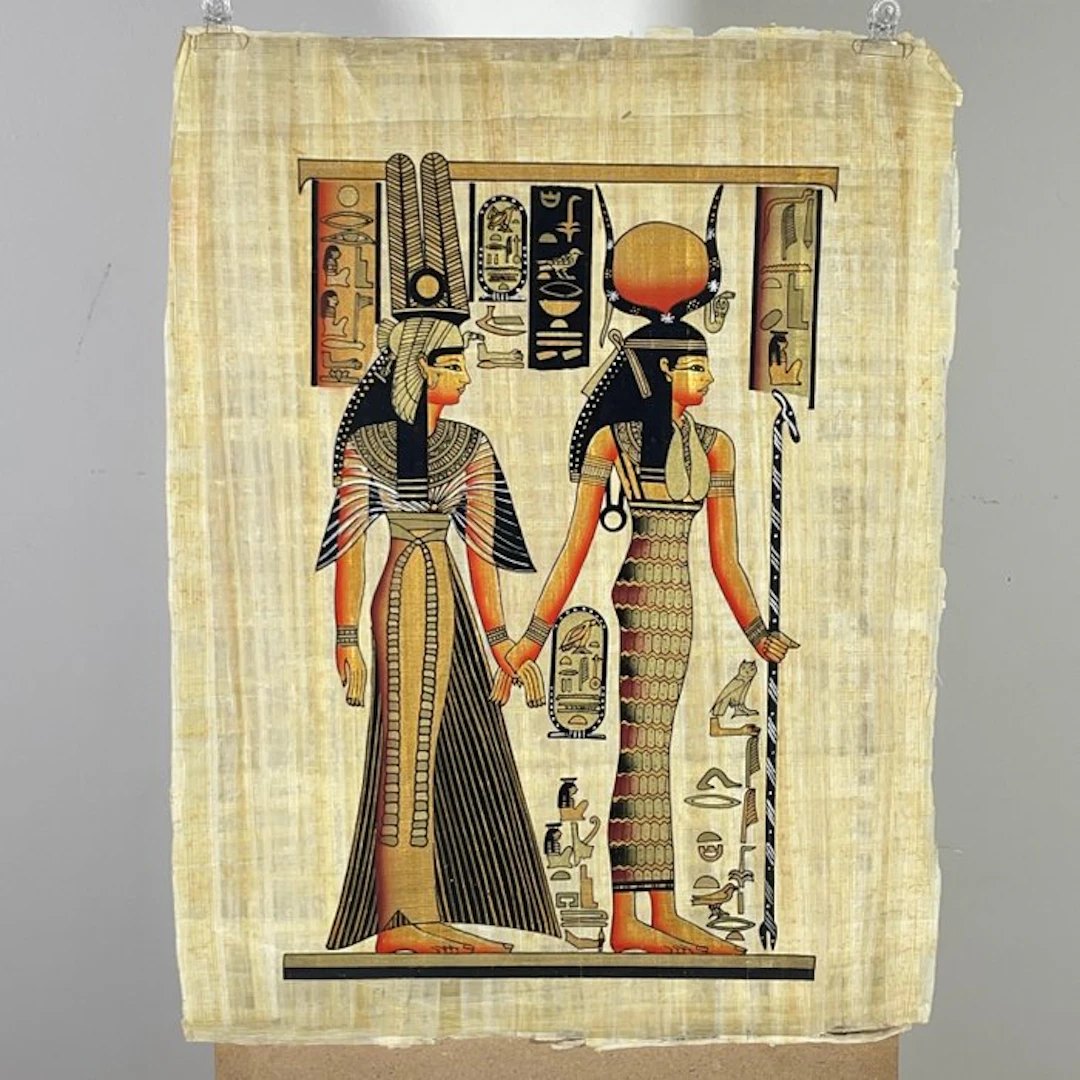
Traditional Egyptian Painting on Papyrus – The Goddess Isis Guiding Queen Nefertari Certificate and production by ADEL GHABOUR Papyrus A fine, handcrafted artistic reproduction executed on authentic Egyptian papyrus plant substrate. The artwork is faithfully crafted following millenary traditions, utilizing two perpendicular layers of fibers derived from the stem of the papyrus plant, as verified by the manufacturer's certificate of guarantee. The scene features a rich color palette dominated by warm tones of ochre, gold, terracotta, and black, with defined outlines that reflect the two-dimensional, highly symbolic style of Theban tomb paintings. Represented Subjects and Mythological Significance The painting reproduces one of the most famous and poetic scenes in Egyptian art, originally located inside the magnificent Tomb of Nefertari (QV66) in the Valley of the Queens in Thebes, dating back to the 19th Dynasty (13th Century BC). On the Left – Queen Nefertari: The favored Royal Wife of Pharaoh Ramesses II, whose name translates to "The most beautiful of them all". She is depicted in idealized earthly features, wearing a refined, semi-transparent pleated white linen dress. On her head, she wears the vulture headdress, surmounted by two tall ostrich plumes (symbols of royalty and her connection to the goddess Mut). On the Right – The Goddess Isis (or Hathor-Isis): A central deity in the Egyptian pantheon, associated with motherhood, magic, and the protection of the deceased in the Afterworld. She wears the signature crown featuring cow horns enclosing a red solar disk, and is dressed in a rich ceremonial sheath gown decorated with a colorful geometric scale pattern. In her left hand, she holds the Was scepter (the symbol of divine power and dominion). Meaning of the Scene The artwork depicts the transition into the spiritual world. The goddess Isis gently takes Queen Nefertari by the hand to accompany her on her delicate journey into the afterlife, symbolizing protection, divine acceptance, and the assurance of immortality for the deceased queen’s soul. Meaning of the Hieroglyphs Within the context of these artistic reproductions, the hieroglyphs retain their precise historical and religious meaning from the original tomb formula: 1. The Royal Cartouches: The inscriptions enclosed within the oval frames (cartouches) positioned above and near the left figure record the formal titles and name of the queen, identifying her as the "Great Royal Wife, Nefertari Meritmut" (Meritmut meaning "Beloved of the goddess Mut"). 2. The Divine Texts: The columns of hieroglyphs above and next to the deity state her identity and recite formulas of welcome into the Underworld. The glyphs include classic phrases wishing the deceased "Health, stability, protection, and eternal life" (represented by iconic symbols like the Eye of Horus, the water line, and the Tyet knot). 3. The Small Falcon (Bottom Right): Positioned next to the goddess's feet is a depiction of the falcon, a clear dynastic attribute connected to Horus, serving as an additional seal of divine legitimacy for the scene. Notes : The artwork is in excellent condition, featuring the raw, frayed edges typical of manually manufactured papyrus that add a material, antique charm to the piece. It is offered complete with its original historical documentation certifying its production processes and authentic materials.
Estimate:£127.08
To the auctionEstimate:
£127.08
OCT 17 | 10:00 PM


Bring your auction to collectors worldwide!
Get listed nowBy subscribing, you are agreeing to the privacy policy. Unsubscribe anytime.
Barnebys HQ
Brahegatan 10
BOX 5038
114 37 Stockholm
