


OCT 17 | 10:00 PM

All auctions / Jewellery & Gems / Unusual Necklace From Four Rows "Corallo Sciacca", Italy Around 1900

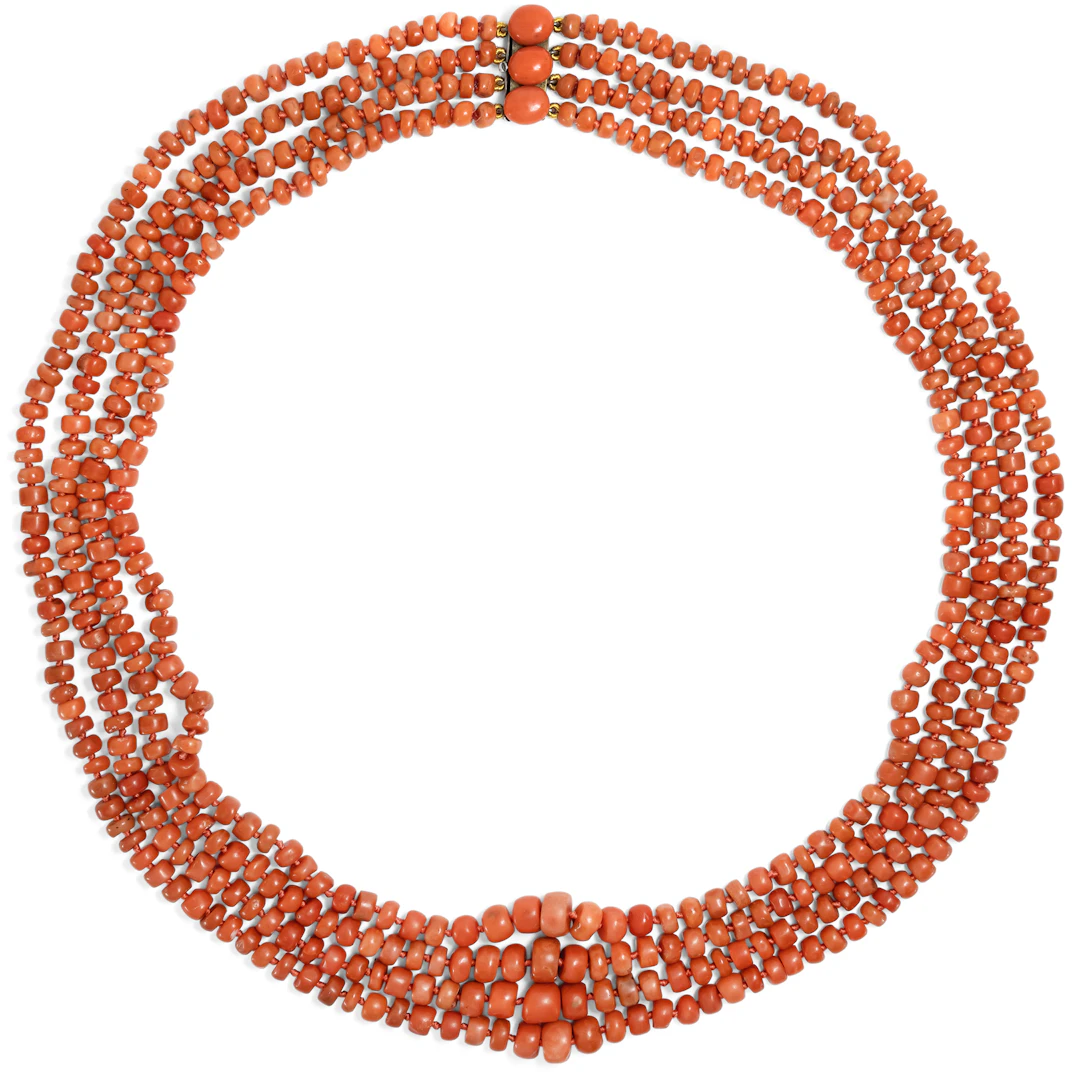
Corals from the Mediterranean come in different shades of colour. Depending on the region, sea depth and growing conditions, the marine animals develop specific colour nuances - such as the deep red Sardegna corals, which are fished around the island of Sardinia. Sicily provides a very special coral colour, and the history of these marine treasures is extremely exciting: An undersea volcano erupted off the town of Sciacca, located on the southern coast of Sicily, in July 1831. Fishermen observed the explosions and were astonished to discover that the volcano had formed a new island. As soon as the eruptions had ceased, a fierce dispute broke out over which country the new island should belong to. The Kingdom of the Two Sicilies regarded it as a natural part of its territory and named it "Ferdinandea" after its king, Ferdinand II. However, Great Britain also laid claim to the new territory, which was strategically located on important shipping routes, and called it "Graham Island". The French fleet also claimed the island, which it called "Julia", and Spain also laid claim to it. The dispute was finally settled by nature: by 1832, the waves had eroded the island to such an extent that it sank into the sea and only remained as a shoal. But what does all this have to do with corals? The repeated undersea volcanic eruptions and numerous earthquakes had killed off large quantities of coral, which formed one of the richest deposits in the entire Mediterranean. These subfossil corals took on a salmon-coloured hue due to decades of storage in the water, which makes them unmistakable to this day. This marine treasure was discovered in 1875 and the coral soon began to be mined, but by 1915 the deposits were completely exhausted. In this necklace, we see these special corals arranged in four rows. The corals were cut into small barrels around 1900 and have the characteristic salmon hue that makes the "Corallo Sciacca" so desirable. The strands are arranged in a graduated pattern, which means that they become thicker towards the middle. The corals show a beautiful colour variation of lighter and darker salmon tones as well as some natural growth marks. The large necklace, which we had restrung and knotted, is held in place by its original tombac clasp. A magnificent piece of jewellery with a story all of its own!
Estimate:£1,265.65
To the auctionView all items fromHofer AntikschmuckorJewellery & Gems
Estimate:
£1,265.65
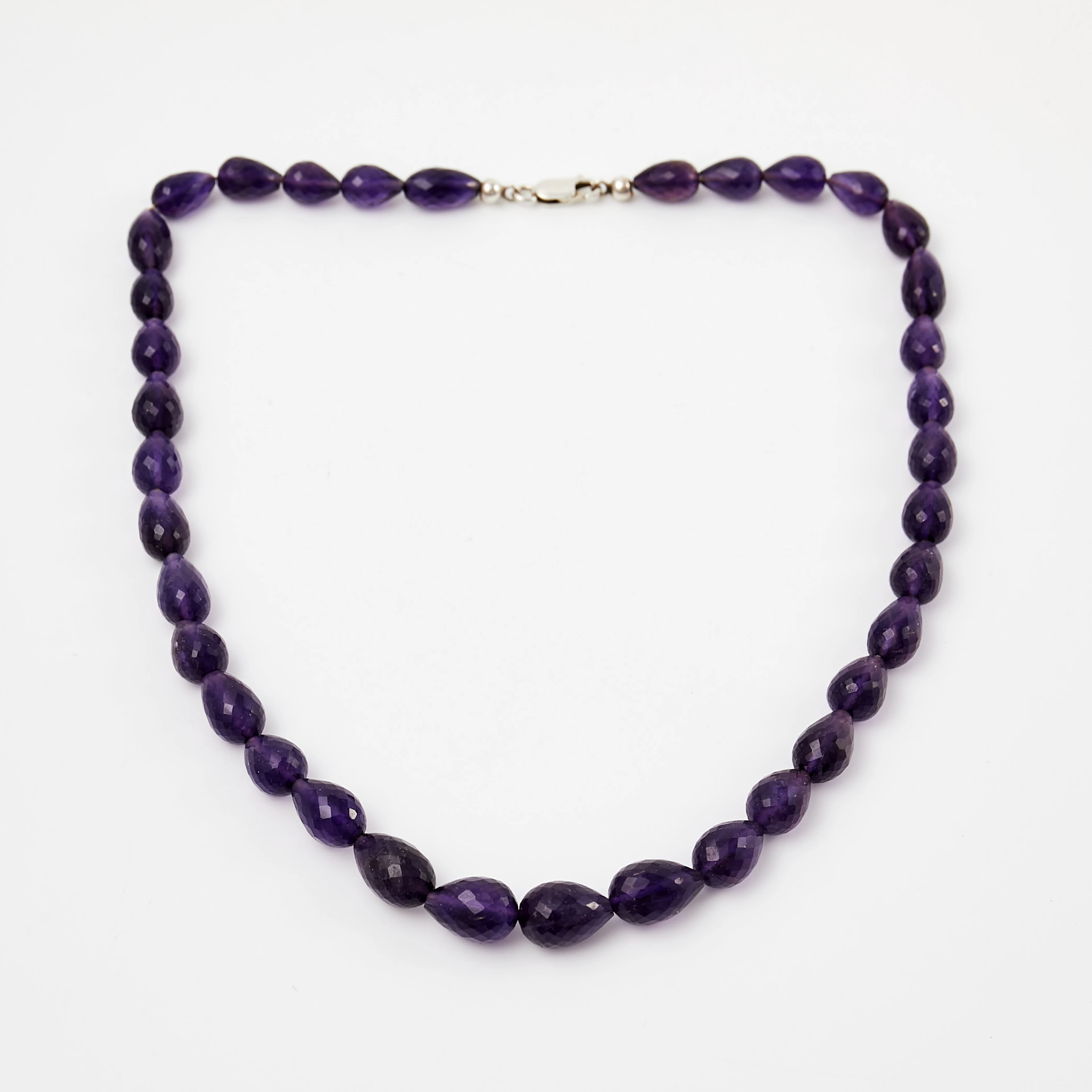
COLLIER, ametister, lås i sterling silver, utländska stämplar.
10/07/2026
£22.74
Est: £75.38
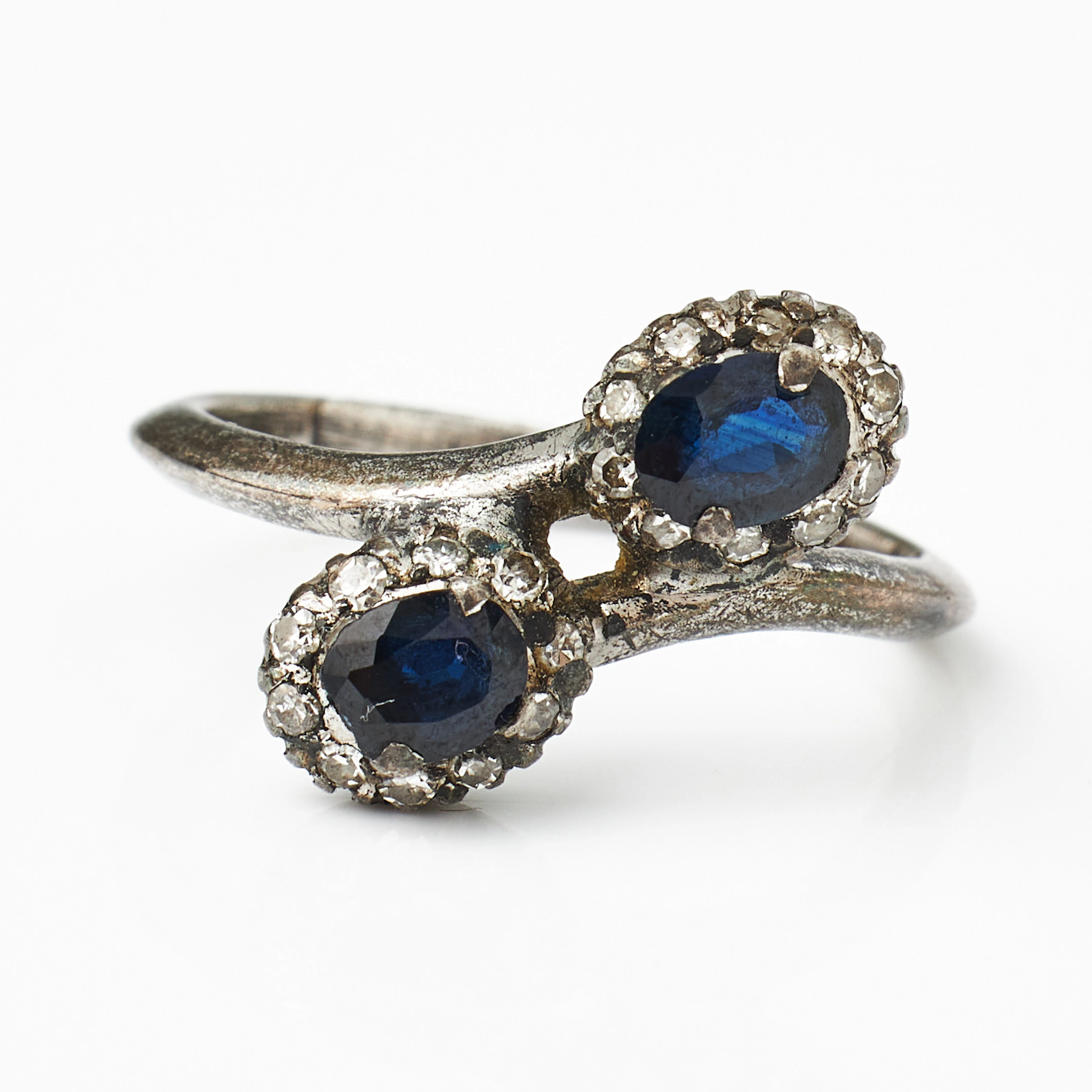
RING, låghaltigt vitguld, 2 fasettslipade ovala safirer bekransade
10/07/2026
£56.86
Est: £113.07
OCT 17 | 10:00 PM


Bring your auction to collectors worldwide!
Get listed nowBy subscribing, you are agreeing to the privacy policy. Unsubscribe anytime.
Barnebys HQ
Brahegatan 10
BOX 5038
114 37 Stockholm
