



All auctions / Arts & Graphics / Vincenzo Camuccini (1771–1884)

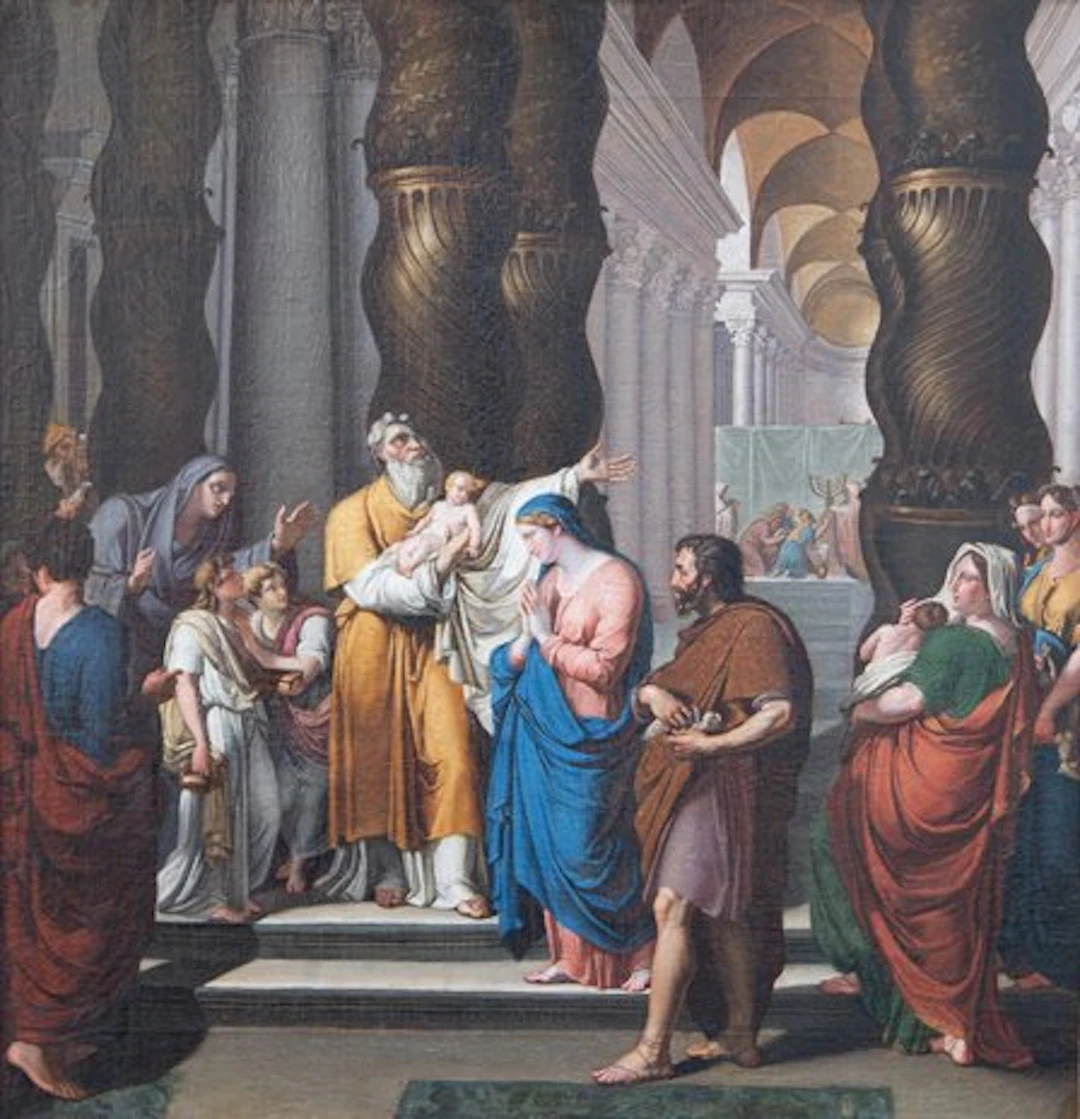
Workshop of Vincenzo Camuccini (Rome, 1771 – 1844) Presentation of Christ at the Temple Oil on canvas, 71 x 68 cm With frame 87 x 81 cm Son of Giovanni Battista, a charcoal merchant of Ligurian origin, and Teresa Rotti, Vincenzo Camuccini was born in Rome in February 1771. Encouraged and materially supported by his elder brother Pietro, he began his painting apprenticeship in the studio of Domenico Corvi (Viterbo, 1721 – Rome, 1803), a respected master and member of the Accademia di San Luca. Prone to the dramatic effects of chiaroscuro and of Caravaggesque ancestry, Corvi nevertheless respected the classicizing solutions proposed to Roman 18th‑century painting by the predominant authority of Pompeo Batoni; and he transmitted to his pupils the modes typical of that academy, far from dogmatic, as shown by the varied outcomes of Landi and Cades, Camuccini’s fellow pupils. In addition to Batoni, other essential reference points for Camuccini’s cultural and artistic formation were Mengs, active in Rome at the end of the 18th century, and Winkelmann, whose writings on classical art profoundly influenced the artist’s work. Among the artist’s early works, already evidencing his faithful adherence to classicism, we recall the copy of Raphael’s Deposition (1789), executed for Lord Bristol, and Archelaus with the boy Paris (fresco) for a ceiling in the Borghese Villa, renewed in those years under Asprucci’s direction. After a formative stay in Florence in the 1790s, during which he had the chance to meet and form friendships with Bossi and Appiani, Camuccini returned to Rome, where, from 1802, he joined the Accademia di San Luca, where a work of his, a Rescue of Paris, remains. Prince of the Accademia di San Luca from 1806, despite his young age, in the first decade of the 19th century Camuccini was already the undisputed ruler of Roman painting. His religious paintings show him faithful to the chiaroscuro effects of his master Corvi: this is also evidenced by the beautiful Presentation at the Temple for the Rosary chapel of the church of San Giovanni in Canale in Piacenza; Camuccini was also known for his portrait production—consider, for example, the Portrait of Maria Luisa of Bourbon of Palazzo Pitti—and for history painting. Among the important commissions received in the 1810s is the fresco cycle for the Quirinal Palace. Between the 1820s and 1840s, Camuccini, who managed to build around him a productive workshop, devoted himself mainly to religious painting, creating large works not only for Roman churches but for those throughout Italy: he worked in Florence, Parma, Naples, Catania, and various other centers of the Peninsula. Until a paralysis on February 19, 1842, that prevented him from using the brush, Camuccini continued his activity as historical and religious painter and as a portraitist: according to critics and art historians, in the latter field, as well as in drawings, he left his best; recent criticism has compared him with the English painter Thomas Lawrence for his worldly elegance. The painting in question, by a pupil of the artist, faithfully reproduces the composition and vivid colors of the Presentation of Christ at the Temple executed by the master for the neoclassical Rosary chapel of the church of San Giovanni in Canale in Piacenza. In the second left bay, the chapel presents a rectangular structure with an apse. Inside, executed in neoclassical style by the architect Lotario Tomba, who benefited from the project some advice from Antonio Canova, lies, in addition to Camuccini’s Presentation, a Way to Calvary by Gaspare Landi: both canvases were executed by the two leaders of neoclassicism in 1808. From the second decade of the 19th century, the painting enjoyed enormous visual popularity, as evidenced also by its numerous translation prints. The Camuccini pupil who carried out the execution of this beautiful painting manages to reproduce the vivid colors and the play of light of the master’s works, providing this fortunate iconography with an interpretation absolutely up to the level of the Roman neoclassical artist’s production. The frame is provided as a complimentary gift, therefore it cannot be a reason for return or complaint. For paintings purchased abroad: after payment, the export license (ALC) procedure will be started. All antique pieces sent abroad from Italy require this document, issued by the Ministry of Cultural Heritage. The procedure may take 3 to 5 weeks from the request, so as soon as we have the document the painting will be shipped.
Estimate:£921.34
To the auctionView all items fromCatawikiorArts & Graphics
Estimate:
£921.34


OCT 27 | 4:00 PM
Bring your auction to collectors worldwide!
Get listed nowBy subscribing, you are agreeing to the privacy policy. Unsubscribe anytime.
Barnebys HQ
Brahegatan 10
BOX 5038
114 37 Stockholm
