



Bring your auction to collectors worldwide!
Get listed nowBy subscribing, you are agreeing to the privacy policy. Unsubscribe anytime.
Barnebys HQ
Brahegatan 10
BOX 5038
114 37 Stockholm
All auctions / Coins & Banknotes / Wonderful Antique Shell Cameo With the So-Called "Cupid Trader" in

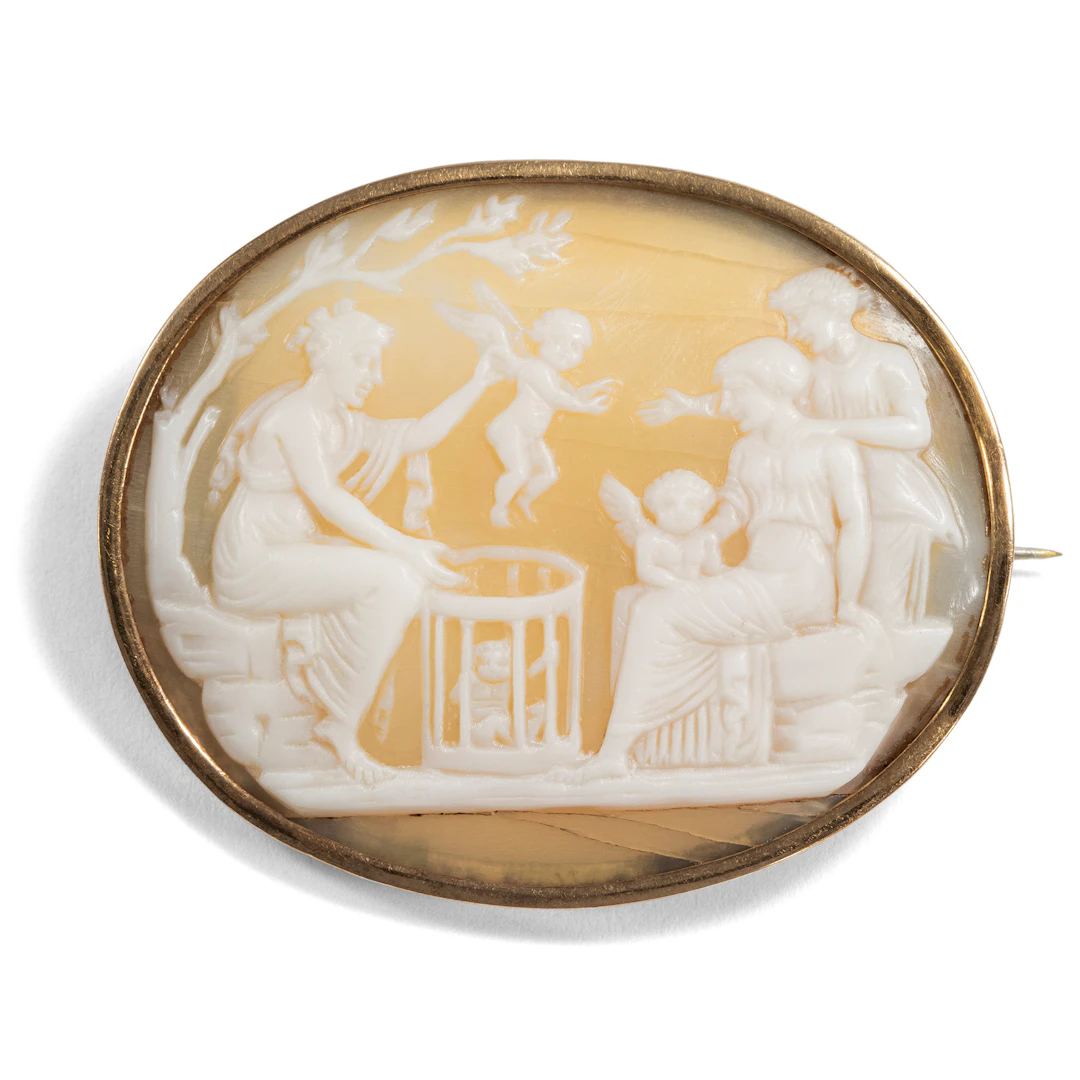
Cameos of the 18th and 19th centuries have always been among our favorite pieces. These small reliefs are works of art in their own right, they show the world of Western culture in miniature. They reflect the educational aspirations of the upper classes of the Classicist era, and at the same time they reflect the enjoyment of art and the yearning for antiquity of those years like hardly any other genre. The present cameo of the 1830s is carved from shell and set in gold. It shows a scene that was well known to every traveller to Italy in the 18th century. Goethe also reports on it in his Italian Journey. It is a depiction of the so-called "Cupid Trader", which also became famous under the title "The Sale of the Gods of Love". The imagery of Roman antiquity produced this little scene, which is as heartbreakingly funny as it is graceful, and tells the following story: Wealthy ladies of antiquity who had difficulty finding the right man or simply wanted to fall in love, according to tradition, resorted to the help of little winged love helpers that could be purchased. In our scene we see a cupid dealer sitting on the left side holding a small cupid by the wings. She has taken the love helper from a playpen to present him appropriately. Cupid has already stretched out his little arms to begin his quest to plunge his new owner into the throes of a new, previously unknown love. Another little angel of love is still sitting in his enclosure. A third helper nestles against the customer's knee, apparently to see how it feels. A counselor stands helpfully by. With so much help, nothing can stand in the way of a new love! The model for the scene shown here in relief is an ancient wall painting that was found in 1759 in Stabia in the so-called Villa Arianna near Pompeii and Herculaneum during archaeological excavations. We show a contemporary, side-inverted reproduction from the 3rd volume of the "Antichità di Ercolano esposte" (Naples 1762), which probably served as a model for the piece of jewellery presented here. The scene became famous throughout Europe within a few years, and countless variations were created in prints, as paintings, and even in the medium of porcelain, in the Meissen manufactory, and even as cameos brought home by travellers from Italy. The brooch made of gold and silver with a touching motif is a beautiful piece of jewellery that not only takes us to the imaginary world of antiquity - but also allows itself in our time an amusing side blow to the eternal game of wooing and being wooed - even if you have already found your great love. The cameo found its way to us from an important Berlin collection.
Estimate:£842.89
To the auctionView all items fromHofer AntikschmuckorCoins & Banknotes
Estimate:
£842.89
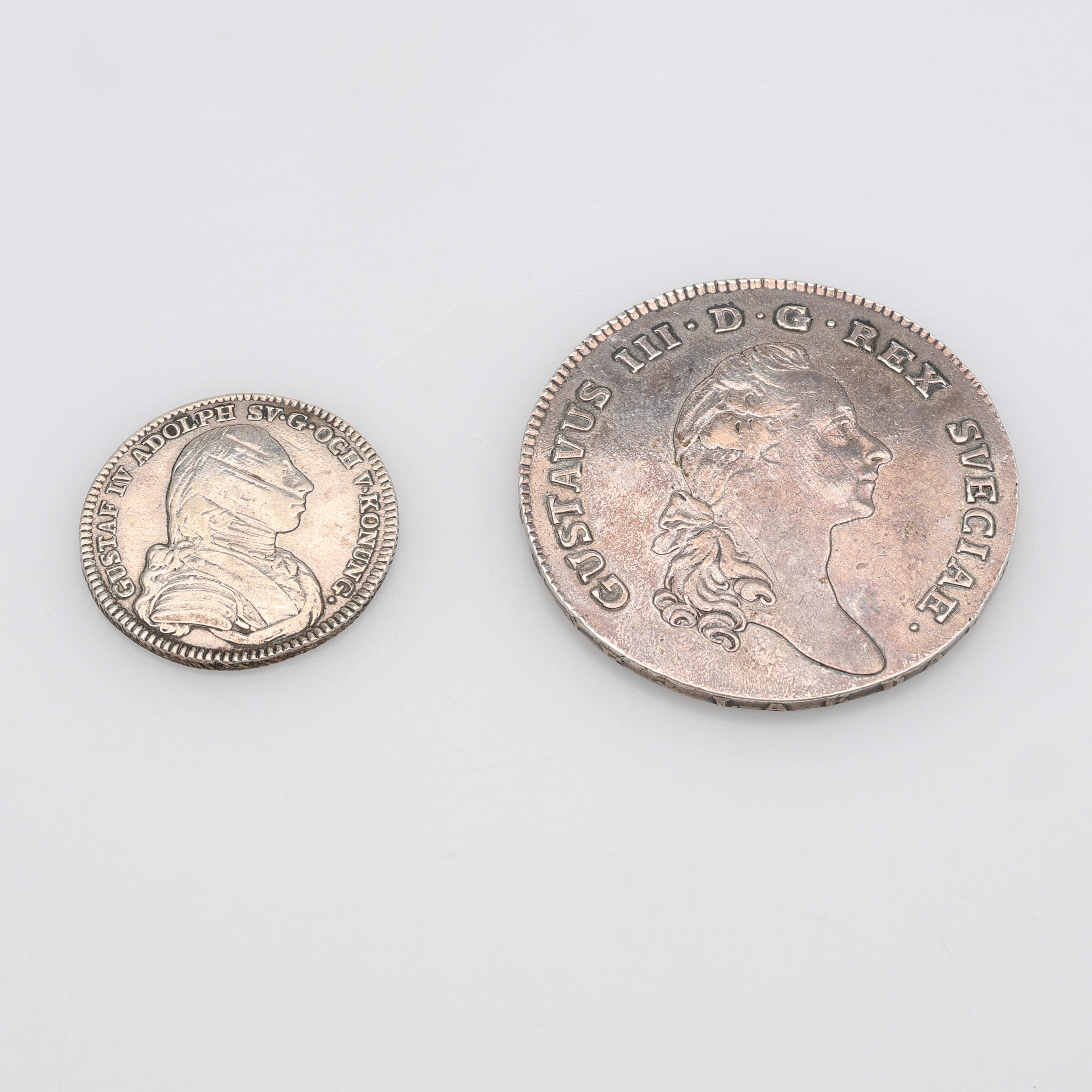
MYNT, 2 ST, 1/6 RIKSDALER GUSTAV IV ADOLPH, 1808 & 1 RIKSDAL, GUSTAV
09/29/2026
£241.03
Est: £227.23
Bring your auction to collectors worldwide!
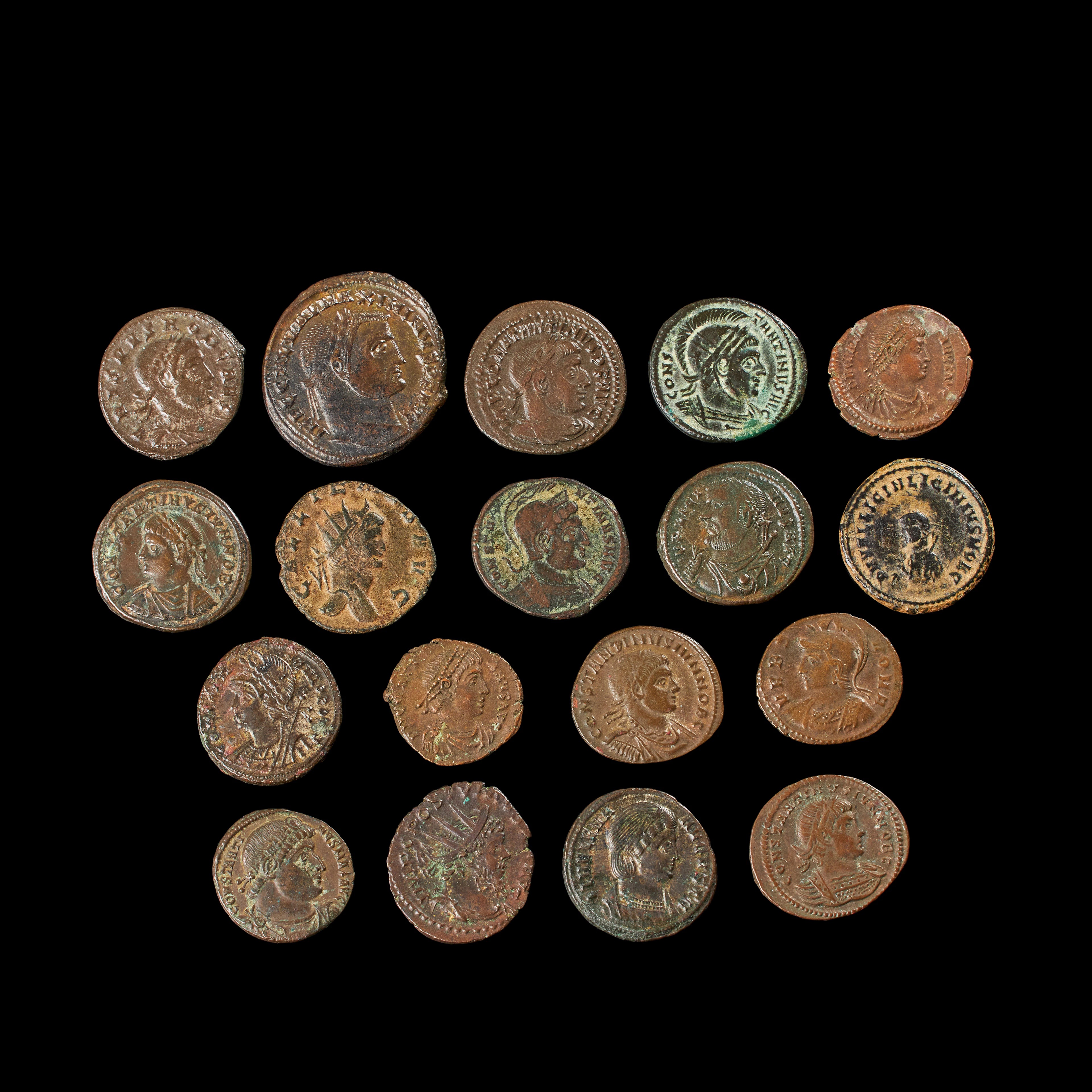
Get listed nowBRONSMYNT, 18 st, senromerska, 200-400 e Kr.
09/28/2026
£150.75
Est: £227.84
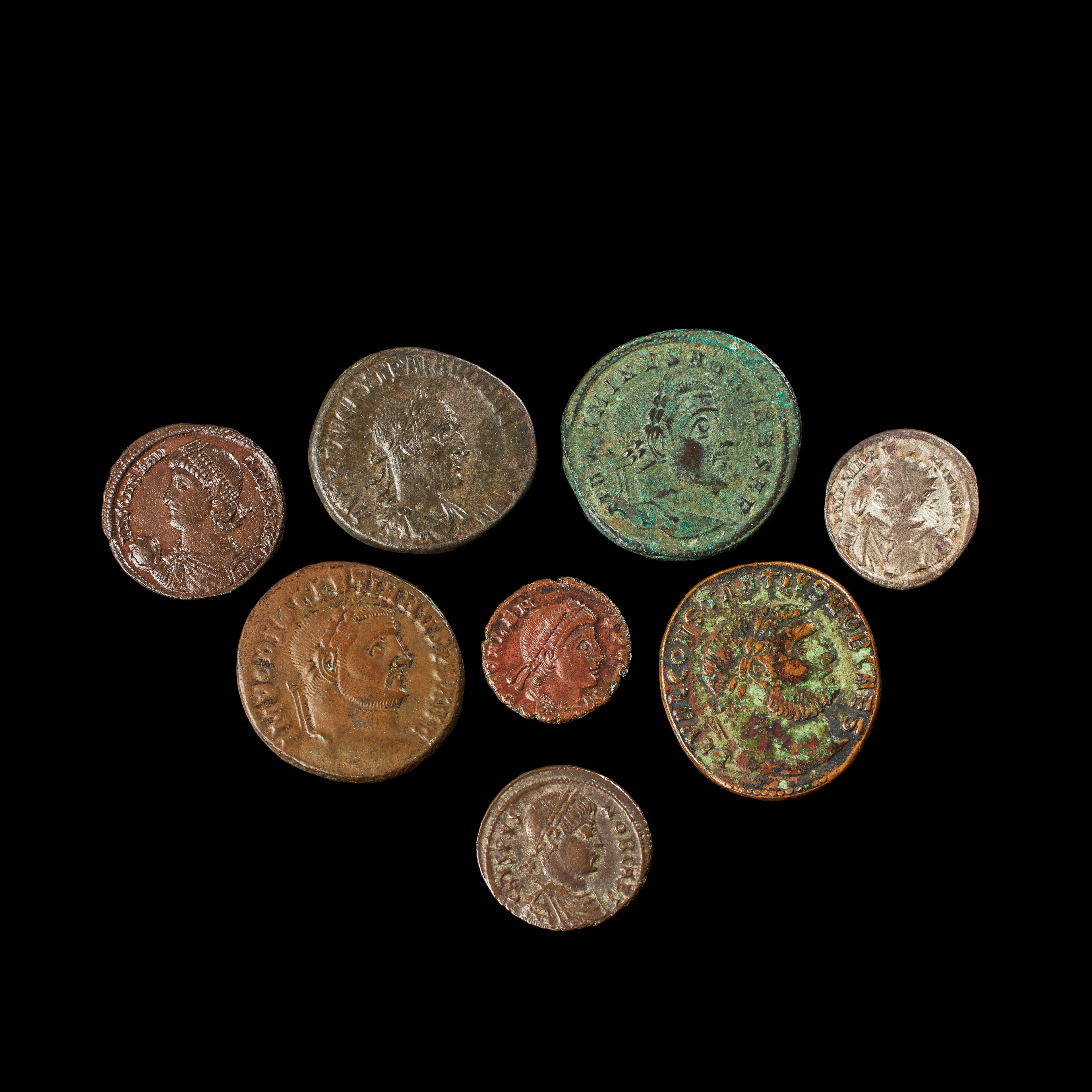
BRONSMYNT samt SILVERMYNT, 8 st, romerska, bl a Trajanus tetradrakma
09/28/2026
£150.75
Est: £227.84
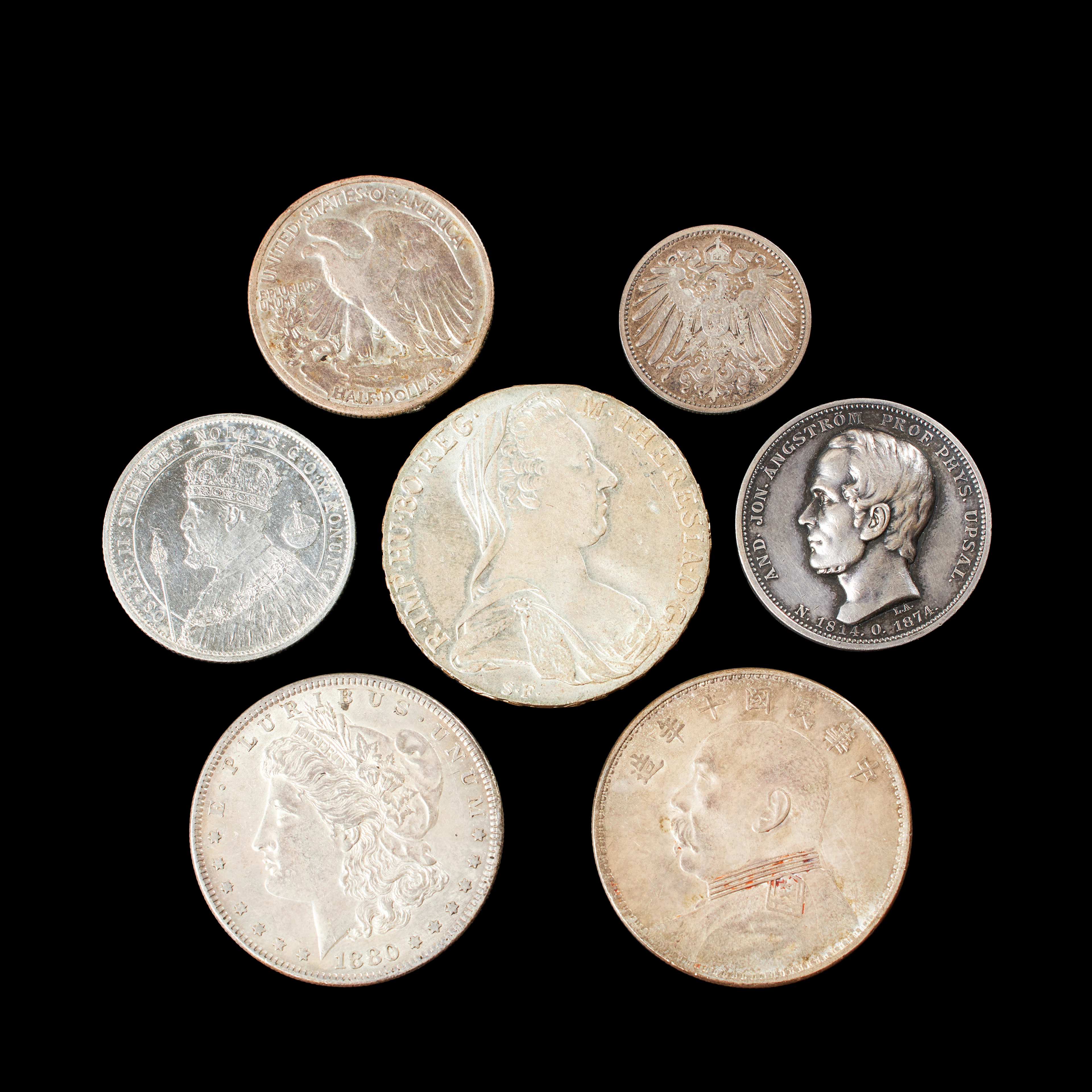
SILVERMYNT samt MEDALJ 7 st, 1 dollar 1880, 1/2 dollar 1939, Maria
09/28/2026
£226.13
Est: £304.35