Looking back on Rörstrand’s 300-year history is like stepping into a detailed story of Sweden’s aesthetic and cultural evolution. Some pieces have transcended their everyday function to become icons - symbols of their era, heirlooms and classics. Here are ten of Rörstrand’s most beloved designs:
1. Nationalservisen (Swedish Grace), the Swedish style icon
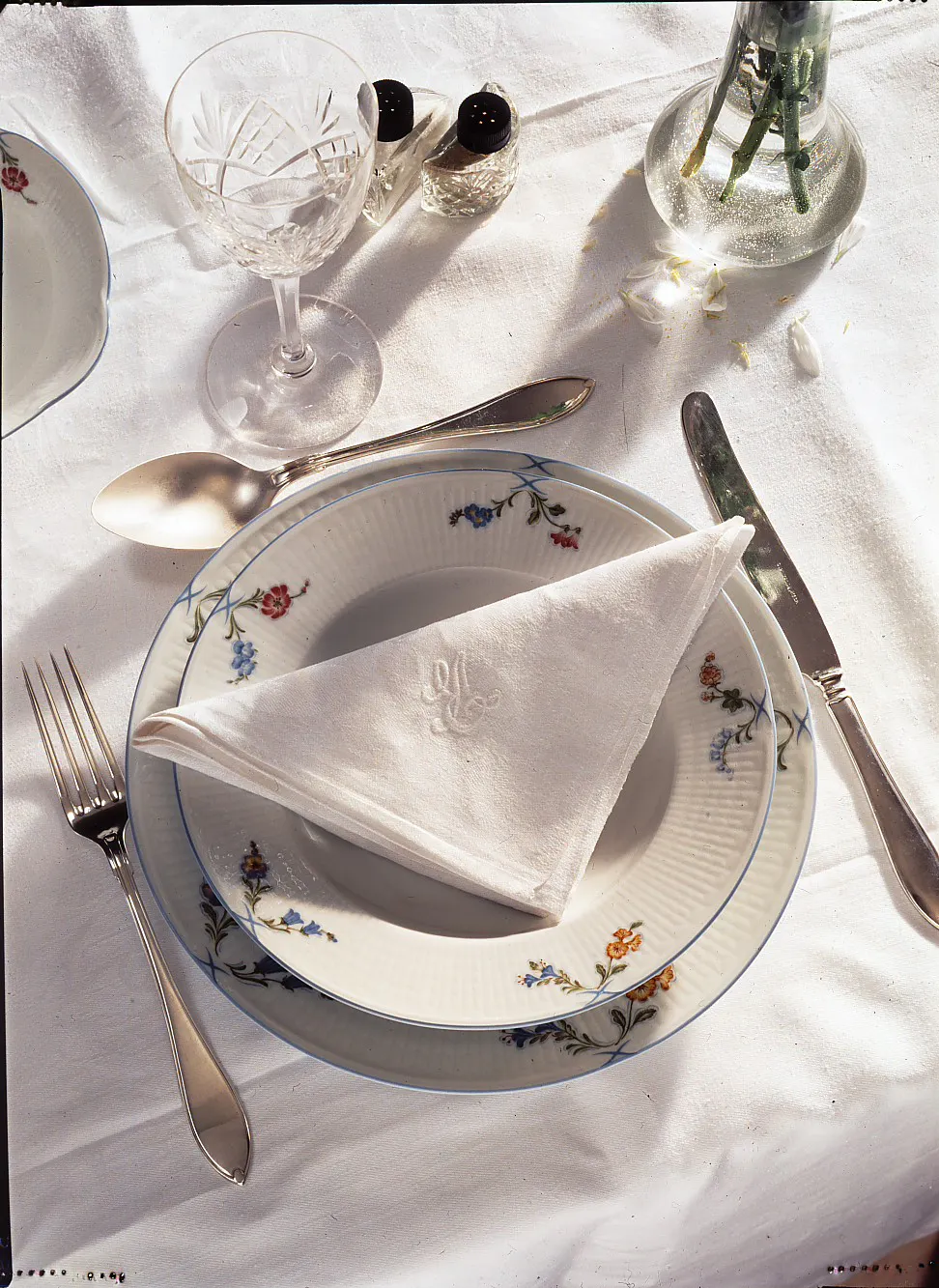
It all began in 1930 with Louise Adelborg’s stylised wheat relief, adapted from her 1923 vase Vase. She described the motif as “something Swedish, straightforwardly patriotic.” Launched at the Stockholm Exhibition the same year, Nationalservisen (National Service) quickly became a favourite in both royal residences and everyday homes. Over 200 different pieces were produced through the decades. In 1999, the service was relaunched as Swedish Grace, reinterpreted by Pia Törnell and Margot Barolo. It continues to evolve with new designs, including Winter by Katarina Brieditis and the children’s set My First Swedish Grace by Lina Ekstrand.
2. Grön Anna (Green Anna), from Neo-Rococo to folk tradition
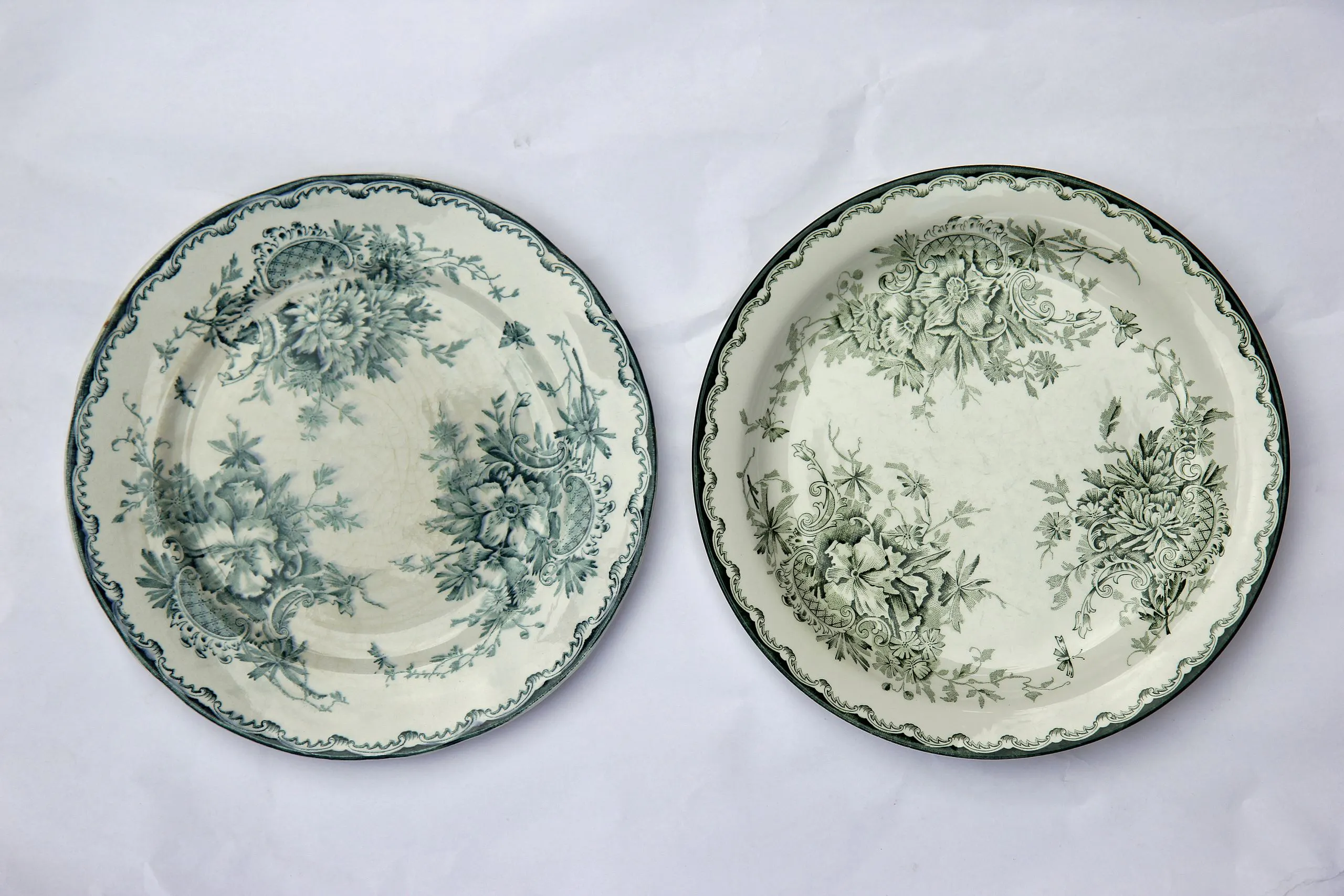
Green Anna is one of Rörstrand’s most enduring dinner services, with a history that goes back further than many realise. The pattern originated at the Gothenburg Porcelain Factory around 1898, under the name Anna. Rörstrand took over production in 1926 and continued until 1940. The design, rich in Neo-Rococo details, reflects a fascination with historical styles. Though the green version became the most widely known, editions in blue and purple were also produced in small numbers and are now prized by collectors. In 1966, Green Anna was revived in a simplified version by Carl-Harry Stålhane. It was manufactured in flintware and, from 1994, in feldspar porcelain until production ceased in 2002.
3. Ostindia, inspired by a shipwreck
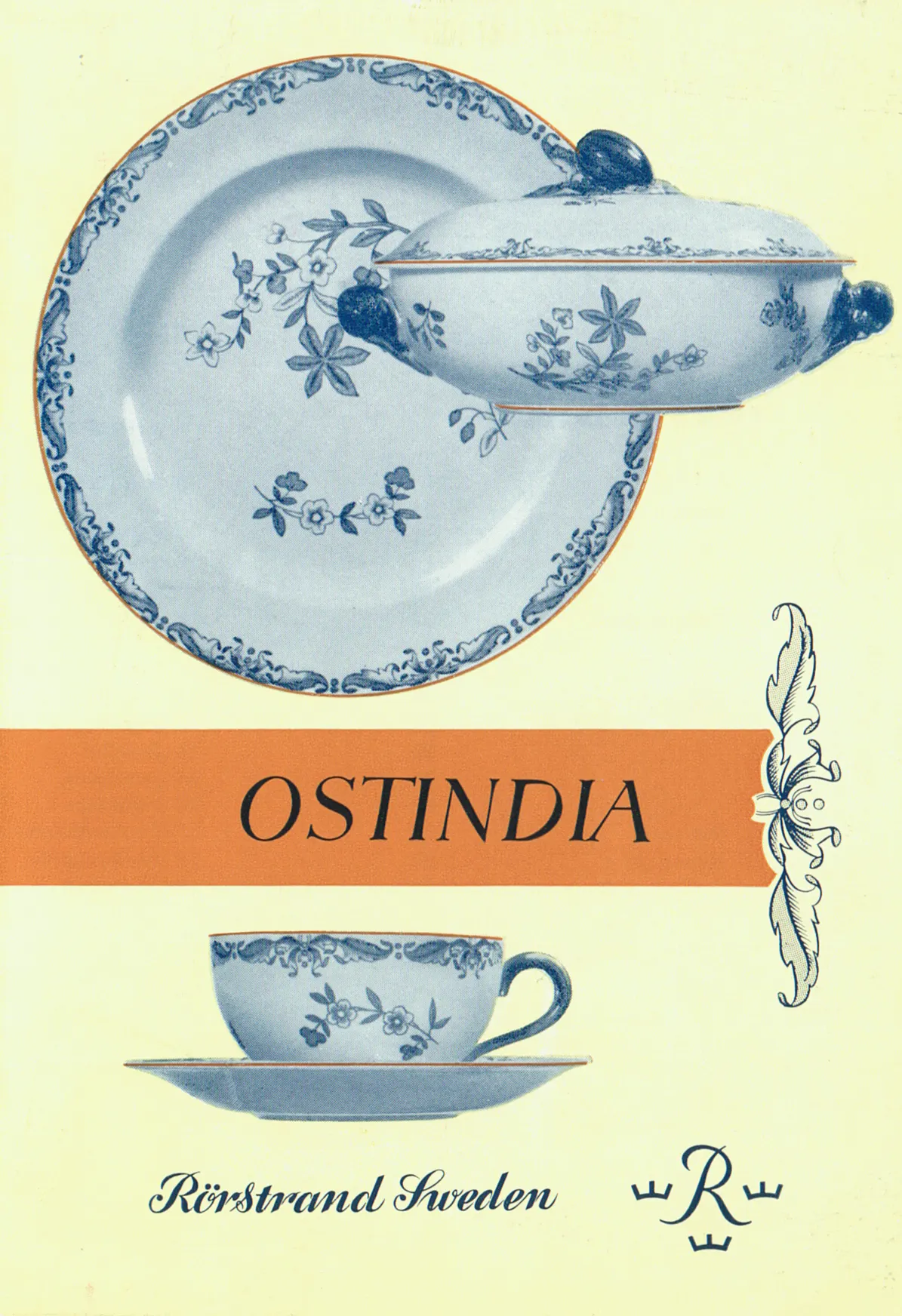
A fragment of porcelain from the 18th-century wreck of the East Indiaman Götheborg inspired the creation of Ostindia, launched in 1932. Its delicate blue floral pattern on a white background, paired with a form influenced by Eastern ceramics, quickly made it a favourite in Swedish homes. In 2012, the series was gently updated in a design that bridges tradition and the present day.
4. Koka Blå (Blue Koka), where function meets form
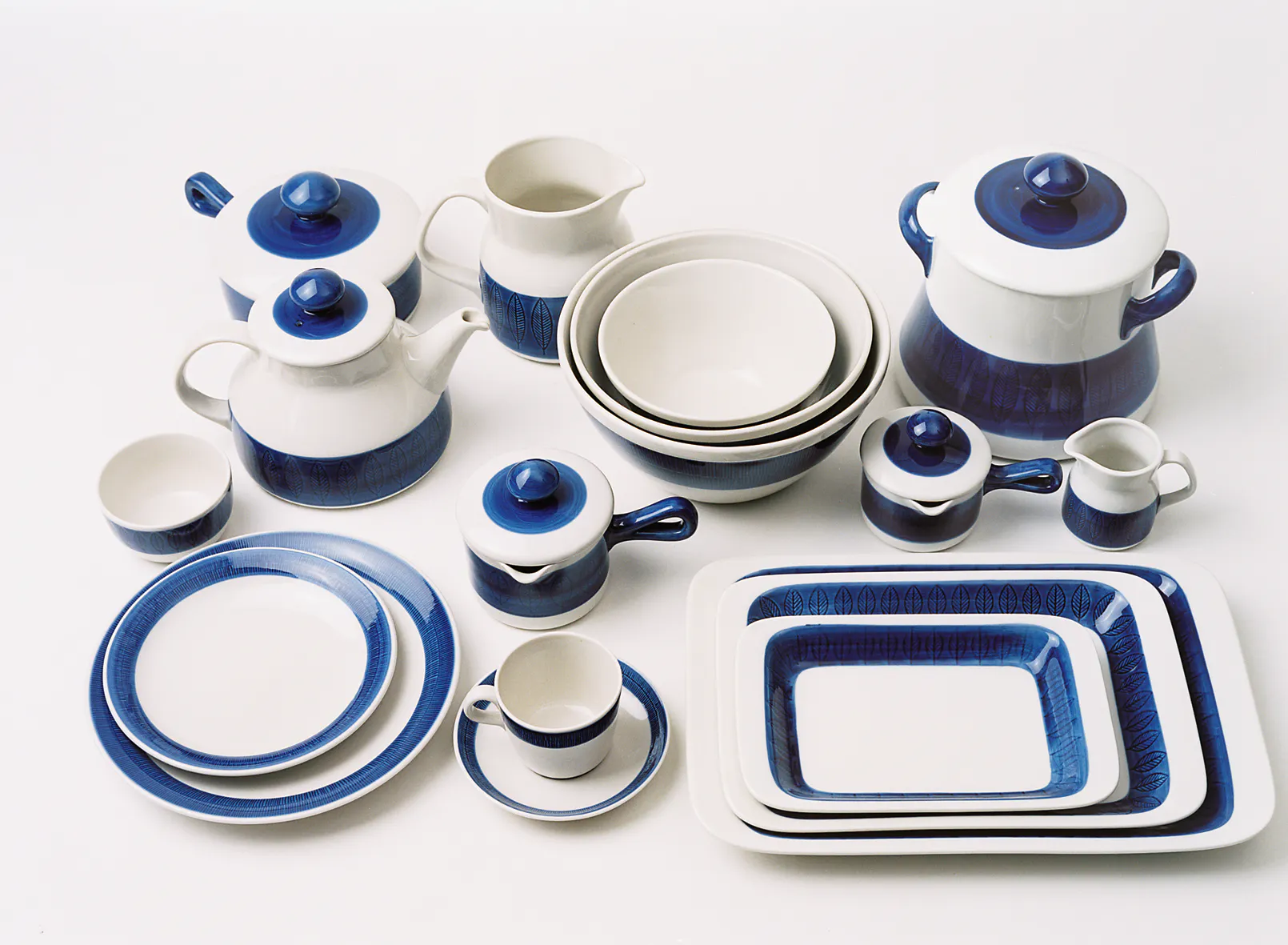
Designer Hertha Bengtson had a clear goal: to reduce the amount of washing up. The result was Blue Koka, a dinner service that could go directly from stove to table, something unusual when it was introduced in 1956. The range included coffee, tea, and dinner services, combining functionality with elegance. The decoration features relief bands in the form of lines, stylised leaves, or fish, all hand-painted with a blue stripe. Made in feldspar porcelain until 1988, the series had several variants. Brown Koka was launched in 1967, a rare Black Koka appeared in limited edition, and an olive-green version was created but never released.
5. Mon Amie, born on a rainy midsummer
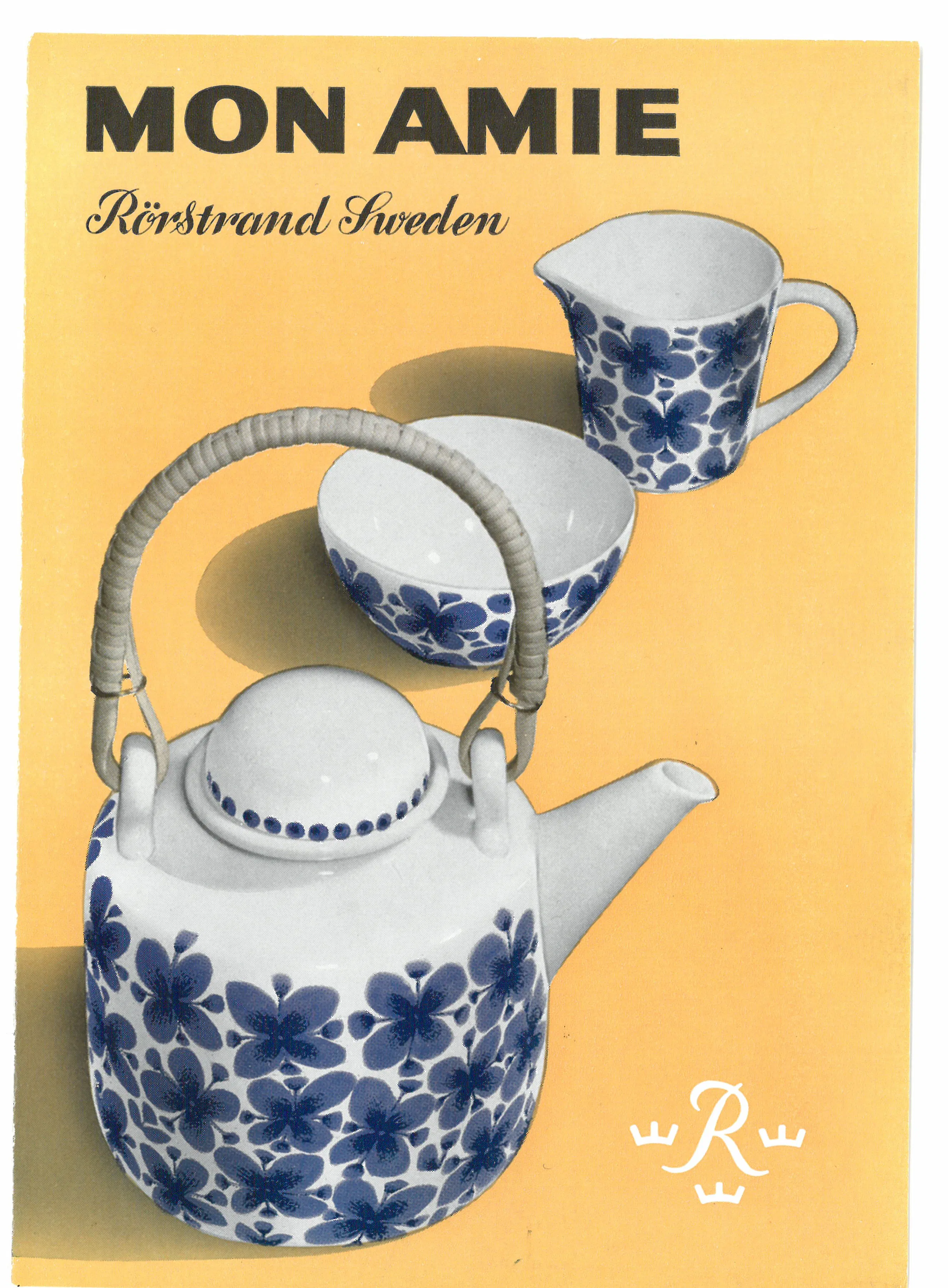
The pattern for Mon Amie was created on a rainy midsummer evening in Dalarna. Instead of joining the festivities, Marianne Westman stayed inside and sketched a sprig of water primrose. Though the flower is white in reality, she painted it blue, creating one of Sweden’s most recognisable tableware patterns. Mon Amie was launched in 1952 as a tea and coffee set and later expanded into a 40-piece dinner service. It was produced until 1987 and became strongly associated with summer, coffee, and celebrations. In 2008, the set was relaunched just in time for Westman’s 80th birthday. She was directly involved in the updated pieces and insisted that the flowers remain large, just as in the original. Some later items, designed with input from Hanna Werning, feature a version of the pattern with smaller flowers.
6. Picknick (Picnic), playful and colourful
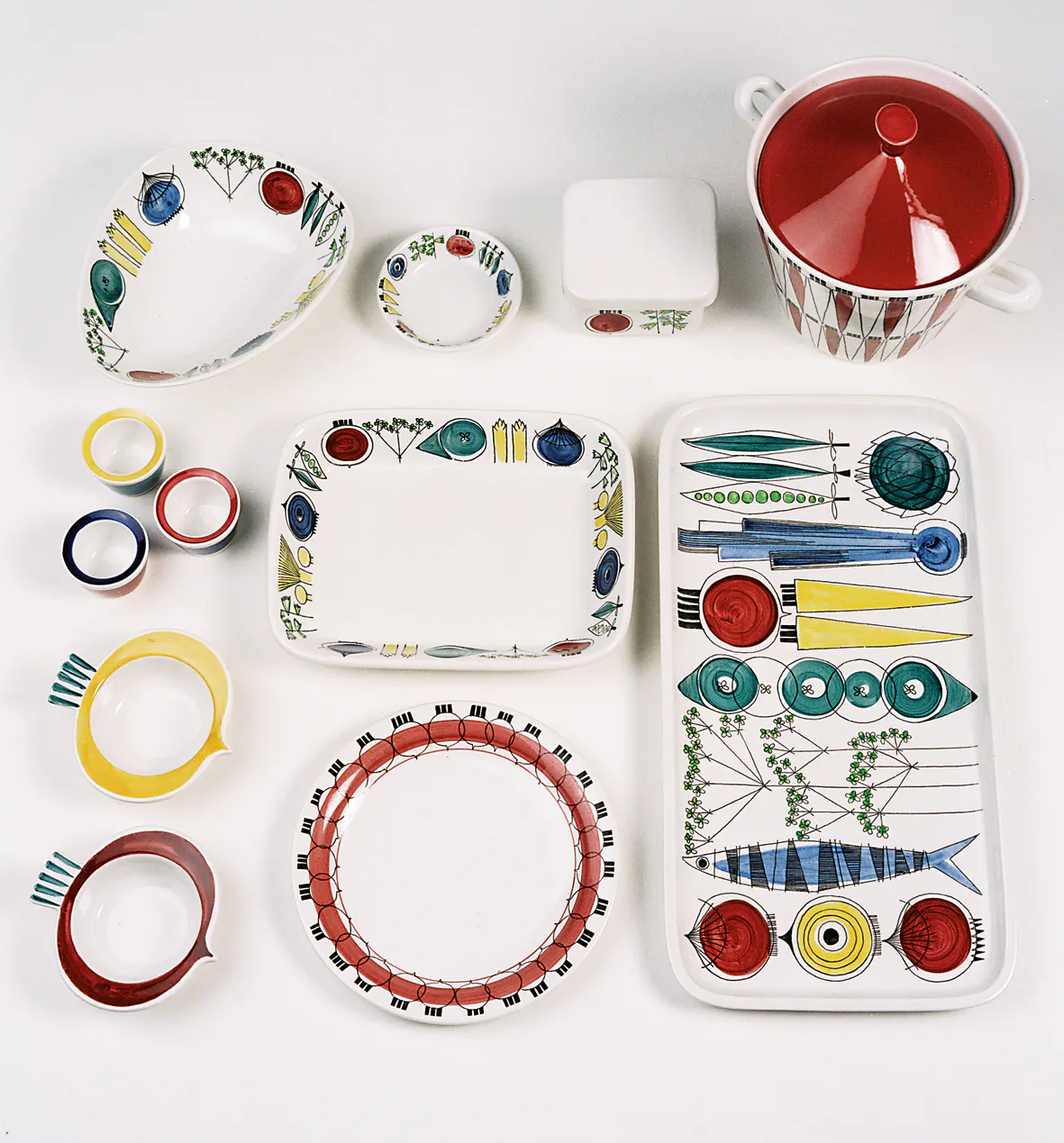
After the success of Mon Amie, Marianne Westman continued to innovate Swedish porcelain. Picnic, produced between 1956 and 1969, is one of Rörstrand’s most colourful tableware lines. Made in flintware and launched using Westman’s RH model (short for “Roliga Hushållsgrejer” or “Fun Household Things”), the design features black stamp outlines filled with hand-painted colours. The motifs include vegetables, herbs, and mushrooms. Spouts, knobs, and handles often have geometric shapes that reinforce the character of the design. At the height of her career, Westman’s designs made up 45 percent of Rörstrand’s sales. Picnic was likely her greatest commercial success.
7. Poppy Vase, Rörstrand's first international success
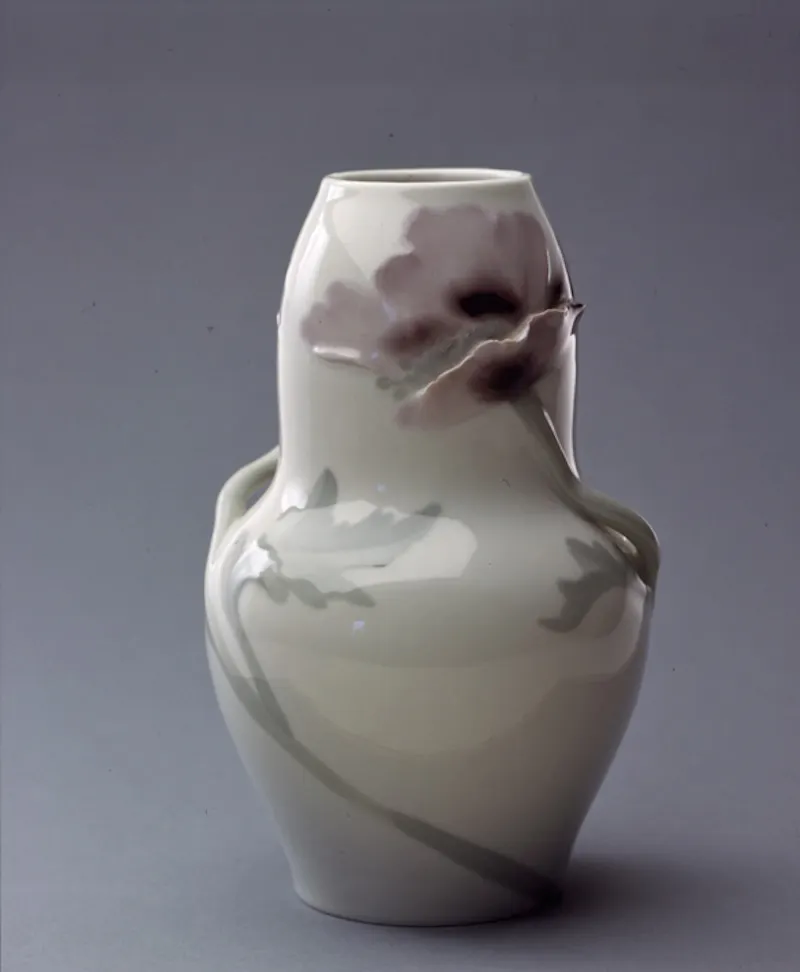
The Poppy Vase was created around the turn of the century by Alf Wallander, one of Sweden’s most notable Art Nouveau designers. Its softly curved shape, hand-painted poppies in subdued tones, and influence from natural forms gave it a unique aesthetic. The vase received international acclaim, earning gold medals at the 1897 Stockholm Art and Industry Exhibition and the 1900 Paris World Exhibition. These awards marked not only a milestone in Wallander’s career but also Rörstrand’s first international breakthrough.
8. Popkannan (Pop), the colour explosion of the 1960s
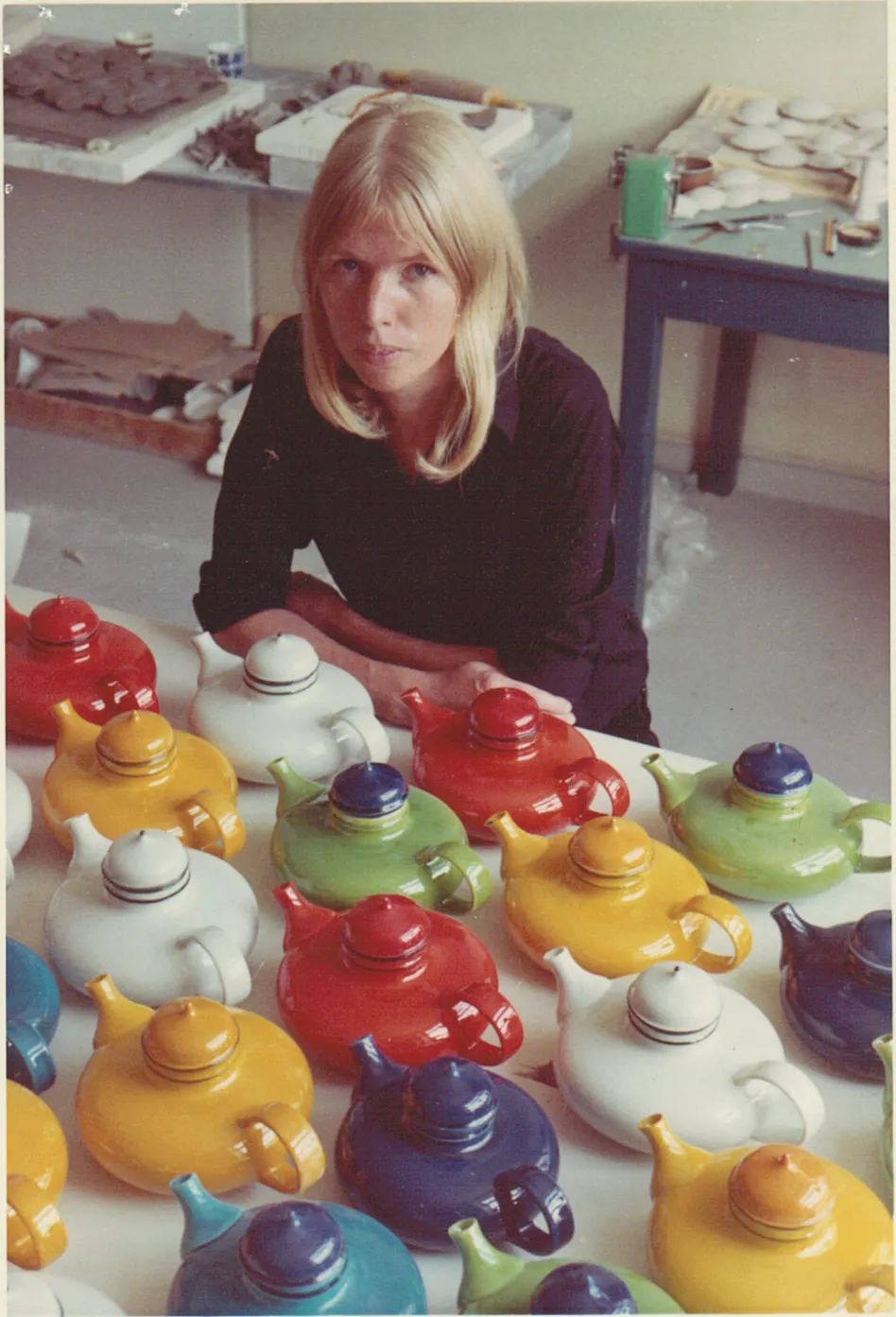
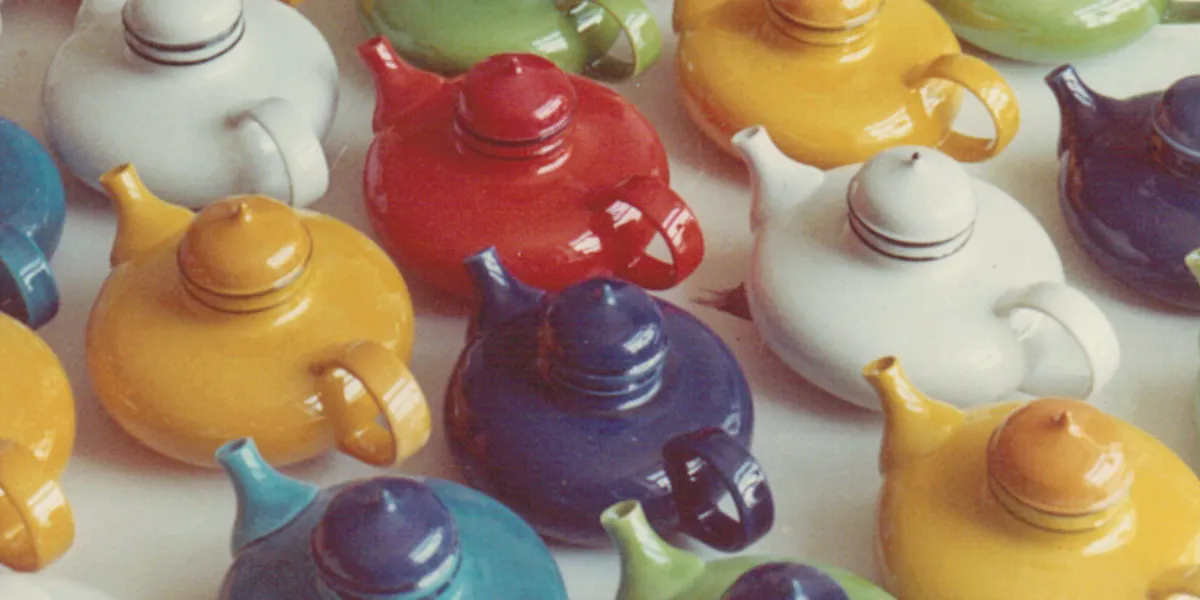
Inger Persson’s Pop jug, launched in 1968, captured the colourful and playful spirit of the 1960s. With its low, rounded shape and high-gloss enamel glaze available in six colours — orange, white, yellow, green, blue, and turquoise — it let users mix and match jugs and lids. This concept echoed the era’s idea of democratic design: stylish, accessible objects for everyday use. The jug was not always easy to pour from, but its bold shape and shiny surface made it a standout piece. Persson developed the design while staying at a French château. Today, the Pop jug remains a well-known part of Swedish design history.
9. Bali Girl, a figurine found in many homes
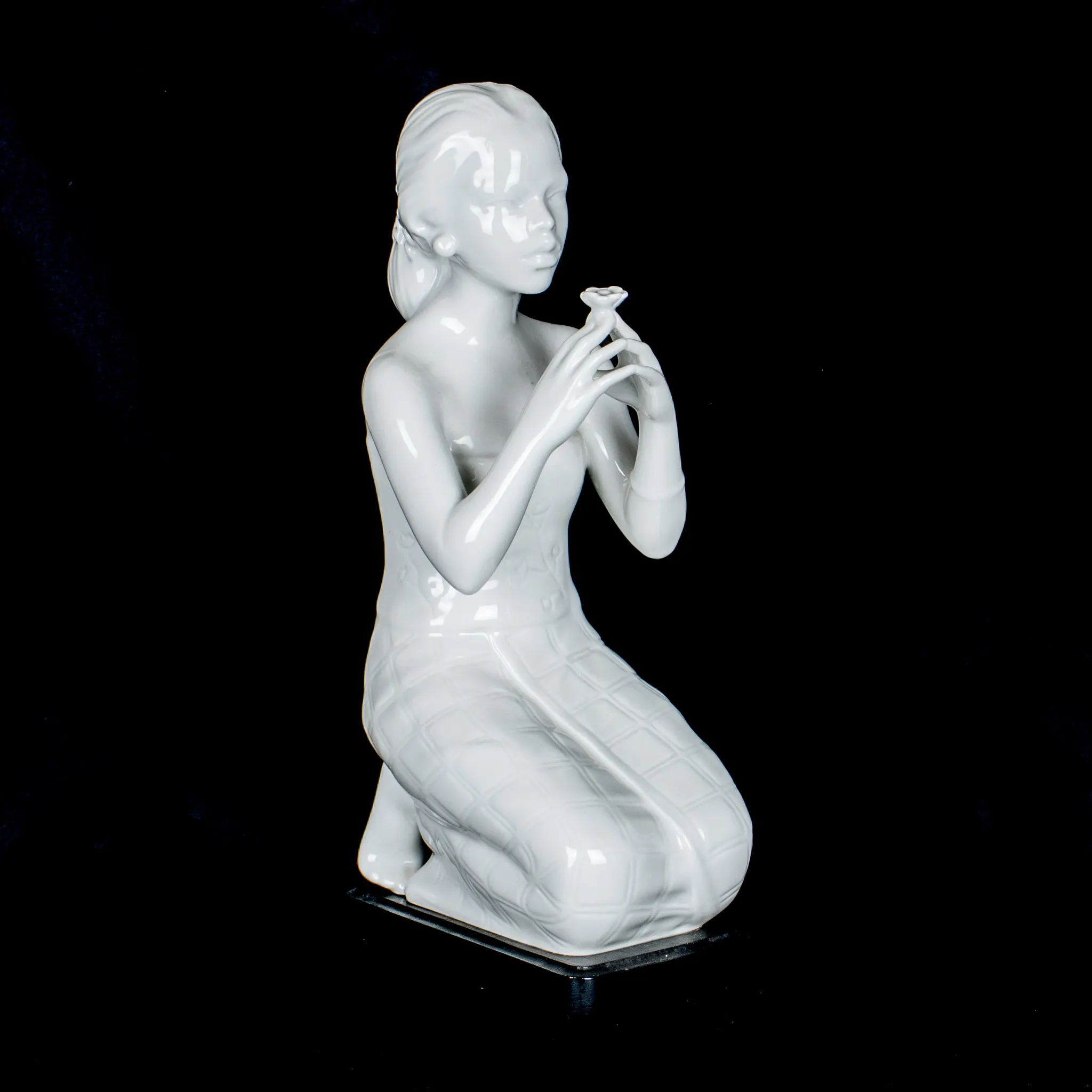
In the mid-20th century, figurines were popular in Swedish interiors and a significant product category at Rörstrand’s artware department. Bali Girl, made from feldspar porcelain in the 1940s, was created by Norwegian-Danish sculptor and ceramicist Harald Salomon, who worked at Rörstrand from 1943 to 1945. The figurine shows a seated girl gazing ahead, fingertips touching, and holding a flower that likely symbolises a ritual. She wears a floral vest, a chequered skirt, a bangle, and round earrings. Her hair is tied back with a decorative band and she is barefoot. For generations, The Bali Girl has decorated bookshelves and cabinets in Swedish homes, often placed on a wooden base.
10. Christmas Plates, a journey through time and landscape
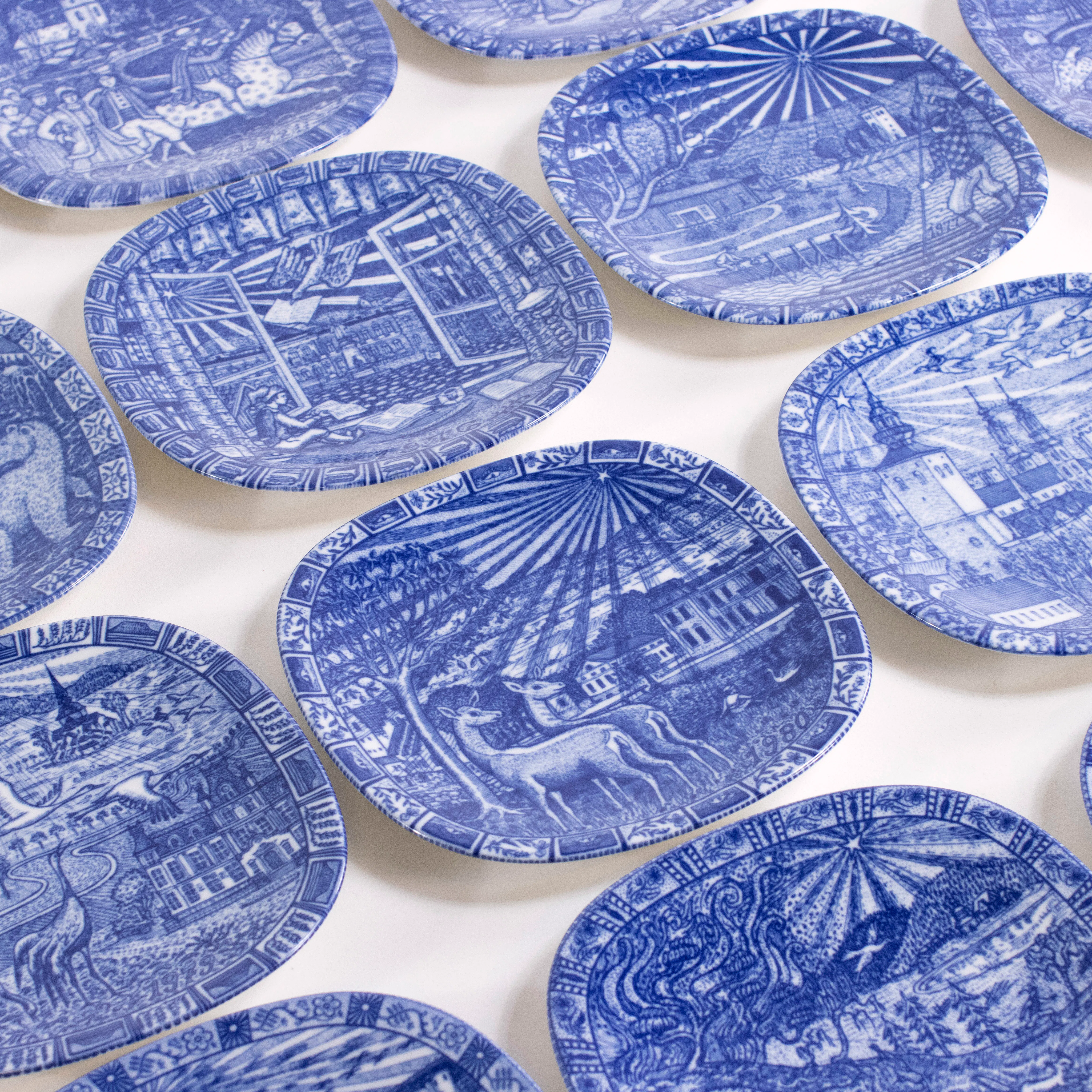
Gunnar Nylund’s Christmas Plates became a collector’s item soon after the first release in 1968, which featured the motif “The Christmas tree brought home from the forest.” From 1970 to 1999, the plates depicted scenes from Selma Lagerlöf’s The Wonderful Adventures of Nils, combining storytelling with regional landscapes. Their rounded, square format made them suitable for everyday use as well as display. Even today, particularly in Lidköping, sandwiches are sometimes served on these nostalgic plates.
What these ten Rörstrand designs have in common is their ability to outlast changing trends. They are more than decorative objects. Each one tells a story about Swedish design, skilled craftsmanship, and the rhythms of everyday life. Many continue to be produced in new editions, while others are carefully preserved in cabinets, antique shops, and personal collections.