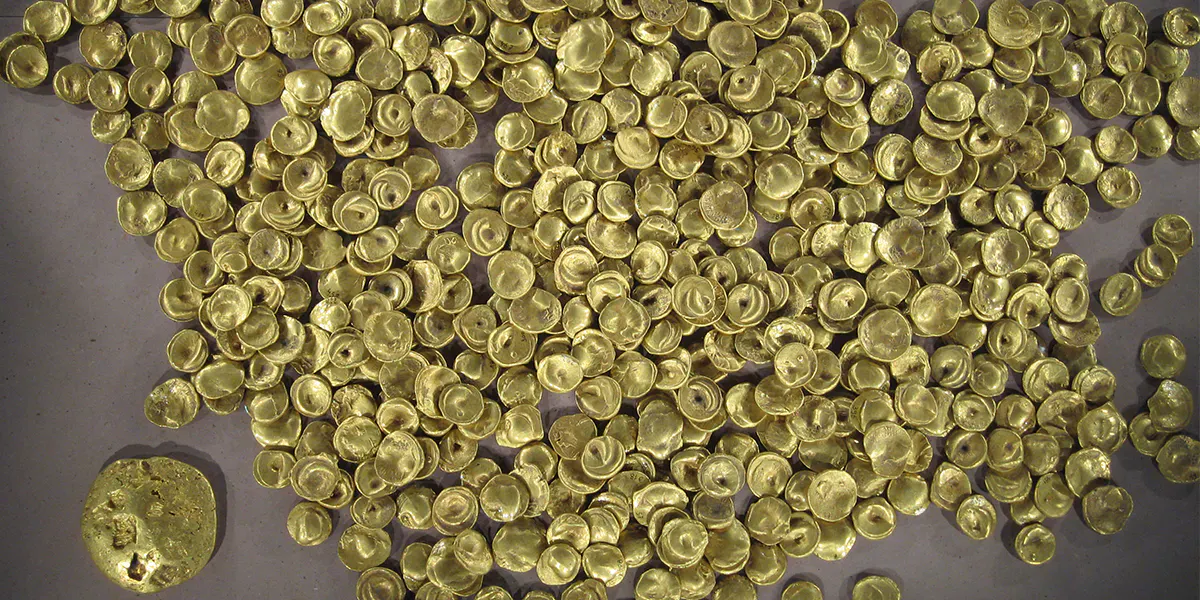
Around 1:30 am on 23 November, unknown thieves gained access to the Celtic-Roman Museum in Manching near Ingolstadt, Germany, and stole 483 gold coins and an associated cast, as well as three other coins. The main loot is the Celtic gold treasure from Manching, an archaeological find of the highest cultural and scientific value and the largest Celtic gold find of the 20th century. The theft was discovered by museum staff on the morning of 23 November and immediately reported to the police.
The security case in which the treasure was displayed had triggered an alarm, which did not reach the associated security company due to a failure of the telephone and internet connections. The failure seems to be connected to the theft, as shortly before the burglary there was "damage to a fiber optic distribution point of Deutsche Telekom in Manching," as the Bavarian State Criminal Police Office, which put together a special commission to investigate the case, stated in a press conference.
See also: 10 Major Art Thefts in 10 Different Years
In prehistoric times, Manching was home to a Celtic settlement with about 10,000 people. The gold treasure from Manching was a hoard find that was hidden by its owner in connection with a military conflict or other crisis.
Interestingly, the gold hoard does not consist of coins minted locally, but by the Boii, a Celtic tribe in Bohemia (now part of the Czech Republic), suggesting extensive trading links between Manching residents and that area. Overall, the gold treasure weighs 3.7 kilograms, which corresponds to a material value of a quarter of a million euros. The sale value could even be six times as high.
See also: Money Talks: Ancient Roman Coins
It is feared that the perpetrators are only after the material value and will melt down the gold coins, an irretrievable loss for the area's cultural heritage.
Want more news articles like this straight to your inbox? Subscribe to our free newsletter!
In May of this year, illegal metal detectorists stole several Celtic metal objects from an archaeological excavation site in Manching. And the gold treasure itself fell victim to a robbery shortly after its discovery in August 1999, when detectorists stole 31 coins that were still in the ground, but were later seized when an attempt was made to sell them.