On the evening of 4 August 2020, two explosions in quick succession shook Lebanon's capital, Beirut. Triggered by a fire, 2,750 tons of ammonium nitrate had detonated in a storage room in the port. In addition to the resulting fires in the immediate vicinity, the entire city was affected by the shock wave from the second detonation: at least 207 people died and more than 6,500 were injured. For 300,000 more, their houses and apartments became uninhabitable.
One of the damaged houses was the Sursock Palace, the residence of the prominent Lebanese noble Sursock family, built in 1860. Much of the palace was destroyed due to damage to the roof and windows caused by the explosion. One of the residents of the house at the time, Lady Cochrane Sursock, died a short time after from injuries sustained in the disaster.
See also: Artemisia Gentileschi: Passionate Feminist Artist
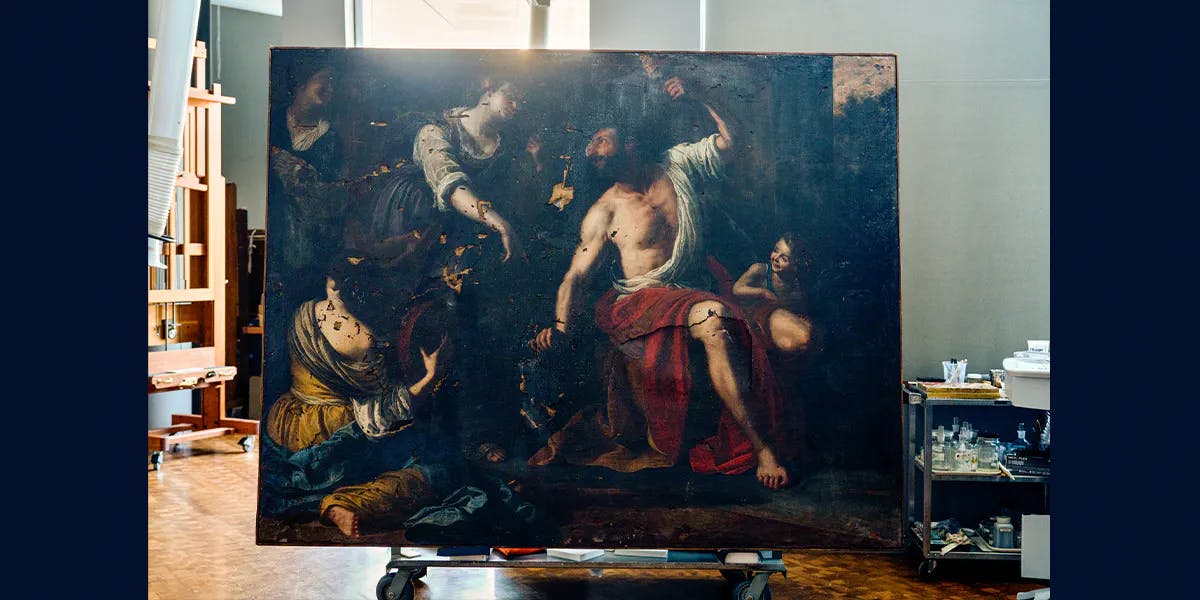
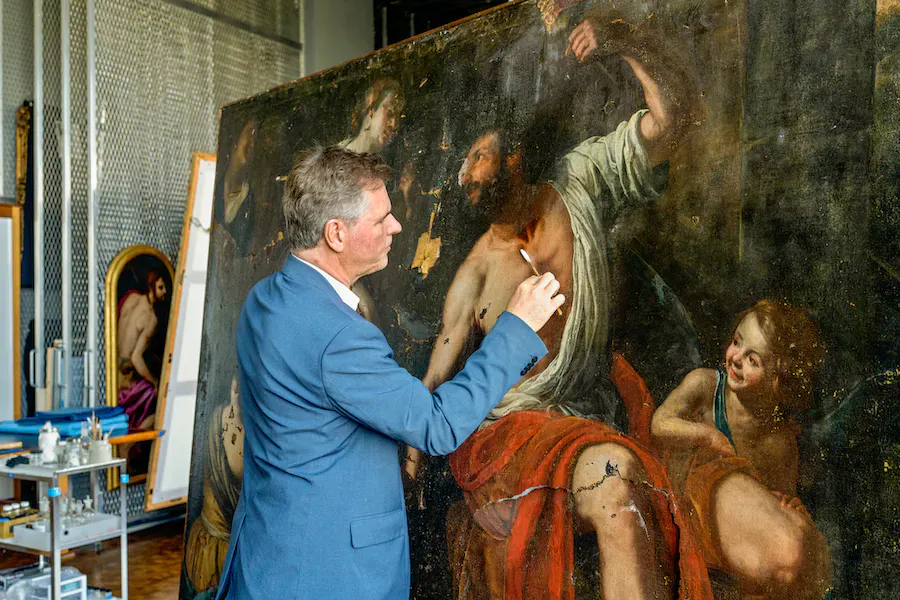
A few weeks after the explosion, art historian Gregory Buchakjian wrote an article for Apollo Magazine detailing his visits to the ruined Sursock Palace and the Sursock Art Museum across the street. In the article, Buchakjian presented research he did in the 1990s, but never published, about a lost masterpiece by the Italian Baroque painter Artemisia Gentileschi that was found in the Sursock Palace.
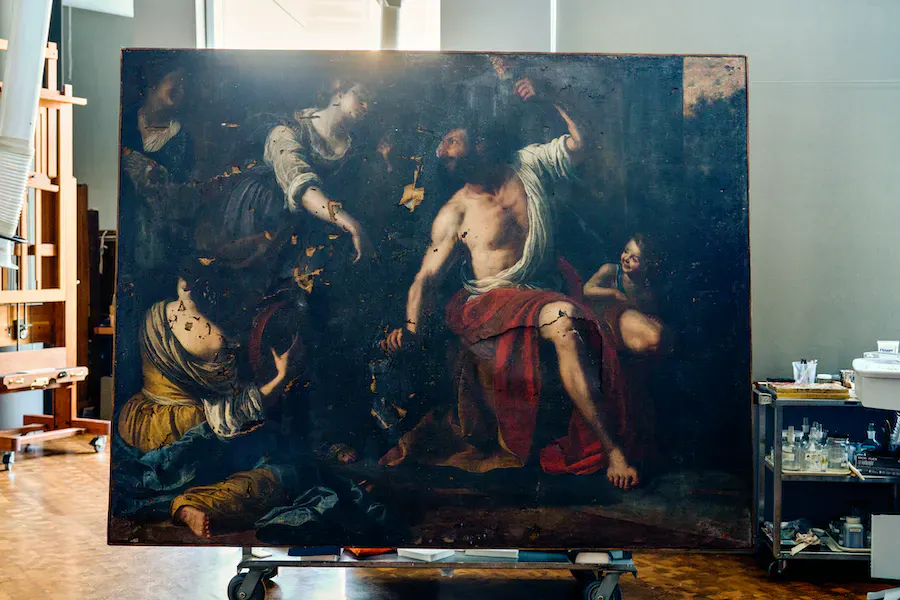
The painting in question depicts the Greek myth of Hercules and Omphale, in which the famous hero is condemned to become a slave for a year to the Lydian queen Omphale. However, the two fall in love with each other and marry.
See also: Artemisia Gentileschi: 5 Extraordinary Facts
Art experts agree that this is indeed an original work by Gentileschi. She had twice dealt with the subject of Hercules and Omphale. The first painting was commissioned by the Spanish king in 1628, but it was probably destroyed in a fire in the 18th century. The painting from the Sursock Palace is therefore very likely to be the second version that Gentileschi executed in the 1630s.
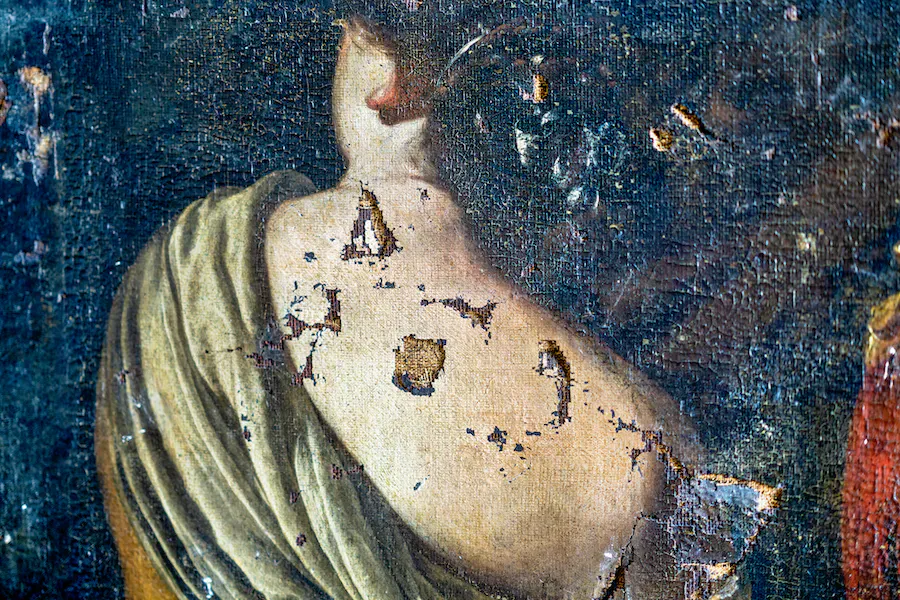
“Hercules and Omphale is a large scale, multi-figure, complex, and ambitious composition,” explains Davide Gasparotto, senior curator of paintings at the Getty Museum. “Woman painters in the 17th century were mostly practitioners of portraiture and still life. Few dared to approach the complexity of history painting, which required a higher degree of technical skills, an appreciation of literary poetics, and knowledge of a vast body of other artworks upon which to draw. Since the inception of her career, Artemisia Gentileschi was an ambitious history painter and she competed at the same level of her male colleagues, gaining a reputation that spread all over Europe.”
Want more articles like this straight to your inbox? Subscribe to our free newsletter!
See also: An Artemisia Gentileschi Painting is Rediscovered
Artemisia Gentileschi's Hercules and Omphale is to be exhibited as a loan to the Getty Museum at the end of 2023 until the Sursock Palace is fully renovated. It will be shown together with Lucretia, another work by the Baroque painter, which the museum acquired in 2019 for the record sum of $6.1 million.