
HVMC's upcoming auctions on 25 and 26 September will combine several categories and span several centuries of art history. Experts have collected wonders from ancient civilisations, master paintings, furniture and art objects.
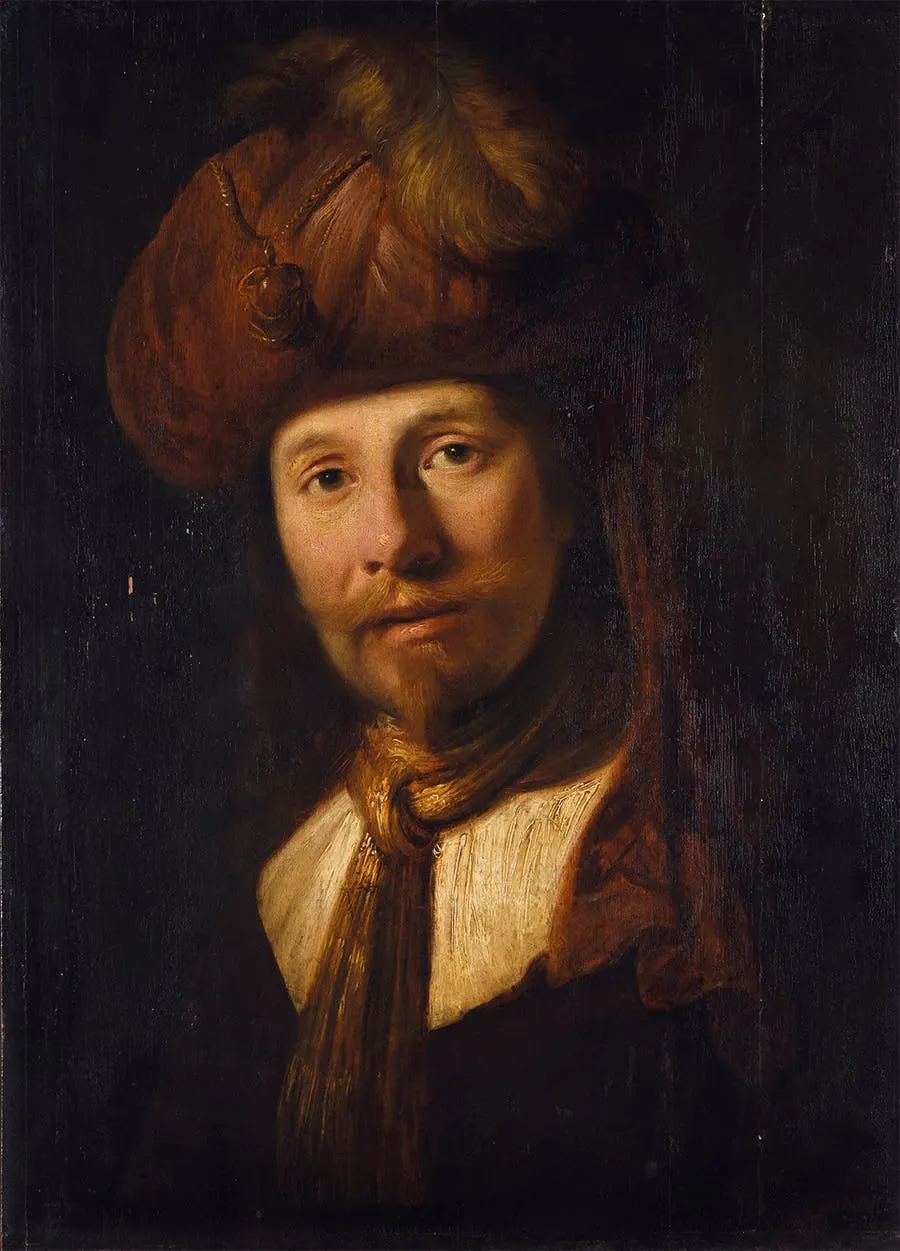
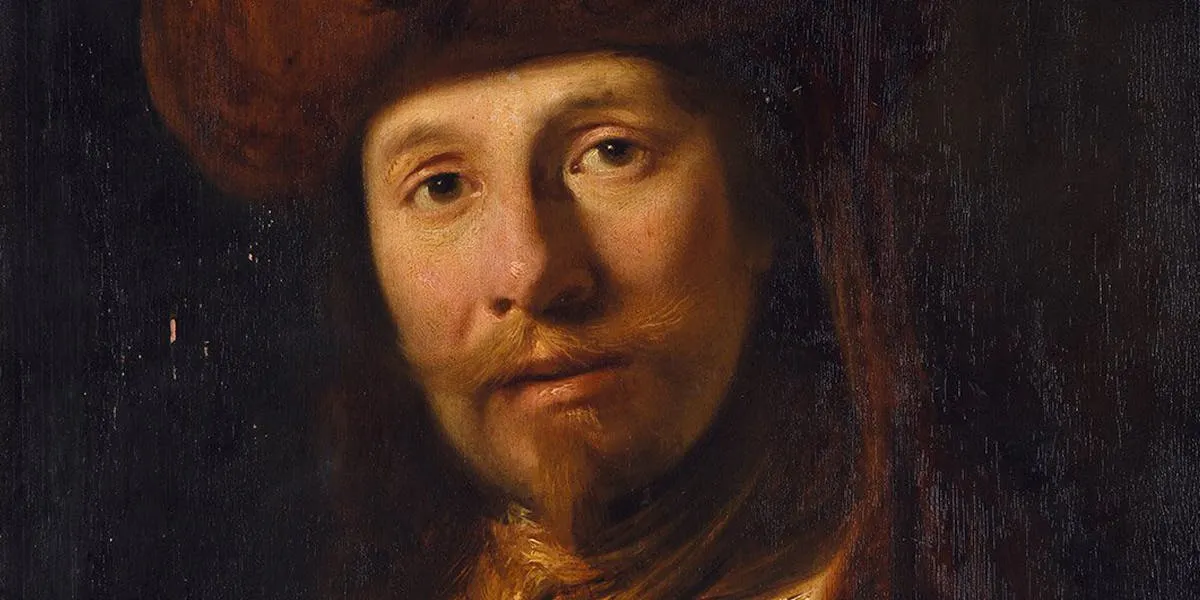
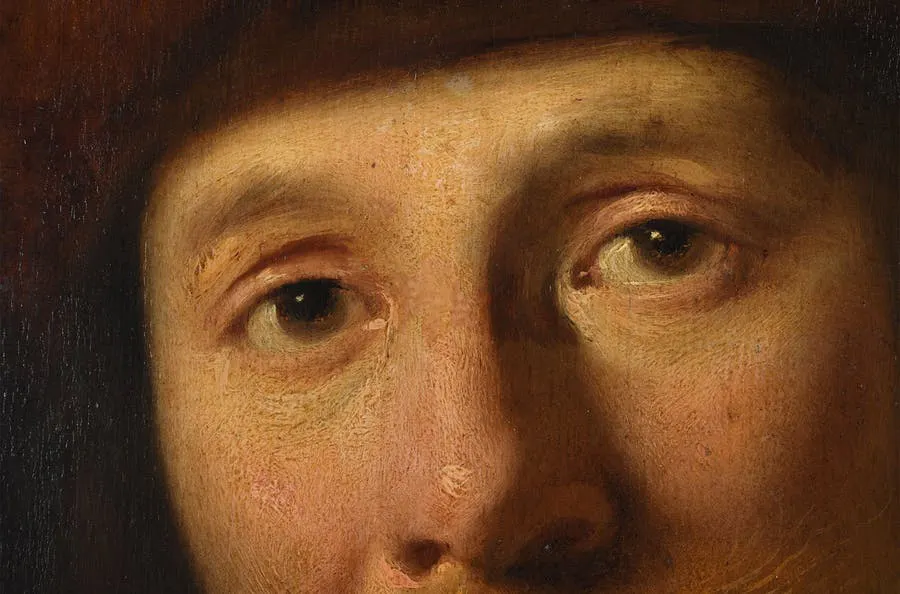
Among the selection of old paintings is Portrait of a Man in a Turban, a work on panel by the Dutch Golden Age painter, draftsman and engraver Cornelis Bisschop. Known for his genre scenes, allegorical scenes and portraits, Bisschop worked under Bol's tutelage in Amsterdam, before returning to his hometown of Dordrecht. Painting in the most diverse genres, he has often been compared to his contemporary Nicolaes Maes, who was to exert a very clear influence on him since there are similarities in several of his family portraits and his allegorical paintings.
The work recalls the portraits of Middle Eastern men wearing turbans that Rembrandt and his pupils developed in the 1630s. Ferdinand Bol, master of Bisschop and himself a pupil of Rembrandt, painted dozens of subjects with turbans and adorned with gold.
Themes of imaginary Persian or Ottoman princes were in vogue at this time, due to the new relationship between the Batavian Republic and its colonies. In a sense, these portraits can be considered expression studies because they blend a portrait based on a realistic likeness with the depiction of an Orientalist stereotype.
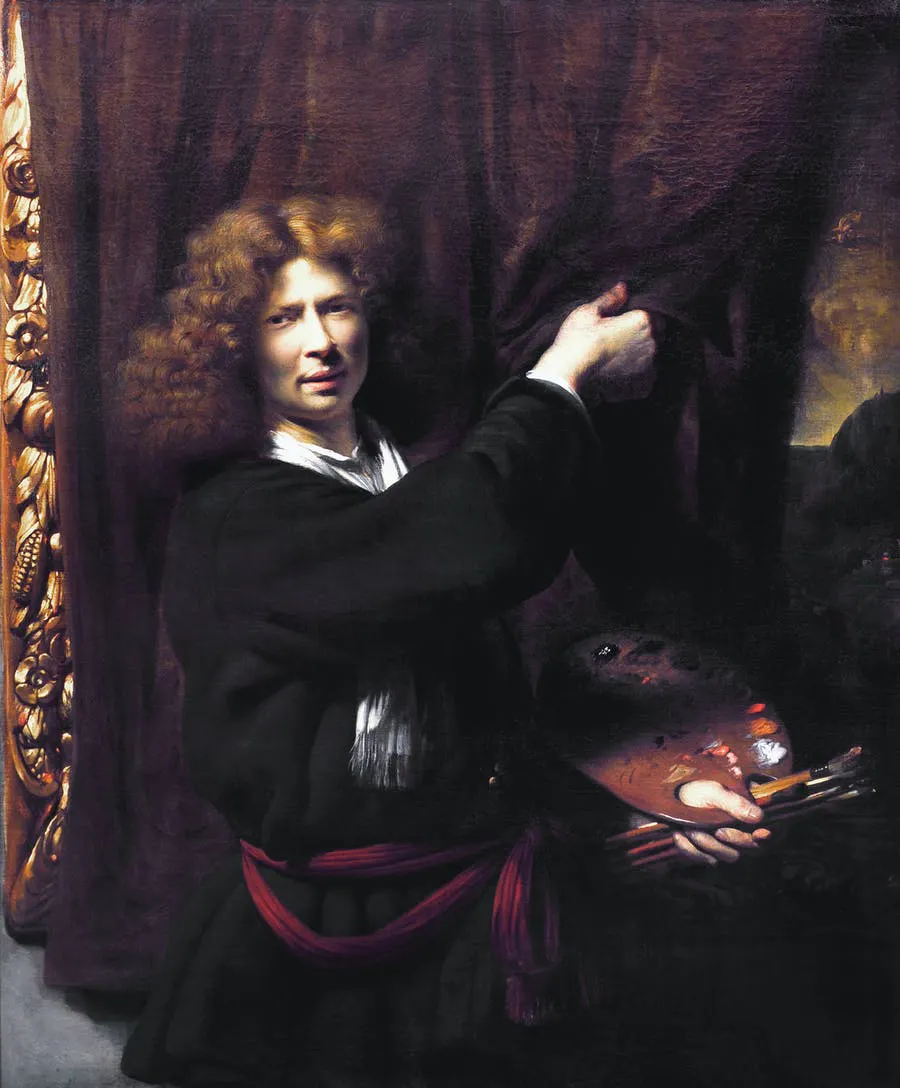
A follower of Maes and close friend of Pieter De Hooch (with whom he was often confused), Bisschop was the first to paint in trompe-l'oeil and thus occupies an important place in the history of Dutch painting. Portrait of a Man in a Turban had long been attributed to Gerrit Willemsz Horst, before being reattributed to Bisschop by Sumoski. It carries an estimate between €40,000 and €60,000.
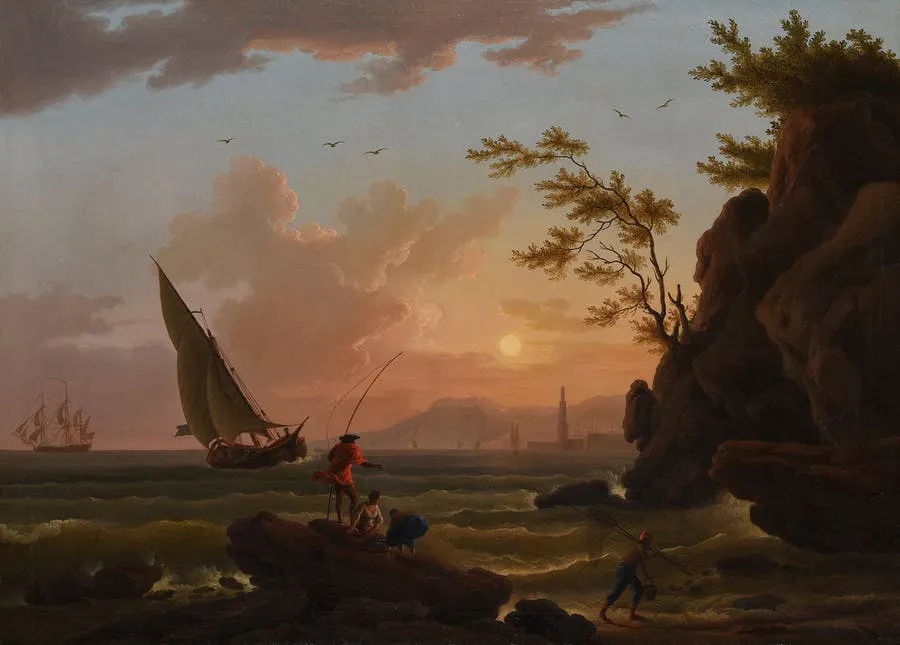
The selection will also include Fishermen on the Shore, near the port of Marseille, an oil on canvas attributed to Charles-François Lacroix of Marseille, a famous painter of landscapes and seascapes. A student of Claude Joseph Vernet, he produced paintings in the style of his master, but also in that of Jean-Joseph Kapeller or even Henry Arles. Born around 1700 in Marseille, Lacroix spent a good part of his life between Italy and Provence, exhibiting in Rome successfully in the 1770s.
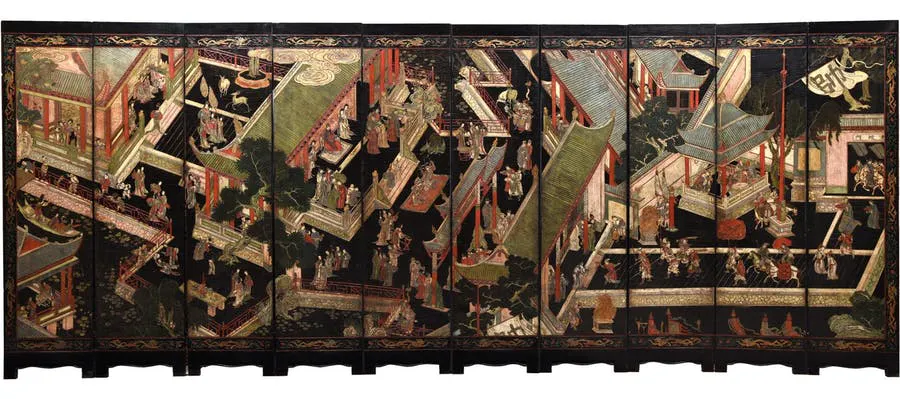
As for Asian art, there is a sumptuous Chinese screen from the Kangxi period dated to the year of Dingmao, 1687. Composed of ten sheets in Coromandel lacquer, the screen was a commissioned piece made in honour of General Meng Wengjin. One of the faces is finely decorated with a delegation around a palace, which is located not far from a small lake with lotus flowers. The scene illustrates the reception given by General Guo Ziyi, known for having saved the Tang Dynasty. The outline is dotted with dragons and plants, while the other side features calligraphy designs in xingshu illustrating a poem written by scholar Gong Zhang.
From the Château de la Barben and the collections of the Marquis de Forbin, this exceptional two-piece cabinet was produced by Thomas Hache, a Toulouse cabinetmaker born in the second half of the 17th century. The Marquis de Forbin (Gaspard Palamède de Forbin de la Barben) was a contemporary of Hache and cousin of Claude de Forbin, the sponsor of the large flat desk from the Regency period produced by Hache between 1720 and 1730.
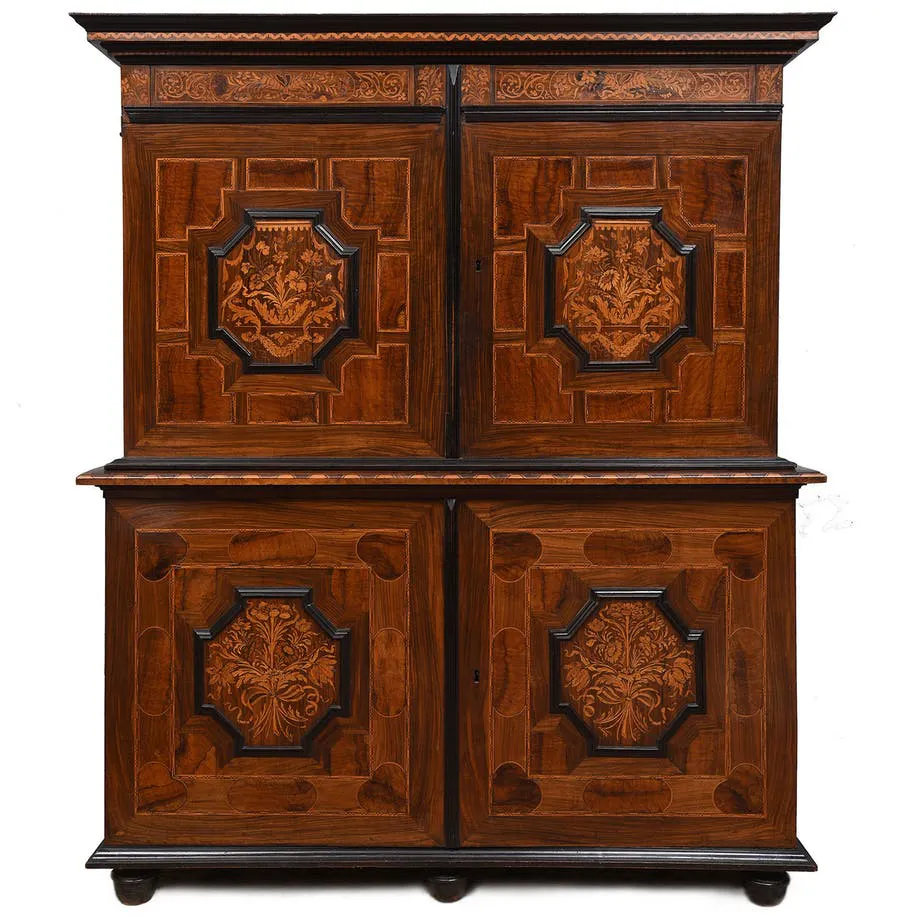
This copy has a composition identical to the two other two-piece cabinets by Hache, one of which is now kept at the Museum of Tapestries in Aix-en-Provence. Inlaid with flowery branches and various patterns, the furniture presents on the sides reserves in the shape of a heart, a circle and cartridges, as on the other two versions. These two-piece works reveal the first technique of the young Hache, who worked for the nobility of Provence from 1685, including the families of the Forbin de la Barben and that of the Marquis de Mirabeau.
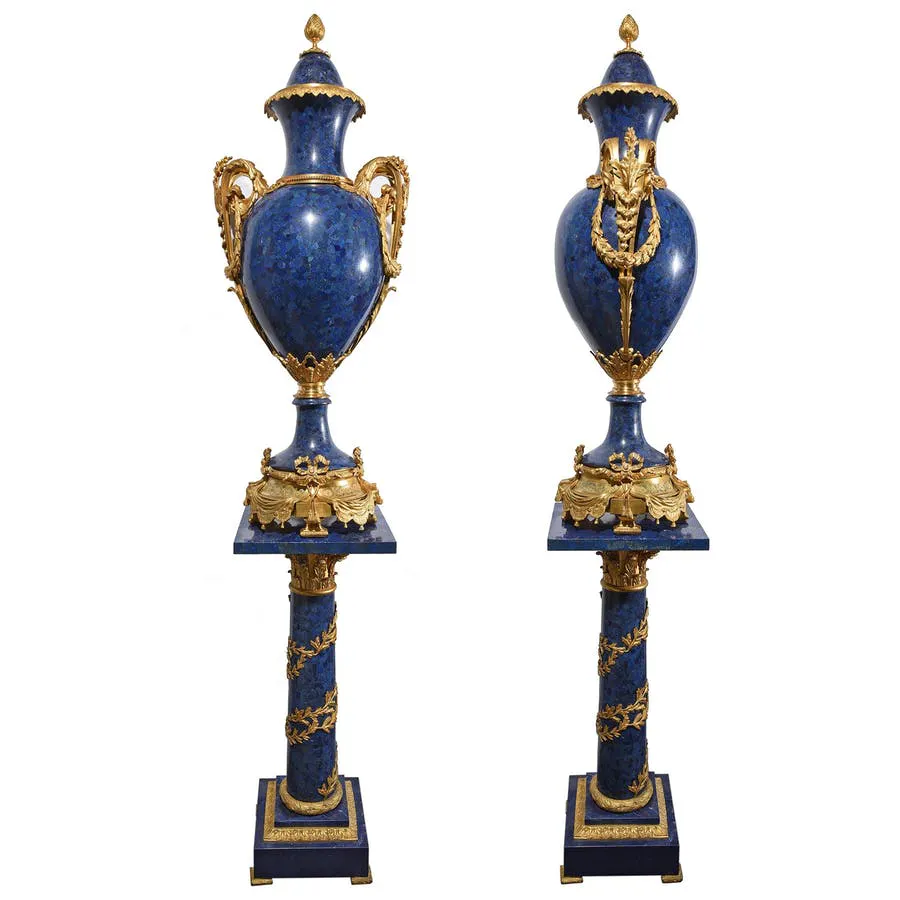
The selection of decorative art objects will include, among others, a pair of monumental lapis lazuli and gilded bronze vases resting on columns surrounded by wreaths of oak and olive flowers (symbols of life and longevity). The base and tops are made of solid lapis lazuli, while the vases and columns are veneer.
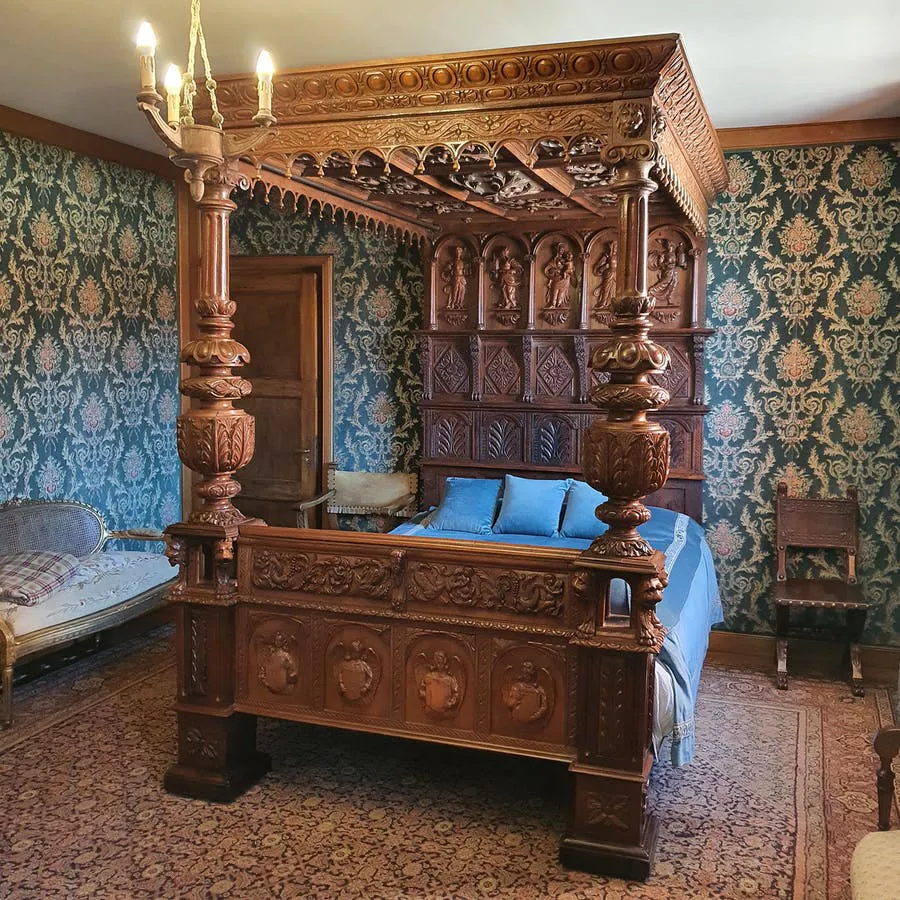
Special mention goes to this carved oak canopy bed from Queen Mother Elizabeth's red bedroom at Glamis Castle, Scotland. This piece of high-flying craftsmanship, made around 1850 in a decorative register in the spirit of the Renaissance, is accompanied by a letter from Lady Katherine Seymour of the Royal House of Clarence House giving details of its origins.
The catalogue will also include a fine selection of drawings, masks and ornamental jewellery from African, Indonesian and Chinese cultures. See you on 25 and 26 September in Monaco for a trip to the heart of art history.