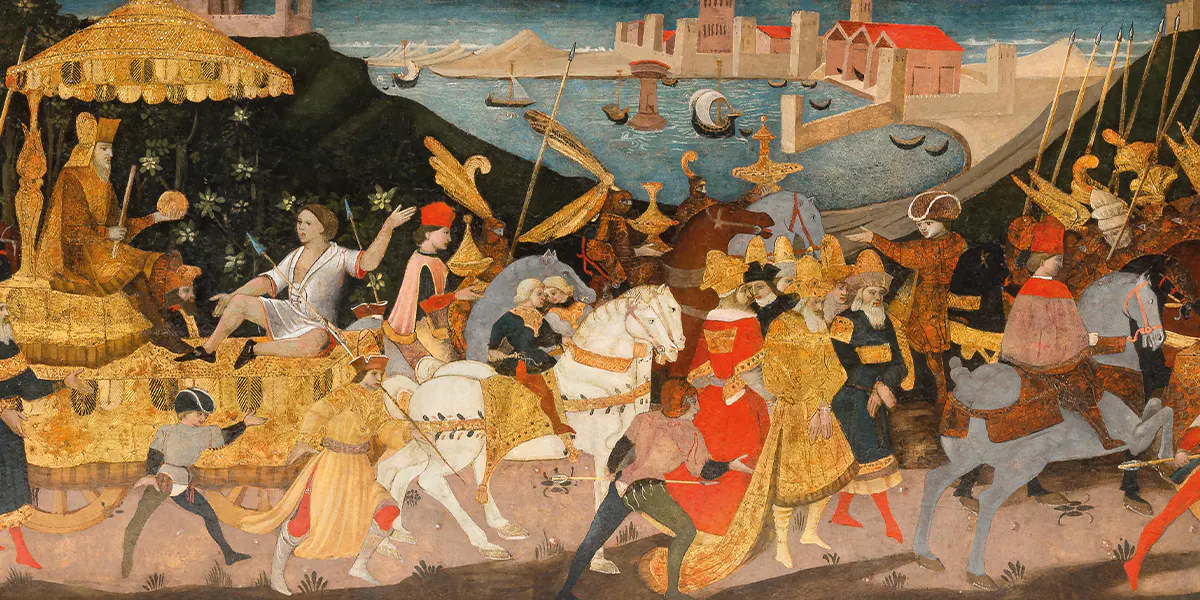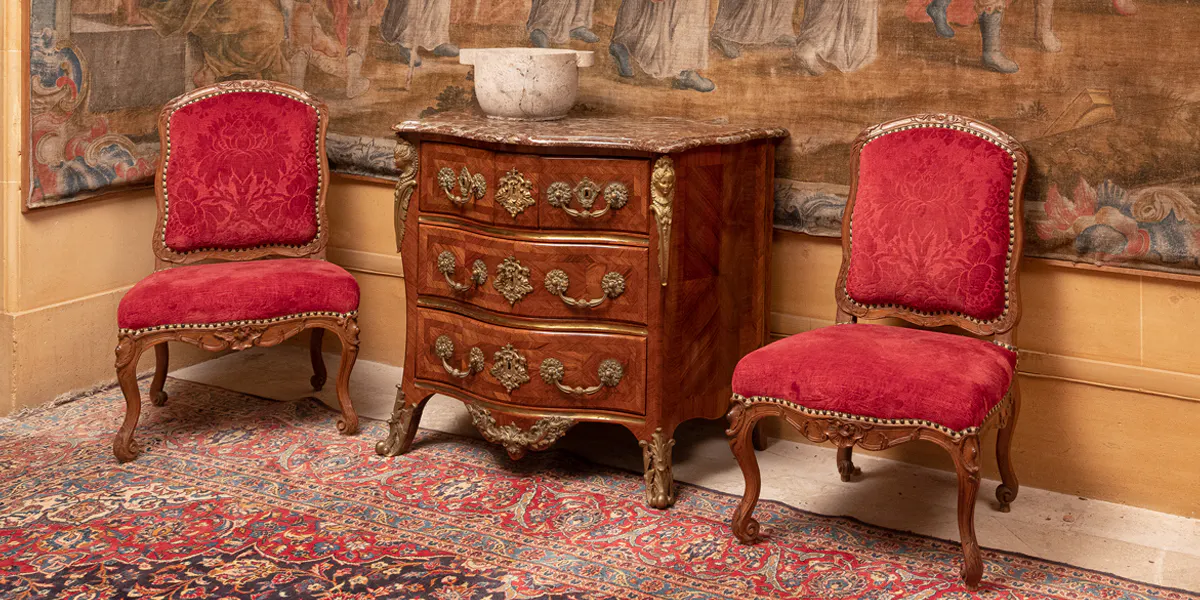
The French auction house Binoche et Giquello has taken what was left of the splendour of the Château de Boutemont, a medieval fortress built in the 17th century, the Château de Formentin and large Parisian properties and is offering them in a sale at the height of prestige.
On 9 February, the furniture, collectables and artworks that have sublimated these places steeped in history will be dispersed during a sale that will give pride of place to French taste. The catalogue of more than 200 lots is an anthology of furniture, historic paintings, tapestries and archaeological masterpieces that will delight lovers of art and history.
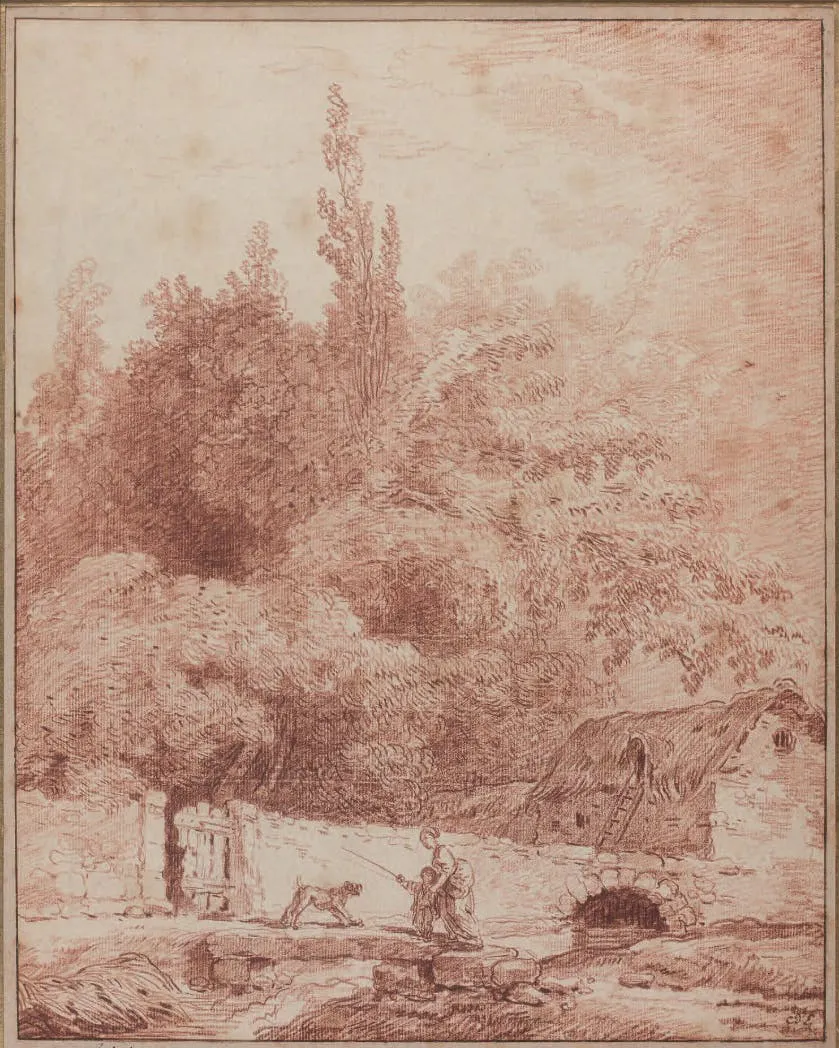
Among the flagship lots is a pair of red chalk works from Hubert Robert, an 18th-century French painter and engraver whose talent for architectural drawing earned him great success during his lifetime. Robert's love for red chalk was born from his meeting with Jean-Honoré Fragonard, when they were both boarders at the Académie de France in Rome. Together, they multiplied the blood-red landscapes executed in the city or in the surrounding countryside, favouring views of abandoned palaces and gardens plagued by the effect of time and nature.

These picturesque subjects, which amateurs of the time particularly appreciated, were the spearhead of Robert's work: he used them throughout his career, in drawing as in painting, at the same time establishing his reputation as a draftsman of ruined architectures.
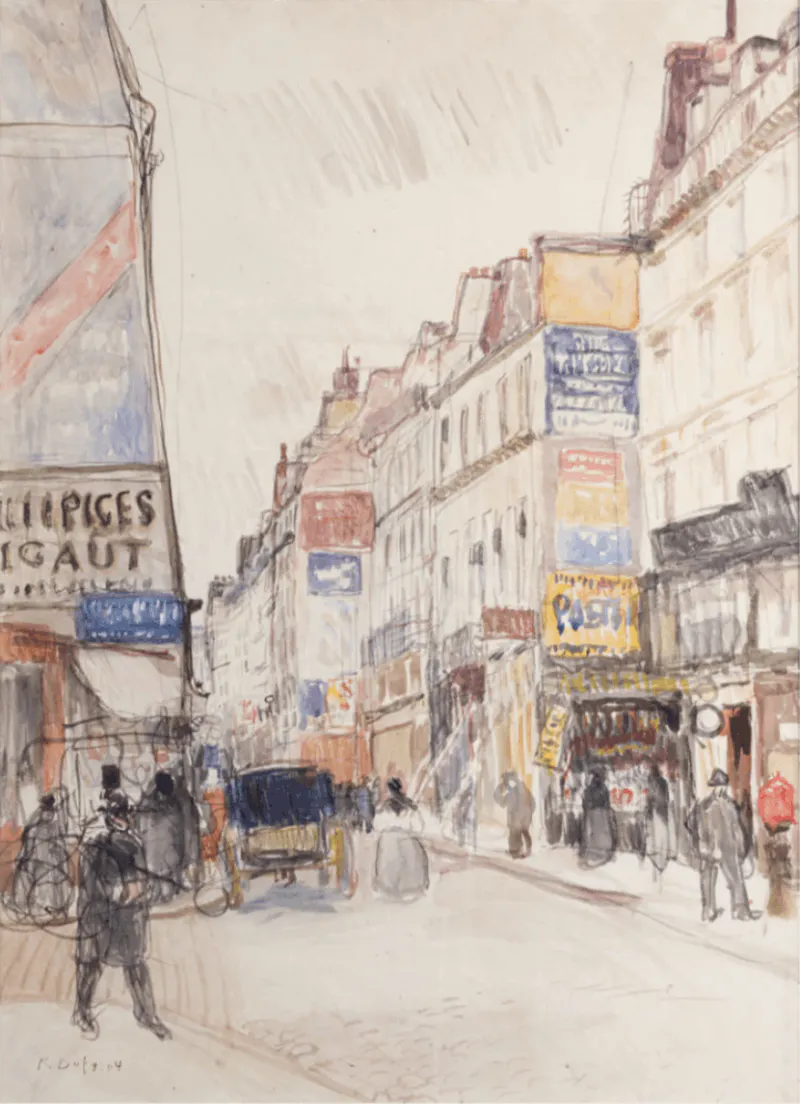
A watercolour by Raoul Dufy, entitled La rue Vieille du Temple in Paris, will punctuate the sale. A major painter and decorator of the first half of the 20th century, Dufy expressed the festive spectacle of everyday life for most of his career, multiplying the landscapes, the lively street scenes and even the village festivals. His discovery of the first Fauve painters pushed him to adopt the style of the movement, until he became one of its main representatives. Under his brush, the French capital revealed itself in all its glory, summer and winter, lively or deserted.
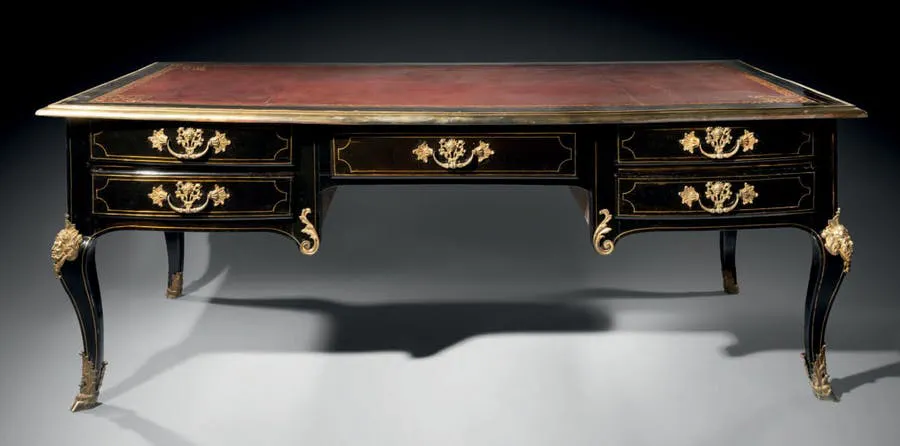
In terms of furniture, the key lot will be none other than this flat blackened pear wood desk from the Regency period. Overhung by a rectangular top nearly two meters wide, the desk opens with five drawers and rests on arched legs. Ornamentations of chiselled and gilded bronze dot a decoration of brass threads, which extend over the entire surface.
Blackened wood desks are characteristic of the Regency, a period during which cabinetmakers favoured oak, beech, walnut, fir, blackened pear and even exotic woods. It was also during this period that the techniques of plating, marquetry and gold leaf gilding became popular.
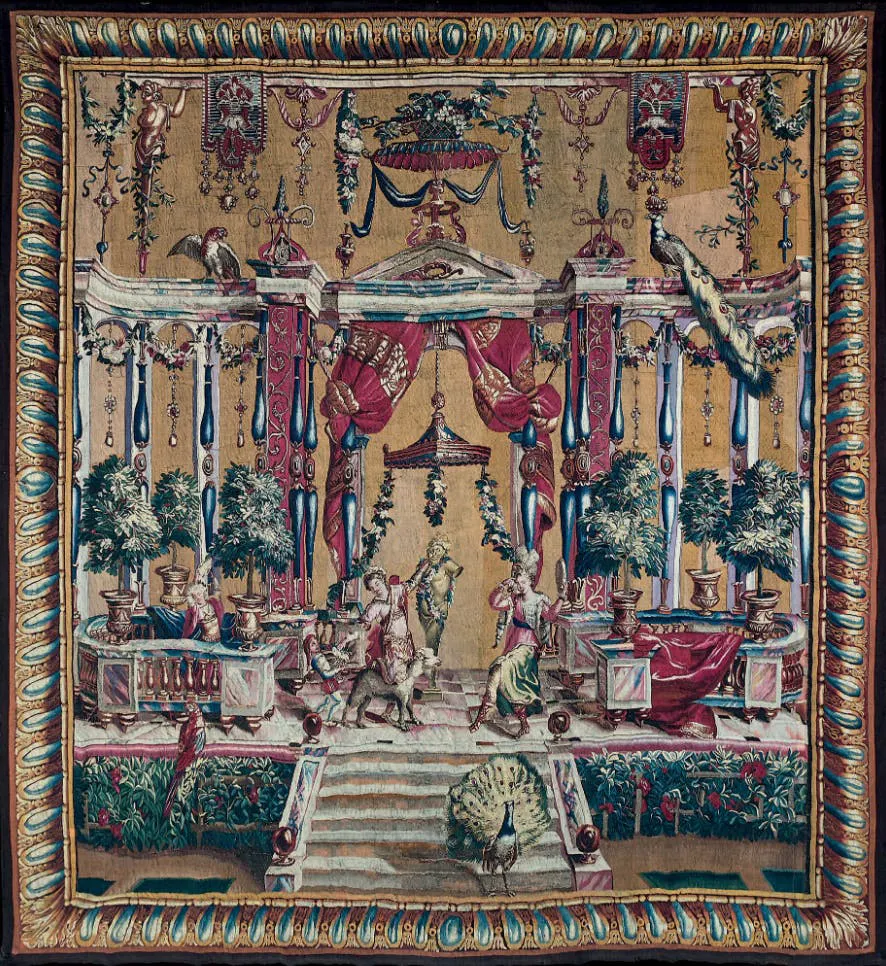
Dating from the Louis XIV period, around 1700, this exceptional tapestry from the Manufacture Royale de Beauvais was made during the design of the hanging of the Grotesques with a yellow background (the word grotesque was formerly used to designate the decorations inspired by the discoveries of the Domus Aurea of Nero, in Rome). Put on the loom in 1689 under the direction of Philippe Béhagle, the Grotesques hanging with a yellow background was inspired by the work of Louis XIV's ornamental painter, Jean Berain I, and included six subjects.
After huge success, the hanging was rewoven several times, presenting more and more variations and combinations derived from the original subject. The tapestry presented here, entitled L'Offrande à Pan, is one of the narrower compositions of the wall hanging, the one associated with The Offering to Bacchus and two versions of The Musicians.
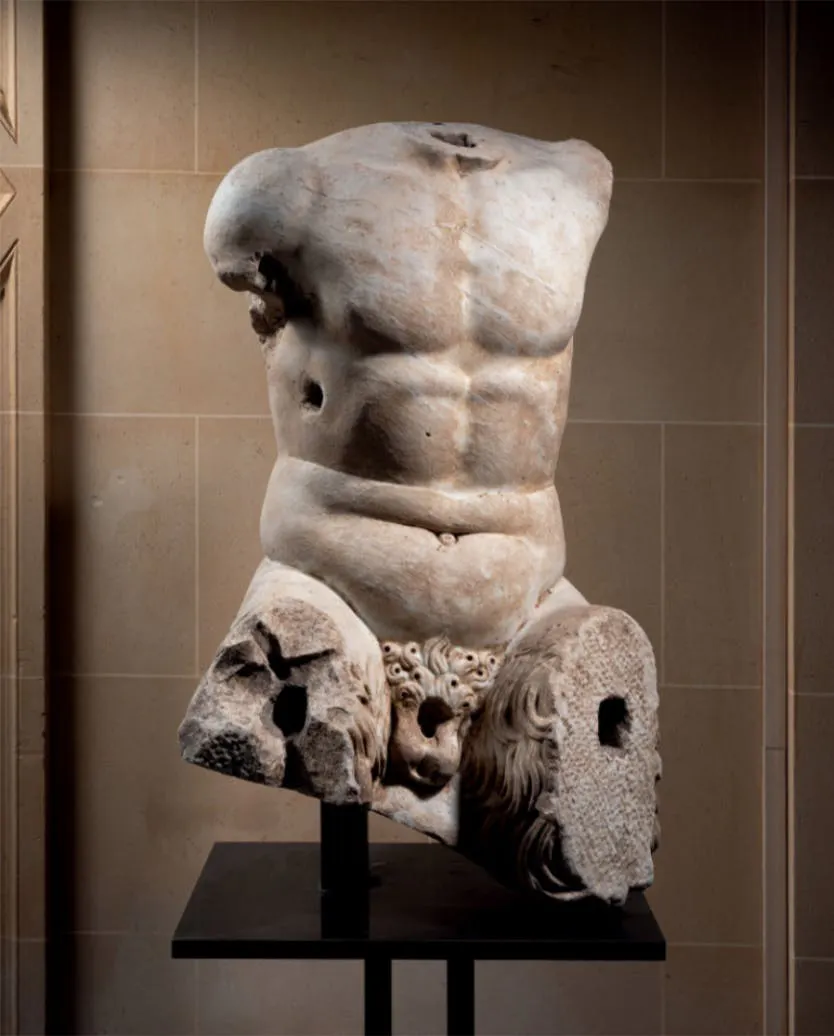
Archeology will also be in the spotlight with a superb acephalic torso dating from the 1st-2nd century AD. Masterpiece of Roman art, the torso represents the god Pan or a faun, a figure of powerful musculature, while the remaining parts of its goat-legs reveal wavy locks. This type of sculpture was associated with fertility and was usually arranged in groves of sacred woods or in caves dedicated to worship.
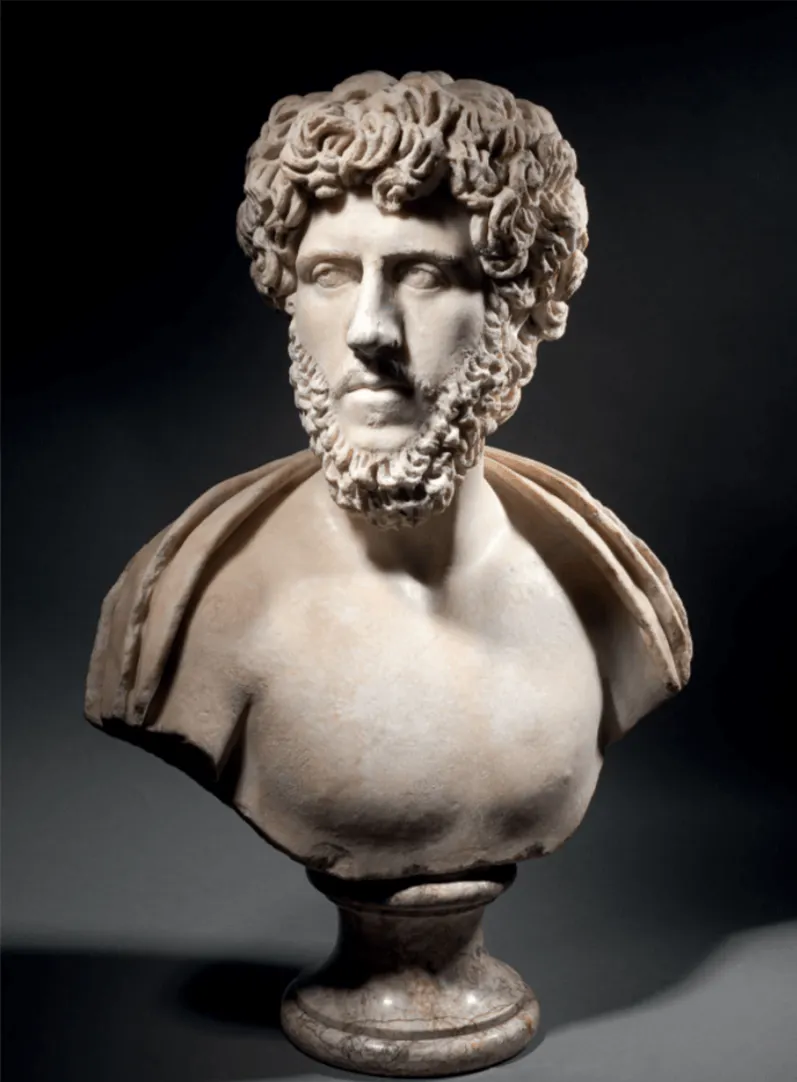
History buffs will appreciate this bust of Lucius Verus (130-169), Roman co-emperor with Marcus Aurelius from 161. If he was known to have supervised a campaign against the Parthians in 162, Lucius Verus was in fact more interested in a life of lust and debauchery, leaving the responsibility of military operations to his generals. Not devoid of qualities, Verus still managed to lead this type of life by performing official duties with a certain efficiency.
Unlike most leaders, he is represented here without a traditional laurel crown, and half-naked and three-quarters. His beard and hair, similar to that of his father Aelius, is made up of long, deeply sculpted curls. This white marble bust was made during the Antonine period, between 130 and 192 AD.
In addition to these few treasures, collectors will also have the opportunity to admire and purchase an important portico clock, a statue of Diana the Huntress in white marble, or even paintings by Félix Ziem and Eugène Berman. An unmissable event, it is taking place on Tuesday 9 February in the early afternoon.
For all the information relating to the health measures in force, we invite you to visit the auction house's website.