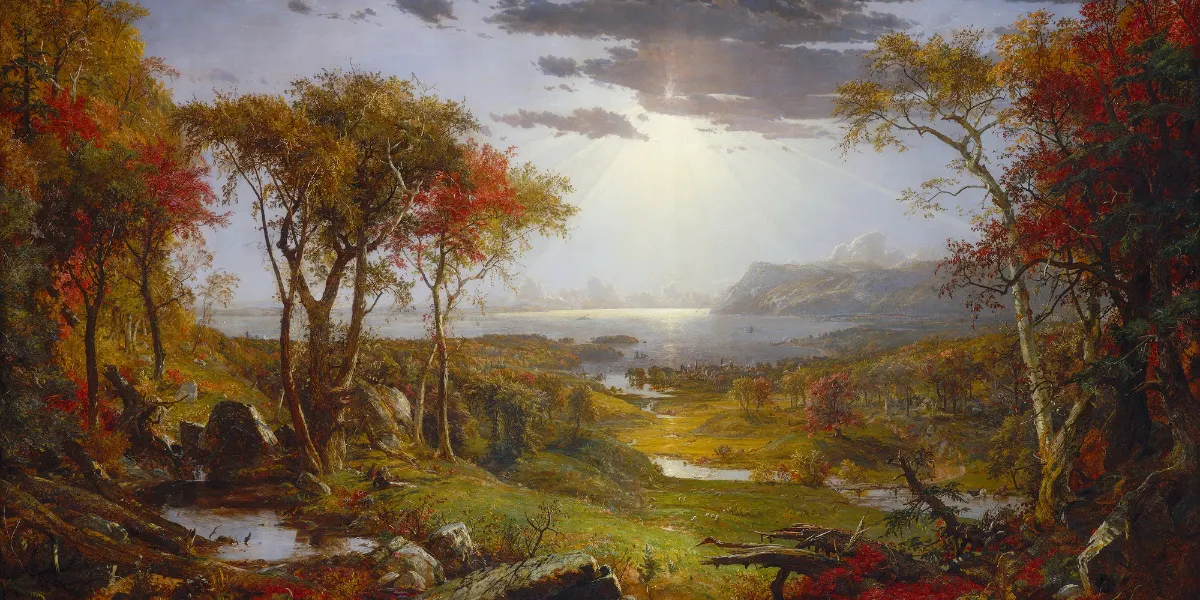
New York's Hudson River Valley cuts a swath of 150 miles from upstate south to Manhattan. The Hudson River Valley is composed of charming riverside towns, thick forests, mild mountains and a wide river bank, and the region was important as home to Native Americans, an agricultural hub under British and Dutch colonisation, the site of battles of the Revolutionary War, and the location of the first New York railroad. The latter development coincided with the founding of the Hudson River School in the 1830s, a group of painters that sought to capture the beauty of the region as the industrialisation of New York City spread north with the rise of the railroad.
See also: 5 Paintings to Celebrate Autumn
These artists were inspired by the Romantic movement that had started at the beginning of the 19th century in Europe. Similarly a response to the Industrial Revolution on the continent, Romantic artists were fascinated by nature and achieving the sublime through beautiful art. Emotions, creativity, freedom and self ruled in Romanticism, as opposed to the logical thinking of the Age of Enlightenment. At this time, America was envisioned as an untouched and untamed continent.
See also: 6 Iconic American Paintings
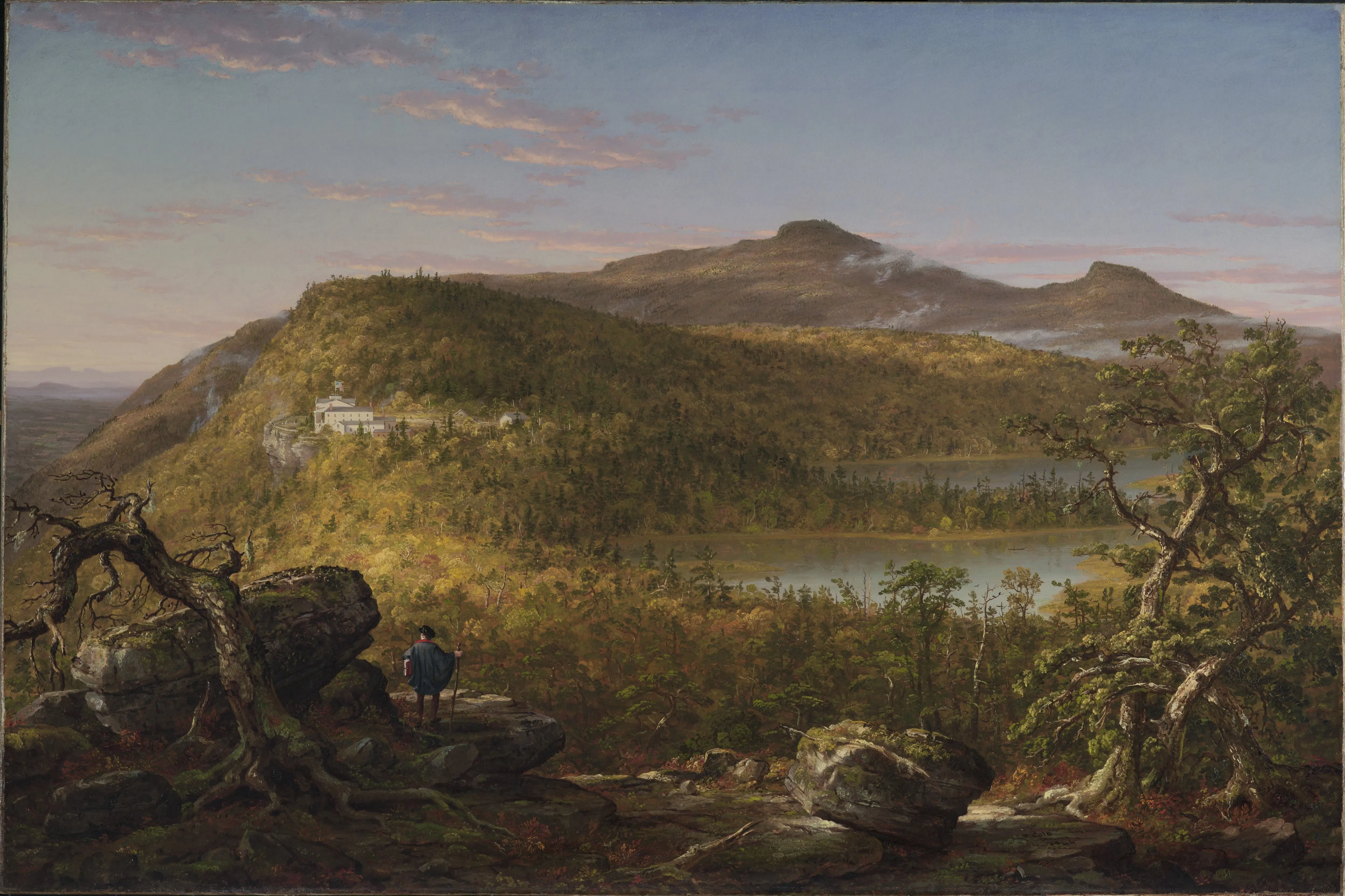
Thomas Cole, the founder of the Hudson River School, was actually born and raised in England and did not arrive in America until he was 17. After living in Ohio and Philadelphia, he moved to the Hudson River Valley region in 1825 when he was 24 years old. Likely the change from England, which was rapidly developing, to America, which still boasted massive areas of complete wilderness, was largely influential in Cole's work. While he sketched en plein air, his finished works were often idealised and incorporated allegorical scenes, such as his famous Voyage of Life series.
See also: Albert Bierstadt: America the Beautiful

Early followers of Cole included his close friend Asher Brown Durand and his protege Frederic Edwin Church. When Cole died of pleurisy in 1848, this ushered in the next generation of the Hudson River School, and arguably the period that gave it the biggest spotlight from 1850-1870. Church took the helm of the school, as did Albert Bierstadt, who started painting in the Hudson Valley before venturing westward. Both were celebrities who drew crowds in American and Europe to see their latest works.
See also: The Art of Plein Air Painting
While Cole's work had emphasised allegory, the second generation of the Hudson River School focused more on naturalism and the subtle effects of lighting, a sub-genre referred to as Luminism. These works sought to capture America's beauty without the exaggerated grandeur that had characterised earlier works, heralding the American Realism movement that arrived a few decades later in the early 20th century and aimed to depict American urban life accurately.
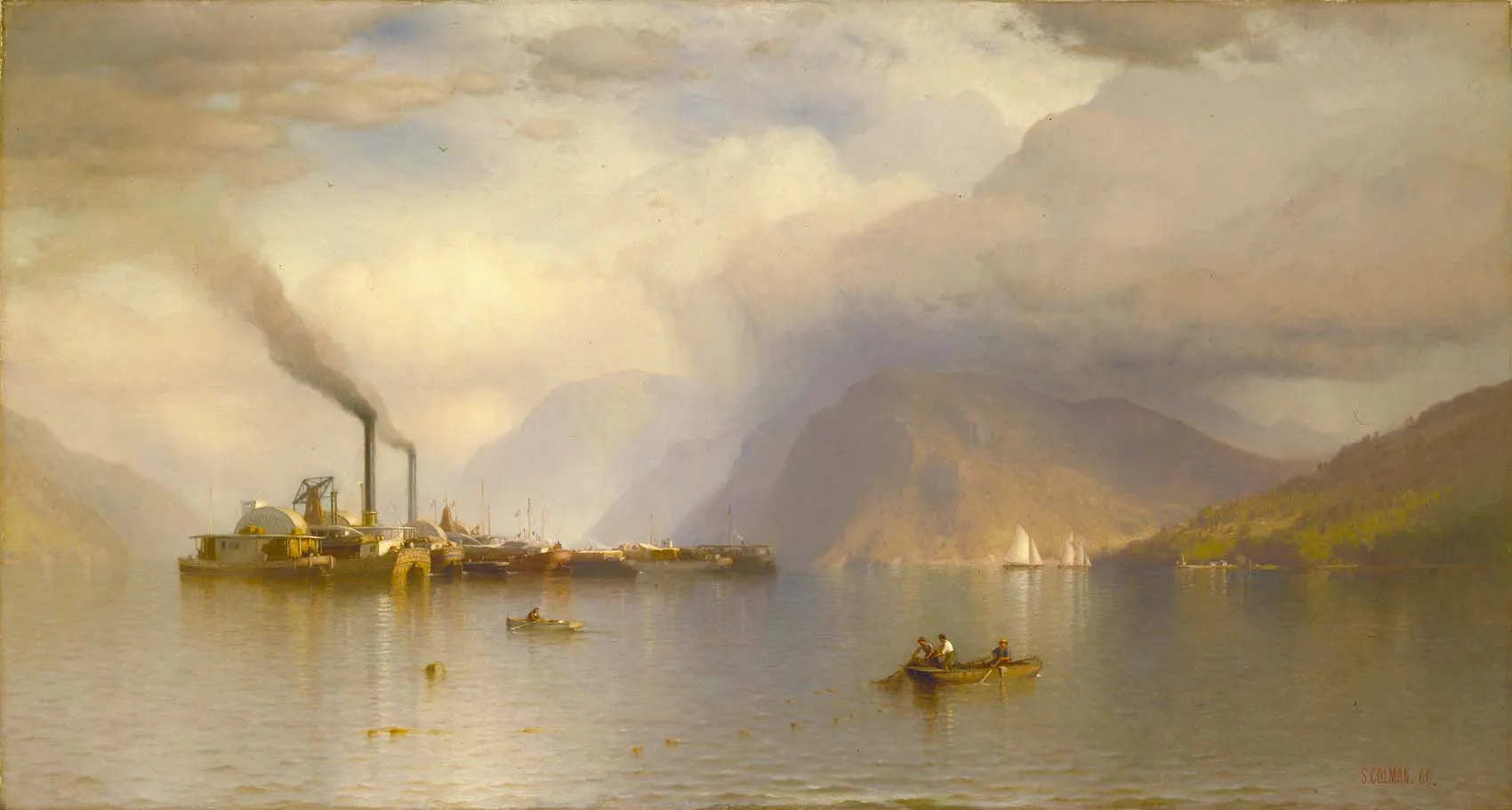
With the deaths of the leading Hudson River School artists, Frederic Edwin Church and Albert Bierstadt, at the turn of the 20th century, the movement declined and fell out of favour. However, today, the Hudson River School is considered America's first nationalist art movement, though it draws significant inspiration from the European Romantic movement and ran parallel to the French Barbizon School. Paintings by Hudson River School artists grace most major American art museums. In their paintings, these artists desired to capture, in their own way, what the Romantics had also attempted: achieving a transcendent connection with nature and revealing humanity's vulnerability in the face of it.
Want more articles like this straight to your inbox? Subscribe to our free newsletter!
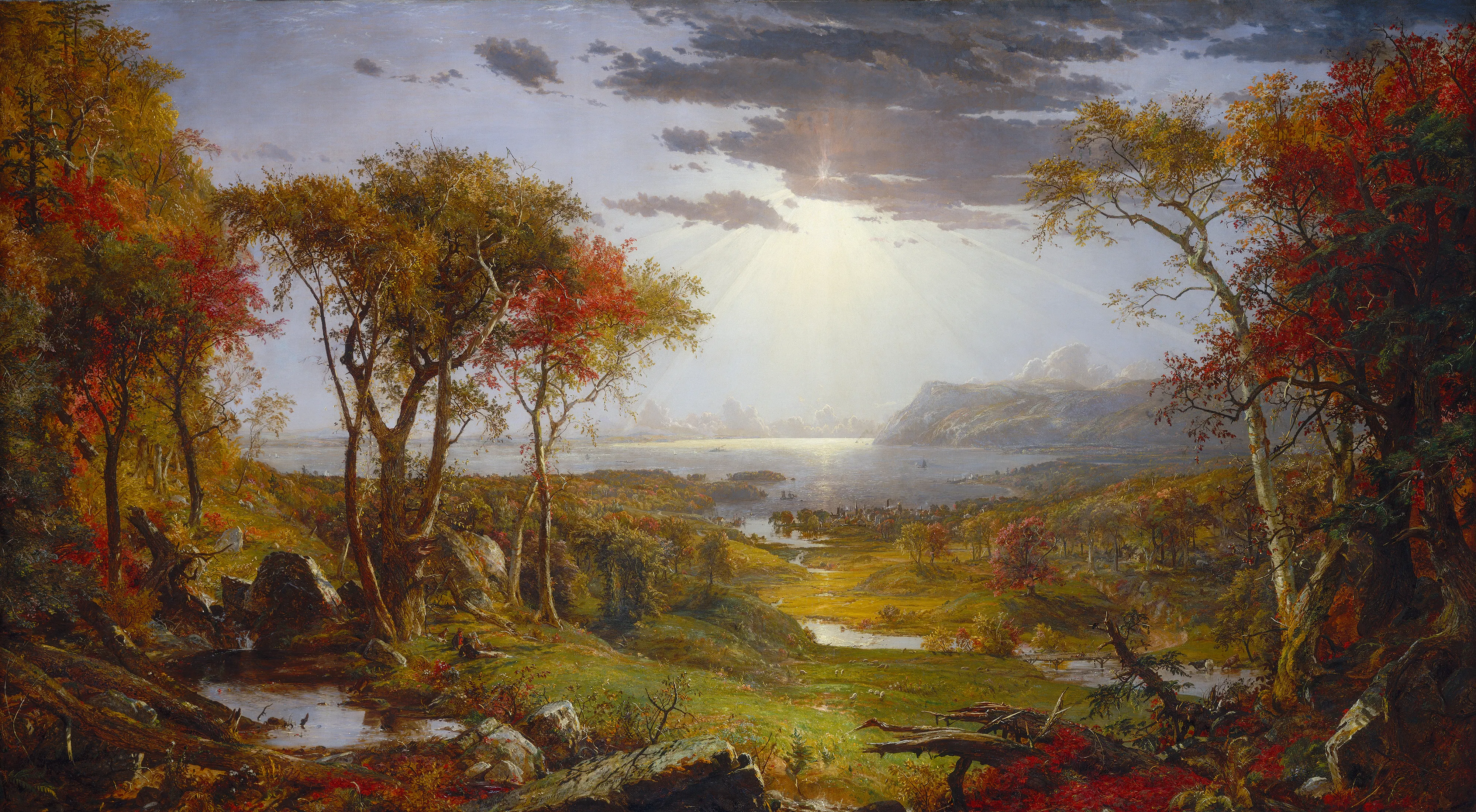
Today, Hudson River School paintings come for auction on occasion, ranging from a few thousand to seven figures for the biggest names of the movement. With their beautiful landscapes, including some of the best depictions of American nature, the Hudson River School also marks a defining moment in American art history, as the country began to form a collective artistic identity in the face of rapid change and development.