![Edmond Lachenal & J. Costet, Juno, decorative ceramic motif with decoration of the goddess Juno, signed [detail]. Photo © Rossini](https://images.prismic.io/barnebys/6869c5f6-9c84-47b6-aaa4-afc0103070ec_Cover.jpeg?auto=format,compress)
The Parisian auction house Rossini is putting an emphasis on ancient art in a fine sale of paintings, furniture, musical instruments and more. The catalogue totals 216 lots, including works by Floris van Schooten, Ary Bitter and even luthier Louis Nicolas Vissenaire. Here is an overview.
Ancient paintings
The auction will open with a set of 65 paintings and graphic works from Flemish, Dutch, Spanish, Italian and French schools, with particular emphasis on schools of the north.
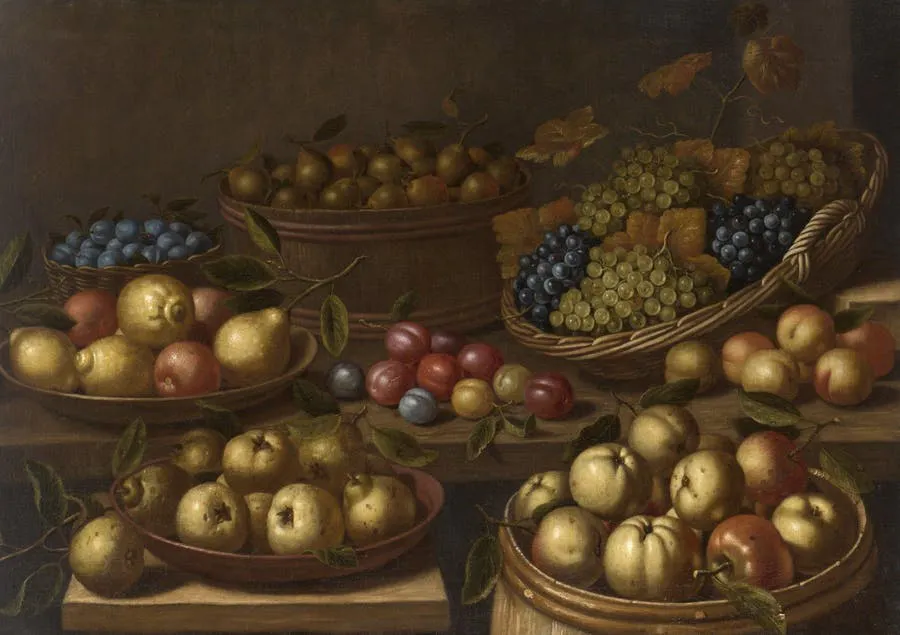
Floris van Schooten was a prolific Dutch Golden Age painter (he produced a hundred works between 1617 and 1644), best known for his still life paintings. He lent his nobility to the genre of culinary still life, also known as ‘Banketje’, depicting compositions of fruits and vegetables, fresh ready-to-cook ingredients or typically bourgeois meals and leftovers. Through his various works, van Schooten has given historians a better understanding of 16th-century Dutch culinary techniques.
Still life with fruits on an entablature, which is to be presented during the sale, is a composition which constitutes a characteristic work of the artist and which would have been painted in Harlem between 1630 and 1640. It can be compared to three canvases currently preserved at the Rijksmuseum in Amsterdam, at the Royal Castle in Warsaw, and in the Hohenbuchau collection of the Liechtenstein Museum.
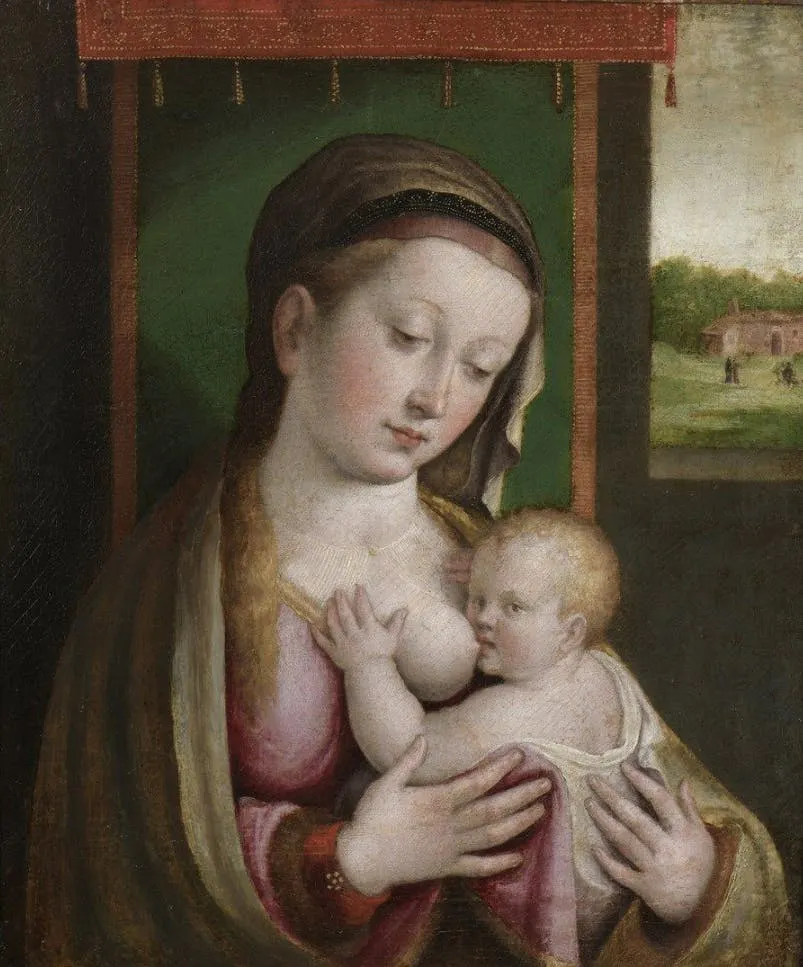
The Flemish school is represented (among others) with a 17th-century composition featuring The Virgin breastfeeding the Child, one of the iconographic variants of Christian painting on the theme of the Virgin and Child. This representation, where the Virgin is immortalised in a moment of intimacy, has been used by many painters, whose production includes hundreds of works.
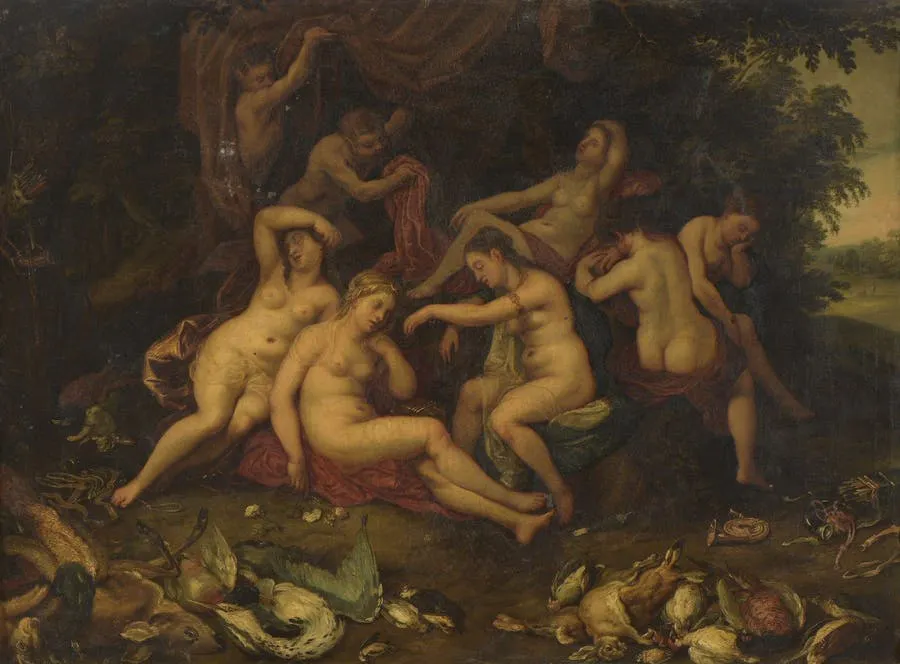
Diana and Her Resting Nymphs Surprised by Satyrs is an oil on copper attributed to Jan Brueghel Le Jeune and the Flemish painter and furniture designer Hendrick van Balen. The two artists worked together for the first time in 1620, before Brueghel undertook his trip to Italy in 1622, which was cut short by the death of his father during the cholera epidemic of 1625. Van Balen, who also passed by Italy, opened his engraving workshop in Antwerp.
When the partnership between the two artists resumed, van Balen produced some of Brueghel's works in his studio and they worked together on important compositions. Their collaboration ended in 1632, with the death of van Balen. They are known, for example, for Massacre of the Innocents, an oil on canvas for which van Balen produced the characters, while Brueghel Le Jeune set the scene in a contemporary Flemish village.
The work presented here uses a composition of the same size by van Balen and Brueghel the Elder, kept at the Dresden Museum.
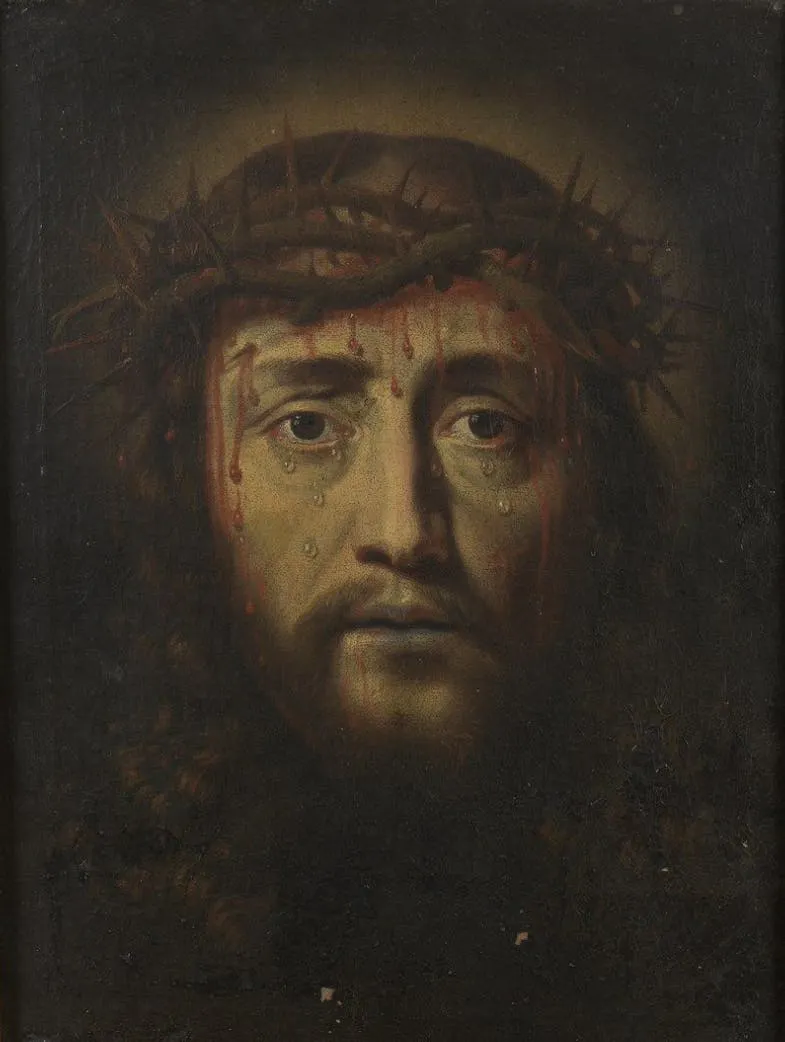
A small tour to the side of France takes us to an oil on canvas from the school of Philippe Champaigne, a French classical painter and engraver of Brabant origin. La Sainte Face à la couronne d’épines (‘The Holy Face with the Crown of Thorns’) was one of the artist's favorite themes, and he produced no less than five compositions on the Holy Face of Christ, as well as a version similar to the one on sale, this time realised on wood and in slightly smaller dimensions than usual.
Decorative Art
The Decorative Arts category will be devoted to 20th-century production and include works by Jacques Adnet, Émile Monier, Ary Bitter, Jean Rouppert and Edmond Lachenal.
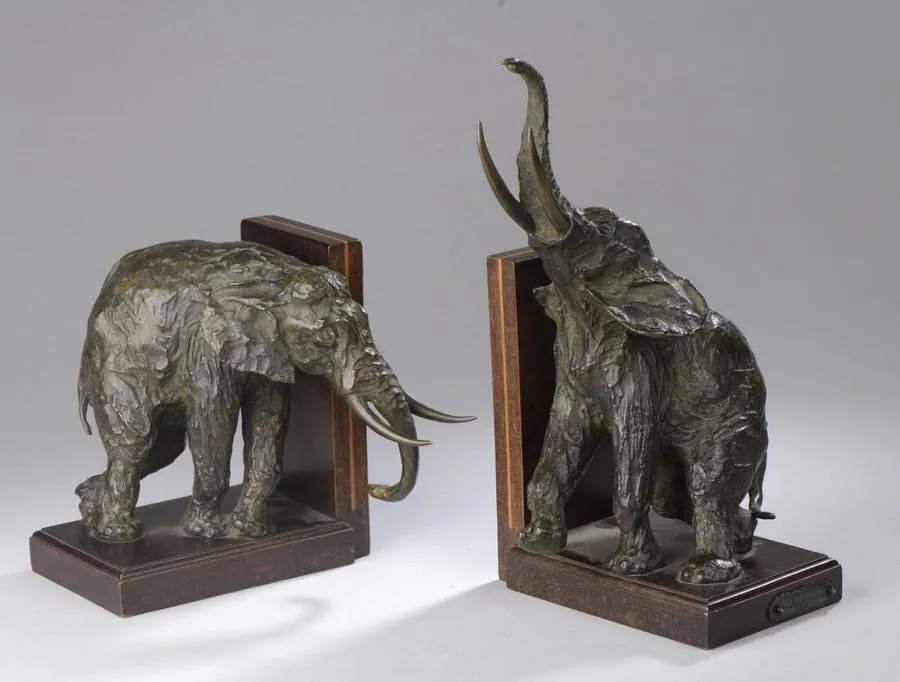
We start this section with a pair of bookends by French sculptor Ary Bitter. Made in bronze with a nuanced antique green patina and placed on a mahogany base, the pair of pachyderms saw the light of day around 1939, when the artist received a large order from the National Contemporary Art Fund for three gargoyles intended for a monumental fountain in Pithiviers.
Bitter received the silver medal at the Salon des Artistes Français in 1921 and the gold medal in 1924.
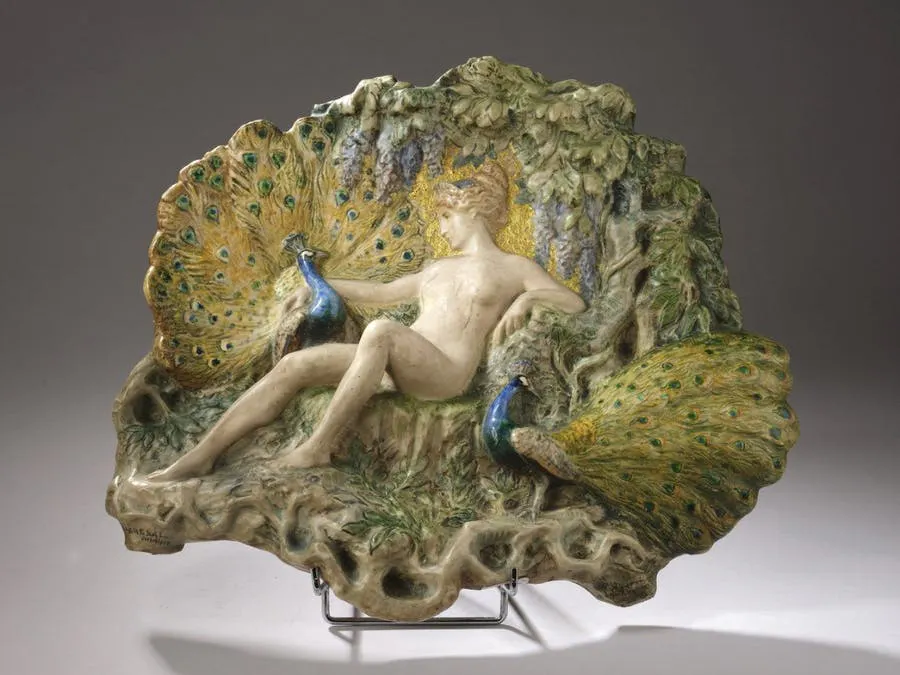
Of note is a decorative ceramic motif with a decoration of the goddess Juno, executed by Edmond Lachenal and J. Costet. The ceramist Lachenal, born in the second half of the 19th century, stood out for his technical innovation and for having developed a type of matte enamel with pastel, velvety with frosted tones. The exceptional quality of his creations was not only noticeable in exhibitions or press articles, but through the acquisition of his work by other great artists of his time.
Haute Époque
The Haute Époque or ‘High Period’ specialty includes 22 lots, including several religious wooden sculptures. Among them, an element of an altarpiece of an entombment stands out, made in North Germany at the end of the 16th century.
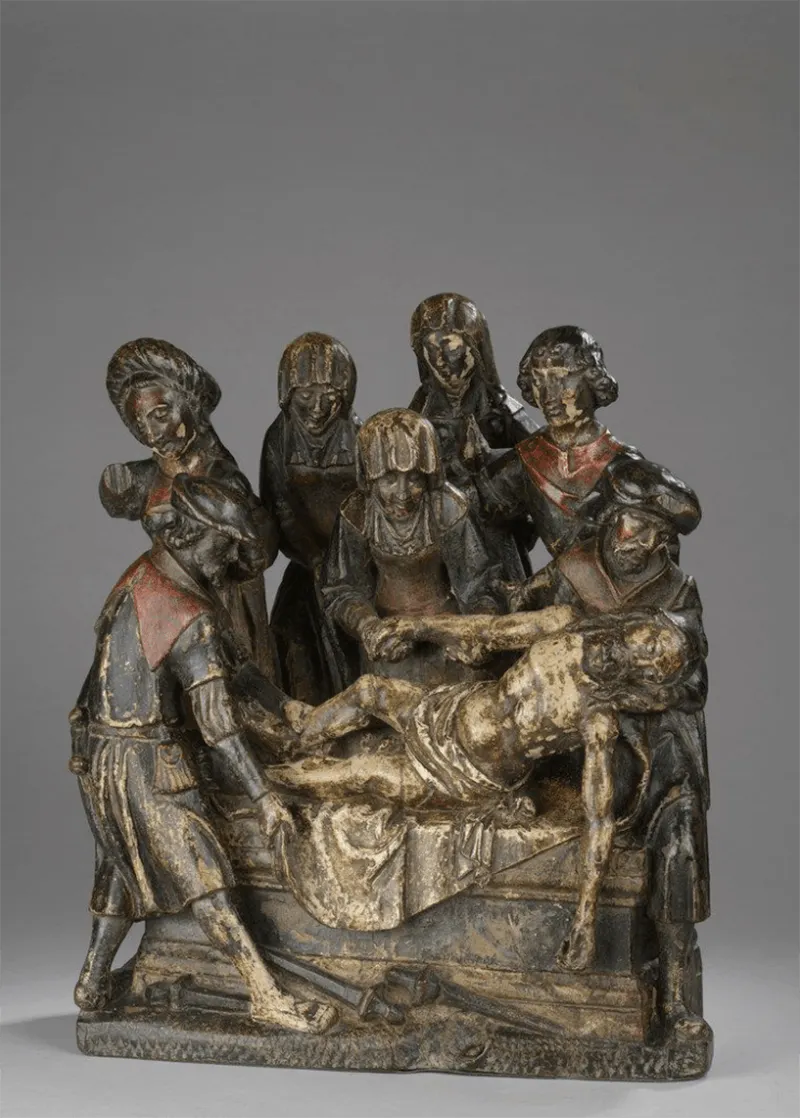
On this piece, in carved and polychromed oak, the body of Christ is placed in the tomb by Joseph of Arimathea and Nicodemus on either side of the Virgin, who holds the hand of her son. Behind her stand Saint John and the three holy women.
Musical instruments
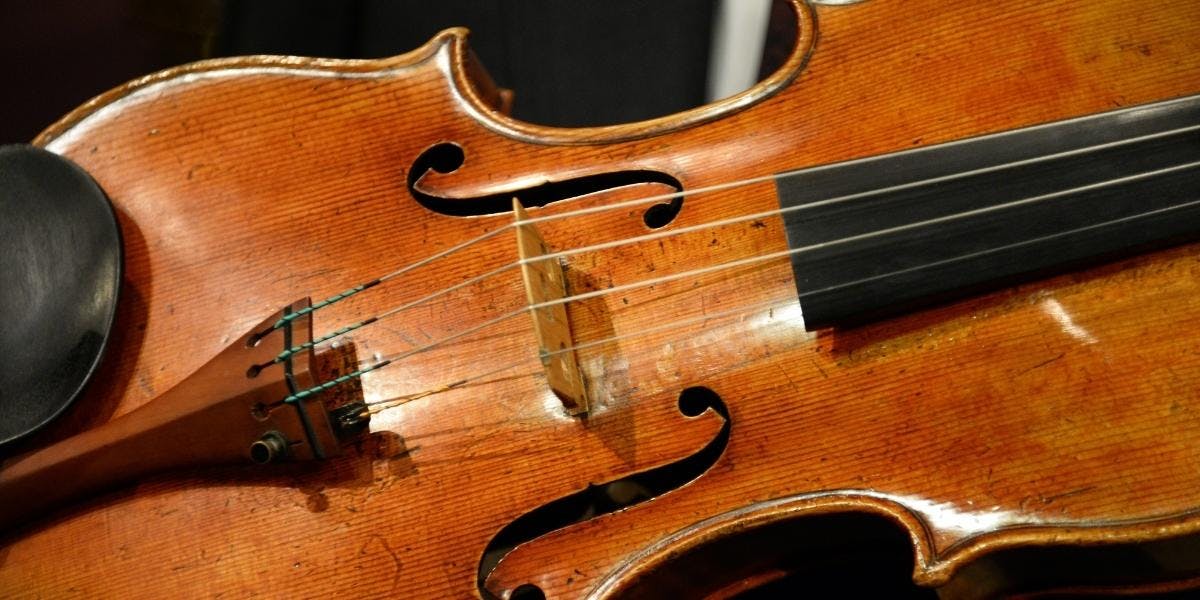
We end this overview with a work by Louis Nicolas Vissenaire. Violinist and luthier in Lyon, younger son of Louis Vissenaire I, Louis Nicolas took over his father's business around 1870 along with his older brother, Louis Vissenaire II. The pieces created by the Vissenaire brothers presented work significantly superior to that of their father, and earned them the title Luthiers du Conservatoire (Luthiers of the Conservatory). Rossini has the pleasure of presenting a beautiful violin dated 1871, the beginnings of Louis Nicolas in the family workshop.
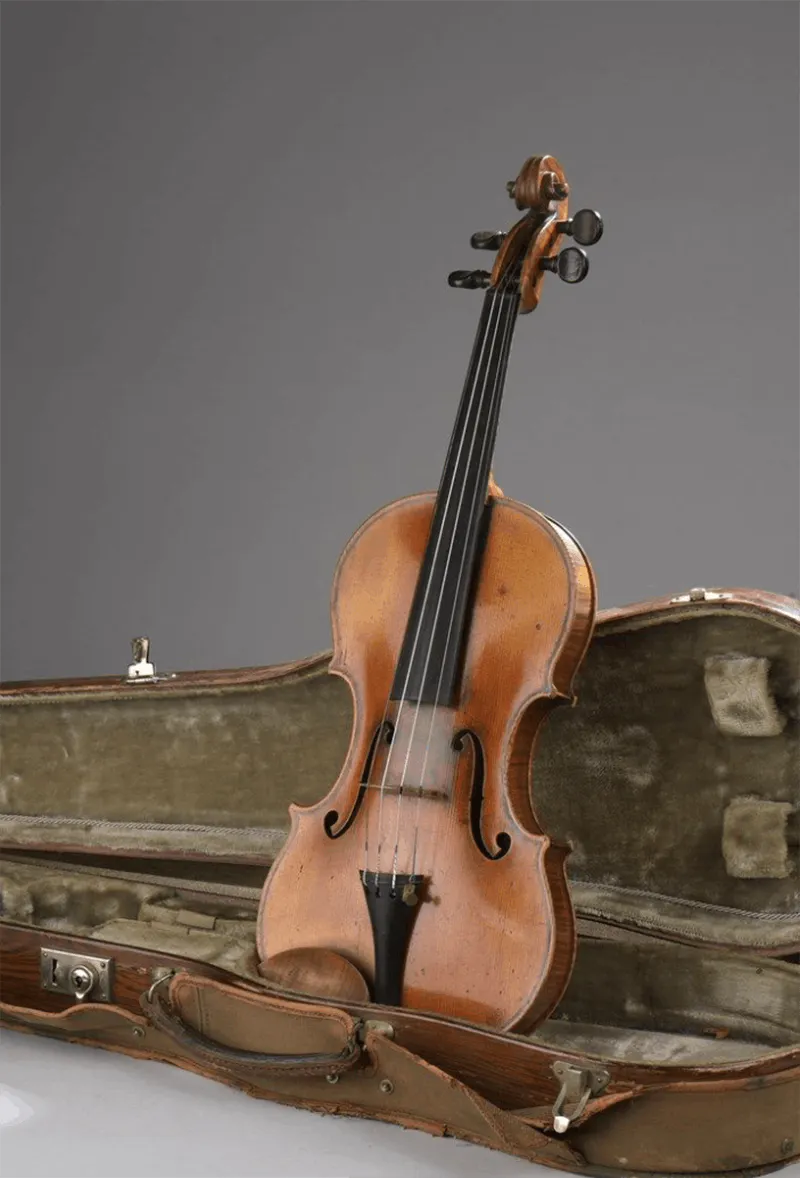
The instrument selection consists of 47 sets, with a large majority of stringed instruments, bows, as well as a clarinet and saxophone.
The sale will take place on 8 April at Rossini, subject to continued government authorisation. For all the information relating to the health security measures in force, we invite you to consult the auction house's website.