
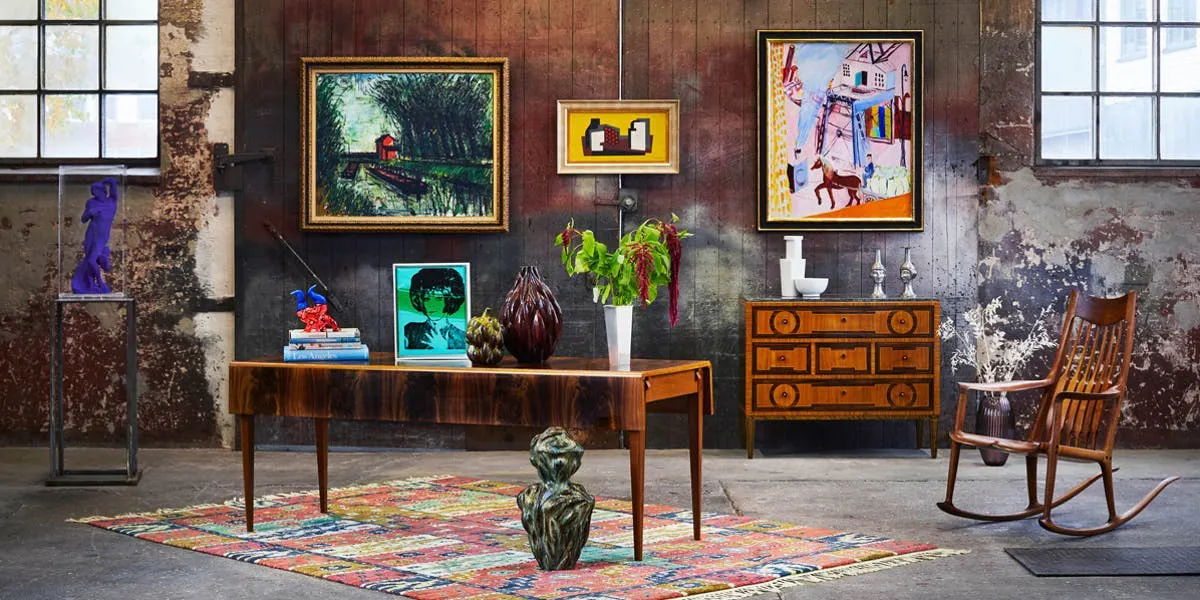
On 18 and 19 November, auction house Uppsala Auktionskammare is hosting its prestigious sales of modern and contemporary art and design. The catalogues, which include several hundred lots, bring together many of the big names in the history of art, including Andy Warhol, Pablo Picasso, Yves Klein, as well as English artist Adrian Allinson. Exemplary examples of high quality silver and design are also included.
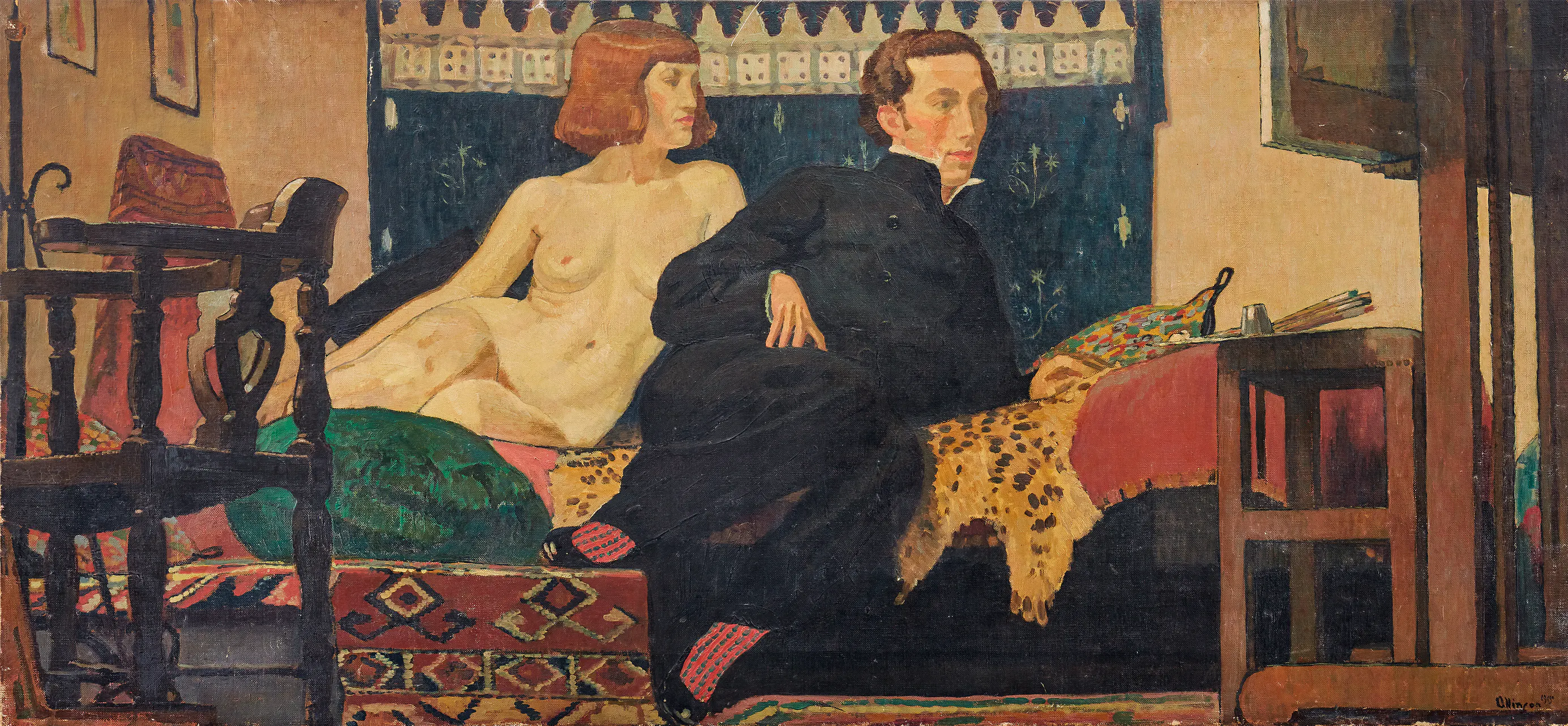
Adrian Allinson ROI (1890‑1959) was a British painter, potter and engraver known for his landscapes of Southern Europe and North Africa, as well as a series of notable posters he made for London Transport. In this striking self-portrait, the artist is sitting in full length in front of his easel, on a leopard fur, next to a nude female model. His gaze is fixed on the canvas standing on the easel, probably contemplating his recent work.
Born in London as the eldest son of the doctor Thomas Allinson, Allinson began studying medicine but eventually turned to art. After graduating in England he travelled to Paris and Munich to continue his studies in art. In 1911, he exhibited his works for the first time at the Alpine Club Gallery in Mayfair together with fellow students C.R.W. Nevinson, Mark Gertler, Maxwell Gordon Lightfoot, Vanessa Bell, Duncan Grant and Rudolph Ihlee. Adrian Allinson was a pacifist and during the First World War associated with members of the Bloomsbury Group.
His early works are rarely seen on the market and this self-portrait provides an exciting opportunity to acquire a newly reappeared painting from a private Swedish collection.
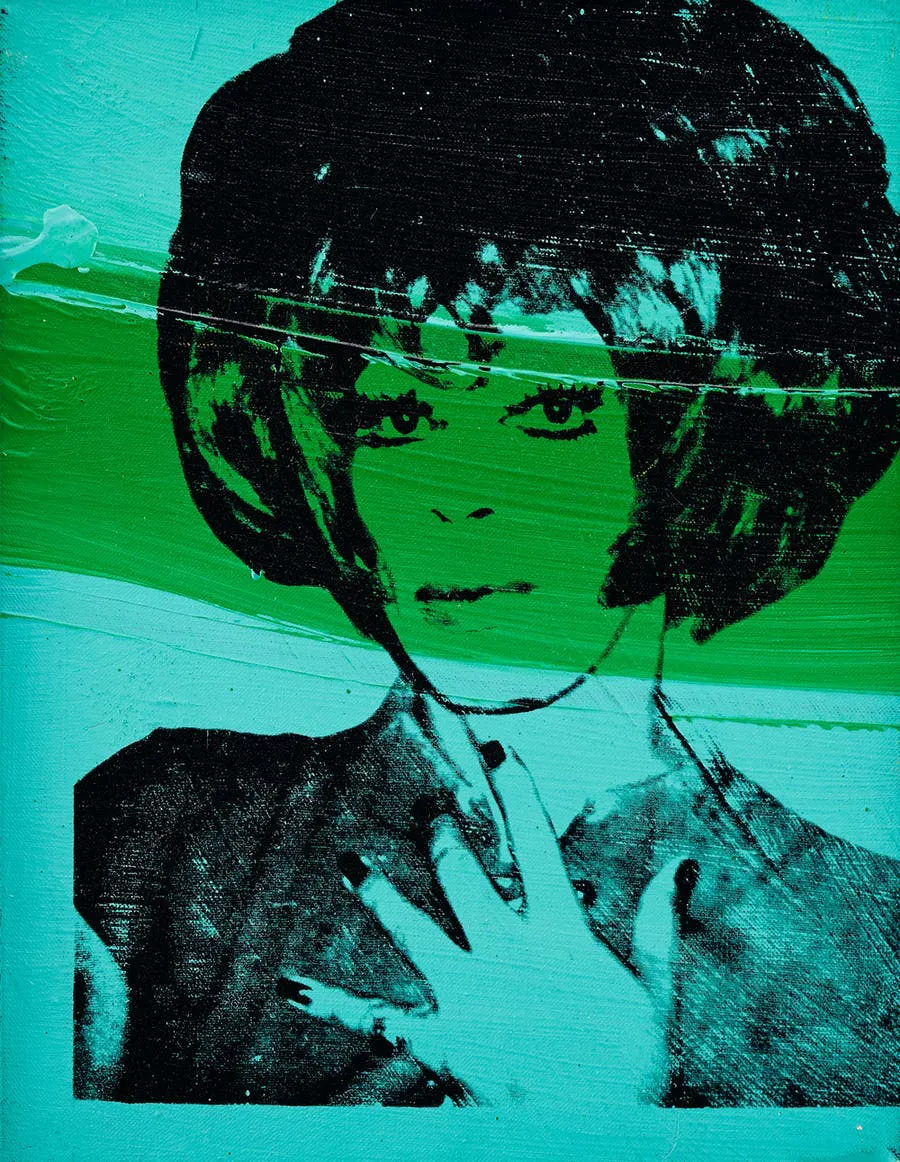
In the 1970s, Andy Warhol (1928-1987) was one of the most acclaimed contemporary artists in New York, especially among the rich and famous. But when the Italian art dealer Luciano Anselmino commissioned Warhol to create a series of ‘impersonal and anonymous’ images of transgender people, Warhol’s oeuvre suddenly became host to another social group.
In 1975, Warhol began photographing people he had come in contact with at The Gilded Grape Bar, a popular gathering place for New York's black and Hispanic transgender people as well as drag queens. He took a total of 500 portraits, some of which later became silkscreen prints, over which he painted. One of these portraits taken was of Helen/Harry Morales. Morales signed the Polaroids that Warhol took, one as Helen Morales and the other as Harry Morales. Ladies and Gentlemen provides an important insight into the place of transgender people in 1970s society.
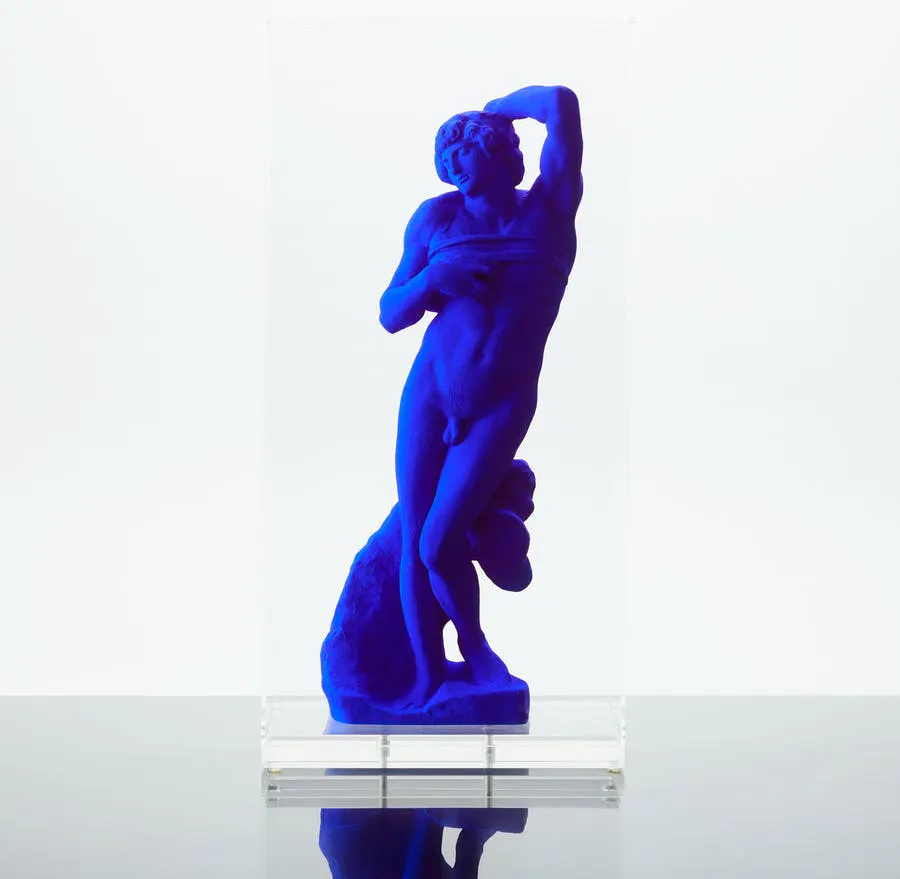
A mystic and spiritualist, Yves Klein's mission was to express the intangible and the infinite through colour. Without any real artistic training, Klein devoted his life to art after his decisive meeting with the poet Claude Pascal and the sculptor Arman: the men had a common vision of the world and of art, although their respective practices differ (Arman played with the material while Pascal with words, and Klein was fascinated by the infinite and the skies), they remade the world together, drawing their inspiration from one other.
For Klein, art was to stimulate the senses and feelings without depending on lines, figures or abstract symbols. The colour blue became more and more important in his oeuvre, and he even created the International Klein Blue (IKB) in 1957, an ultramarine pigment which, by its properties, doesn’t lose its intensity. The artist then appropriated famous sculptures – such as the Winged Victory of Samothrace, the Venus de Milo and the present work, The Dying Slave After Michelangelo – and covered them with his iconic blue. The present example was created in 1962, the year of the artist's early death, and is one of his final creations.
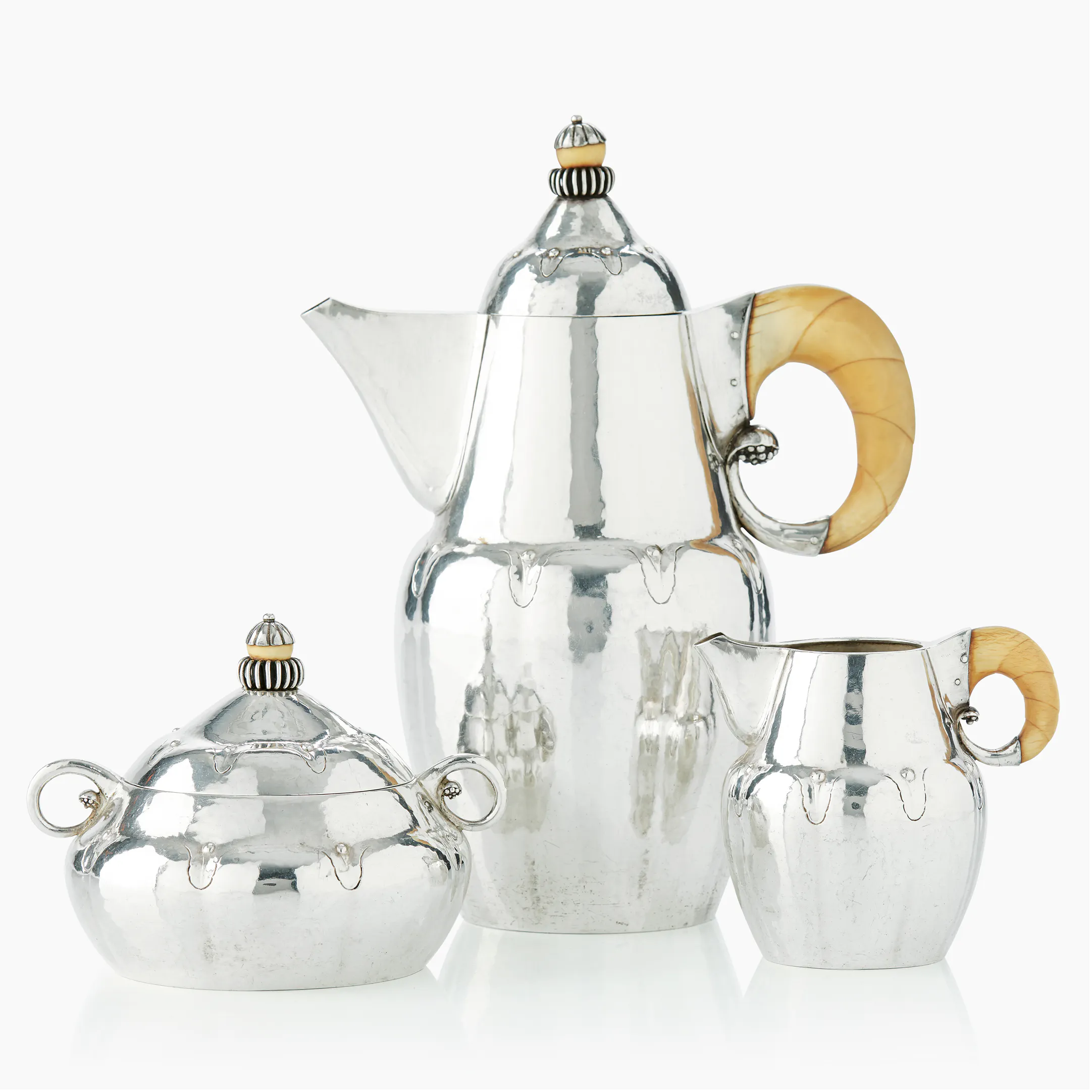
Silversmith Albert Feinauer (1886 1955) became a workshop teacher at the Grossherzoglich-Sächsische Kunstgewerbeschule in the German city of Weimar in 1910. The school had been established by the Belgian Henry van de Velde a little over three years earlier and later, after the First World War, was reorganised by Walter Gropius into the Bauhaus school. In 1913, Feinauer became a member of the Deutscher Werkbund, which promoted an association of art and industrial design.
Around 1921-23, he established his own company in Weimar under the name Weimar-Schmuck, where he was active until 1925 when he emigrated to the United States as a result of Germany's economic crisis. It was around this time, before settling in the US, that the present coffee set in three parts was created, consisting of a coffee pot, cream jug and sugar bowl. Once in the United States, Feinauer established himself as a prominent silversmith and is mainly active at the International Silver Company in Meriden, Connecticut.
Find more from Uppsala Auktionskammare with Barnebys Magazine